As a dedicated fan with over 325 hours across multiple playthroughs and a 100% trophy completion, there's no denying the love for Elden Ring. The game is a monumental achievement, blending FromSoftware's signature challenge with a vast, breathtaking world. With the Shadow of the Erdtree expansion now part of the journey, the experience has only deepened. Yet, it's precisely this deep appreciation that allows for a critical reflection: while Elden Ring's open world is impressive, its sheer scale often detracts from the tight, focused progression that defines the best Soulsborne experiences. For the next title, perhaps a return to a more condensed, intricate design would better serve the core appeal.
The Scale of the Lands Between: A Double-Edged Sword
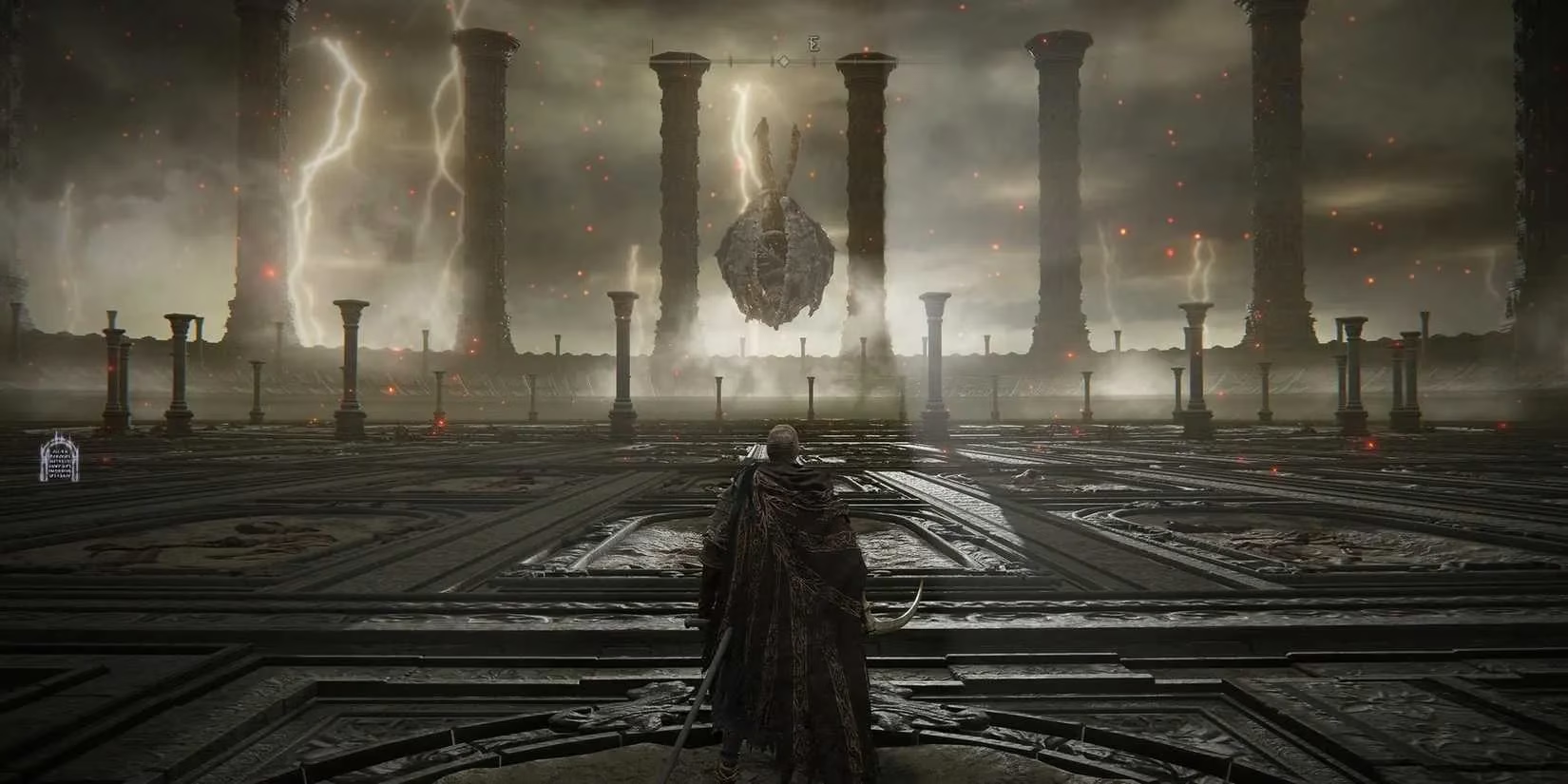
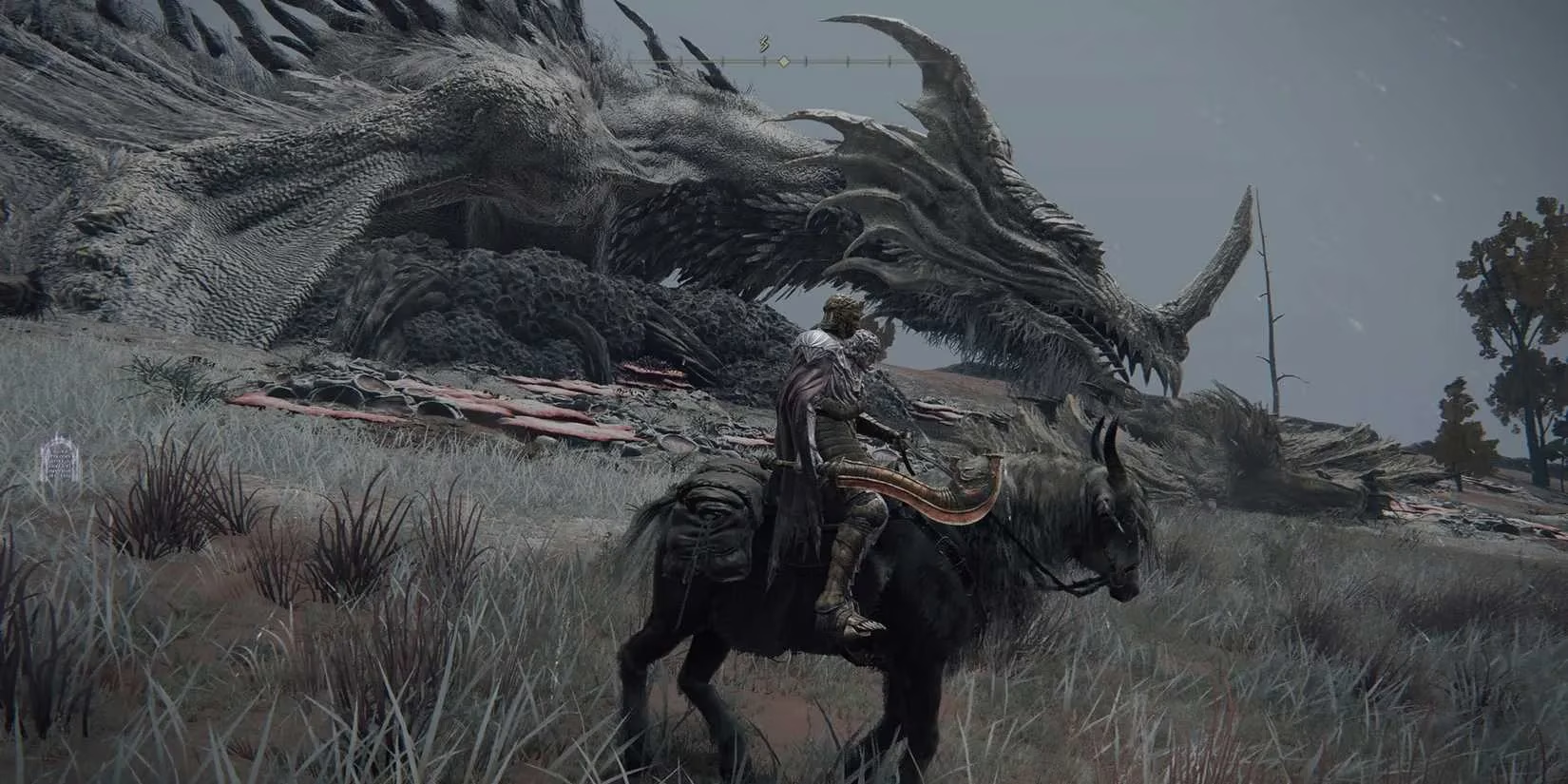
Elden Ring's world is undeniably majestic, but is its massive size always a benefit? The primary joys of Soulsborne games—epic boss battles, intricate legacy dungeons, and deep lore discovery—are sometimes buried under vast stretches of underpopulated terrain. Regions like Liurnia and Caelid, while visually stunning, can feel like padding, with large areas serving more as scenic backdrops for Torrent-riding than as dense, engaging playgrounds. The thrill of exploration is occasionally dampened by long rides between points of interest, where the payoff might be a minor crafting material rather than a meaningful secret. Doesn't the magic of discovery lose its luster when the journey between highlights feels like a chore?
Quest Design in a World Too Vast
NPC questlines are a beloved staple, offering rich storytelling and emotional depth. However, Elden Ring's expansive map introduced practical hurdles. Initially, tracking NPCs like Blaidd or Ranni was notoriously difficult, leading to widespread player frustration. While post-launch patches added map markers—a welcome improvement—this highlighted a core issue: the series' traditional hands-off quest design, praised in tighter games like Bloodborne, became less intuitive in an open world. In a smaller, more focused setting, stumbling upon an NPC feels organic; in a world this large, it can feel like luck. Should future titles sacrifice this organic discovery for the sake of scale?
Repetition in the Depths: Caves, Crypts, and Copy-Pasted Bosses
Let's talk about those dungeons. Elden Ring features numerous caves, crypts, and mines, but how many truly stand out? 🧐 Often, these locations blur together, with similar layouts and repetitive boss fights (looking at you, Erdtree Burial Watchdog and Cemetery Shade). This repetition can evoke the grind of Bloodborne's Chalice Dungeons—the weakest part of an otherwise masterpiece. While filling a huge world requires content, does quantity over quality enhance the experience? The joy of uncovering a new area should be met with unique challenges, not a sense of déjà vu.
What Makes a Soulsborne Game Shine?
Reflect on the series' highlights:
-
Legacy Dungeons: Stormveil Castle and Raya Lucaria Academy are masterclasses in design, offering dense, interconnected spaces full of secrets and tough encounters.
-
Boss Fights: Moments like Malenia's blade dance or Radagon's cosmic spectacle are unforgettable, but their impact is diluted when similar bosses reappear as filler.
-
Pacing: Games like Sekiro and Dark Souls 3 thrive on relentless momentum, where every area feels essential to the narrative and progression.
Elden Ring excels in these areas too, but the open-world framework sometimes interrupts that flow. Imagine if Sekiro: Shadows Die Twice had been open-world—would its precise, story-driven combat have benefited from vast empty fields? Likely not.
A Vision for the Future: Quality Over Scale
Looking ahead to 2026 and beyond, FromSoftware's next Soulsborne project could learn from Elden Ring's missteps. Instead of an expansive open world, why not embrace a more focused, interconnected design? Think of the intricate levels of Demon's Souls or the gothic layers of Bloodborne, but with enhanced verticality and deeper NPC integration. Key improvements could include:
| Aspect | Elden Ring's Approach | Potential Future Approach |
|---|---|---|
| World Size | Massive, with filler areas | Compact, with no wasted space |
| Dungeon Variety | Repetitive caves/crypts | Unique, themed dungeons |
| Quest Tracking | Map markers added later | Integrated, organic clues |
| Boss Encounters | Some reskinned fights | All bespoke, memorable battles |
By prioritizing density over breadth, developers could pour extra love into every corner, ensuring each discovery feels significant. The result? A game that retains the mystery and challenge Soulsborne fans crave, without the bloat.
Final Thoughts: Honoring the Legacy
Elden Ring remains a triumph, a game that pushed boundaries and captivated millions. Yet, its open-world experiment shows that bigger isn't always better for this genre. As we await FromSoftware's next move, the hope is for a return to the series' roots: tightly crafted worlds where every step matters. After all, isn't the heart of Soulsborne about mastery through adversity, not just traversal across a map? Whatever comes next, one thing is certain—it will be dissected, celebrated, and remembered. Now, who's ready to dive back into The Lands Between for another round? 🗡️✨