In the wake of Elden Ring's earth-shattering success, which propelled the games industry forward in unprecedented ways, fans worldwide have been eagerly awaiting news of a sequel. The game set a new gold standard for open-world design, proving that exploration could be immensely rewarding and that worldbuilding doled out in cryptic fragments could captivate millions. It felt like a foregone conclusion that FromSoftware would immediately capitalize on this monumental achievement. However, in a move that initially shocked the gaming community, studio president Hidetaka Miyazaki confirmed that Elden Ring 2 isn't in development and won't be for the foreseeable future. While this news might be a bitter pill to swallow for the Tarnished masses, taking a step back reveals this is not just a smart move—it's a brilliant long-term strategy for one of gaming's most revered developers.
Miyazaki’s Confirmation: No Sequel on the Horizon
During a recent PlayStation Generations Award ceremony, Miyazaki laid the cards on the table for IGN Japan. He stated plainly that the studio isn't "really considering developments such as an Elden Ring 2." This confirmation came as a surprise, especially considering Elden Ring's legacy: a Game of the Year winner that sold phenomenally and whose DLC, Shadow of the Erdtree, made history. It seemed like a slam dunk for the studio's next project. Yet, Miyazaki did leave the door ajar, expressing interest in revisiting the Lands Between in the future, just not anytime soon. For a studio that could easily print money with a quick sequel, this restraint is, frankly, badass.
Forging Their Own Path: Not Chasing Trends
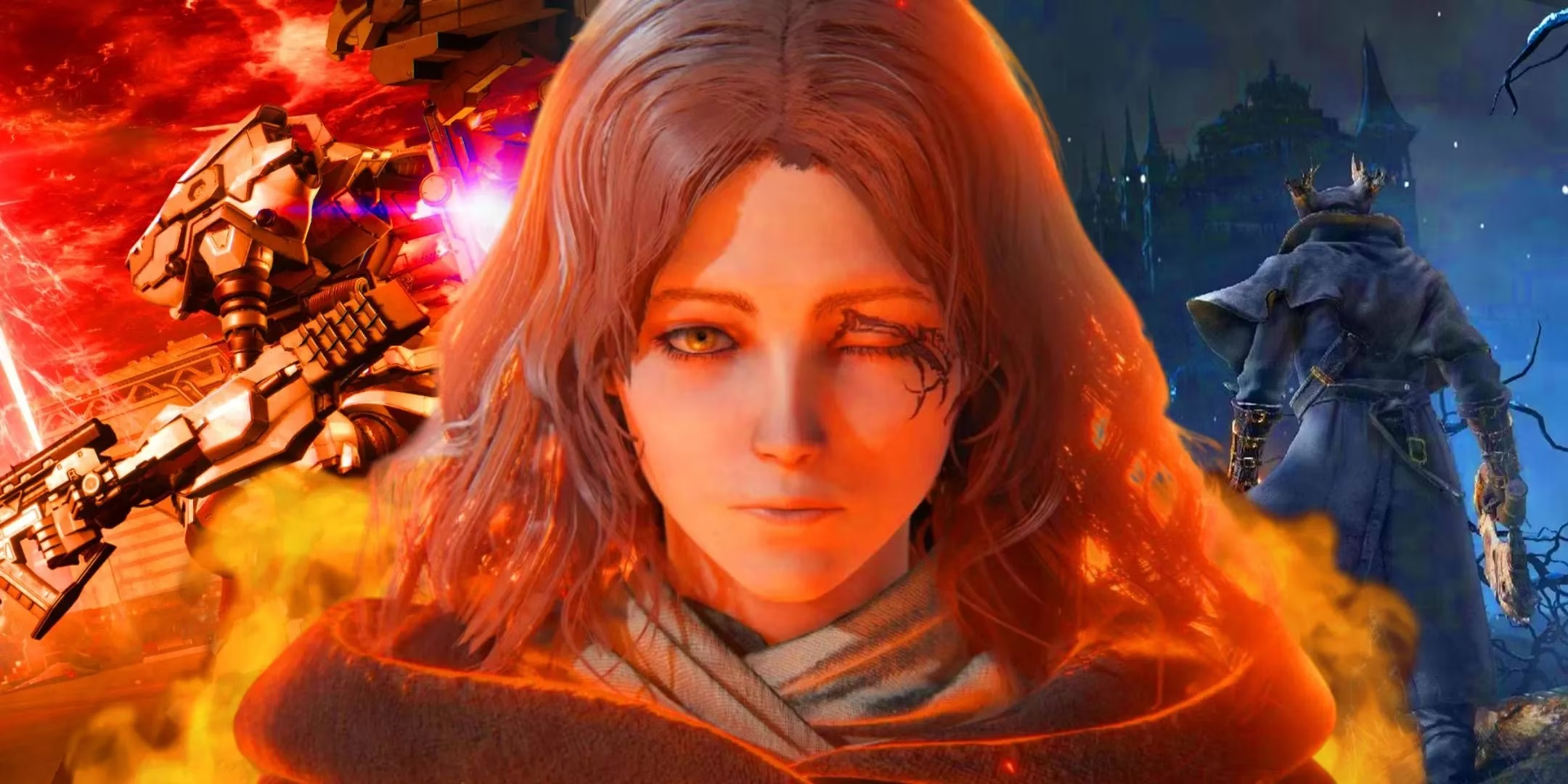
By putting Elden Ring on the back burner, FromSoftware is allowing itself to make the games it wants to, rather than what market pressures dictate. This philosophy is core to their identity. Think about it: they've never been a studio to follow trends. They set them. This decision reinforces that they are a developer operating at the peak of their powers, one that doesn't need to rely on past glories to stay relevant. It's the creative equivalent of the "one for them, one for me" policy seen in film—using the financial security from a blockbuster to fund a personal passion project.
This approach has already borne fruit. Look at Armored Core VI: Fires of Rubicon. After years of dormancy, FromSoftware revived its mech-combat series not because it was the obvious commercial choice, but because they believed in it. The result? A critical and commercial success that proved their mastery extends far beyond the Soulslike genre.

What this means for the future is excitingly unpredictable:
-
New IPs: The studio has shown a stellar capacity for worldbuilding with partners like George R.R. Martin. Who's to say they aren't cooking up another entirely new, breathtaking universe?
-
Reviving Classics: Series like Dark Souls haven't seen a new entry since 2016. A return, when the time is right, could be seismic.
-
Pure Passion Projects: They might just take a break from defining genres to create something weird, wonderful, and wholly original without the crushing weight of "GOTY contender" expectations.
The Case for a Patient Comeback: Letting the Industry Evolve
Miyazaki himself credited games like The Legend of Zelda: Breath of the Wild and The Elder Scrolls V: Skyrim as inspirations for Elden Ring. Its groundbreaking design was built upon decades of industry evolution. Rushing a sequel now would risk creating something iterative rather than innovative.
Let's be real: the shadow of The Legend of Zelda: Tears of the Kingdom looms large here. While an incredible game, many felt it was perhaps too similar to its predecessor. FromSoftware is wisely avoiding that potential pitfall. By giving the industry time to grow and introduce new ideas, philosophies, and technologies, they can return to Elden Ring with a fresh perspective. They can analyze what worked, what didn't, and—most importantly—what's missing from the current gaming landscape.
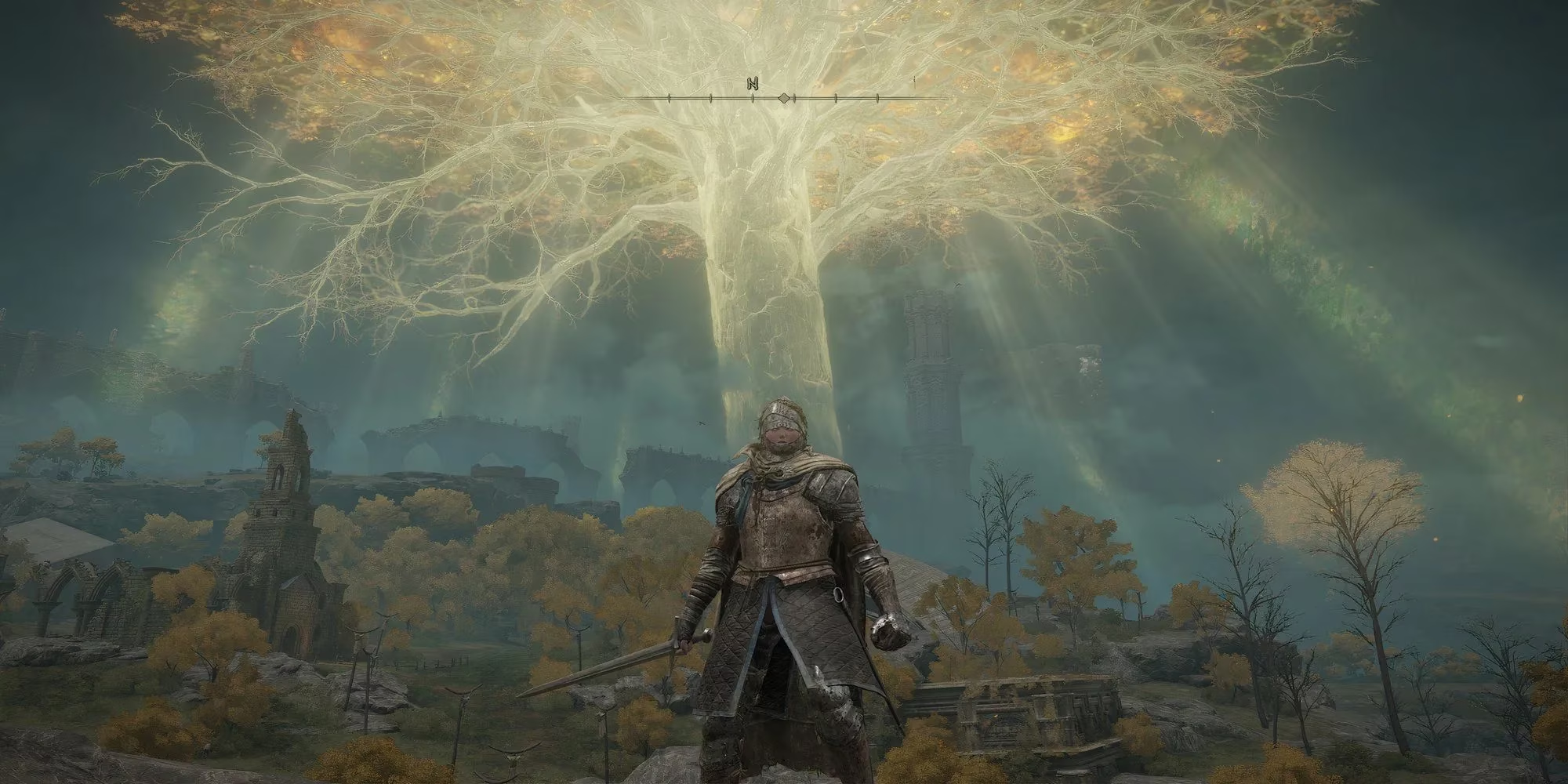
This waiting period isn't a delay; it's an incubation. When Elden Ring 2 finally emerges, it won't just be "more Elden Ring." It has the potential to once again redefine expectations, but only if it's given the space to learn and evolve. A premature sequel would be a disservice to the legacy of one of the greatest games ever made.
The Big Picture: A Win for Everyone
So, where does this leave us in 2026? Honestly, in a great place.
| For FromSoftware | For Fans | For the Elden Ring IP |
|---|---|---|
| Creative freedom to explore new ideas without pressure. | The excitement of not knowing what's next from a master developer. | Time for the lore and world to marinate, making a return more impactful. |
| Ability to grow and refine its craft on different projects. | Guarantee that when a sequel does come, it will be a labor of love, not a cash grab. | Opportunity to incorporate next-gen tech and design trends that don't exist yet. |
| Cementing its reputation as a true artist, not just a hit-maker. | More diverse games like Armored Core VI to enjoy in the meantime. | The sequel will feel like a true event, a generation-defining moment. |
In an industry often obsessed with sequels, live-service models, and quick turnarounds, FromSoftware's stance is refreshingly old-school. It's a commitment to artistry over algorithm, to legacy over quarterly earnings. They've earned our trust. So, while we might not be traversing a new fractured kingdom in the next few years, we can rest assured that whatever FromSoftware does next will be crafted with the same punishing care and visionary spark that made us fall in love with their worlds in the first place. The wait for Elden Ring 2 will be long, but damn, it's gonna be worth it. \U0001fae1