As we move through 2026, the Soulsborne genre continues to evolve, with titles like Elden Ring pushing the boundaries of scale and exploration. Yet, when I reflect on the vast, interconnected worlds and punishing combat that define this style of play, my mind always circles back to one title: Bloodborne. It's a sentiment that seems to be shared by none other than Hidetaka Miyazaki himself. In various discussions, even while promoting massive new projects, the creative director has frequently singled out Bloodborne as a profoundly personal and defining work. Why does this 2015 game, now over a decade old, continue to cast such a long shadow over the genre it helped perfect? For me, and apparently for Miyazaki, it represents the purest, most potent distillation of a specific creative vision.
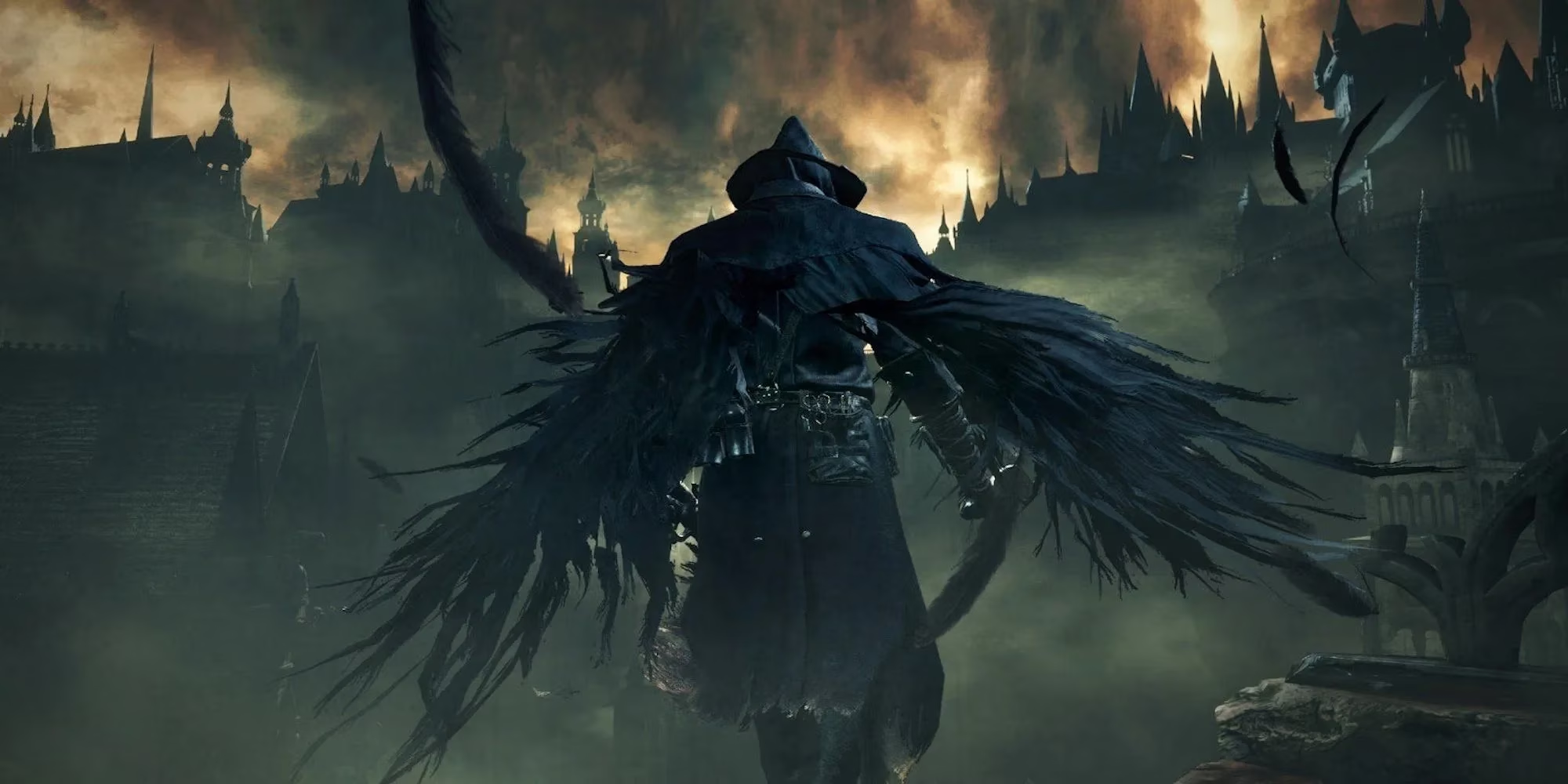
Miyazaki has been remarkably candid about his connection to Bloodborne. In interviews, he's described it as "a special game for me," a project where he imparted more of his own ideas into the story, world-building, and mechanics than perhaps any other. He calls it "the strongest reflection of my type of flavoring of a game that one can experience." When you play Bloodborne, you feel that intensely personal stamp. The game isn't just a challenge; it's an atmospheric obsession. The gothic, Victorian-inspired city of Yharnam, with its labyrinthine streets and pervasive sense of cosmic dread, feels like a direct conduit to the director's imagination. It’s a world where every corner hides a secret, and every enemy design tells a fragment of a horrifying, larger story. Isn't that the hallmark of a truly visionary work?
Part of this deep connection stems from the game's arduous birth. Miyazaki has noted that Bloodborne was "probably one of the most challenging development cycles we've had from a studio perspective." That struggle is palpable in the final product, but in the best way possible. The tension, the relentless pace, the feeling of scraping by on sheer grit—these aren't just gameplay features; they feel baked into the game's very DNA, mirroring the effort it took to create. This wasn't just another project; it was a crucible that forged something unique.
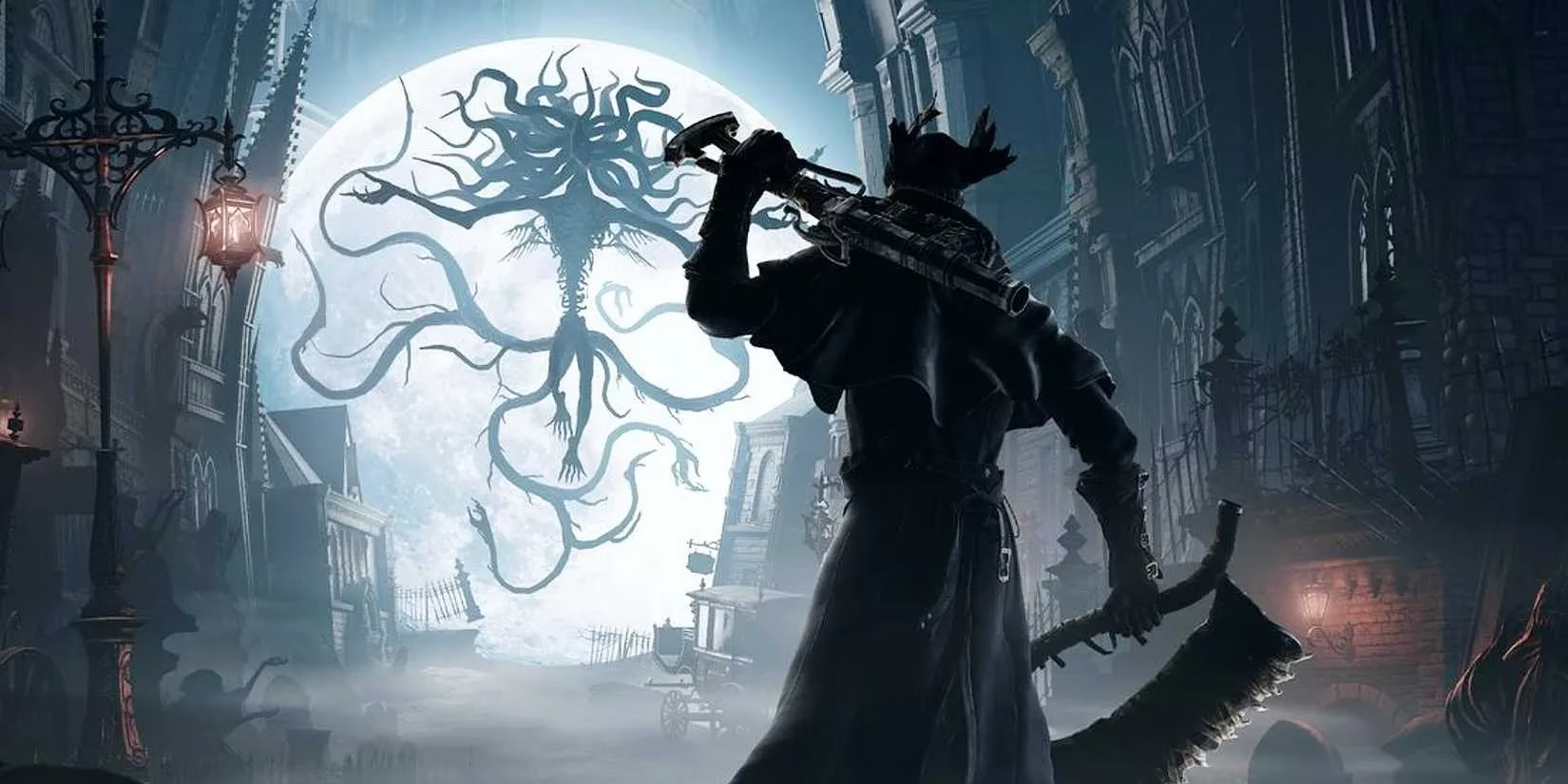
Where Bloodborne truly set itself apart, and where its influence is still felt today, is in its combat philosophy. While the Dark Souls series perfected a methodical dance of patience, blocking, and stamina management, Bloodborne threw that playbook out the window. Miyazaki has spoken about this evolution, describing the desire for something "much more fluid and active." The game aggressively encourages, even demands, aggression. The Rally system, which allows you to regain lost health by immediately striking back, fundamentally changes the player's mindset. Defense is no longer a cautious shield raise; it's a swift, punishing counter-attack. This philosophy created a combat rhythm that is, in my opinion, unmatched in its intensity and satisfaction.
Miyazaki himself traced the lineage of this idea, suggesting that Sekiro: Shadows Die Twice was a "big turning point" in honing this active combat style, but that the seeds were planted in Bloodborne. He even teased that there might be "one more level we can crank it up to." But for many fans, Bloodborne hit that sweet spot first. The fusion of its breakneck combat with the game's oppressive, Lovecraftian horror created a synergy that was greater than the sum of its parts. You weren't just fighting beasts; you were participating in a desperate, violent ballet of survival against unknowable cosmic forces.
Let's compare the core combat feel across some key FromSoftware titles to see Bloodborne's pivotal role:
| Game | Primary Combat Stance | Key Mechanic | Overall Pace |
|---|---|---|---|
| Dark Souls Trilogy | Defensive, Methodical | Shield Block, Stamina Management | 🐢 Slow & Calculated |
| Bloodborne (2015) | Aggressive, Fluid | Rally System, Gun Parry | ⚡ Fast & Punishing |
| Sekiro: Shadows Die Twice | Rhythm-Based, Reactive | Posture System, Deflection | 🎵 Rhythmic & Precise |
| Elden Ring (2022) | Versatile, Adaptive | Spirit Ashes, Jump Attacks | 🦅 Varied & Expansive |
As the table shows, Bloodborne was the dramatic pivot that proved high-speed, high-stakes combat could work at the soul-crushing difficulty fans expected. It broke the mold.
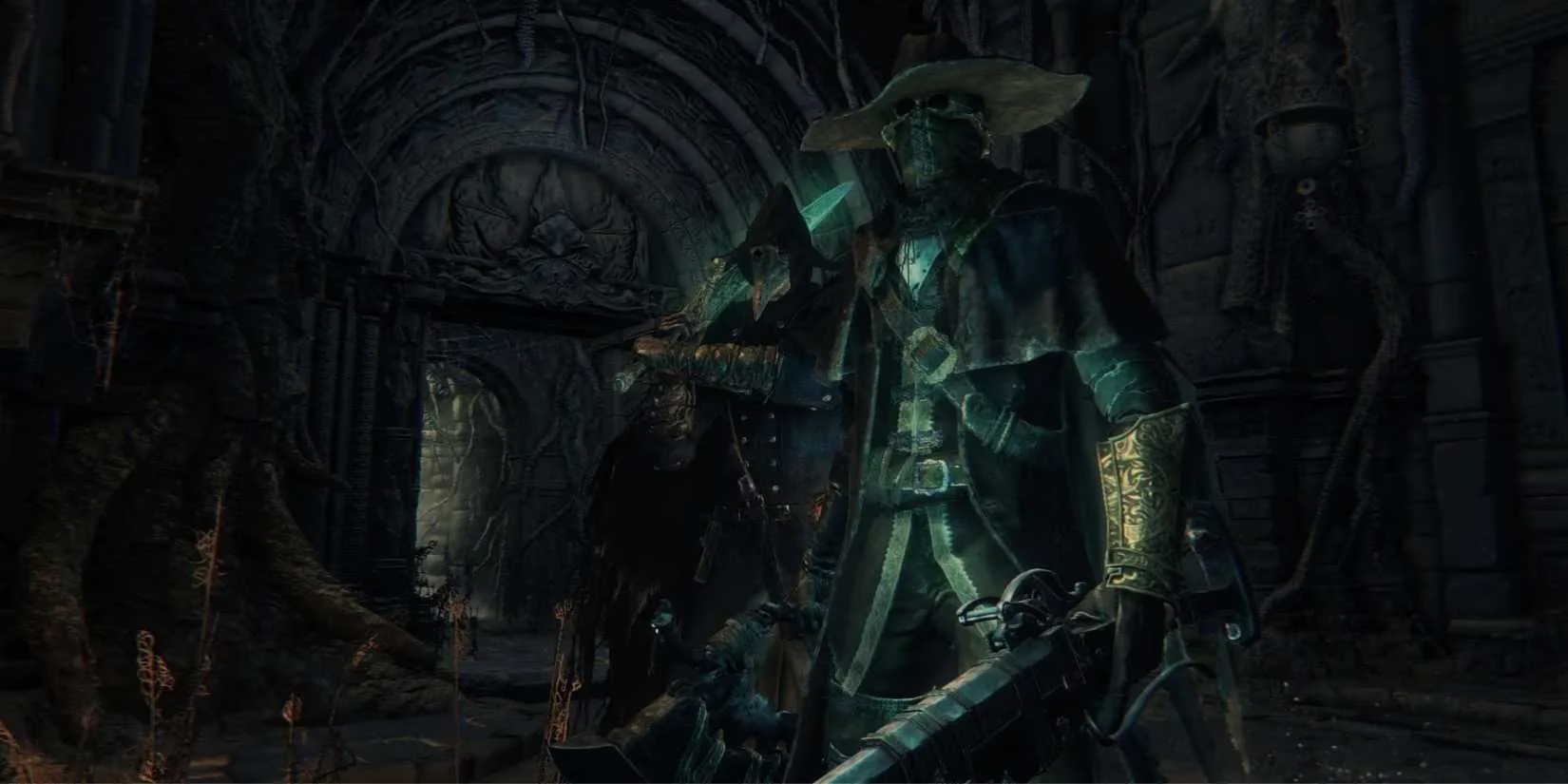
Now, in 2026, we live in a post-Elden Ring world. The Shadow of the Erdtree expansion further proved FromSoftware's mastery of open-world design and monumental boss encounters. New giants in the genre, like Black Myth: Wukong, have risen, offering their own brutally beautiful takes on the formula. Yet, the discourse among fans still frequently returns to Bloodborne. The desire for a modern remaster or a long-rumored PC port has become a perennial topic, a testament to its enduring legacy. Why does it still feel so urgent, so relevant?
I believe it's because Bloodborne is a masterpiece of focused design. Elden Ring is an incredible buffet of possibilities—a vast, sprawling epic. Bloodborne, by contrast, is a perfectly crafted, multi-course meal with a singular, intense flavor profile. There is no dilution. Its world, while interconnected and rich, is more concentrated. Its combat system is less about build variety and more about mastering a specific, thrilling style. This focus creates an unparalleled sense of cohesion. Every element—the trick weapons, the Gothic architecture, the blood vials, the haunting soundtrack—serves the same core themes of insight, madness, and violent transcendence.
So, while I eagerly await whatever Hidetaka Miyazaki and his team dream up next, and while I'll surely lose hundreds of hours to the next Elden Ring-scale phenomenon, Bloodborne holds a unique place. It is, as Miyazaki said, a direct reflection of his flavor. It's a game that didn't just challenge my skills as a player; it captivated my imagination as a fan of dark, intricate worlds. It taught me that sometimes, the most profound adventures aren't the widest, but the deepest. In the crowded pantheon of Soulslikes, Bloodborne isn't just a member; for me, it remains the pinnacle. 🩸