As a long-time fan of FromSoftware's work, I've been thinking a lot about what comes next after Elden Ring. It's not just their most successful game; it feels like a monumental evolution of the Soulsborne formula. But that success creates a fascinating dilemma. Unlike the Dark Souls trilogy, which got direct sequels, Elden Ring was crafted more as a spiritual successor—a standalone epic. Now, in 2026, the question of a sequel is more pressing than ever, and from where I'm sitting, FromSoft faces a unique set of narrative challenges that make Elden Ring 2 a much harder sell than a simple 'return to the Lands Between.'
One of the biggest hurdles is that Elden Ring simply doesn't share the same DNA that made Dark Souls sequels work. Think about it. Dark Souls 2 and 3 used massive time jumps. They took place so far in the future that the events of the previous games became ancient history, more like background lore than a direct cause-and-effect chain. This was a brilliant narrative trick—it let the sequels exist in a new, vaguely connected world without having to pick a single 'canon' ending from the player's choices.
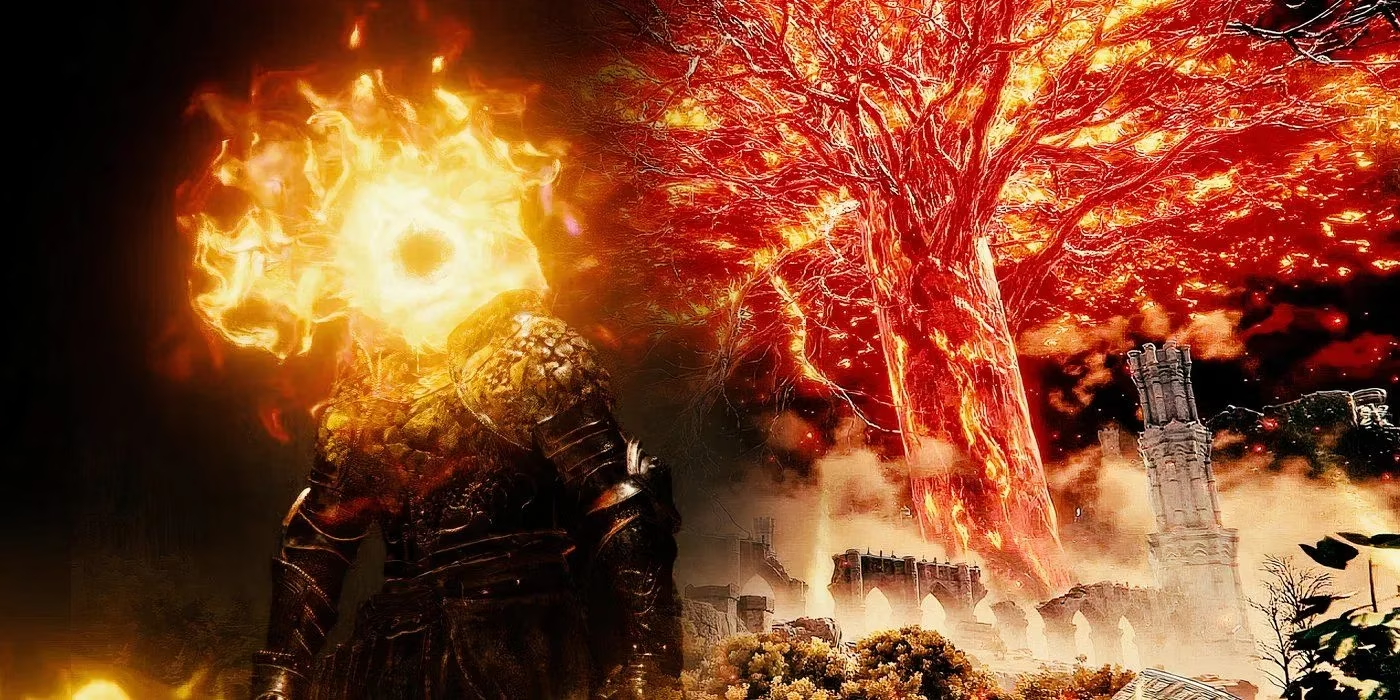
But that trick feels almost impossible to pull off with Elden Ring. A core part of the game’s magic is its deep, present-tense history, co-written with George R. R. Martin. The Shattering, the demigod wars, Marika's actions—this isn't just ancient lore; it's the active, driving force behind everything happening in the game's present. Characters like Ranni, Malenia, and Radahn aren't legends from a forgotten age; they're active, world-shaping powers with clear goals. Jumping forward a thousand years would feel jarring. It would disconnect us from the very history that makes the Lands Between so compelling. The world feels too alive, too tied to its immediate past, for a simple time skip to feel satisfying.
Okay, so if a time skip is off the table, what about a direct sequel set right after our Tarnished becomes Elden Lord? This approach has its own, even bigger problem: player choice. Dark Souls 1 had two main endings. Dark Souls 2 cleverly sidestepped picking one by setting its story so far in the future that the original choice didn't matter. Elden Ring, however, gives us six wildly different endings. We're not just talking about a slightly different cutscene.
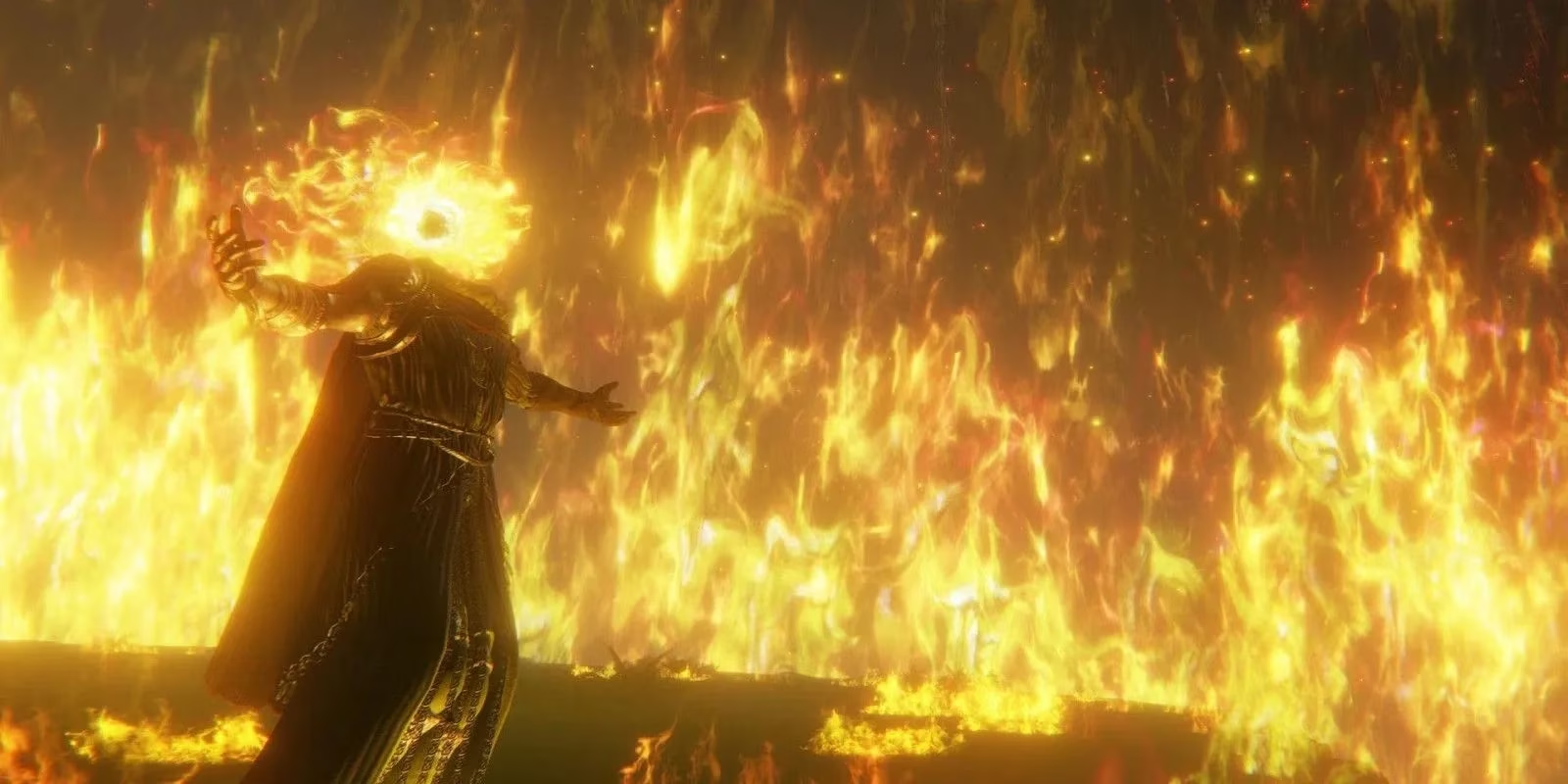
Compare the bleak, world-scorching finality of the Lord of Frenzied Flame with the mysterious, hopeful departure of the Age of Stars. The Age of Fracture, the Duskborn ending—each one reshapes the fundamental rules of the world in a distinct way. A sequel can't possibly account for all of them. FromSoftware would be forced to pick a single 'canon' ending, which inherently invalidates the choices millions of players made. It’s a no-win situation: ignore player agency or create a narrative that feels forced. This is the central paradox of an Elden Ring sequel.
So, is a sequel doomed? Not necessarily. FromSoftware is one of the most creatively ambitious studios out there, and I believe they could find a way. They have a few potential paths, though each comes with trade-offs.
One idea is to take a page from games like Fallout. Set the sequel not in the Lands Between, but in a completely new region mentioned in the lore. The Badlands? The Land of Reeds? This would bypass the need to canonize an ending entirely. The events of the first game could become distant rumors or fragmented history, allowing a new story to bloom in fresh soil. It would be a spiritual successor within the same universe.
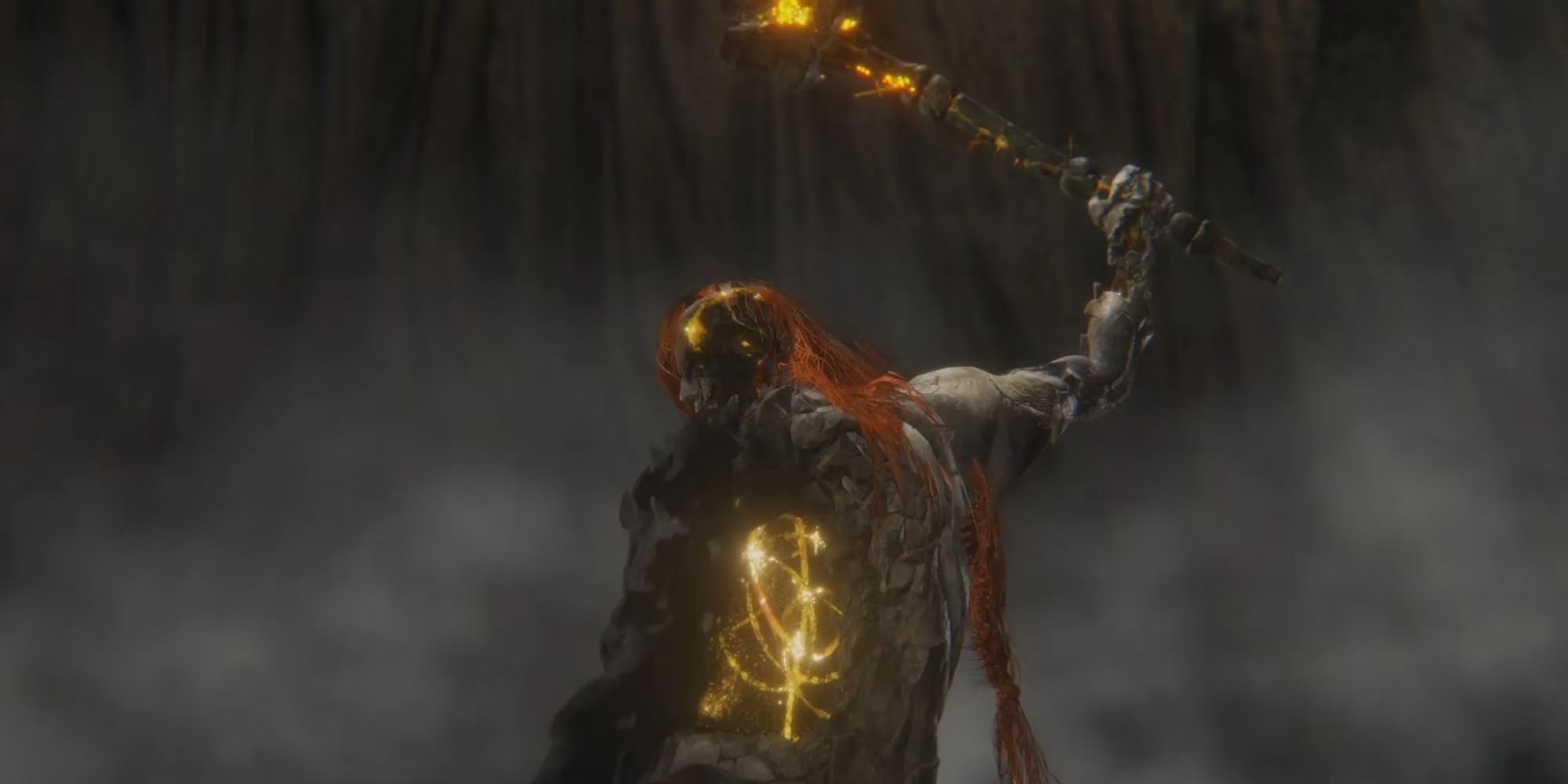
If the sequel must return to the Lands Between, then the studio might have to bite the bullet and pick an ending. The Age of Fracture, being the most 'default' ending, leaves the world in a messy, unstable state—perfect for new conflicts to arise. The Lord of Frenzied Flame ending is practically a cliffhanger, begging for a 'clean-up' story. Or they could go with the most popular or narratively rich ending, like the Age of Stars, and explore its profound consequences. It would disappoint some players, but it might be the only way to tell a coherent, direct follow-up story.
And let's not completely rule out a time skip. It's true that Elden Ring's present feels more immediate than Dark Souls 1's did. But FromSoft and George R. R. Martin could collaborate again to envision a distant future for this world. What does the Age of Stars look like after 500 years? What new order rises from the ashes of the Frenzied Flame? They could introduce new cyclical conflicts or cosmic threats that make the past relevant in a new way. It’s a challenge, but not an impossibility.
Of course, the easiest path for FromSoftware might be to do what they've always done best: move on. Armored Core 6 and Sekiro showed they're not a one-trick pony. Their next project in 2026 could be another spiritual successor with a brand-new setting, leaving Elden Ring as a perfect, self-contained masterpiece. But given its record-breaking success and the depth of its world, it's hard to imagine they aren't at least plotting something. The very aspects that make Elden Ring so special—its rich, present-tense lore and impactful player choices—are the same things that make a sequel so fiendishly difficult to design. As a fan, I'm equal parts anxious and excited to see which path they choose.