Across the fractured and sublime expanse of the Lands Between, where the echoes of a shattered order linger amidst golden light and despair, a Tarnished's journey is defined by steel, sorcery, and survival. The armory of Elden Ring is a vast and terrifying tapestry, woven with over four hundred instruments of war that range from humble daggers to implements capable of slaying divinities. Yet, for the keen-eyed wanderer, a deeper story unfolds within the grooves and runes of certain arms. These are not merely tools of conquest; they are whispers, subtle and overt, to the myriad worlds of fantasy, science fiction, and legend that dwell in the collective imagination. They are Easter eggs etched in iron, loving homages that transform a weapon's heft into a nod of recognition, a shared secret between creator and connoisseur.
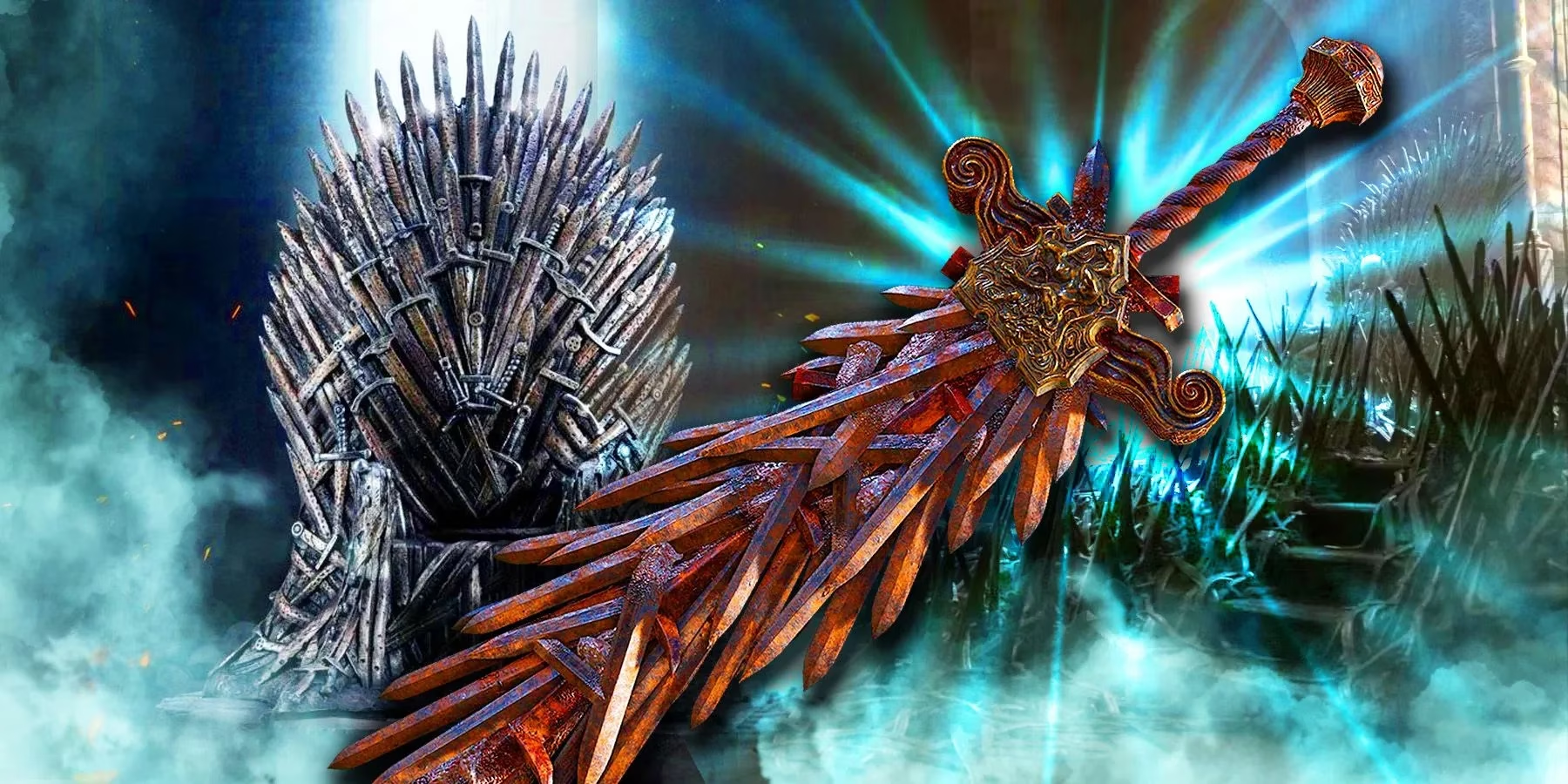
Among these referential relics, none are more direct in their lineage than those born from the mind of George R. R. Martin, whose mythic scaffolding underpins the game's world. The Sword of Night and Flame, a storied blade resting in Caria Manor, sings a dual song. Its name elegantly mirrors the union of Queen Rennala's lunar sorceries and Radagon's fiery devotion, a tragic romance frozen in lore. Yet, its very title is a clear and poetic echo of Martin's own magnum opus, A Song of Ice and Fire, a series where the chilling grasp of winter and the purifying, destructive power of flame define an epoch. This is not the only tribute to the master of Westeros. The Grafted Blade Greatsword stands as a far more visceral monument. It is the Iron Throne given lethal, mobile form—a colossal heap of swords, hilts, and pommels brutally welded into a single, monstrous instrument. Its very existence, forged from the weapons of the fallen by a lord determined to never cease fighting, mirrors Aegon the Conqueror's ambition to forge a kingdom from the shattered realms he subdued.
From the grim, gothic streets of Yharnam to the ashen highlands of the Lands Between, the legacy of FromSoftware's own creations bleeds through. Inquisitor Ghiza's terrifying implement, Ghiza's Wheel, is a direct and brutal descendant of a Bloodborne fan favorite.
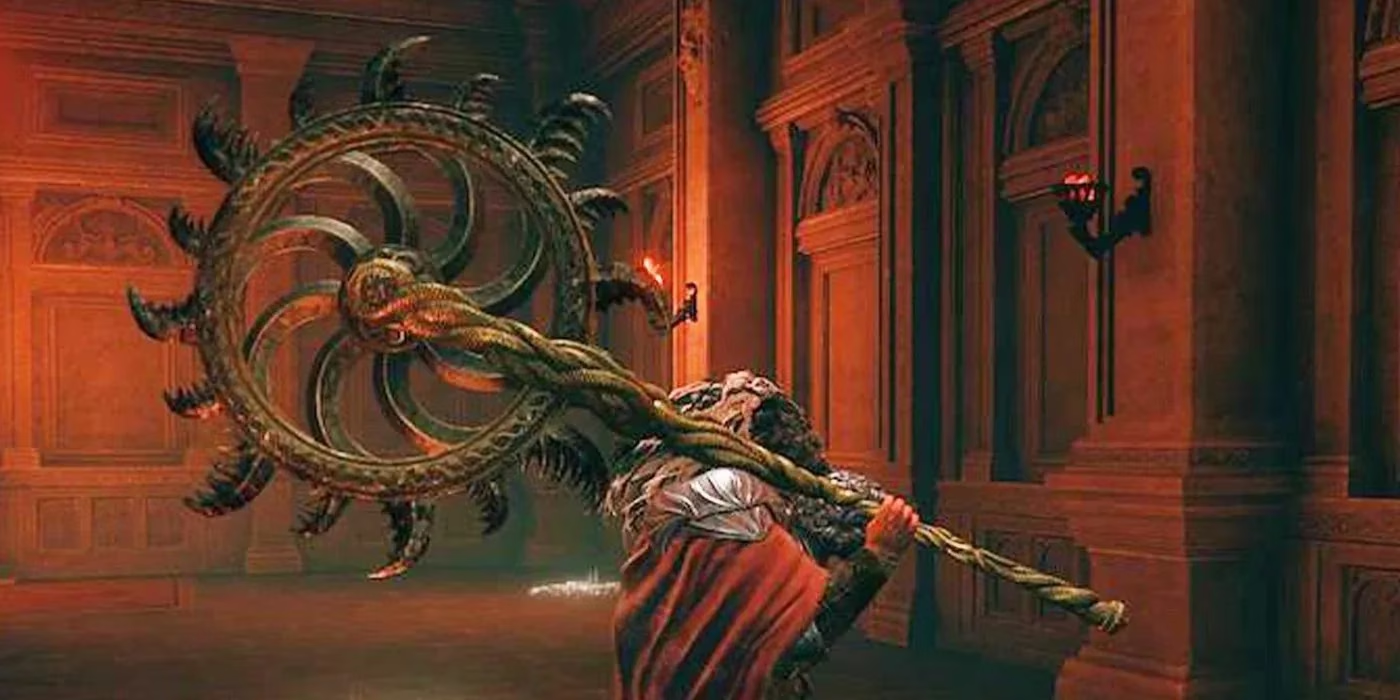
Its spinning, serrated blade evokes immediate memories of the Whirligig Saw, affectionately dubbed the 'pizza cutter,' a tool of both construction and carnage in the hands of a Hunter. In Elden Ring, its purpose is specified as one of torture, yet its violent rotation remains a familiar, comforting horror to veterans. Similarly, the Godslayer's Greatsword, with its distinctive helix-shaped blade wreathed in black flame, finds a clear predecessor in the Onyx Blade wielded by Sir Vilhelm in the Painted World of Ariandel from Dark Souls 3. The similarity extends beyond mere aesthetics to the very animation of its incendiary buff, suggesting not just inspiration but an evolution. And then there is the perennial pilgrim, the Dark Moon Greatsword. By any name—Moonlight Greatsword, Holy Moonlight Sword—its azure glow and lunar power are a constant, a signature carried from the depths of King's Field through every Soulsborne iteration. In Elden Ring, it is the coveted reward for a long and poignant quest, a piece of gaming history given new life and devastating power.
The references reach far beyond FromSoftware's own catalog, touching upon iconic pop culture landmarks. Eleonora's Poleblade, with its twin arcs of bloodflame incarnadine, is an unmistakable visual nod to the double-bladed lightsaber of Star Wars' Darth Maul, transforming a weapon of cosmic fantasy into one of hemomancy and frenzy. In a more classical vein, the Stone-Sheathed Sword offers a clever twist on the Arthurian legend. Here, the stone is not a fixed anvil but the sword's own sheath, a portable prison for a blade of light or shadow that must be earned, a myth made manageable for a wandering champion.
Sometimes, the homage is in name and theme alone. The grotesque, corpse-adorning Blasphemous Blade, a favorite for its fearsome power and life-stealing properties, shares its title with the 2019 game Blasphemous from The Game Kitchen. The thorn-wrapped sword Mea Culpa from that title bears a spiritual and visual kinship to Rykard's profane armament, a sign of mutual respect between creators of challenging, atmospheric worlds. Even the humble Icon Shield, with its distinctive vertically-grooved wooden plate, serves as a subtle callback, echoing the designs of the Adjudicator's Shield from Demon's Souls and the Ancient Dragon Greatshield from Dark Souls 3. It is a piece of defensive nostalgia.
Finally, the influence of Kentaro Miura's seminal manga Berserk continues to be felt, as it has in nearly every FromSoftware title. The simply named Greatsword is anything but basic. Its description as an "unwieldy, broad, thick, and dull" hunk of iron is a direct quotation referencing the massive slab of steel wielded by the protagonist Guts. It is a weapon that defies practicality in favor of overwhelming, brutal force, a perfect translation of the manga's ethos into the game's mechanics. These weapons, from the subtly referential to the blatantly homage, enrich the world of Elden Ring. They are threads connecting the Lands Between to a vast tapestry of inspirational works, reminding the Tarnished that every swing of the blade can carry the weight of another story, another world, another dream.
| Weapon | Primary Reference | Nature of Homage |
|---|---|---|
| Sword of Night & Flame | A Song of Ice and Fire (GRR Martin) | Title & thematic duality |
| Grafted Blade Greatsword | Game of Thrones (Iron Throne) | Visual design & lore concept |
| Ghiza's Wheel | Bloodborne (Whirligig Saw) | Visual & functional design |
| Eleonora's Poleblade | Star Wars (Darth Maul) | Visual design (twin red blades) |
| Stone-Sheathed Sword | Arthurian Legend | Conceptual twist on 'sword in the stone' |
| Greatsword | Berserk (Guts' sword) | Visual design & item description |
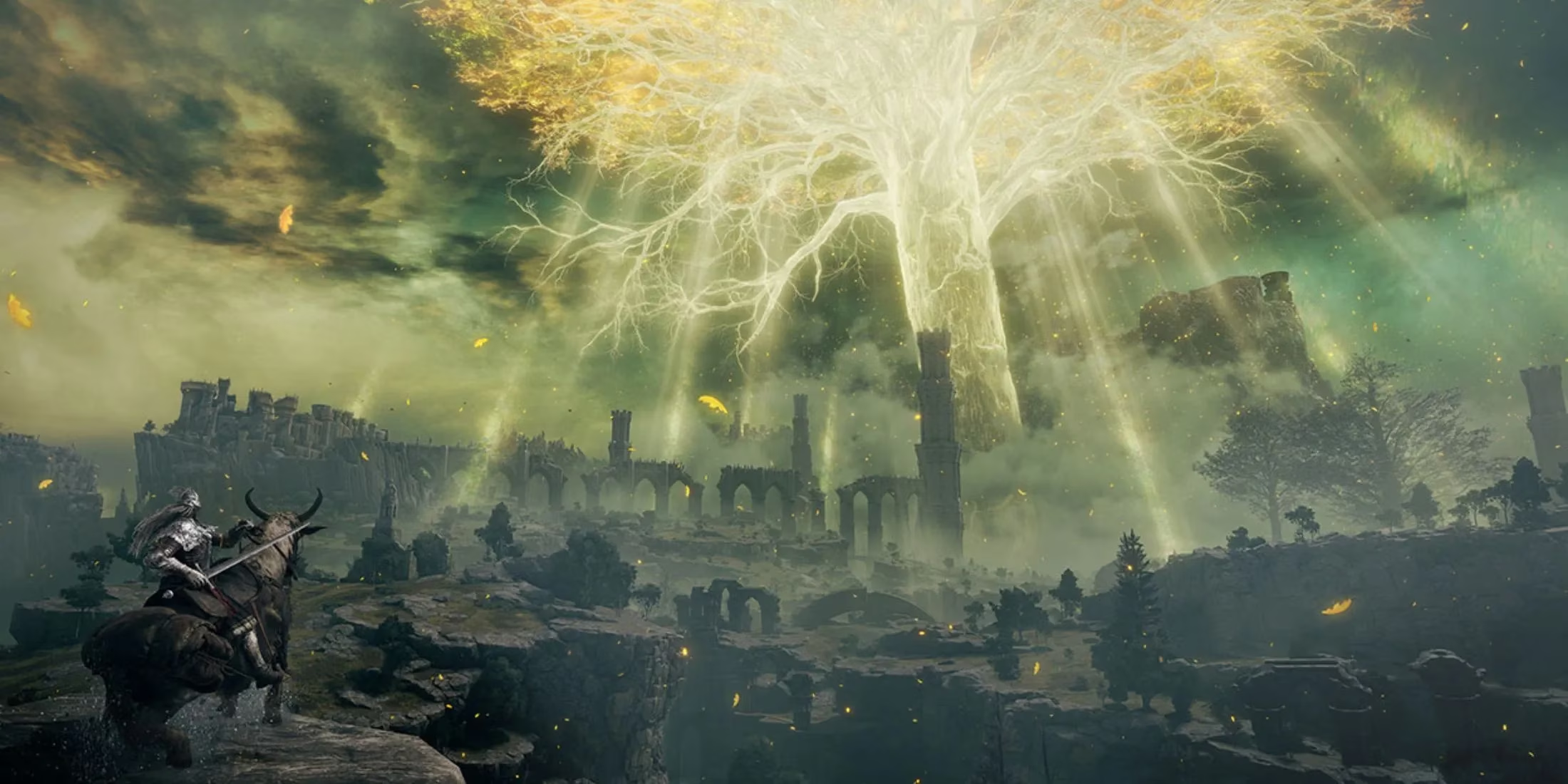
These artifacts stand as testaments: in a realm obsessed with a broken ring and a withered tree, the stories we carry—from pages, screens, and shared myths—forge the truest weapons of all.