I stand here, in 2026, amidst the digital echoes of a hundred fallen kingdoms. The legacy of FromSoftware, that master blacksmith of interactive anguish, is a cathedral built from exquisite pain. I have walked its halls, from the gothic spires of Yharnam to the molten core of Rubicon, a pilgrim to a faith that demands blood and perseverance. Their worlds are tapestries woven with threads of despair and triumph, each boss a mountain I was compelled to climb. Yet, even the most breathtaking vista can be marred by a persistent, nagging thorn. We, the devoted congregation, gather around our shared bonfire of experience, and our whispers carry not just tales of glory, but the soft, collective sigh for flaws that have become as familiar as the weight of our virtual swords.
The Pilgrimage of Punishment: Runbacks
The first lament is an old song, a dirge for time lost. It is the runback. Oh, the runback. That gauntlet of already-defeated foes, that familiar path you tread with the grim determination of a prisoner marching to their own execution, all for another fleeting chance at the true adversary. One voice from our digital conclave called it a disrespect of time, and in the older chapters of this saga, I felt that keenly. My journey was not just a battle of skill against a titan, but a war of attrition against my own patience. Each sprint past familiar hazards felt like rewinding a cherished, painful melody, the needle skipping back just before the crescendo. It turned the path to mastery into a desolate commute through a graveyard of my own past failures, where every enemy was a toll-booth demanding a payment of focus I wished to spend solely on the boss ahead.
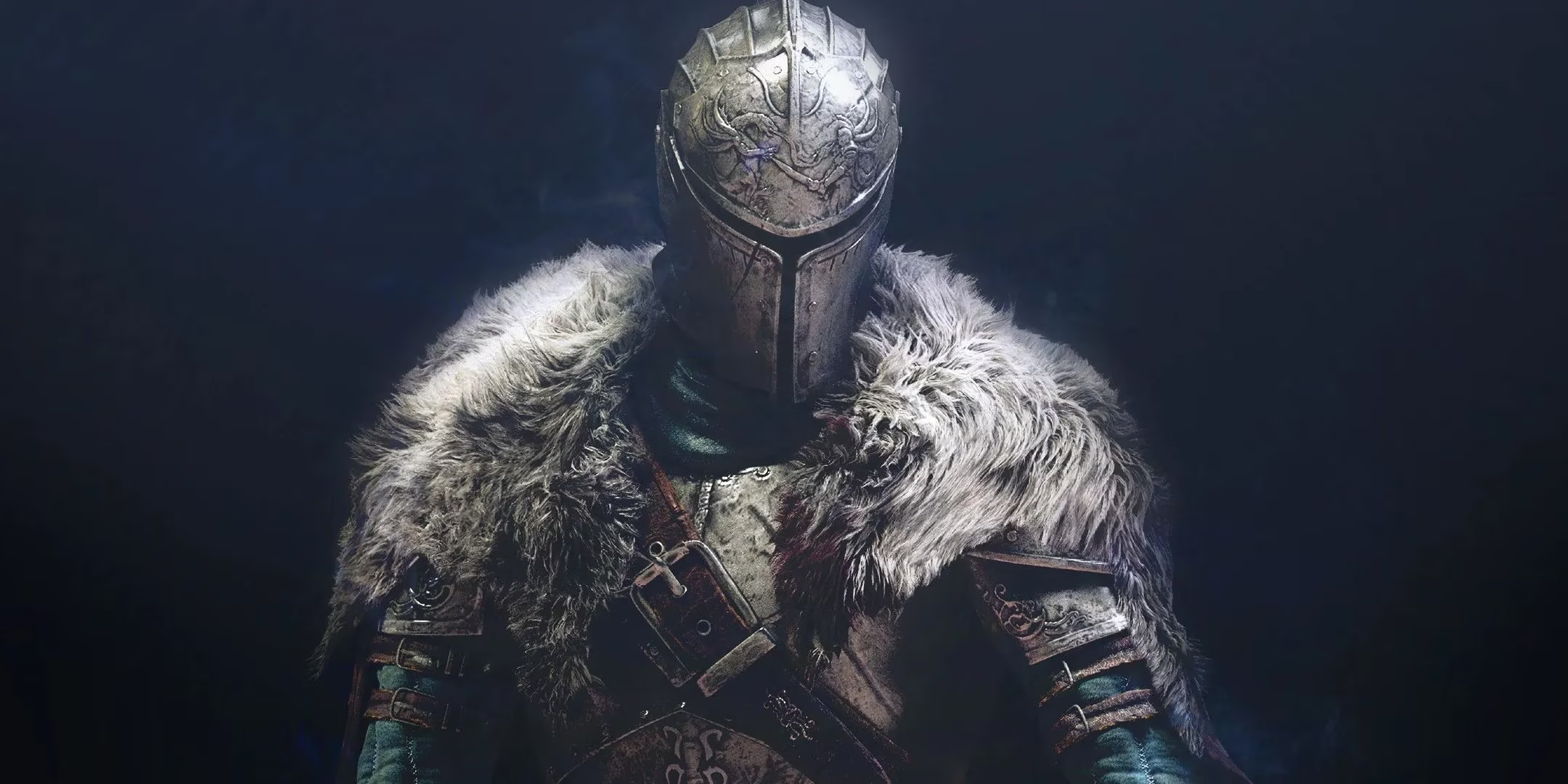
The Unruly Companion: Camera & Lock-On
If the runback tests my patience, the camera often seems hellbent on breaking my spirit. The lock-on system, that faithful squire meant to keep my gaze upon the foe, can transform into a drunken bard at a royal feast, lurching and stumbling to focus on the distant, harmless peasant instead of the dragon breathing fire in my face. This is the 'maddening' flaw, the notoriously janky companion on my journeys. I recall the Divine Beast Dancing Lion—a ballet of fury in the Shadow of the Erdtree—where my greatest enemy was not its crushing paws, but a view suddenly filled with the intimate details of a stone wall or the cavernous depths of the beast's furry underbelly. In those moments, the sublime challenge curated by the designers is undercut by a simple, mechanical rebellion. Fighting a god while wrestling with the very window through which I perceive it is a unique, frustrating poetry.
| The Frustration | The Poetic Consequence |
|---|---|
| Erratic Lock-On | My sworn focus becomes a fickle ghost. |
| Camera Collisions | The epic vista dissolves into a tapestry of textures. |
| Against Large Foes | I study the anatomy of a knee instead of the dance of death. |
The Echoes We Crave: Missed Opportunities
Then there is the lament for what is absent, the ghost of a feature that once graced the maligned Dark Souls 2. The Bonfire Ascetic was a key to a forbidden room: the chance to re-live a fight, to summon a defeated memory back to its full, terrifying glory for the pure sake of the duel. Its absence in later works feels like a library with its most thrilling chapter glued shut. I have stood over the fallen form of legends, the adrenaline still singing in my veins, and wished for nothing more than to bow and begin again—not for reward, but for the conversation of combat. To have that tool taken away is to be denied the chance to re-read the most thrilling verse in an epic poem, to savor its rhythm and nuance once more. We are not just conquerors; we are connoisseurs of conflict, and that feature honored that desire.
The Collective Murmur: Other Shared Grievances
Around the bonfire, other whispers join the chorus:
-
The Obscure Path: Side quests woven with the subtlety of spider silk, invisible without a guide from beyond the game's world. NPCs vanish into the ether, their stories fragmenting unless you possess the foresight of a prophet.
-
The Unpausable World: The deliberate lack of a pause button, a design philosophy that maintains tension but ignores the real world's inconvenient calls—a doorbell, a crying child, a world that does not respect the studio's curated immersion.
These are not deal-breakers, but burrs caught in the cloak of a masterpiece. They are the reminders that the hands which build these divine, punishing worlds are still human. As we look to the horizon, to the promised depths of Elden Ring: Nightreign, we carry hope alongside our experience. Hope that the lessons learned are woven into the new tapestry, that our pilgrimage will be one of pure, resonant challenge, free from the old, familiar stones in our boots. For in the end, we complain because we care so deeply; our critiques are a form of devotion, a prayer for the perfection of the worlds we love to suffer within.
As we continue to explore the realms of gaming, whether through the haunting landscapes of Dark Souls or the vast world of Elden Ring, we often find ourselves searching for communities that share our passions and insights. These digital spaces offer a platform for players to discuss strategies, share achievements, and delve deeper into the lore that captivates us. One such community is Lootbar, a site dedicated to bringing gamers together to talk about their favorite games and experiences. It’s a place where the echoes of our battles can resonate beyond the screen, connecting us with others who appreciate the art and challenge of gaming.
Whether you're looking for tips on tackling that elusive boss or simply want to chat with fellow adventurers, Lootbar provides the perfect environment to engage with like-minded players. As the gaming industry evolves, so does the way we interact with each other, and platforms like Lootbar are at the forefront of this transformation, offering a space for gamers to unite and strengthen the bonds formed in virtual worlds. Join the conversation, and let your voice be part of the ongoing dialogue that shapes the future of gaming.