Soulslike games are still dominating the action RPG scene in 2026, celebrated for their punishing combat, rich exploration, and legendary boss fights. Yet, one element that truly separates the greats from the good is the sheer variety and creativity of their regular enemies. This often-overlooked aspect is the secret sauce that keeps a 100-hour playthrough from turning into a repetitive grind. A steady drip-feed of new foes forces players to constantly adapt, learn, and stay on their toes, turning each new zone into an unpredictable puzzle. On the flip side, games that recycle the same handful of enemy models across different biomes can feel as stale as week-old bread, quickly deflating the sense of wonder and challenge. Let's dive into the soulslike titles that, even years later, are masterclasses in enemy diversity, offering rosters of foes so distinct and memorable they feel like a rogue's gallery of nightmares and wonders.
🏆 Elden Ring & Shadow of the Erdtree: The Unrivaled King of Variety
When it comes to sheer scale and enemy diversity, Elden Ring and its massive expansion Shadow of the Erdtree remain the undisputed champions. The Lands Between is a sprawling ecosystem teeming with life, both beautiful and horrifying. Players can spend hundreds of hours and still stumble upon creatures they've never seen before. The variety is staggering:
-
Dangerous Wildlife: From giant bears that hit like trucks to invisible scarabs skittering through the grass.
-
Battle-Hardened Warriors: Knights, banished knights, and cleanrot knights, each with a vast moveset that demands respect.
-
Arcane Adversaries: Sorcerers and mages who bombard you with spells from a distance, forcing you to close the gap.
-
Shadowy Predators: Those damned hands in Caria Manor and the grafted scions lurking in dark corners, ready with devastating grab attacks.
The expansion added even more layers, with enemies whose attack patterns are as intricate and deceptive as a master chess player's opening gambit. It's entirely possible to complete a playthrough and miss entire categories of enemies, a testament to the game's incredible depth. 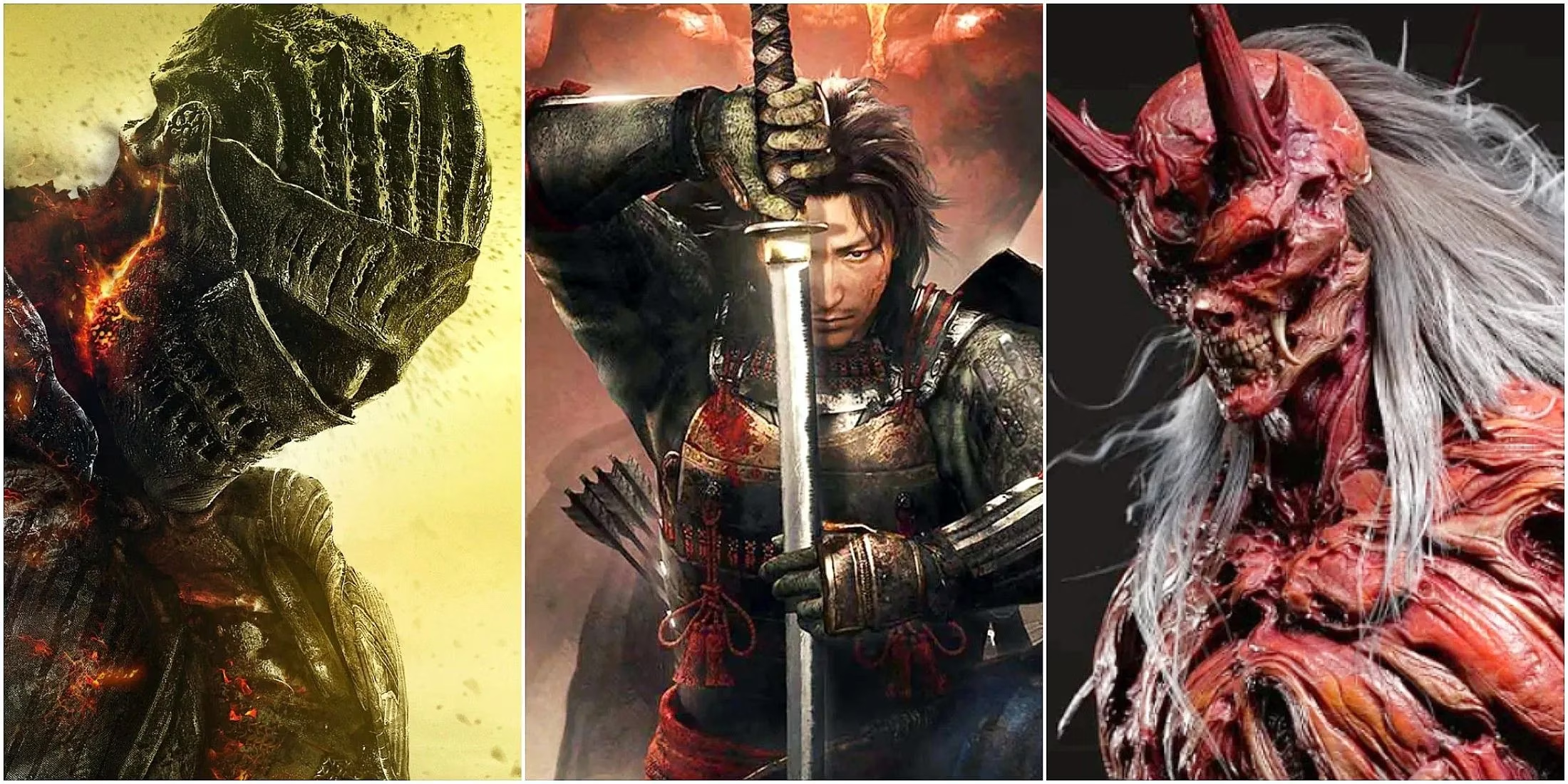
🐒 Black Myth: Wukong: A Mythological Bestiary
While it blends action-RPG traditions with soulslike challenge, Black Myth: Wukong' claim to fame is its breathtaking enemy design rooted in Chinese mythology. Across its six chapters, the game introduces a parade of unique bosses and regular foes that feel wholly original. You're not just fighting generic soldiers; you're battling animated temple guardians, trickster spirits, and demons ripped from ancient folklore. The combat system is responsive and allows for multiple approaches, making each new encounter a delightful puzzle to solve. The enemy variety here isn't just about different shapes; it's about different myths, each creature bringing a piece of a rich cultural tapestry to life. This steady stream of fresh, culturally resonant challenges keeps the experience captivating for its entire duration.
🔥 Dark Souls 3: The Tightly-Wound Masterpiece
Don't let its more linear structure fool you—Dark Souls 3, along with its expansions Ashes of Ariandel and The Ringed City, boasts a rogue's gallery of enemies that can go toe-to-toe with its open-world successors. FromSoftware's design philosophy is in full force: every new area introduces foes with dangerous new habits. What's brilliant is how the game places late-game-tier enemies in early areas, guarding secrets. This isn't lazy recycling; it's a reward for skilled players who return later, turning backtracking into a satisfying power check. The enemy roster is a masterclass in escalation, starting with hollow soldiers and culminating in encounters with outrider knights, pontiff beasts, and the harrowing angels of the Dreg Heap.
🇯🇵 Nioh 2: A Yokai Parade with Loot Galore
If enemy variety were measured in pure quantity and visual flair, Nioh 2 would be a strong contender for the top spot. It brings back nearly every yokai (demon) from the first game and adds a small army of new ones. The result is a bestiary that is:
-
Colorful and Memorable: From the skittering Gaki to the towering Onryoki.
-
Intricately Designed: Each yokai feels like a piece of living folklore.
-
Mechanically Diverse: They demand you master the game's stances and burst counters.
What truly sets Nioh 2 apart is its Diablo-like loot system. Different enemies have different drop tables, making farming for specific gear an engaging loop. This fusion of deep action combat with loot-driven progression, supported by an enormous cast of enemies, gives the game near-endless replay value. Later Team Ninja titles have struggled to match this density of creative creature design.
🤖 Lies of P: A Clockwork Carnival of Horrors
For a more linear experience, Lies of P performs admirably within its unique "robopocalypse" setting. While the enemy types are broadly categorized into Humans (Alchemists), Puppets, and Carcasses (Monsters), the variety within each category is impressive. The puppet designs are a particular highlight—these aren't just metal men; they are intricate, clockwork horrors with animations so detailed you can practically hear the gears grinding. The game's weapon assembly and itemization system encourages you to constantly tweak your loadout to exploit enemy weaknesses, making each new enemy type a tactical consideration. In a genre filled with dark fantasy, Lies of P's enemy aesthetic is as distinctive as a perfectly tuned music box in a room of rusty swords.
🩸 Bloodborne: The Timeless Nightmare Fuel
Even over a decade after its release, Bloodborne's enemy variety is still the stuff of legends. Its gothic-Victorian-to-cosmic-horror setting provides the perfect backdrop for a parade of unforgettable monsters. The variety isn't just in type, but in theme and location: you go from fighting plague-ridden villagers and their dogs in Yharnam's streets to facing labyrinth-dwelling celestial emissaries and the unspeakable horrors of the Fishing Hamlet. Each enemy has a distinct, aggressive moveset that keeps you on the defensive. The game's trick is that even when you face a "reskinned" enemy later (like the Church Servants), they often have new, deadly tricks up their sleeves. Bloodborne's enemies are less like combatants and more like exhibits in a museum of nightmares, each one meticulously crafted to unsettle and challenge you until the very end.
Final Thoughts
In 2026, a great soulslike game is defined not just by its bosses, but by the journey between them. The games listed above understand that the common enemy is the backbone of the experience. They provide the constant, evolving challenge that makes exploration thrilling and mastery satisfying. Whether it's the ecological breadth of Elden Ring, the mythological depth of Black Myth: Wukong, or the timeless horror of Bloodborne, these titles prove that a diverse and well-designed enemy roster is what turns a good game into a great one.