Hey everyone! As a hardcore RPG gamer, I've spent countless hours getting lost in worlds that feel more like intricate puzzles than simple backdrops. You know the type—the ones where every shadow feels like it's hiding a secret, and the story isn't handed to you but whispered in fragments. In 2026, the allure of these enigmatic virtual spaces is stronger than ever. So, let's dive into five of the most mystifying RPG worlds that master the art of keeping players guessing. Forget hand-holding; these games thrive on your curiosity.
1. TUNIC: A World Written in Secrets
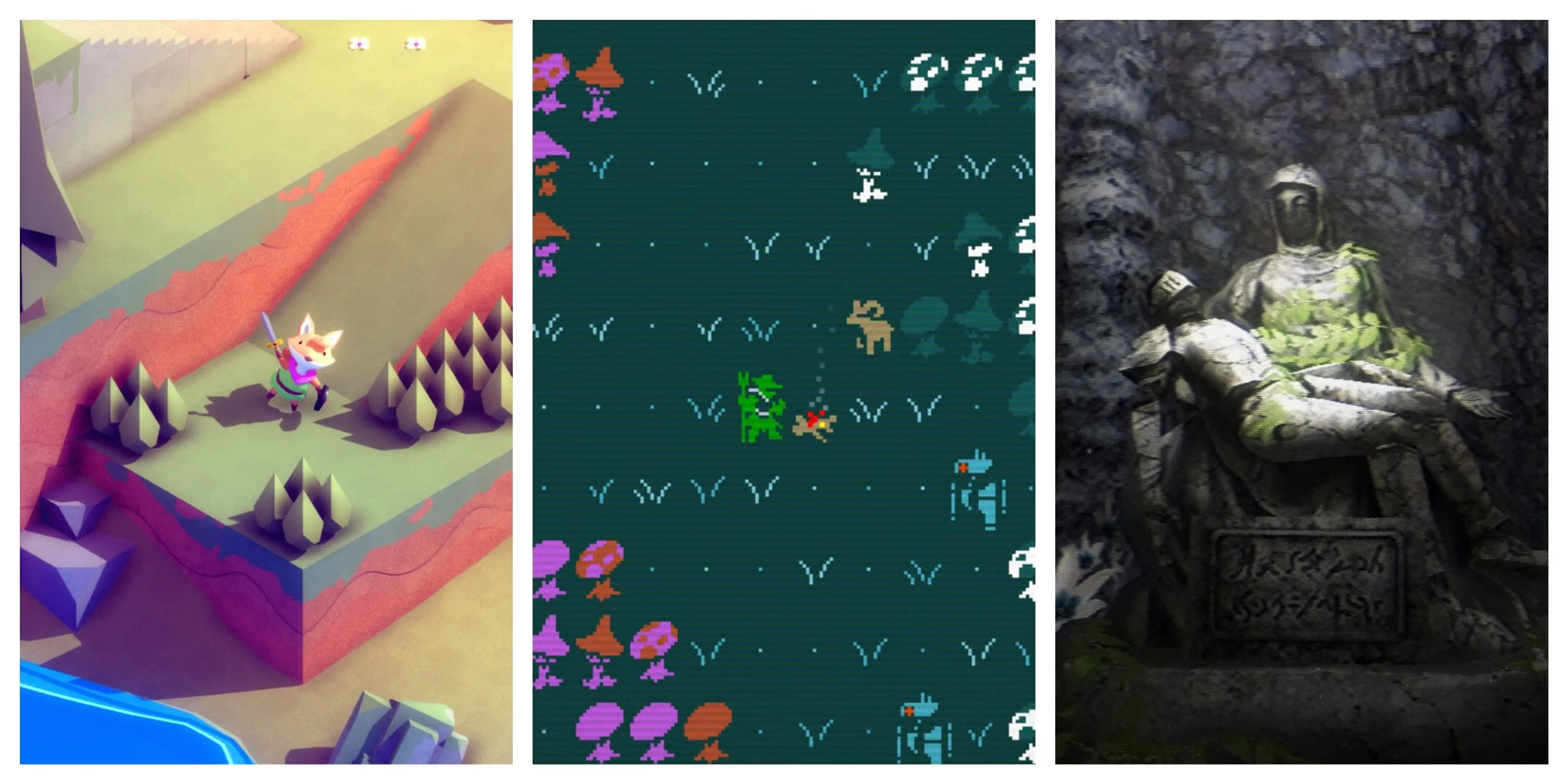
Let's start with TUNIC. This game, man, it's a love letter to mystery itself. Right from the get-go, you're thrown into a vibrant, isometric world with zero explanation. The core of its enigmatic atmosphere? A literal in-game instruction manual where the pages are scattered across the landscape, written in a completely undecipherable script. 😵 Collecting these pages isn't just a side activity; it's the primary way you learn about the world, its lore, and even core gameplay mechanics. It's like being an archaeologist in your own adventure!
-
Gameplay Vibe: It blends that classic Zelda-style lock-and-key exploration with Dark Souls-inspired combat (think dodges, parries, and tough-as-nails bosses).
-
The Mystery Engine: The entire experience is built on deprivation of information. You piece together the story and rules yourself, making every discovery feel incredibly personal and rewarding.
-
Why It's Special: While the action is tight and the boss fights are memorable, TUNIC's greatest strength is how its labyrinthine design and cryptic clues create a constant, delightful sense of bewilderment.
2. Elden Ring: Mystery on a Monumental Scale
If TUNIC is a condensed puzzle box, Elden Ring is a sprawling, continent-sized enigma. FromSoftware took their signature cryptic storytelling and blew it up to an open-world scale, and the result is breathtaking. The mystery here hinges on pure, unguided exploration. You're dumped into the Lands Between with almost no context and set free.
-
The Breadcrumb Trail: The world is packed with tucked-away caverns, forgotten ruins, and massive legacy dungeons. The game doesn't use map markers; it uses visual storytelling—a strange structure on the horizon, a hidden path behind a waterfall—to pull you forward with curious breadcrumbs.
-
Key Difference from Dark Souls: While it shares DNA with its predecessors, Elden Ring's pure open-world design means you're not as frequently trapped or lost in claustrophobic corridors. The mystery comes from the sheer density of secrets in a vast landscape, not just from getting turned around (though that still happens in those epic dungeons!).
-
The Payoff: That feeling of riding into a dense forest or descending into a sprawling underground city completely unprepared is unmatched. The sense of discovery is constant and massive.
3. Lunacid: A Nostalgic Dive into First-Person Obscurity
Lunacid is a fantastic throwback to a specific niche: the first-person dungeon crawlers FromSoftware made before Dark Souls, like King's Field and Shadow Tower. This game is a masterclass in atmospheric, gloomy mystery. You explore labyrinthine dungeons from a first-person perspective, where every corridor is shrouded in fog and every monster encounter is tense.
-
Vibe Check: It's a horror-tinged ARPG drenched in a somber, melancholic atmosphere. The exploration is thoughtful and deliberate; you need to pay attention to your surroundings to navigate.
-
Characters & Quirks: Just like in Dark Souls, you'll meet strange, quirky characters who offer cryptic dialogue and brief respites from the oppressive gloom. They add layers to the world's mystery.
-
The Core Appeal: The mystery isn't just in the lore; it's in the labyrinthine level design itself. Getting lost in its multi-layered, foggy dungeons is the whole point, creating a uniquely claustrophobic and mysterious adventure.
4. Caves of Qud: A Procedural Mystery of Ancient Futures
Now for something radically different: Caves of Qud. This is a roguelike RPG set in a retro-futuristic, sci-fi fantasy world that's utterly bizarre and endlessly mysterious. Think ancient, malfunctioning cybernetics, mutated creatures, and societies built around pre-apocalyptic artifacts.
-
World Diversity: From the starting town of Joppa with its friendly moisture farmers to the colossal Six Day Stilt and the terrifying, rusted caves of Golgotha, every location feels unique and steeped in unexplained history.
-
The Magic Formula: The game brilliantly mixes hand-crafted content (key villages, major dungeons) with procedurally generated wilderness and caves. This means the hand-crafted spots might become familiar, but the vast procedural world never loses its mysterious nature across hundreds of hours and playthroughs.
-
The Mystery Engine: The setting itself—a blend of primitive and hyper-advanced tech, wild mutations, and lost history—creates a fundamental, underlying sense of wonder and confusion. You're always uncovering fragments of a world that doesn't play by normal rules.
5. Dark Souls: The Blueprint for Atmospheric Enigma
We have to end with the one that arguably defined the modern standard: Dark Souls. Yes, it's famous for its brutal difficulty, but that's only part of the story. Its true genius lies in crafting the kingdom of Lordran, a world that feels like a decaying, interconnected puzzle.
-
Thrown in the Deep End: The game begins with minimal preamble and almost zero explanation. You're given vague narrative threads and set loose in a non-linear, labyrinthine world.
-
Pillars of Mystery:
-
Vague Narrative: Lore is in item descriptions, environmental details, and cryptic NPC dialogue.
-
Mysterious Characters: Everyone you meet has their own obscure agenda and tragic backstory.
-
Interconnected Design: The world loops back on itself in mind-bending ways, making geography itself a mystery to solve.
-
-
The Core Experience: Getting genuinely, wonderfully lost is a feature, not a bug. Stumbling down a twisting path and emerging somewhere you recognize hours later is a magical feeling. It creates a consistently mysterious atmosphere that has cemented it as a timeless classic.
Final Thoughts
So, what do all these worlds have in common? They respect your intelligence. They don't explain; they imply. They use environmental storytelling, cryptic lore, and deliberate design—whether it's the tight labyrinths of Dark Souls or the boundless wilds of Elden Ring—to build an atmosphere of profound mystery. In 2026, where many games are eager to show you everything, these titles remind us that the greatest adventures often begin with a question, not an answer. What's your favorite mysterious game world? Let me know in the comments! 🔍✨