For over a decade, the dimly lit corridors and solemn silences of FromSoftware's hub areas have served as more than mere pit stops; they have been the beating heart within the ribcage of a hostile world. These sanctuaries, from the desolate majesty of Firelink Shrine to the melancholic seaside calm of Majula, offered a profound counterpoint to the relentless adversity beyond their borders. Is it any wonder that players would linger, not just to upgrade a sword or allot a stat point, but simply to exist for a moment in a place that felt, against all odds, like home? In an age where multiplayer lobbies buzz with transient chatter, these spaces whispered of permanence and purpose. Now, as whispers on the wind suggest a potential return to a more focused design philosophy, the question hangs in the air, thick with anticipation: could the next great sanctuary be just over the horizon?
The Central Hearth: A Foundation of Comfort and Connection
Since the Nexus of Demon's Souls first gathered wayward souls, hub areas have been central to the emotional architecture of FromSoftware's worlds. They are meticulously crafted environments that provide a crucial balance to the game's legendary difficulty. Here, players are granted a sacred pause—a moment to breathe, to regroup, and to engage with the strange and tragic NPCs who offer fragments of lore and cryptic guidance. These spaces serve a dual, sacred purpose: they are narrative focal points where the world's story quietly unfolds, and they are immutable gameplay safe zones, sanctuaries where the ever-present threat of death is held at bay.
As players return time and again, a deep, almost unspoken emotional connection to the hub and its inhabitants takes root. Each return is a milestone, creating a tangible sense of progression and belonging. The NPCs who gradually populate these spaces are not mere vendors or quest-givers; they are refugees of the same broken world, each with a backstory that peels back new, often tragic layers of the overarching lore. Firelink Shrine, for instance, became a tapestry of interwoven tales—from the crestfallen warrior to the mysterious cleric—each interaction revealing more of the world's decaying history and moral ambiguity. The hub becomes a living journal of the player's journey.
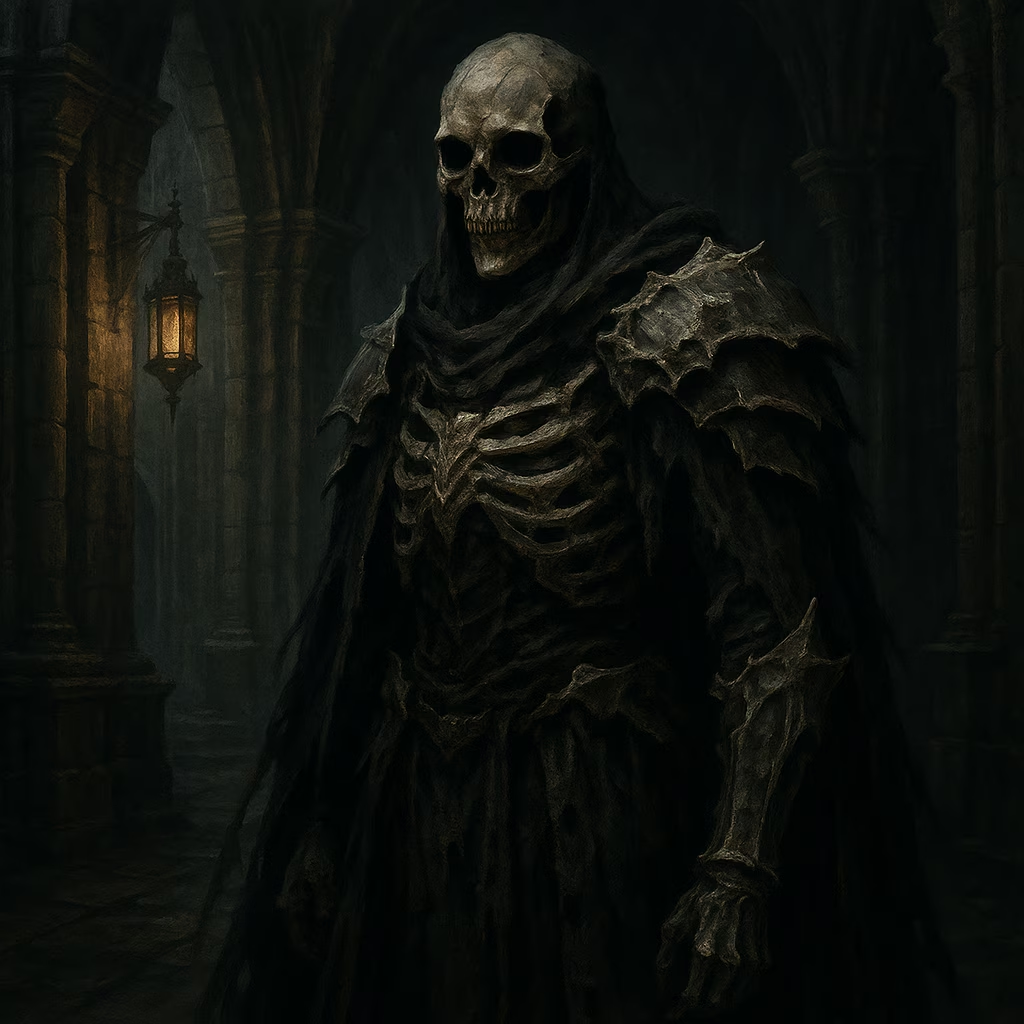
The Open World Expansion: Sanctuary in a Sea of Scale
With the monumental success of Elden Ring, FromSoftware boldly expanded its vision into a vast, seamless open world. This design brought unparalleled freedom and a sense of epic discovery, but it also fundamentally altered the function and feel of the traditional hub. The Roundtable Hold, while grand and lore-significant, operates as a semi-detached location. Accessible only through fast travel, it exists in a pocket dimension separate from the Lands Between.
This separation, while practical for a world of such scale, inevitably creates a sense of disconnect. Does the Roundtable Hold feel like a lived-in space, or more like a utilitarian checkpoint, a menu made manifest that players visit only when necessity demands? The very nature of the open world encourages constant, forward motion, exploration without a fixed geographical anchor to return to. The hub becomes a tool rather than a home. While this evolution was a masterful adaptation to a new format, it left a particular yearning in the hearts of long-time fans—a nostalgia for the intimate, centralized hearth around which all journeys once revanged.
The Road Ahead: A Return to Intimate Sanctuaries?
As we look to 2026 and beyond, compelling speculation suggests FromSoftware's next flagship Soulslike title may mark a deliberate pivot. The studio might well be poised to break from the open-world formula, opting instead for a more focused, intricately crafted linear or semi-linear structure. If true, this shift could herald the glorious return of the traditional, deeply integrated hub area.
President Hidetaka Miyazaki has himself hinted at a desire to explore more "abstract" and emotionally "warm" themes. What better vehicle for such themes than a hub that embodies them? Imagine a sanctuary inspired by the serene, intimate settings of traditional JRPGs:
-
A secluded temple garden where cherry blossoms fall gently onto still ponds, a place of stark tranquility contrasting the grotesque beauty of the outside realms.
-
A small, resilient village built into the side of a mountain, where every resident has sought refuge from a shared cataclysm.
Furthermore, what new aesthetic frontiers could these sanctuaries explore? The possibilities are thrilling:
| Potential Theme | Hub Concept | Atmospheric Promise |
|---|---|---|
| Steampunk Refuge | A hidden clockwork fortress or a cathedral-like engine room. | Gears turn slowly overhead, steam hisses from pipes, creating a sense of fragile, industrially-wrought safety. |
| Retro-Futuristic Haven | A geodesic dome sheltering a lush interior garden, or a bunker filled with analog tech. | A blend of cold, sleek metal and warm, organic life; a hideaway from a world that has advanced catastrophically. |
| Gothic Arboretum | A cathedral with a collapsed roof, now overgrown with bioluminescent flora and ancient trees. | Nature reclaiming sacred architecture; a symbol of life persisting in a world of undeath. |
In a gaming landscape where the Soulslike genre has become richly populated by other talented studios, a signature return to a refined, hub-centric design could be FromSoftware's masterstroke. It is an opportunity to reassert leadership in atmospheric, character-driven world-building. By crafting a space that is not just functional but fundamentally felt, a place where every stone, every melody, and every silent NPC tells a story, the studio may do more than revisit a classic formula. It might just birth a new classic—a sanctuary for a new generation of players, a place destined to be whispered about with the same reverence as the Nexus, Firelink Shrine, or the haunting shores of Majula. The soul of the journey has always yearned for a home. Perhaps soon, it will find a new one.