In the vast and treacherous world of Elden Ring, few threats are as pervasive and terrifying as the Scarlet Rot. This is not a simple poison or disease; it is a manifestation of decay and rebirth, an entity that seeps through the very fabric of the Lands Between. More potent than any toxin found in previous FromSoftware titles, the Scarlet Rot presents a unique and existential challenge. It is a red liquid or smoky miasma that inflicts a devastating condition, relentlessly draining the health of those afflicted until they succumb. While Tarnished adventurers can find ways to mitigate its effects, for many inhabitants of this broken world, there is no such reprieve. The Rot's influence is far-reaching, touching distant corners of the map and weaving a complex story of cosmic influence, tragic heroes, and an inevitable cycle of decay.
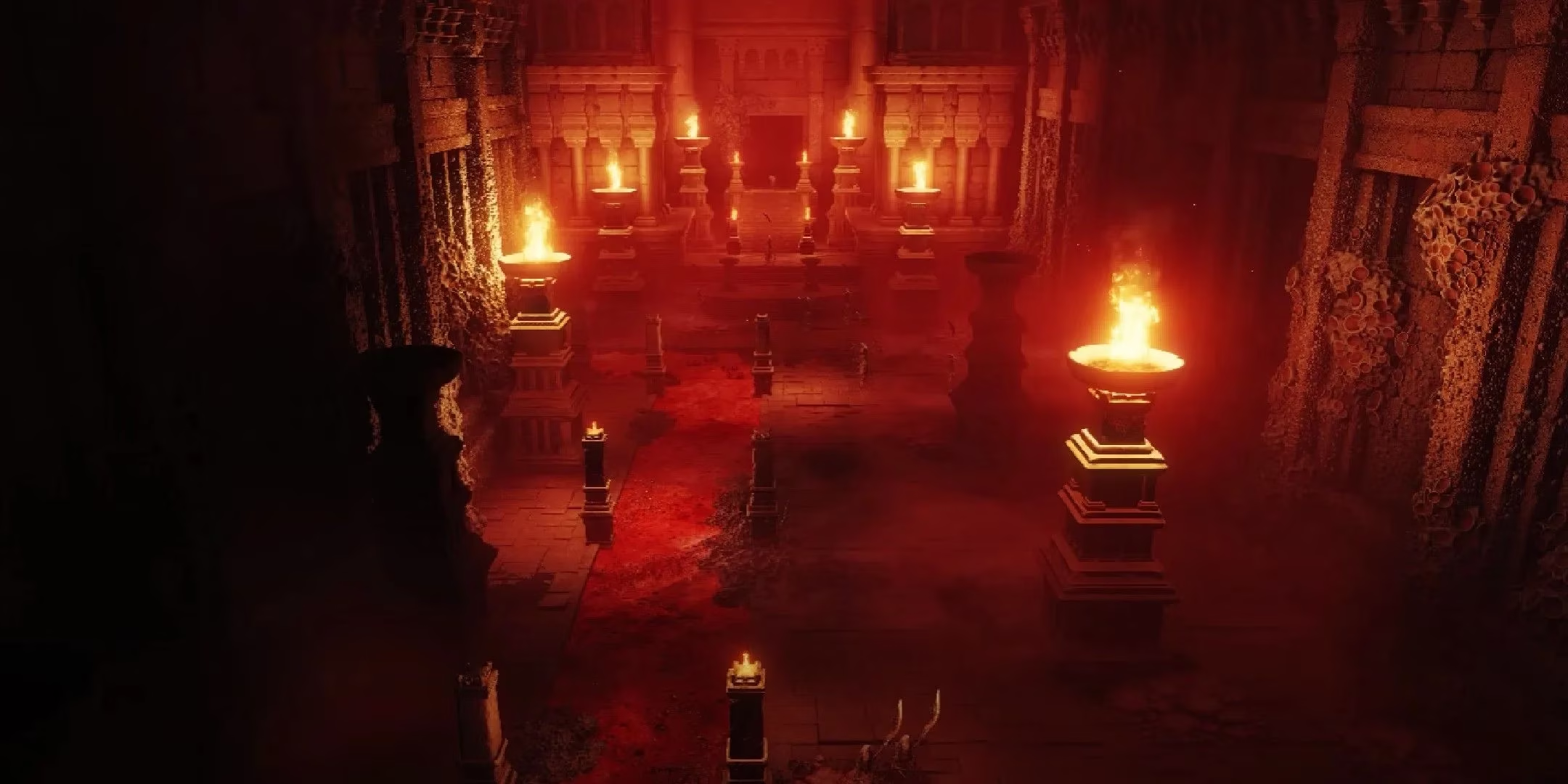
The true source of this affliction is an Outer God, a distant and powerful entity that seeks to impose its will upon the world. In this regard, the Scarlet Rot is a force akin to the Flame of Frenzy, complete with its own devoted followers, dedicated combat applications, and a distinct theology. The goal of this Outer God of Rot is both simple and horrifying: the total decay of all existing things. From this universal death, a new form of life is meant to emerge. The vibrant, fungal blooms and strange flowers that carpet areas like Caelid and the Haligtree are believed to be the ultimate lifeforms in this entity's vision—a vision of a world entirely reclaimed by the Rot.
This process of decay and rebirth also seems to spawn the Pests, servile creatures resembling sentient centipedes. It remains unclear whether these beings are spontaneously generated by the Rot itself or if they represent a grotesque reanimation of the corpses left in its wake, reborn solely to worship their creator. The Rot's ultimate ambition appears to be an ecosystem of perpetual decay, with the Pests as its agents and the blooming fungi as its final, beautiful, and terrifying state of being.

Despite their immense power, the influence of Outer Gods on the Lands Between is not absolute; it can be severed. History tells of a legendary hero, the Blind Swordsman, who managed to defeat the Scarlet Rot long ago. Utilizing a technique known as Flowing Water, he achieved this monumental feat. The nature of this technique is ambiguous—it could refer to a fluid, evasive sword-fighting style designed to avoid contact with the Rot, or it could be a more literal act of using flowing water to contain the corruption. The evidence points to the latter. It is widely believed that the Blind Swordsman succeeded in sealing the Rot's advance deep underground, within the cavern that would become known as the Lake of Rot. This submerged chamber, filled with ancient temples constructed by Pests for worship, is likely the Rot's original prison. The underground rivers that feed into it may very well have been the Swordsman's handiwork, a hydrological cage meant to trap the entity forever.
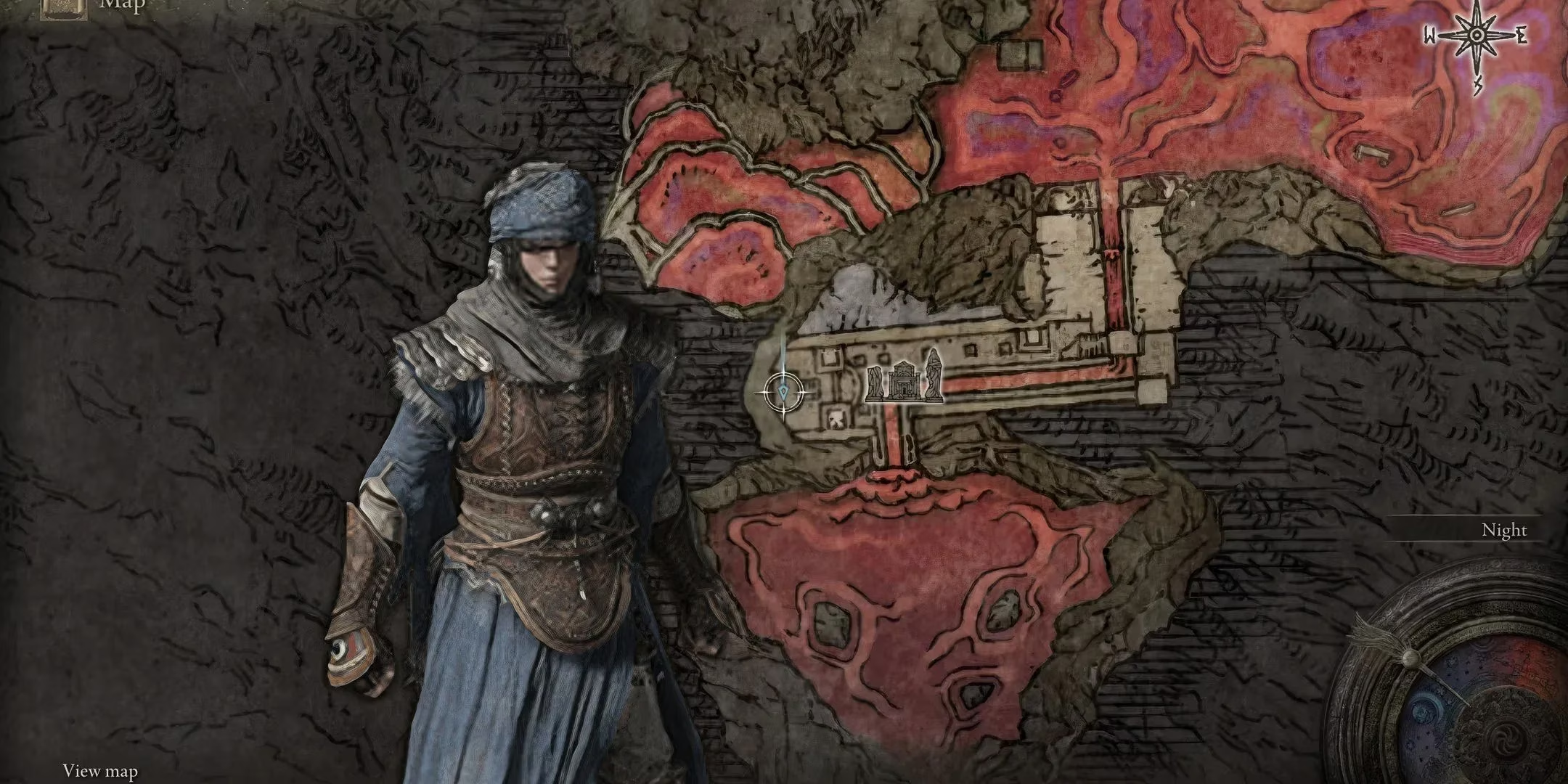
Of course, no prison is perfect. The Rot found a new vector in Malenia, Blade of Miquella, one of the most formidable demigods and a legendary boss encountered by players. Chosen as an avatar by the Outer God of Rot, Malenia has been afflicted since childhood. The corruption ravaged her body, necessitating the amputation of her right arm and both legs. To save his sister, her twin brother Miquella, a prodigy, crafted artifacts of unalloyed gold capable of repelling the influence of Outer Gods. These artifacts became Malenia's iconic prosthetic limbs and, most crucially, a needle implanted within her to staunch the Rot's spread.
Malenia's story, however, is one of tragic escalation. Residing with Miquella in the secluded Haligtree, she eventually journeyed south to the region of Caelid, clashing with the mighty General Radahn. In a moment of desperate stalemate, facing defeat, Malenia made a fateful choice: she shattered the golden needle within her. This act unleashed a cataclysmic Scarlet Aeonia, a bloom of Rot so powerful it corrupted the entire region of Caelid in an instant. Radahn was driven mad, the land was blighted, and its wildlife was horribly transformed. Radahn's loyal forces continue a hopeless battle, using fire and siege engines to burn back the ever-encroaching decay.
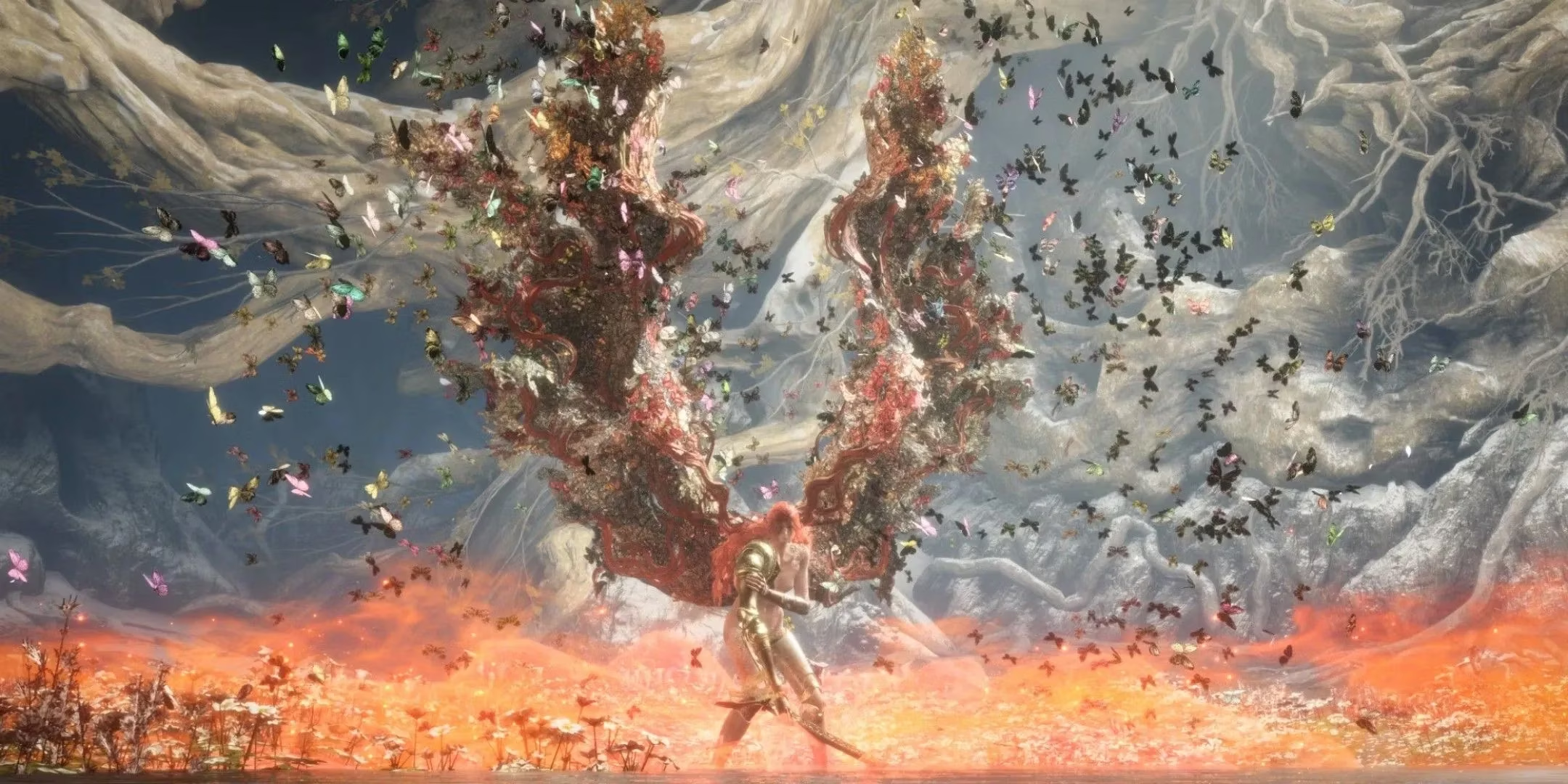
Though gravely wounded, Malenia managed to return to the Haligtree. Yet her presence alone was enough to infect her sanctuary. The Scarlet Rot spread through the roots of the great tree, fostering the growth of fungi and Rot blossoms, ultimately killing it. Here she waits, slumbering at the base of the dead Haligtree, the never-defeated Blade of Miquella, awaiting her brother's return. When confronted by a Tarnished, if pushed to her limits, she blooms once more, ascending to become the Goddess of Rot. In this state, she is the unwilling avatar of the Outer God, and given its themes of decay and rebirth, it may not be the last form she takes.
The Rot's influence extends beyond Malenia herself. Scattered throughout the world are five mysterious young women who bear a striking resemblance to her, sharing her affliction and physical losses. They are Millicent, Polyanna, Maureen, Amy, and Mary, though only Millicent's journey is directly accessible to the player. These figures are not Malenia's daughters in a conventional sense; they are more likely born from the Rot itself, sprouting from its flowers as potential Valkyries destined to ascend alongside their "goddess." Players can aid Millicent, guided by a mysterious sage named Gowry, who tasks them with repairing a broken golden needle to help her suppress the Rot and journey to the Haligtree. In a cruel twist, Gowry is later revealed to be one of the Pests. His true goal is for the player to earn Millicent's trust and then betray and kill her at the journey's end, believing such a death will lead to a grander rebirth as a true Valkyrie of Rot. Regardless of the player's choice, Millicent's story ends in tragedy. She ultimately chooses to remove the needle and die as herself, rejecting the destiny the Rot has written for her.
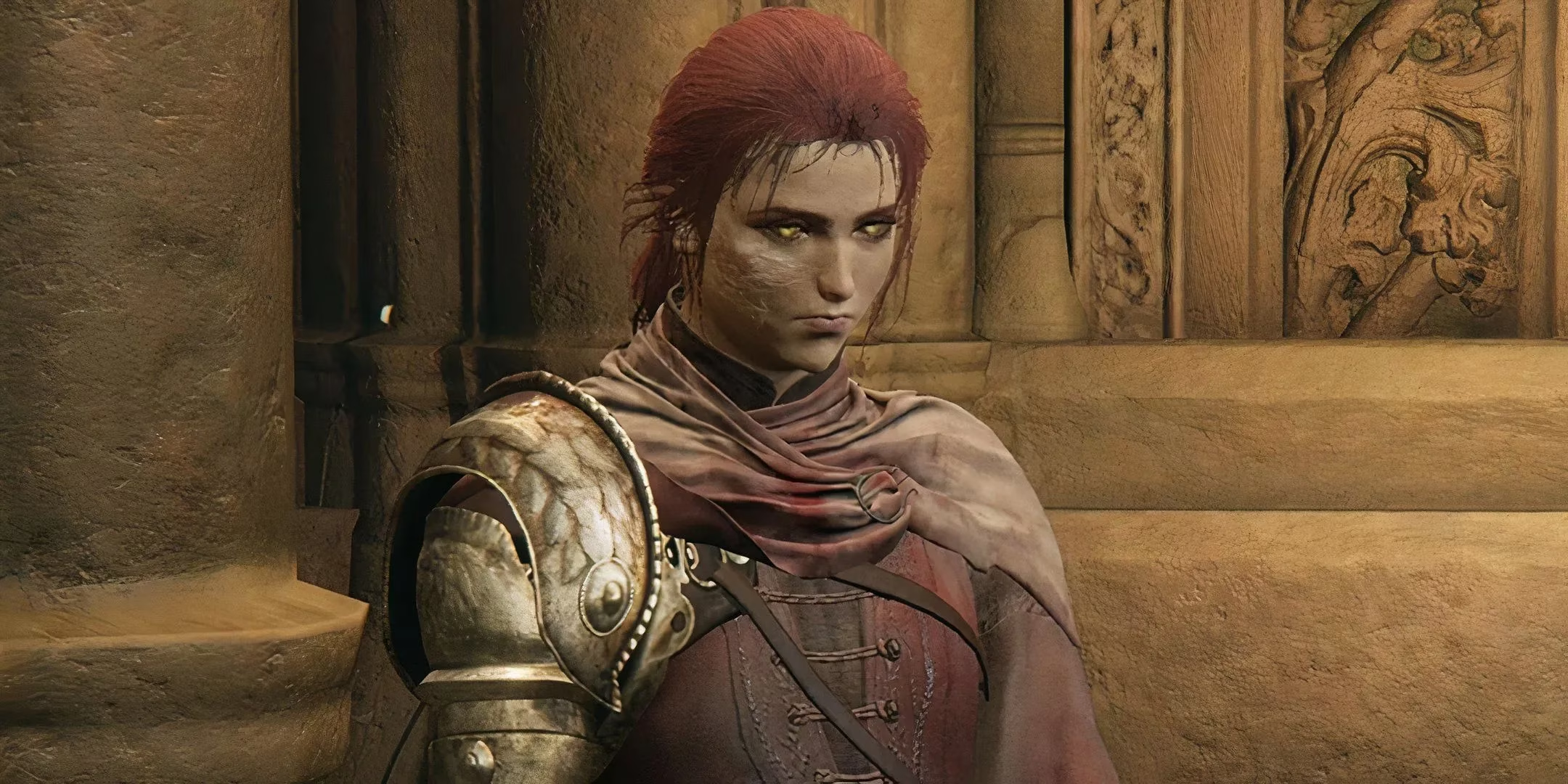
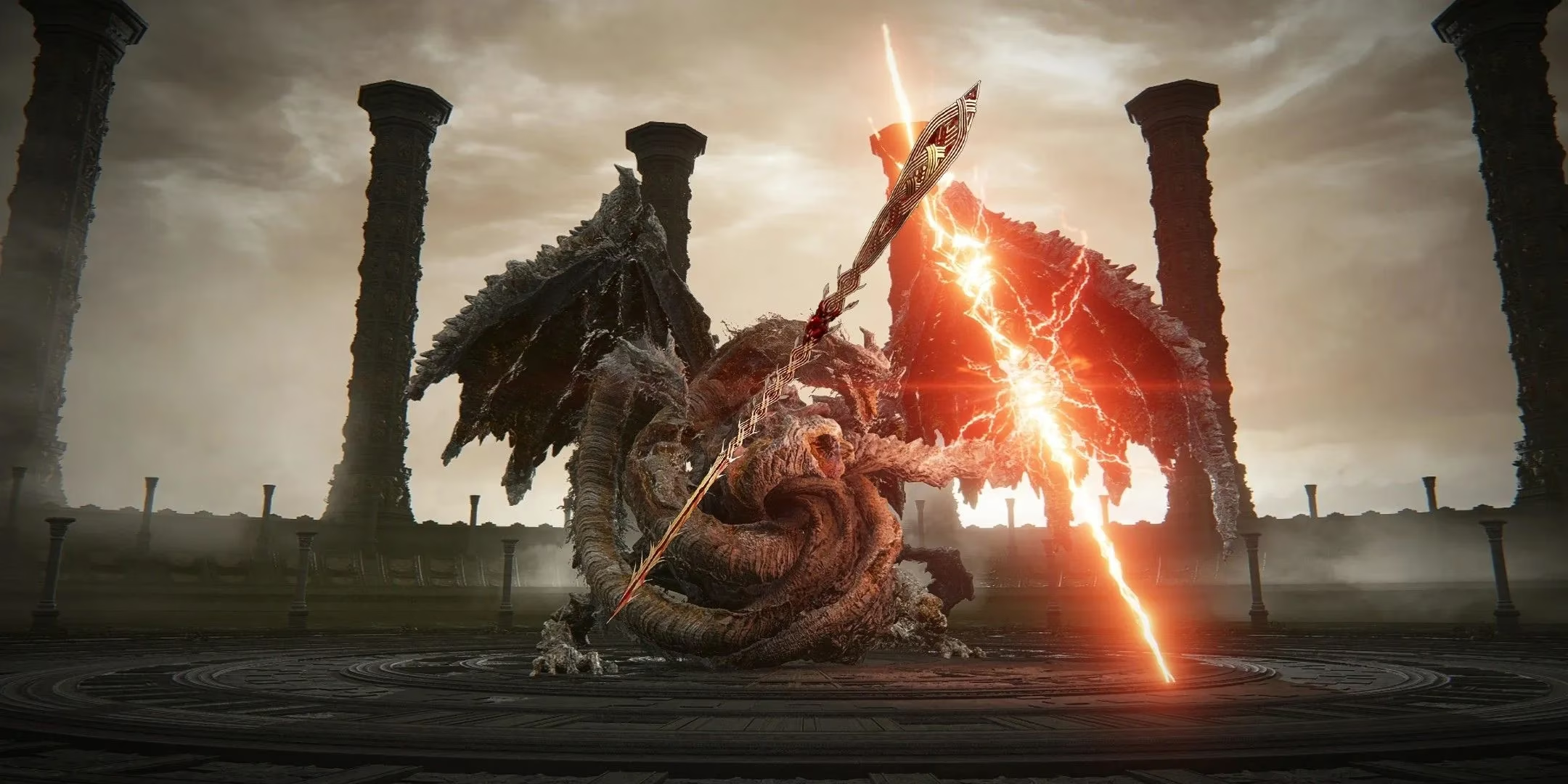
The needle of unalloyed gold is a central artifact in this saga. The very one repaired for Millicent is believed to be the same needle Malenia broke in Caelid. Crafted by Miquella, it is a powerful ward against Outer Gods, but only a temporary one. The Rot continues to build within the host, making its eventual release all the more catastrophic—as seen with Malenia's decades, if not centuries, of pent-up corruption exploding in Caelid. Interestingly, this needle also provides players with a unique utility: it is the only known method to cleanse oneself of the influence of the Flame of Frenzy, another invasive Outer God. To perform this permanent cure, one must use the needle in a place outside of time, such as the crumbling arena of the ancient Dragonlord Placidusax. It remains a tragic unknown whether this permanent cure could have saved Malenia, or if Miquella ever discovered its full potential.
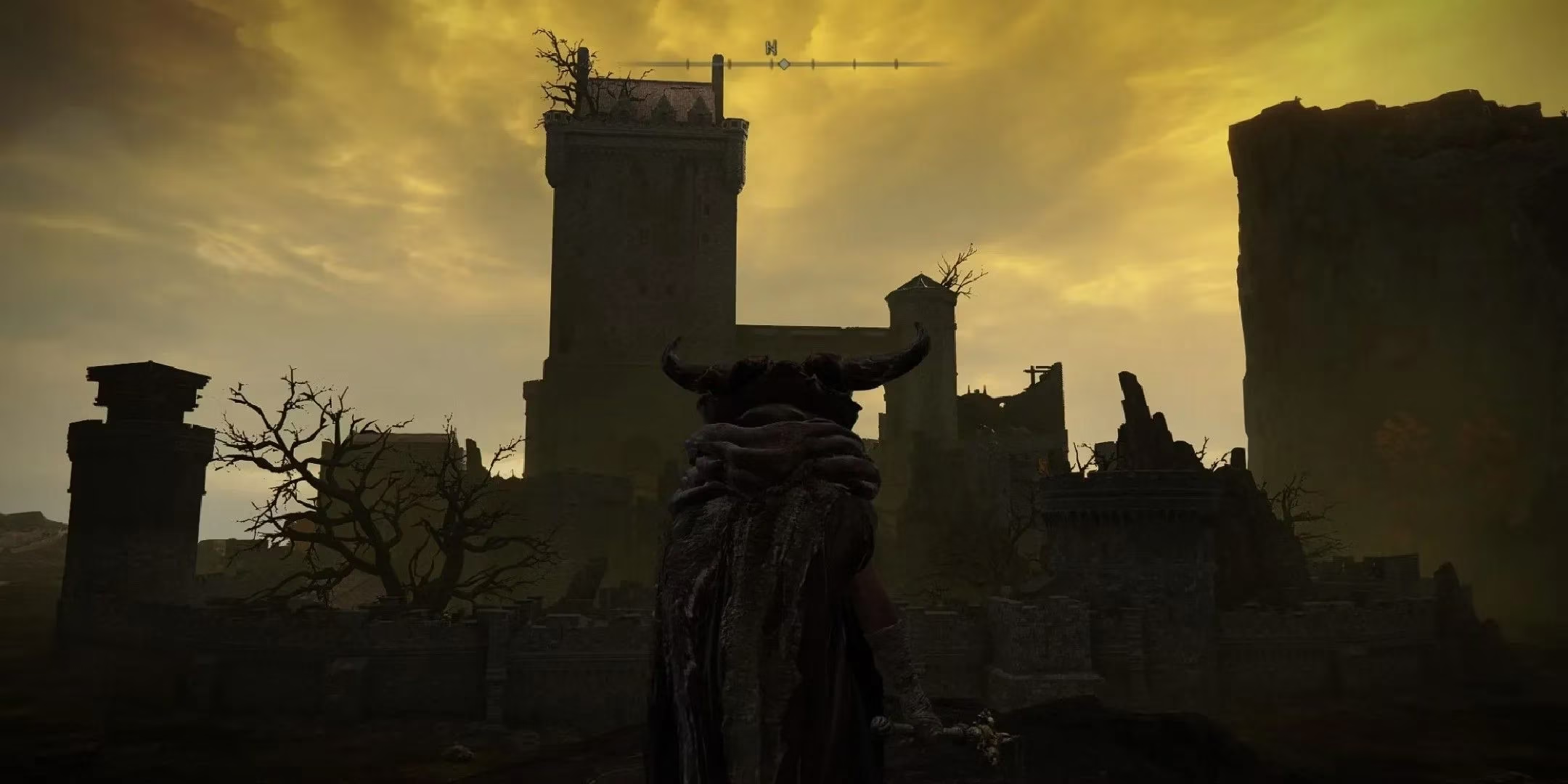
The legacy of the Scarlet Rot and Malenia has spawned distinct groups of followers. The Pests and other Rot-aligned creatures worship Malenia as their goddess, a title she vehemently rejects. In contrast, the Cleanrot Knights are her unwavering loyalists, following her out of devotion rather than reverence for the Rot. A unique figure in this dynamic is Maleigh Marais, the lord of the Shaded Castle. Unlike the Pests, his admiration for Malenia stems not from her connection to the Rot, but from her strength in overcoming a debilitating condition—a struggle he shared as a sickly child. His throne room, often overlooked by adventurers more focused on the castle's boss, Elemer of the Briar, holds the clues: it is filled with prosthetic arms and a portrait of Malenia, a shrine to a demigod he saw as a kindred spirit and an icon of resilience.
From the cosmic ambitions of an Outer God to the personal tragedies of Malenia and Millicent, the Scarlet Rot is more than an environmental hazard; it is a narrative force. It represents an inevitable cycle of decay, the desperate struggle for identity against a predestined fate, and the unintended consequences of a single, desperate act on a battlefield in Caelid. Its red blooms are a lasting scar upon the world, a testament to a power that was sealed, unleashed, and continues to fester, waiting for its next era of rebirth.