The gaming world is abuzz with speculation about what's next for FromSoftware. After the monumental success of Elden Ring, which has arguably reached its zenith with the stellar Shadow of the Erdtree DLC, many are wondering what the legendary studio has cooking in its secretive kitchen. While some might expect another colossal open-world epic, the whispers on the wind suggest something different, and perhaps, more exciting for the long-term health of the studio and its stories.
In a rather candid interview with The Guardian back in June 2024, the maestro himself, Hidetaka Miyazaki, the president of FromSoftware and the visionary director behind Elden Ring, dropped a bombshell. He mused that Elden Ring represented the absolute pinnacle of what the studio could achieve with their current technological capabilities and creative vision. A statement that sent shivers down the spines of hardcore Souls fans who were already dreaming of an even bigger, badder, and more brutal successor. But wait, there's a twist! Miyazaki-san didn't see this as a limitation, but rather as a liberation. He posited that having multiple smaller, more focused projects helmed by the younger, hungrier talents within FromSoftware would be the most strategic direction for the studio's future. This, he believed, would foster a more dynamic and diverse creative environment, allowing fresh ideas to blossom without being crushed under the weight of a singular, monolithic undertaking.
Now, let's be real for a second. FromSoftware isn't exactly known for churning out cookie-cutter sequels at a breakneck pace. They are the masters of meticulous craftsmanship, of building worlds that feel less like digital playgrounds and more like ancient, breathing nightmares. A smaller-scale Soulslike could be the perfect palate cleanser, not just for the players, but for the storytellers themselves. Imagine a project that doesn't require the entire studio to be devoted to building a continent-spanning open world, but instead allows a smaller team to focus on a singular, densely packed environment. A place dripping with atmosphere, where every alleyway tells a story, and every hidden corner holds a secret waiting to be discovered (or gruesomely dismembered by a horrifying monstrosity, let's be honest, it's a FromSoftware game after all).
Here's why this could be a game-changer (pun fully intended):
-
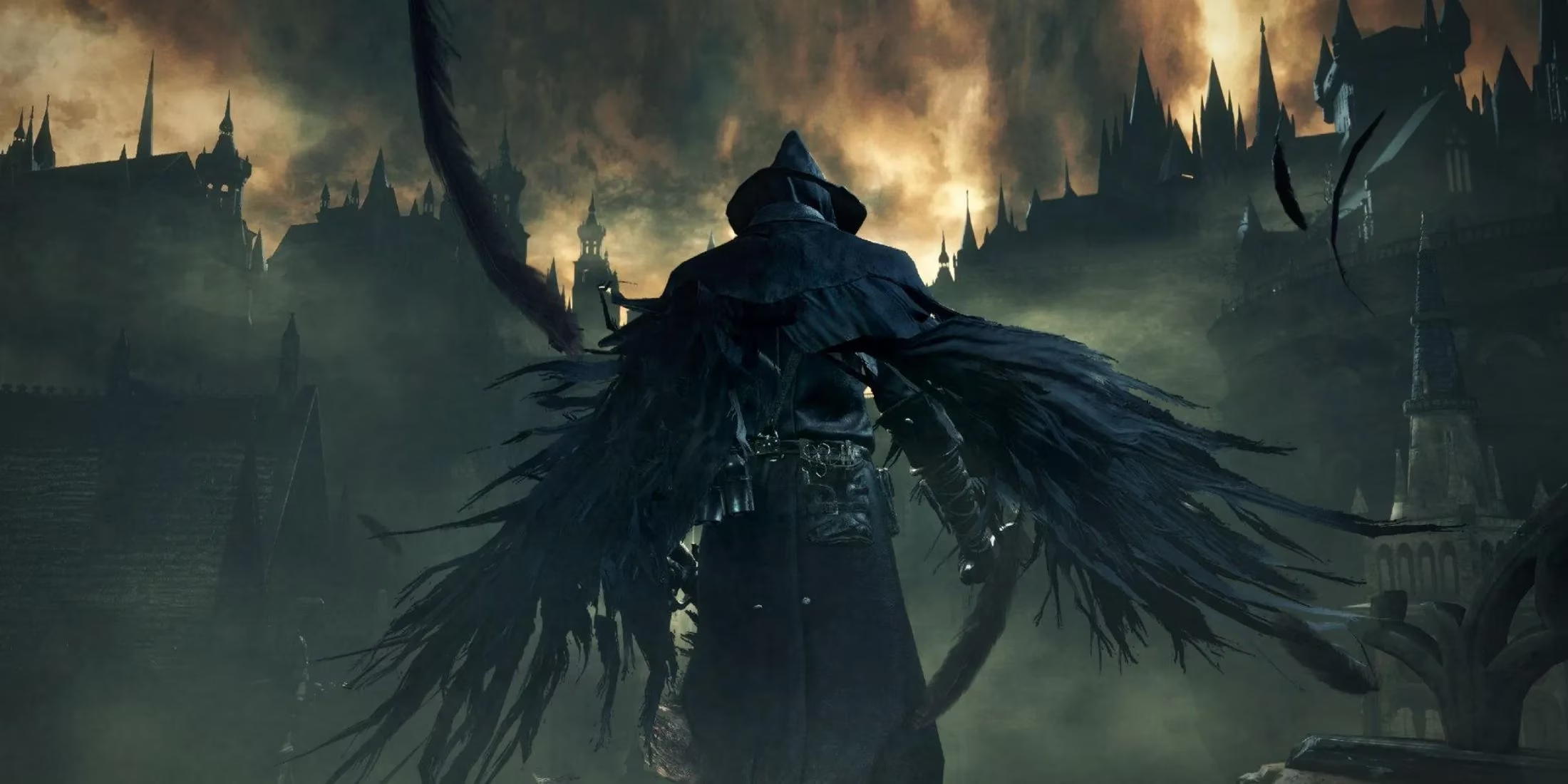
Narrative Depth: A smaller scope inherently allows for a tighter, more focused narrative. Think of the intricate, multi-layered stories of Bloodborne or Sekiro: Shadows Die Twice, but condensed into a more intimate setting. This doesn't mean the story has to be simpler; on the contrary, it could allow for even more complex and nuanced character development, for lore that is woven into the very fabric of the environment, rather than being scattered across a vast landscape.
-
Experimental Gameplay: Freed from the pressure of topping the sales charts of a behemoth like Elden Ring, a smaller project could serve as a testing ground for new, daring mechanics. Perhaps a return to the more linear, interconnected level design of the early Dark Souls games, but with a fresh twist. Maybe a combat system that emphasizes speed, precision, and parrying over the methodical, stamina-management based dance of the traditional Souls formula.
-
Risky Settings and Themes: Remember the sheer audacity of Bloodborne? FromSoftware took the familiar dark fantasy of Souls and plunged it headfirst into a nightmarish gothic horror world. A smaller project could be the perfect opportunity to explore equally risky, but potentially groundbreaking new settings. Imagine a Soulslike set in a:
-
Cyberpunk Neo-Tokyo: All neon lights, rain-slicked streets, and cybernetically enhanced samurai, where the line between human and machine is blurred beyond recognition.
-
Haunted, Derelict Space Station: Claustrophobic corridors, zero-gravity sections, and a constant, gnawing terror of the unknown lurking in the shadows.
-
Mythological Ancient Greece: Where you battle not just gods and monsters, but also the very philosophies that shaped a civilization, and where death is a constant, looming presence.
-
Nurturing New Talent: As Miyazaki-san himself hinted, this approach would empower the next generation of creators at FromSoftware. These smaller projects could become the proving grounds for future directors, artists, and designers, allowing them to leave their unique mark on the Soulsborne legacy without being overshadowed by the towering figure of a Miyazaki-led behemoth. It's a chance to experiment, to stumble, to learn, and ultimately, to create something truly their own.
Of course, the elephant in the room (and a particularly grumpy, poison-spitting one at that) is the undeniable commercial pressure. Elden Ring was a phenomenon, a cultural touchstone that redefined the open-world genre. FromSoftware is now a AAA powerhouse, and with that comes certain expectations. But sometimes, the most brilliant artistic creations are born not from chasing the biggest, most expansive world, but from focusing on a single, perfectly crafted detail. A haunting melody, a single, breathtaking vista, a story told in whispers rather than shouts. A smaller Soulslike could be the key that unlocks a treasure trove of untold stories, of worlds so strange and wonderful that they wouldn't fit in the sprawling canvas of a mega-game, but would blossom in the intimate confines of a more focused experience.
So, while we may have to wait a while longer for another open-world behemoth from FromSoftware, the future looks bright, and perhaps, a little bit smaller. And that, in the grand scheme of things, might just be the perfect opportunity for the studio to explore new horizons, to refine its craft, and to deliver experiences that are not just bigger, but better.