As we look ahead in 2026, the path forward for FromSoftware, the studio that redefined action RPGs for a generation, is shrouded in both mystery and immense excitement. I find myself reflecting on the studio's journey. It's been a few years since the monumental success of Elden Ring, and while its influence is undeniable, the whispers from the developer's headquarters in Japan suggest we are on the cusp of a significant evolution. Remember those job listings from a couple of years back, hinting at "several new projects" and a focus on "mecha design"? Well, the vision outlined by the legendary Hidetaka Miyazaki is finally coming into clearer focus. He promised to show us "the new FromSoftware in many different ways," and that time is now. This isn't just about another challenging game; it's about the studio rediscovering and redefining its own diverse identity. Could it be that we've only seen one facet of this developer's true potential?
A Legacy of Diverse Genres
For many modern gamers, FromSoftware is synonymous with the punishing, atmospheric worlds of Dark Souls, Bloodborne, and Elden Ring. But to think of them solely as a "Soulslike factory" is to overlook a rich and wonderfully bizarre history. I often remind fellow players that this studio's roots are far more eclectic. Their journey began not in a grim fantasy kingdom, but in a first-person dungeon with King's Field and amidst the clanging metal of giant robots in Armored Core. 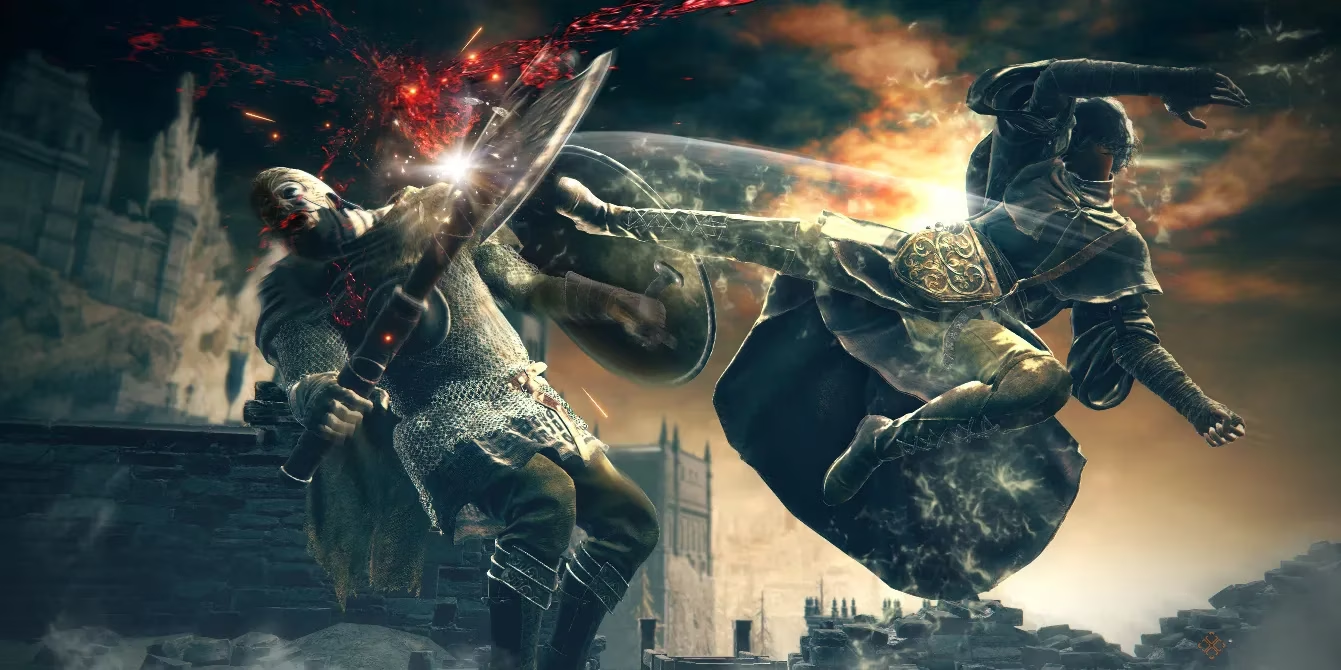
Let's take a quick tour through their often-forgotten catalogue:
-
Mecha Action: The Armored Core series defined mech customization and combat for years.
-
Survival Horror: Kuon offered a chilling experience in a Heian-period setting.
-
Card-Based ARPG: Lost Kingdoms blended real-time action with strategic card decks.
-
...And Even Life Sims?: Astonishingly, they once developed Echo Night: Beyond and dabbled in concepts that shared a peaceful spirit with titles like Animal Crossing.
This history is crucial. It proves that the creative DNA of FromSoftware has always contained strands of experimentation and genre-blending. The intense, methodical combat of their recent hits didn't appear from nowhere; it was refined across different formats and ideas.
The "New FromSoftware" Vision
So, what does Miyazaki mean by a "new FromSoftware"? Based on his statements and the studio's current trajectory, I believe it signifies a conscious expansion. While the core principles of meticulous world-building, environmental storytelling, and satisfying gameplay mastery will likely remain, the genres they inhabit are set to diversify dramatically.
Miyazaki explicitly mentioned that the new projects span "a variety of genres" and that some are directed by talents other than himself. This is perhaps the most exciting part. It means we could see:
-
A triumphant return to mecha with a new Armored Core title, building on the success of Armored Core VI: Fires of Rubicon and pushing the boundaries of mechanized combat.
-
A brand-new IP in a completely unfamiliar setting. Sci-fi? High fantasy? Something entirely unexpected? The possibilities are endless.
-
A revival or reimagining of one of their older, niche genres. Could a modern take on a card-based action game find an audience today?
The key takeaway is that the studio is not resting on its laurels. They are leveraging their hard-earned reputation and resources to explore new creative frontiers. Isn't that what we always hope our favorite artists will do?
What This Means for Gamers in 2026
For us, the players, this is unequivocally good news. The gaming landscape in 2026 is vibrant and competitive, and the promise of "multiple projects" from a studio of this caliber is thrilling. We can reasonably expect:
-
Variety in Challenge: New genres mean new kinds of challenges. The learning curve might not always be about dodging roll timings, but perhaps managing resources, commanding units, or solving intricate puzzles within a hostile world.
-
Fresh Worlds to Unravel: FromSoftware's environmental storytelling is second to none. Applying that skill to a cyberpunk city, a deep-space colony, or a serene, mysterious village could yield unforgettable experiences.
-
A Broader Community: Different genres will attract different players, introducing more people to the studio's unique design philosophy. The communal sense of discovery that defined the Souls and Elden Ring experiences could manifest in new and interesting ways.
Of course, questions remain. Miyazaki has firmly stated no interest in Elden Ring 2 for now, though he hasn't closed the door on the IP forever. The focus is clearly on what's next, not on direct sequels to past megahits. This boldness is commendable.
In conclusion, the future of FromSoftware looks less like a single, looming shadow and more like a constellation of bright, distinct stars. They are not abandoning what made them great; they are building upon it by reaching back into their own history and forward into uncharted territory. The "new FromSoftware" won't just make Soulslikes—it will remind everyone that they are, and always have been, a studio of immense range and daring creativity. The next few years promise to be a fascinating chapter in their story, and I, for one, can't wait to see which world they ask us to explore next.