As we look at the gaming landscape in 2026, the absence of a direct sequel to the monumental 2022 title, Elden Ring, remains a topic of intense discussion among the community. For many fans, the yearning for a return to The Lands Between is palpable, a sentiment I deeply understand. Yet, stepping back and examining FromSoftware's storied history offers a different, perhaps more reassuring, perspective. The developer's renowned reluctance to churn out sequels for the sake of it—evidenced by the enduring single entries for masterpieces like Bloodborne and Sekiro: Shadows Die Twice—isn't a sign of neglect, but a testament to a philosophy that prioritizes organic, inspired creation over market-driven cycles. In an industry where successful intellectual properties are often milked dry, FromSoftware's restraint is a refreshing anomaly, one that safeguards the studio's creative integrity and ultimately benefits us, the players, by ensuring that any future ventures stem from genuine artistic vision rather than financial obligation.
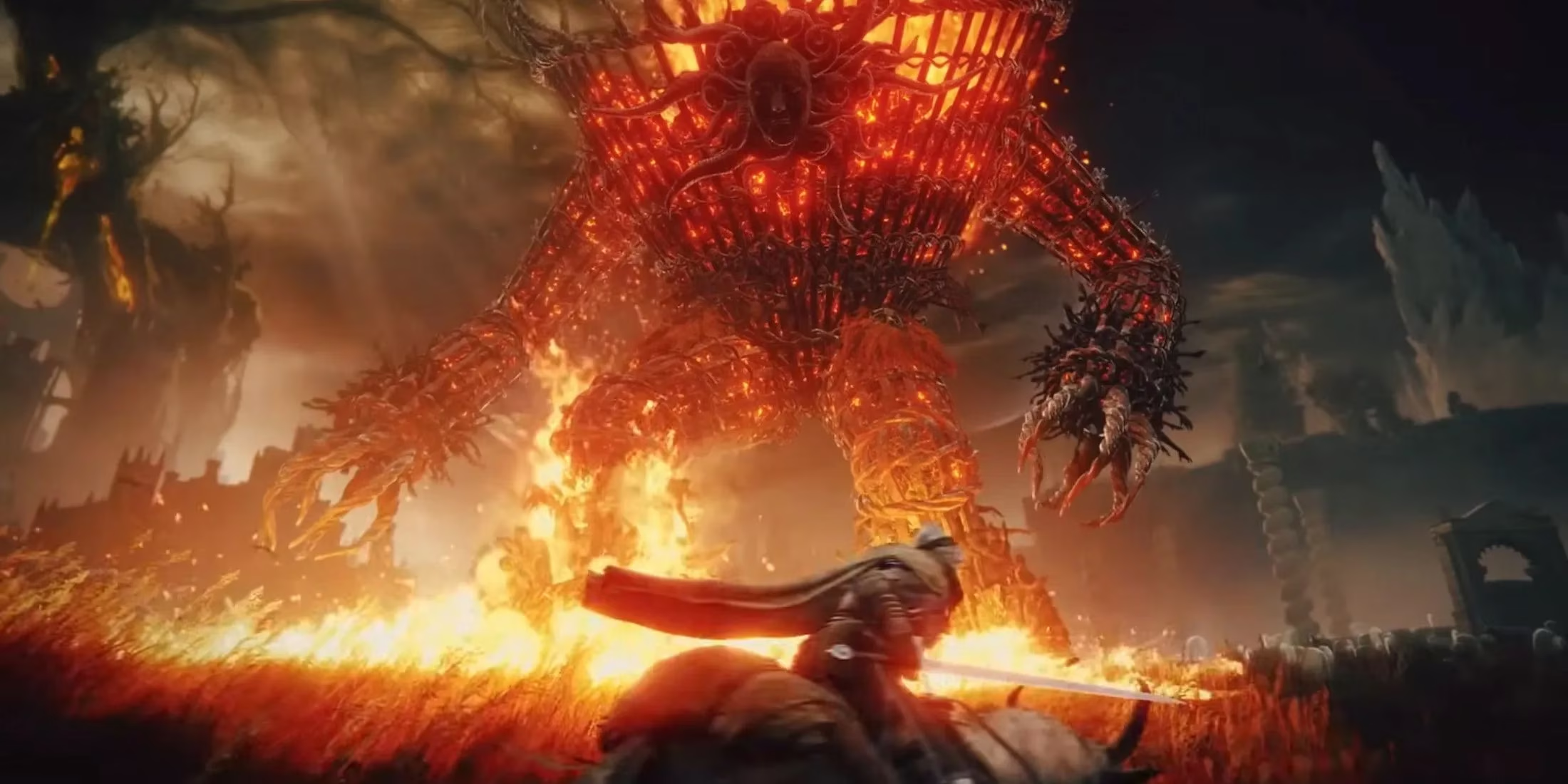
Shadow of the Erdtree: The DLC That Felt Like a Sequel
Let's be honest: for many of us, the colossal Shadow of the Erdtree expansion was our Elden Ring 2. Its sheer scale, depth of new lore, and challenging landscapes filled the void a sequel might have occupied. This expansion's success naturally sparked rampant speculation: if a piece of downloadable content could be this expansive and transformative, what wonders could a full-fledged sequel achieve? The potential seems boundless—a chance to revolutionize core combat systems, explore entirely new regions of the world hinted at in item descriptions, and introduce a fresh pantheon of deities and demigods. The allure is undeniable.
The Creative Conundrum: What Would Elden Ring 2 Even Be?
However, upon deeper reflection, the path to a sequel is fraught with creative pitfalls. The Dark Souls series benefited from a cyclical, renewing world premise that naturally lent itself to continuations. Elden Ring's narrative, centered on a specific, world-altering event—the Shattering—and its resolution, presents a different challenge. Where does the story go from here?
-
Narrative Hurdles: A direct continuation might feel forced, undermining the finality of the Tarnished's journey.
-
Setting Struggles: While moving the action to locales like the Badlands or the Land of Reeds is possible, at that point, wouldn't it be more liberating for FromSoftware to craft an entirely new universe inspired by those concepts?
-
Gameplay Evolution: A sequel demands innovation. Being tethered to the mechanics of the first game could stifle the introduction of groundbreaking new ideas that a fresh intellectual property would allow.
This isn't mere pessimism; it's a recognition of the studio's creative process. Director Hidetaka Miyazaki himself, after confirming no current plans for Elden Ring 2, left the door intriguingly ajar by stating the studio isn't "denying development of the IP." This suggests that while a conventional sequel isn't on the drawing board, other forms of continuation are being contemplated.
Alternative Futures: Beyond the Traditional Sequel
The future of the Elden Ring universe may lie not in "Elden Ring 2," but in bold, lateral explorations. The rich, untapped lore provides fertile ground for experiences that could be even more compelling than a direct follow-up.
| Potential Avenue | Description | Why It Could Work |
|---|---|---|
| Prequel/Spin-off Game | A title where we experience the era of Godfrey, the Long March of the Tarnished, or the brutal wars prior to the Shattering. | Explores beloved lore firsthand, offers a distinct gameplay tone (more grounded warfare, perhaps), and doesn't constrain the main story's ending. |
| Genre Experiment | An Elden Ring title in a different genre—a tactical RPG focusing on managing a faction during the Shattering, or a character-action game starring a legendary figure like Malenia. | Expands the franchise's reach and tests new gameplay ideas within a familiar, beloved setting. |
| Transmedia Expansion | A high-quality animated series or film adaptation that delves into the deep lore and character backstories the game can only hint at. | Builds the world for a broader audience and satisfies lore enthusiasts craving more detailed narratives. |
The Bigger Picture: FromSoftware's Unwavering Trajectory
Ultimately, the most exciting takeaway is this: FromSoftware is not idle. The studio's pipeline, as of 2026, is undoubtedly filled with ambitious projects. The absence of an Elden Ring sequel is not a vacuum; it's space being filled with the next potential genre-defining experience. The studio's model proves that a game can achieve legendary status and enduring cultural relevance without spawning an annualized franchise. Elden Ring's legacy is secure, its influence permeating the industry. Whether we return to its world through a daring spin-off, a transmedia story, or simply through timeless replays, the IP remains a beacon of artistic ambition. As fans, our anticipation shouldn't be narrowly focused on a numbered sequel, but on the thrilling, unpredictable creative ventures that FromSoftware chooses to embark on next, with the freedom its philosophy affords.