As the gaming landscape continues to evolve, the legacy of FromSoftware's Soulsborne series remains a towering monument to environmental storytelling and deep, cryptic lore. In 2026, years after the release of Elden Ring's final expansion, players and scholars alike still gather to dissect the narrative fragments scattered across these brutal, beautiful worlds. What is it about these games that inspires such fervent devotion and endless discussion? Perhaps it is the unique way they treat players not as passive listeners, but as active archaeologists, piecing together histories from item descriptions, environmental clues, and enigmatic dialogue. The lore is the soul of the experience, the dark soil from which every challenging battle and haunting vista grows. Let us journey through these masterpieces, ranked not by their gameplay—though often correlated—but by the sheer depth, innovation, and lasting impact of their stories.
7. Dark Souls 3: The Polished Epilogue
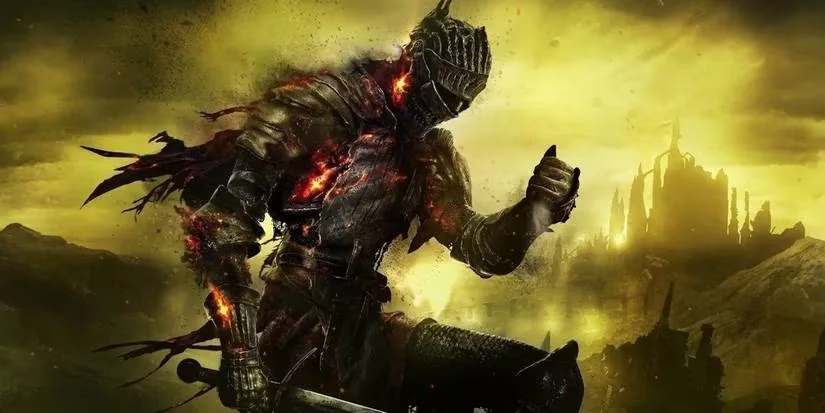
By 2026, Dark Souls 3 is often viewed through a historical lens as the trilogy's competent, yet safe, finale. It represents regular excellence, a masterfully executed refinement of a proven formula. It clinched Game of the Year in 2016 for good reason, offering the most polished combat and interconnected world design in the Dark Souls lineage. Yet, when judged purely on lore, it finds itself at the bottom of this list. Why? The answer lies in its purpose. Conceived as a definitive ending, its narrative is burdened by the need to tie up the cyclical saga of fire and dark. This intention, while satisfying for closure, created early barriers. The lore doesn't take risks; it feels like a greatest hits compilation of concepts from the first two games—the dying kingdoms, the lords of cinder, the fading flame. It's a predictable, if beautifully rendered, march toward an inevitable conclusion. Even in its excellence, it feels like more of the same, a side effect of expanding a story originally meant for a single title. The journey through Lothric is epic, but its tales are those we've heard before, told with finality but not surprise.
6. Demon's Souls: The Revolutionary Prototype
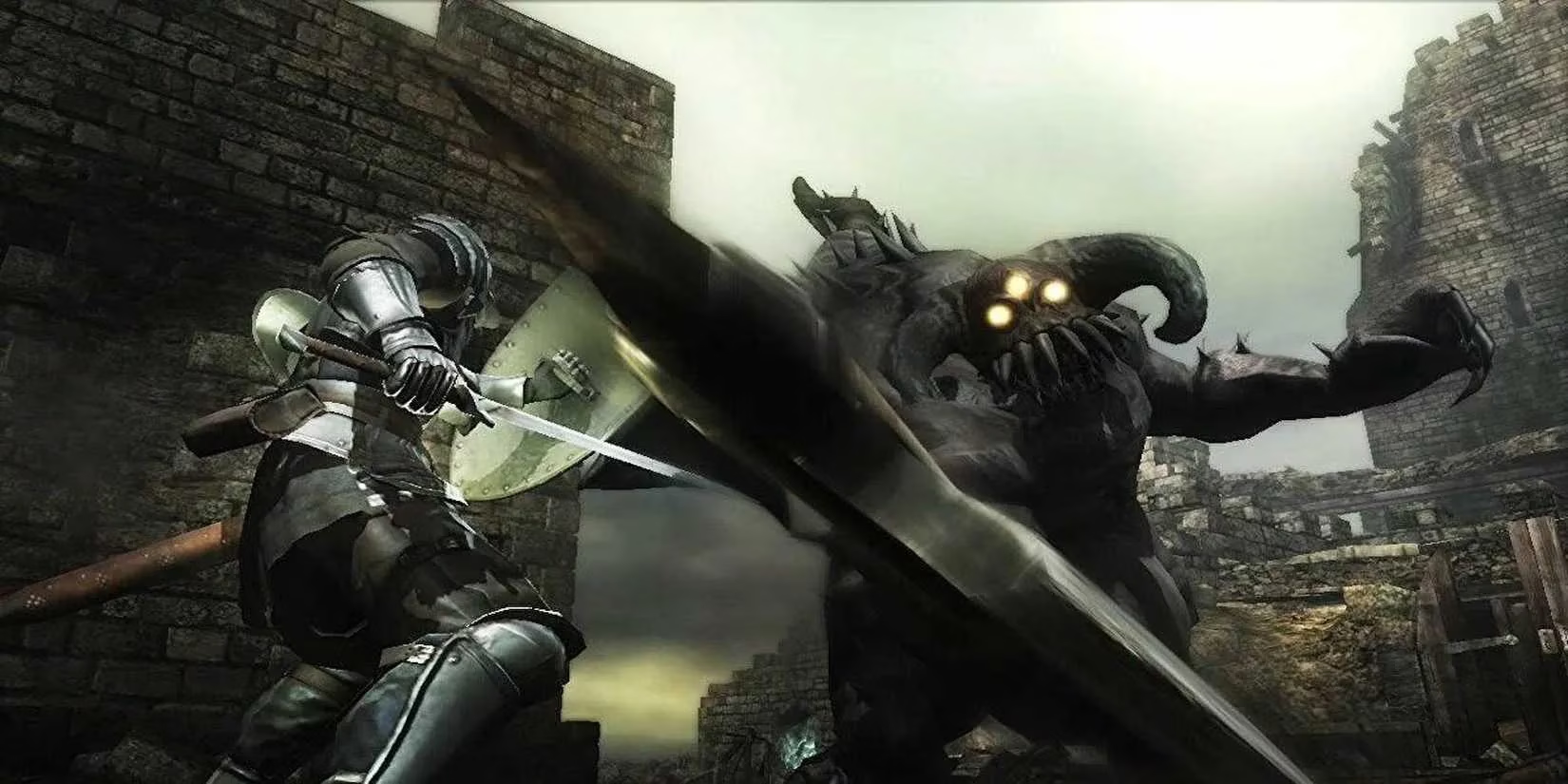
Where do great revolutions begin? For a generation of gamers, it began in the fog-shrouded kingdom of Boletaria. Demon's Souls was the start of something profoundly new. While FromSoftware had crafted fantasy worlds before, the narrative method they pioneered here—opaque, player-driven, and steeped in melancholy—remains one of the most revolutionary changes the industry experienced in the early 21st century. Its lore may be the least fleshed-out of the series, but its impact is immeasurable. The setting is its greatest strength: an aura of profound mystery that makes players feel like abandoned heroes in an abandoned land. The emotional binding is not to clear characters or a explicit plot, but to the feeling of the place itself—its despair, its hostility, its strange, quiet beauty. It uses a dark and oppressive tone that, some argue, hasn't been perfectly replicated since its original release. It asked the first, crucial question: What if the story isn't told to you, but discovered by you?
5. Sekiro: Shadows Die Twice: The Focused Fable
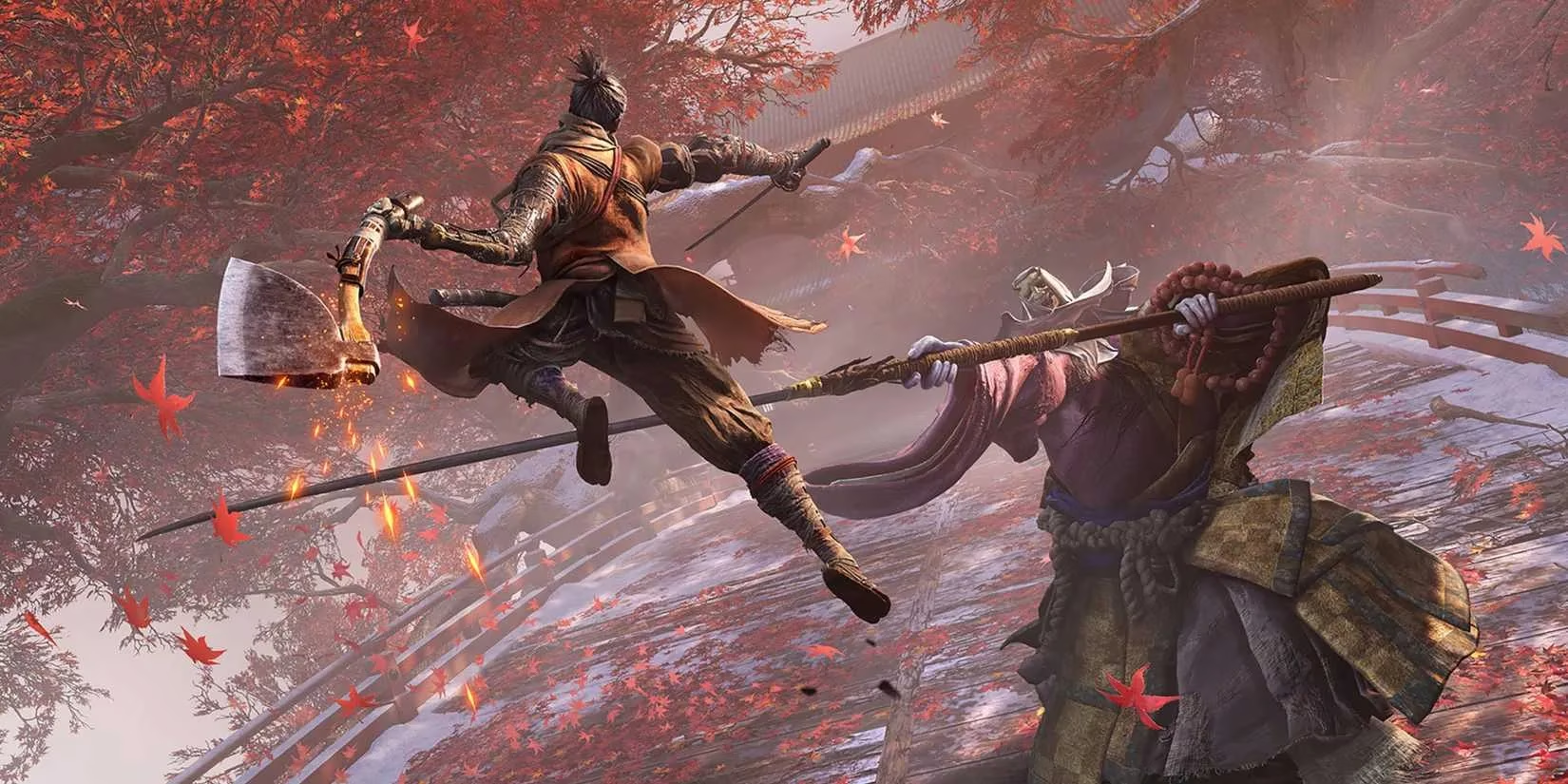
What happens when FromSoftware applies its genius for world-building to a more traditional narrative structure? You get Sekiro: Shadows Die Twice, a masterclass in focused storytelling. Departing from the silent, customizable protagonists of its siblings, Sekiro features a defined hero, Wolf, with clear relationships and motives. The game has more cinematics and direct dialogue than any other Soulsborne title, a necessity for its condensed, revenge-driven campaign. But does this make its lore shallow? Far from it. It trades sprawling mythologies for engaging themes and fascinating cultural influences drawn from Sengoku-period Japan and Buddhist philosophy. The lore of the Divine Heritage, the immortality of the Dragons, and the tragic fate of the Ashina clan is rich and self-contained. In fact, regarding pure potential for future stories, Sekiro is arguably FromSoftware's best prospect. It perfectly closes its own core tale while leaving the door wide open to explore its fantastical version of Japan further—a path fans in 2026 still fervently hope the studio will walk down again.
4. Dark Souls: The Myth That Started a Cult
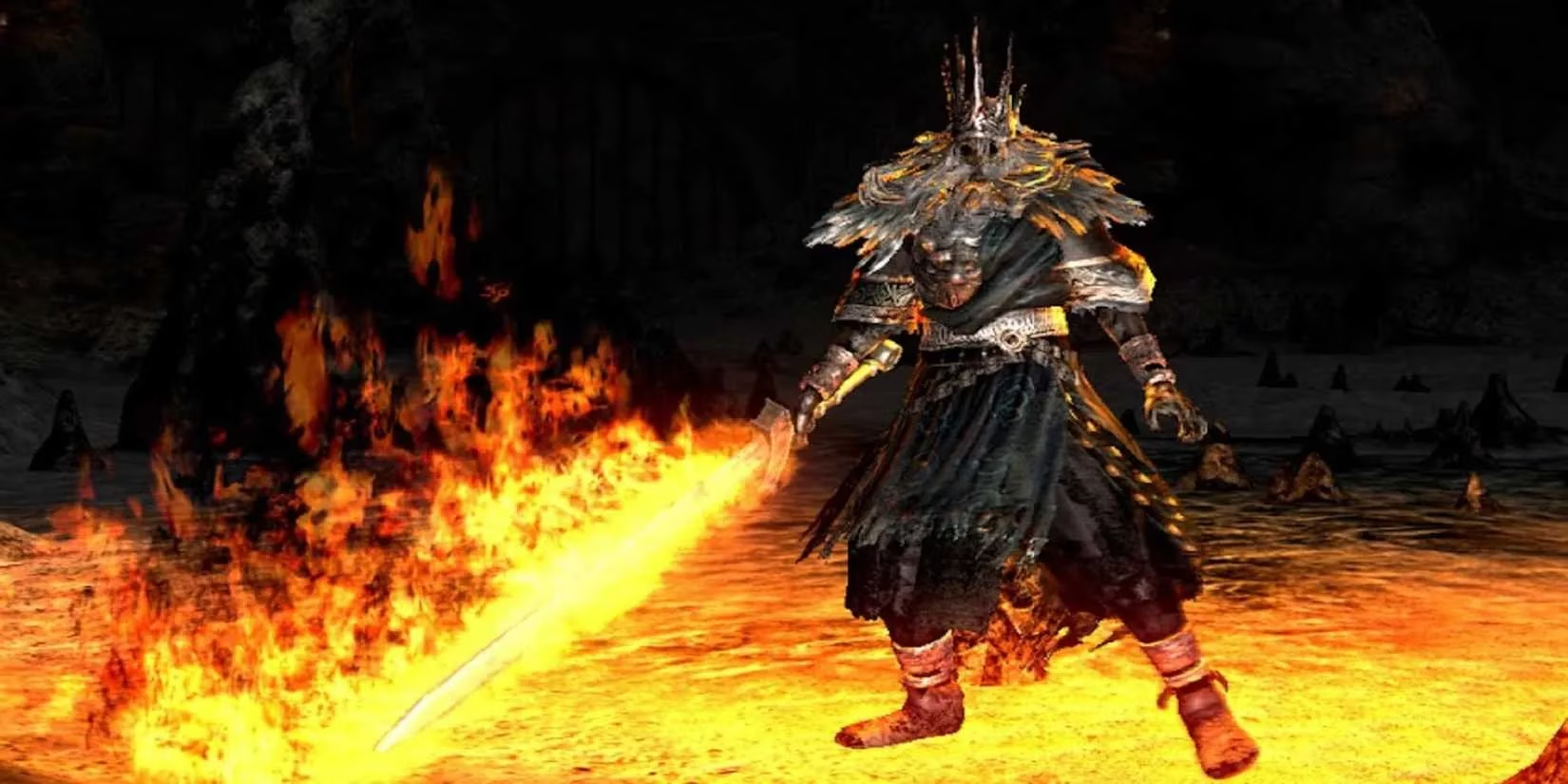
If Demon's Souls asked the revolutionary question, Dark Souls provided the timeless answer. It took the prototype and forged it into a global phenomenon with a mythology so captivating, vast, and detailed that it practically originated a cult of players devoted to decoding the mysteries of Lordran. This was the game that proved environmental storytelling could support a universe as deep as any epic fantasy novel. What is the First Flame? Who were Gwyn and his knights? What is the true nature of the Undead Curse? The game presented these puzzles not as distractions, but as the core narrative engine. The lore was so meticulously contextualized that what occurred in the background—the fallen gods, the forgotten wars, the cycles of ages—often felt more compelling than the player's immediate quest to ring the Bells of Awakening. It is, without hyperbole, a narrative masterpiece whose fragments of tale-telling will be studied and debated forever, a perfect storm of gameplay and lore that defined a genre.
3. Dark Souls 2: The Bold Outsider
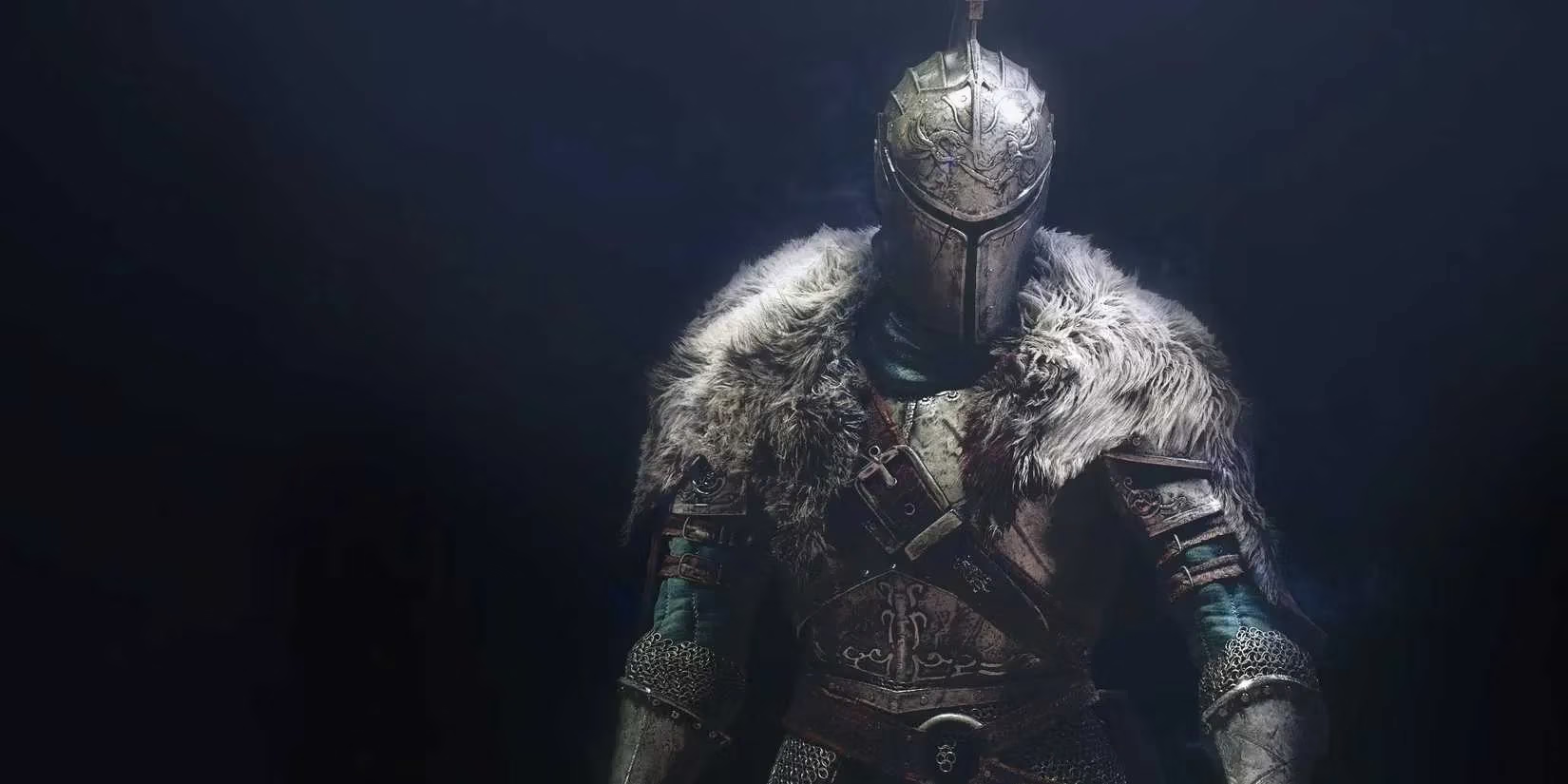
Why is Dark Souls 2 often the most divisive entry? When judged on lore, the answer becomes its greatest strength: it dared to be different. If Dark Souls 3 is the true successor, it is only because Dark Souls 2 had the courage to deny and reject the roots of its existence. It risked everything by largely ignoring the epic, godly narrative of the first game. Instead, it took a more personal, human-scale approach. The lore of Drangleic is not about Lords and Flames, but about people—specifically, the victims of the Undead Curse. It explores themes of memory, identity, and the slow, grinding despair of immortality. Characters like Vendrick, Aldia, and the tragic Queen Nashandra feel grounded in very human flaws and ambitions. This bold and refreshing direction doesn't always nail its execution (its world geography often feels dreamlike and disjointed), but its heart is in the right place. It's a tale full of heart, meaning, and novelty, asking what the cycles of gods mean to the simple humans caught beneath them.
2. Elden Ring: The Ultimate Synthesis
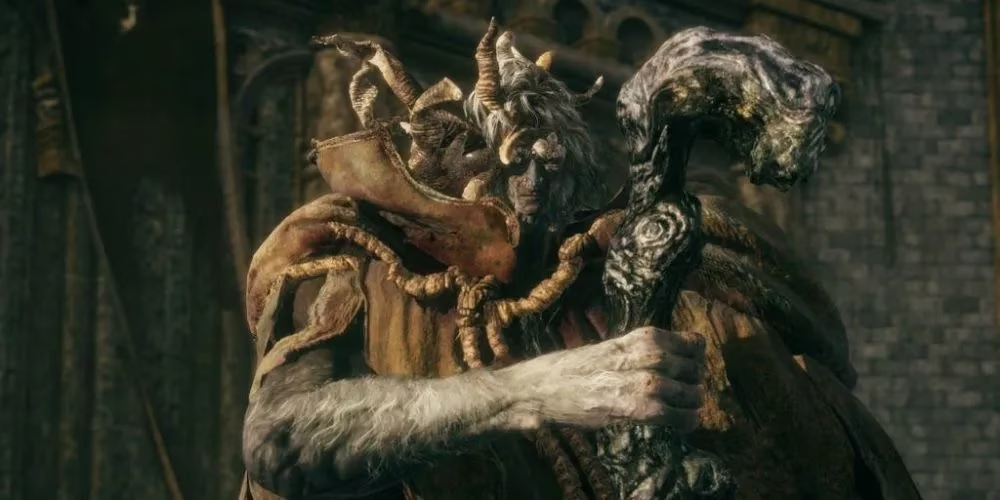
By 2026, Elden Ring stands not just as a game, but as a cultural milestone. It is the ultimate sophistication of the Soulsborne formula in almost every aspect, and its lore is its crowning achievement. The collaboration between Hidetaka Miyazaki and fantasy legend George R. R. Martin created a foundation so divine, lush, and complex that it sits comfortably among the finest works of modern fantasy. But is it just a success due to a big name? Absolutely not. Martin provided the historical tapestry—the Shattering, the demigod lineages, the deep history of the Lands Between—and Miyazaki's team wove it into their signature style of fragmented, discoverable storytelling. The result is unparalleled in scope:
-
Best Settings: From the eerie Siofra River to the towering Leyndell.
-
Best Characters: Tragic, nuanced figures like Radahn, Malenia, and Ranni.
-
Best Myths: An entire pantheon of Outer Gods, Greater Will, and Frenzied Flame.
-
Best Side Stories: Entire epic tales told through optional areas and gear.
It is a bottomless well of narrative, a world that feels truly lived-in and historically dense, proving that the Soulsborne method could scale to an open-world masterpiece.
1. Bloodborne: The Inexplicably Divine
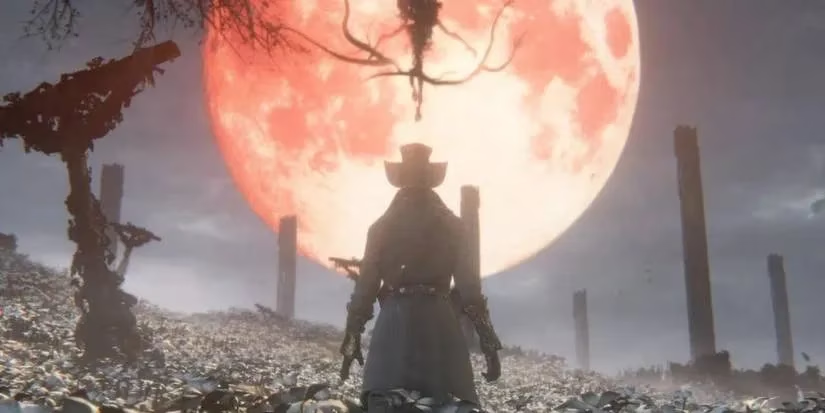
And so we arrive at the pinnacle, the Great One of lore itself: Bloodborne. More than a decade after its release, its status has only solidified. No other context, setting, or folklore has reached this masterpiece's level of transcendence. It begins as a gothic tale of beast-hunting in a Victorian city, a compelling premise on its own. Then, it performs a mid-game revelation so audacious it rewrites reality itself, plunging into cosmic horror. The lore becomes a layered nightmare: the Healing Church's hubris, the School of Mensis's rituals, the tragic history of Old Yharnam, and the unfathomable Great Ones who view humanity as insignificant. The weight of its worldbuilding is so immense it can carry every technical limitation or gameplay quirk because the lore itself is so inexplicably divine. It masterfully blends visceral body horror with existential cosmic dread, asking terrifying questions about evolution, knowledge, and the fragility of the human mind. Unsurpassed in the atmospheric elements that nourish its intentions, Bloodborne makes H.P. Lovecraft proud like no other artwork has accomplished. It is not just a game; it is a proper ode to the darkest corners of human culture and imagination, a perfect, terrifying symphony of story and setting that remains untouched at the zenith of video game lore.