As I look back on my countless hours spent traversing the unforgiving worlds crafted by FromSoftware, one constant adversary stands out, casting a long, terrifying shadow across decades of gaming: the dragon. From my first encounter in the murky depths of King's Field 2 in the mid-1990s to the breathtaking, sky-shattering battles in Elden Ring: Shadow of the Erdtree, these magnificent beasts have evolved from a simple trope into the very embodiment of the studio's design philosophy—a perfect blend of overwhelming power, awe-inspiring spectacle, and brutal, satisfying challenge. But have they gotten harder, or have I, as a player, simply grown alongside them? The answer, as I've learned, is a thrilling mix of both.
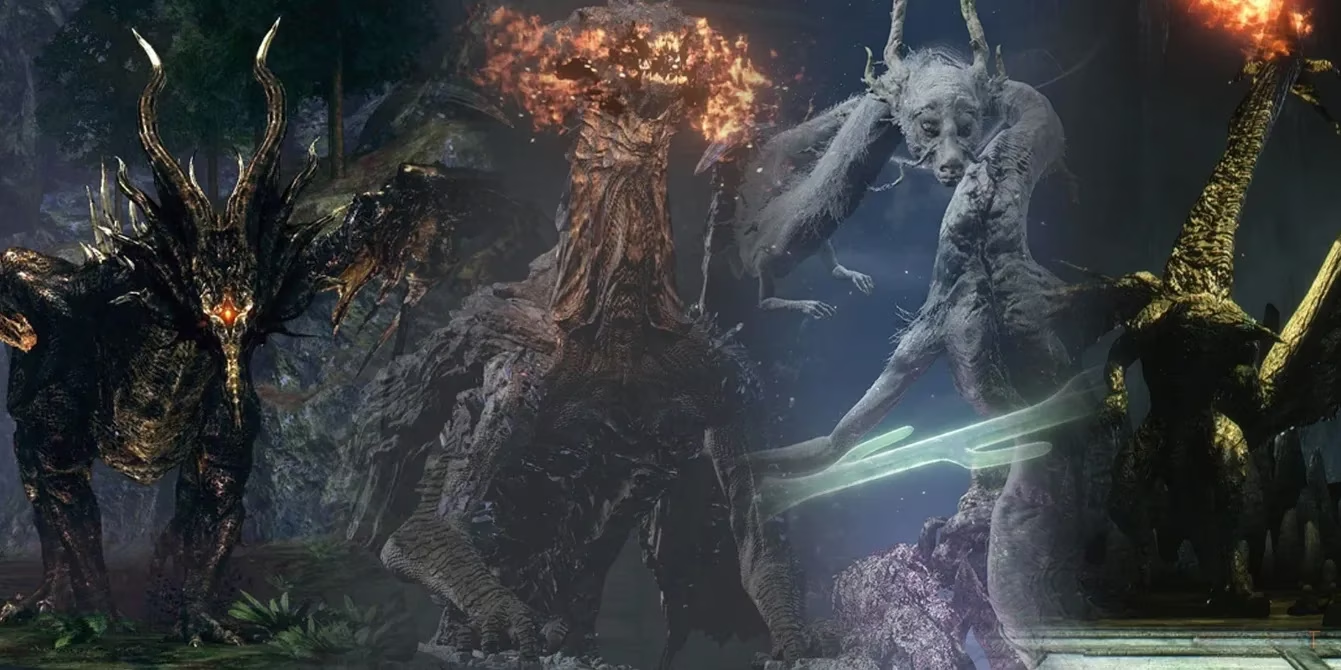
S-Tier: The Peak of Peril
Let's be honest, some fights are seared into your memory not just for their beauty, but for the sheer number of times they sent you back to the last Site of Grace or Bonfire. In 2026, three names still send a shiver down my spine:
-
Darkeater Midir (Dark Souls 3: The Ringed City): This wasn't just a boss; it was a war of attrition against a creature of pure, concentrated darkness. His laser beams, his furious charges, his health pool that seemed to stretch into infinity... every mistake was punished instantly. Yet, defeating him felt like conquering a force of nature itself.
-
Dragonlord Placidusax (Elden Ring): Finding this two-headed, storm-wielding monarch in a crumbled realm outside of time was a moment of pure magic. But the magic quickly turned to panic as lightning storms and teleporting claw swipes turned the arena into a deathtrap. A true test of endurance and pattern recognition.
-
Bayle The Dread (Elden Ring: Shadow of the Erdtree): The latest and perhaps greatest challenge. Bayle isn't just powerful; he's intelligent, unpredictable, and his arena is a character in itself. This fight demanded everything I had learned over the years and then some.
What makes these three the absolute pinnacle? It's the complete package:
-
Devastating AoE Attacks that force constant repositioning.
-
High-Damage Projectiles capable of ending the fight in a single, mistimed dodge.
-
Sweeping Melee Combos that demand pixel-perfect timing.
The silver lining? The sheer visual spectacle and the unmatched feeling of triumph make every failed attempt worth it. They are mountains you climb not because they are there, but because the view from the top is unforgettable.
A-Tier: Formidable & Fearsome
Just a step below the gods of the genre, these dragons are no pushovers. They represent the serious, core challenge that defines a FromSoftware experience.
| Dragon | Game | Primary Challenge |
|---|---|---|
| Lichdragon Fortissax | Elden Ring | Relentless red lightning storms in a claustrophobic arena. |
| Ancient Dragon Senessax | Shadow of the Erdtree | Aggressive close-range pressure combined with deadly lightning. |
| Kalameet | Dark Souls: Artorias of the Abyss | Raw speed and vicious, tracking attacks. |
| Sinh, the Slumbering Dragon | Dark Souls 2 | Aerial superiority; spends most of the fight frustratingly out of reach. |
| Ancient Dragon | Dark Souls 2 | A titanic health pool that turns the fight into a marathon of patience. |
This tier houses some of the most unique gimmicks. Sinh taught me the pain of a dragon who refuses to land, while Dark Souls 2's Ancient Dragon taught me the profound boredom that can come from an hour-long battle of attrition against a single, repetitive attack pattern. Yet, they all command respect.
B-Tier: The Reliable Challenge
This is the bread and butter of FromSoftware dragons. You'll face dozens of variations across the Lands Between and Lordran. They are tough, they will kill you if you get sloppy, but they also have clear, exploitable weaknesses that become second nature.
-
The Telegraphed Titans: Think of Elden Ring's Glintstone Dragons, Magma Wyrms, or Dark Souls' iconic Gaping Dragon. Their attacks are big, loud, and give you a generous window to react. They are the perfect training grounds for the bigger threats.
-
The Glass Cannons: Seath the Scaleless and Oceiros, the Consumed King hit hard and fast, but their limitations (Seath's immobility, Oceiros' lower health) make them puzzles to be solved rather than wars to be won.
-
The Environmental Variants: Elden Ring's Borealis the Freezing Fog or Ghostflame Dragons from the Shadow of the Erdtree add elemental twists, forcing adaptations without overwhelming the player.
These fights are the backbone of the world-building. They make the world feel dangerous and alive, without always bringing your journey to a screeching halt.
C-Tier & D-Tier: The Introductory Lessons
Every master was once a beginner, and these dragons are often the first teachers.
C-Tier includes foes like Decaying Ekzykes in Elden Ring—slow and predictable, but with one nasty Scarlet Rot surprise to keep you honest—or Sekiro's breathtaking Divine Dragon, a fight more about the awe-inspiring spectacle and simple mechanics than brutal difficulty. Even King of the Storm from Dark Souls 3 falls here; a dramatic prelude to the real challenge of the Nameless King.
Then, at the very bottom in D-Tier, we have the dragons that aren't really "fights" at all. 😄
-
Demon's Souls' Red & Blue Dragons: More like terrifying environmental hazards on the ramparts of Boletaria. The goal isn't to fight, but to survive their fire breath as you sprint past.
-
The Puzzle "Bosses": Dragon God (Demon's Souls) and Ancient Wyvern (Dark Souls 3). Their inclusion always sparks debate. Are they clever subversions of expectation or disappointing gimmicks? For me, they were memorable moments of tension—stealth sequences where one wrong move meant a instant, crushing death. They break the formula, for better or worse.
The Legacy Soars On
Looking back from 2026, the evolution is clear. FromSoftware's dragons have grown from impressive set pieces to complex, multi-phase duels that test every skill in a player's arsenal. They have moved from being obstacles in a level to being legendary events, hidden in forgotten cities and broken timelines. Each new iteration asks: How can we make this creature feel more ancient, more powerful, more intelligent?
The answer, thankfully, is not just bigger health bars, but more intricate designs, more dynamic arenas, and movesets that tell a story. Fighting Bayle the Dread in 2026 isn't just harder than fighting the Gaping Dragon was years ago; it's a richer, more cinematic, and ultimately more rewarding experience. They are no longer just bosses; they are the benchmarks by which I measure my own growth as a player. And I can't wait to see what majestic, terrifying form they take next.