Over a decade has passed since the studio first started defining the 'Soulslike' genre, and in 2026, looking back at FromSoftware's design journey feels like watching a master blacksmith refine the same blade over and over. From the groundbreaking interconnected worlds of the original Souls games to the sprawling, open-ended majesty of Elden Ring, the developer’s iterative genius is no secret. They’ve built an empire by polishing their ideas, discarding what doesn’t work, and relentlessly pushing the envelope. At the heart of this evolution lies a core pillar of player expression: build crafting and RPG progression. While the core loop of spending XP to level up stats has remained a comforting constant, the thematic layers wrapped around it have seen fascinating shifts—most notably, the tale of two runes.
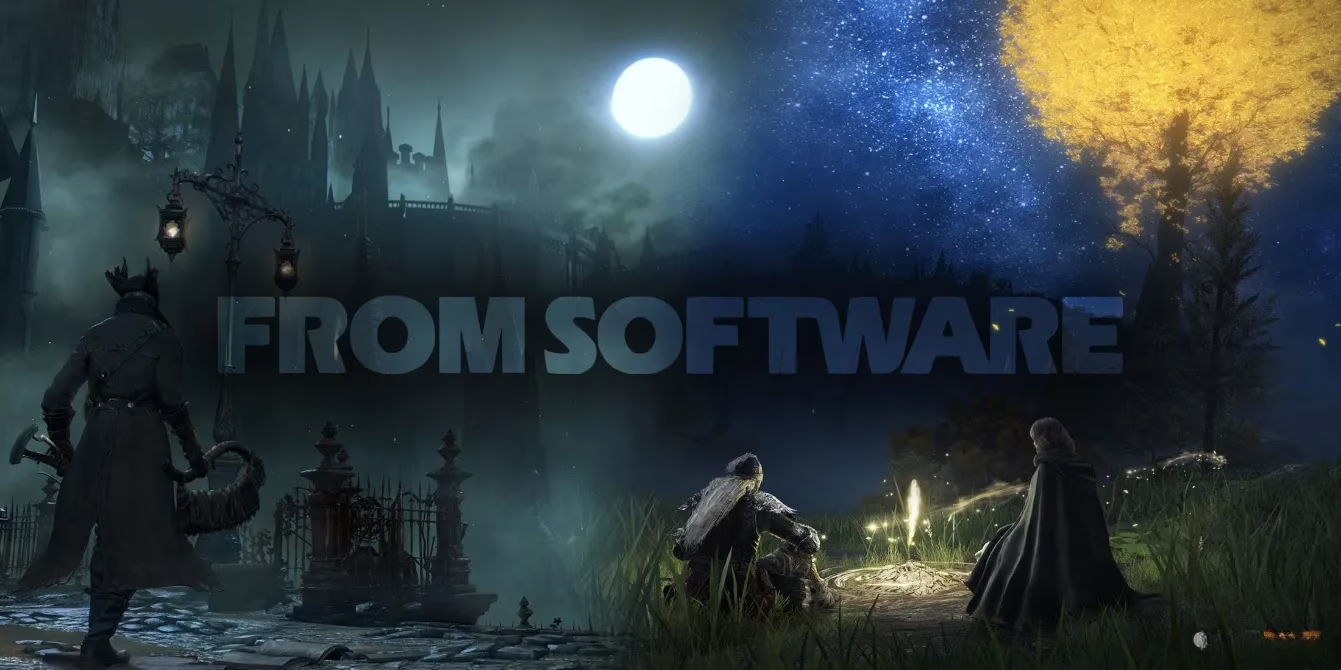
Bloodborne's Caryll Runes: The Silent, Persistent Partners
Let’s rewind to the gaslit streets of Yharnam. In Bloodborne, armor was, for the most part, a fashion statement—your drip mattered more than your defense stats, okay? The real gear-customization juice came from two sources: Blood Gems for your weapons, and the wonderfully weird Caryll Runes. Think of Caryll Runes as your hunter’s permanent, passive tattoos of power. They offered a buffet of distinct buffs, from the utterly game-changing (like Beast's Embrace, which literally turns you into a beast, or Milkweed, for a more... floral transformation) to the more humble, like a modest boost to stamina recovery or a slight bump in physical defense.
What made the Caryll system so brilliant was its pervasiveness and modularity:
-
Zero Drawbacks: Their effects were always on, consuming no resources. They were just... there, helping you out.
-
Stacking Potential: You could equip multiple runes with the same effect, allowing for hyper-specialization.
-
Experimentation-Friendly: With three main slots (plus one for Covenant Runes), players were encouraged to mix and match. It was a sandbox for tinkerers. This system had a holistic, long-lasting effect on your entire playthrough, deeply integrating with your chosen build. It wasn't a 'use-it-and-lose-it' deal; it was part of your hunter's identity.
Elden Ring's Great Runes: The Grand, Fleeting Boons
Fast forward to the Lands Between, and we meet the Great Runes. These were an evolution of a classic Souls trope—think Ember from Dark Souls 3 or Human Form from Demon's Souls. They promised massive power, but with a catch. You couldn't just equip them after defeating a demigod; you had to activate their power by consuming a rare item called a Rune Arc. And you could only have one active at a time.
When active, their effects were undeniably significant—hiking up all your stats or granting massive bonuses to specific attributes. The fantasy was there: you were channeling the shattered power of a slain god. But in practice... well, let's just say the system had some folks feeling a bit underwhelmed. 😅
The core issues were:
-
Ephemeral Power: The boost lasted only until death. Popping a Rune Arc for a tough boss felt good, but that advantage was terrifyingly short-lived.
-
The Hoarding Dilemma: Because Rune Arcs were finite (outside of co-op), players often ended up hoarding them, saving them for a 'perfect moment' that never came. The Great Runes themselves became trophy items, admired in the inventory but rarely used.
-
Lack of Mechanical Depth: Compared to the build-defining nature of Caryll Runes, Great Runes were more of a straight stat injection. They were powerful, but not very interesting from a customization perspective.
The Path Forward: A 2026 Vision for Rune-Crafting
So, where does FromSoftware go from here in their future titles? The answer might lie in a glorious fusion. Imagine a system that takes the best of both worlds.
The Hybrid Rune System: A Proposal
| Feature | Borrowed From | Potential Benefit |
|---|---|---|
| Modular Slots | Caryll Runes (Bloodborne) | Allows for deep build customization and experimentation. |
| Permanent, Passive Effects | Caryll Runes (Bloodborne) | Encourages constant engagement with the system, making it core to your identity. |
| Tiered or Upgradeable Runes | New Concept | Runes could be found in basic forms and upgraded using rare materials (replacing Rune Arcs), adding a progression layer. |
| Situational 'Awakening' | Great Runes (Elden Ring) | Perhaps the ultimate effect of a maxed-out rune set could be activated temporarily for a huge boost, rewarding investment. |
This fusion would address the key flaws:
-
No More Hoarding: Rare items would be used to permanently upgrade your runes, not consumably activate them. You're always building towards something.
-
Deep Customization: Like Caryll Runes, you could tailor a set of passive effects that truly defines your playstyle—a magic-focused set, a stealth set, a tank set.
-
Meaningful Boss Rewards: Defeating major bosses could grant unique, powerful runes or the rare materials needed to upgrade your existing ones to their final forms, making victory profoundly impactful on your build.
Balancing such a system would be a monumental task, no doubt. But if anyone can pull it off, it's FromSoftware. By marrying the pervasive, build-defining soul of Bloodborne's Caryll Runes with the epic, reward-driven gravity of Elden Ring's Great Runes, they could create the ultimate action-RPG progression layer. It would be a system that players constantly engage with, one that makes every item found and every boss slain feel like a direct step toward forging a legend that is uniquely their own. The potential is just sitting there, waiting to be carved into a new set of runes.