Thirty years after its initial release, the influence of FromSoftware's inaugural title, King's Field, is more palpable than ever in the modern gaming landscape. What began as an obtuse, divisive, and notoriously challenging dungeon-crawling RPG for the original PlayStation has, over decades, evolved into the philosophical bedrock for one of the industry's most significant and enduring genres. This obscure title, which faded into relative obscurity despite its sequels and small cult following, planted seeds that would eventually grow into a forest of challenging, atmospheric, and narratively rich experiences that dominate 2026's gaming discussions.
The Spiritual Successor: Demon's Souls

The direct lineage from King's Field to the modern "Soulslike" genre is most clearly traced through Demon's Souls. Hidetaka Miyazaki, the visionary FromSoftware CEO, has frequently cited the original King's Field as a personal favorite from his time as "just a gamer." When he took over the troubled production of Demon'ss Souls, he channeled the essence of that formative experience. The thematic parallels are unmistakable: both games are set in decaying, monster-plagued realms where a seemingly insignificant protagonist must confront overwhelming odds. They share a narrative approach built on environmental storytelling and cryptic lore, a hallmark that would become a signature of Miyazaki's directorial style.
Mechanically, the inheritance is just as profound. The core tenets of King's Field—a punishing difficulty curve, a stamina-based combat system demanding precise timing and positioning, and a gameplay loop built on rigorous trial-and-error—were refined and perfected in Demon's Souls. The philosophy that mastery is born from repeated failure, a concept central to the 1994 title, became the foundational pillar for a new era of action RPGs. Despite initial low expectations, Demon's Souls found a passionate audience, selling approximately 2.5 million copies on the PS3 and proving there was a substantial market hungry for uncompromising, challenging experiences.
Soulslikes Are Born: Dark Souls
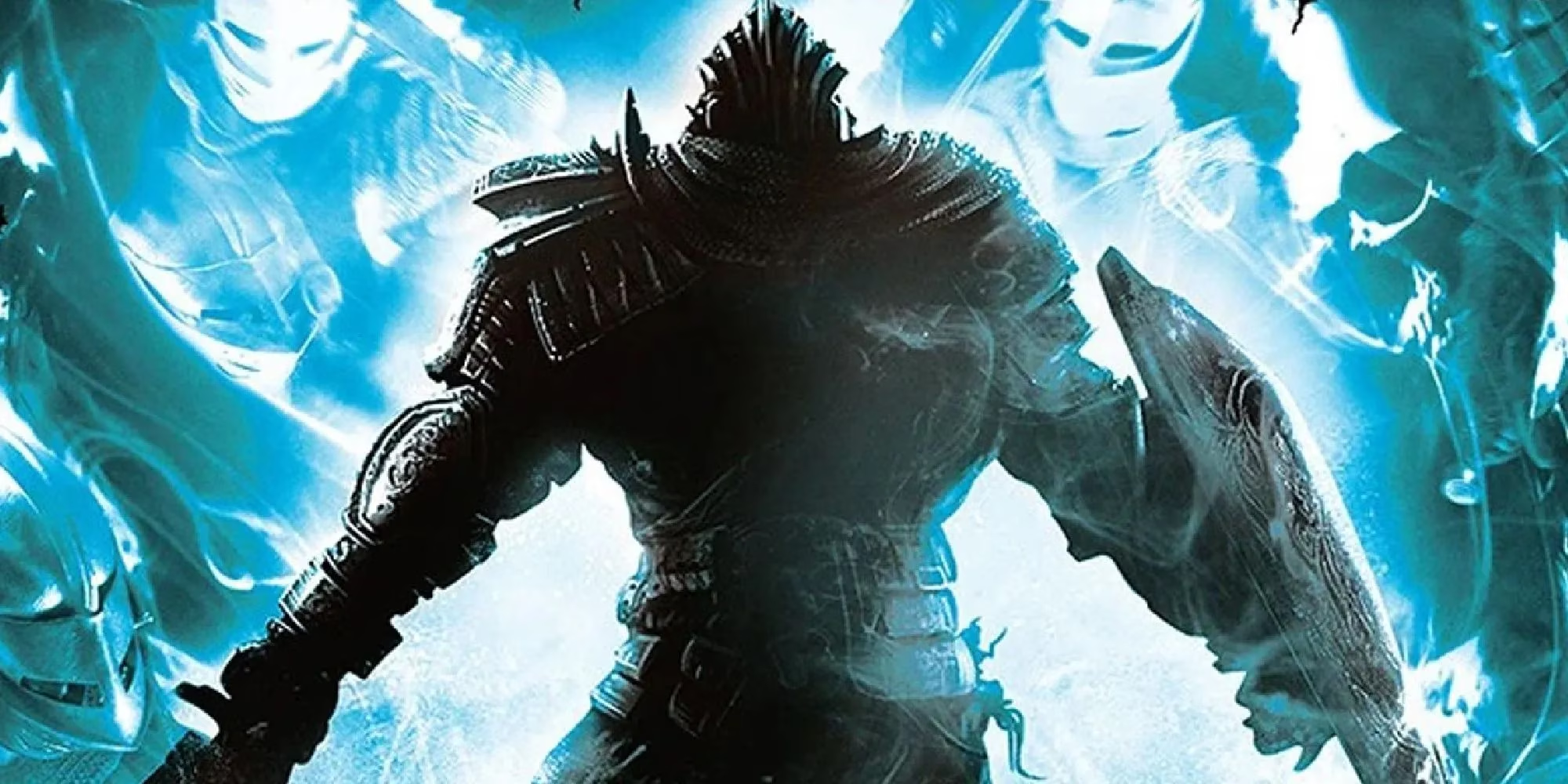
Building on the niche success of Demon's Souls, FromSoftware, now partnered with Bandai Namco, sought to expand its reach beyond PlayStation exclusivity. The result was Dark Souls, a title that took the established formula and honed it to a razor's edge. While iterative in its changes—such as integrating the hub world into the seamless, interconnected landscape and introducing the Estus Flask healing system—Dark Souls achieved a monumental breakthrough. Its commercial and critical success was staggering, with the trilogy eventually selling over 27 million copies worldwide. This triumph did not go unnoticed; it sparked a creative revolution across the industry.
Developers, from ambitious indie studios to major triple-A publishers, began to experiment with and reinterpret FromSoftware's core design principles. This wave gave birth to a new subgenre, colloquially dubbed "Soulslikes." Seminal titles like Nioh, Salt and Sanctuary, and Hollow Knight each put their own unique spin on the formula. The influence even permeated established mega-franchises, with games like Star Wars Jedi: Fallen Order and the reinvention of God of War incorporating stamina management, weighty combat, and checkpoint systems inspired by Dark Souls. The cult classic had successfully catalyzed a genre.
The Genre's Evolution and King's Field's Lasting Impact
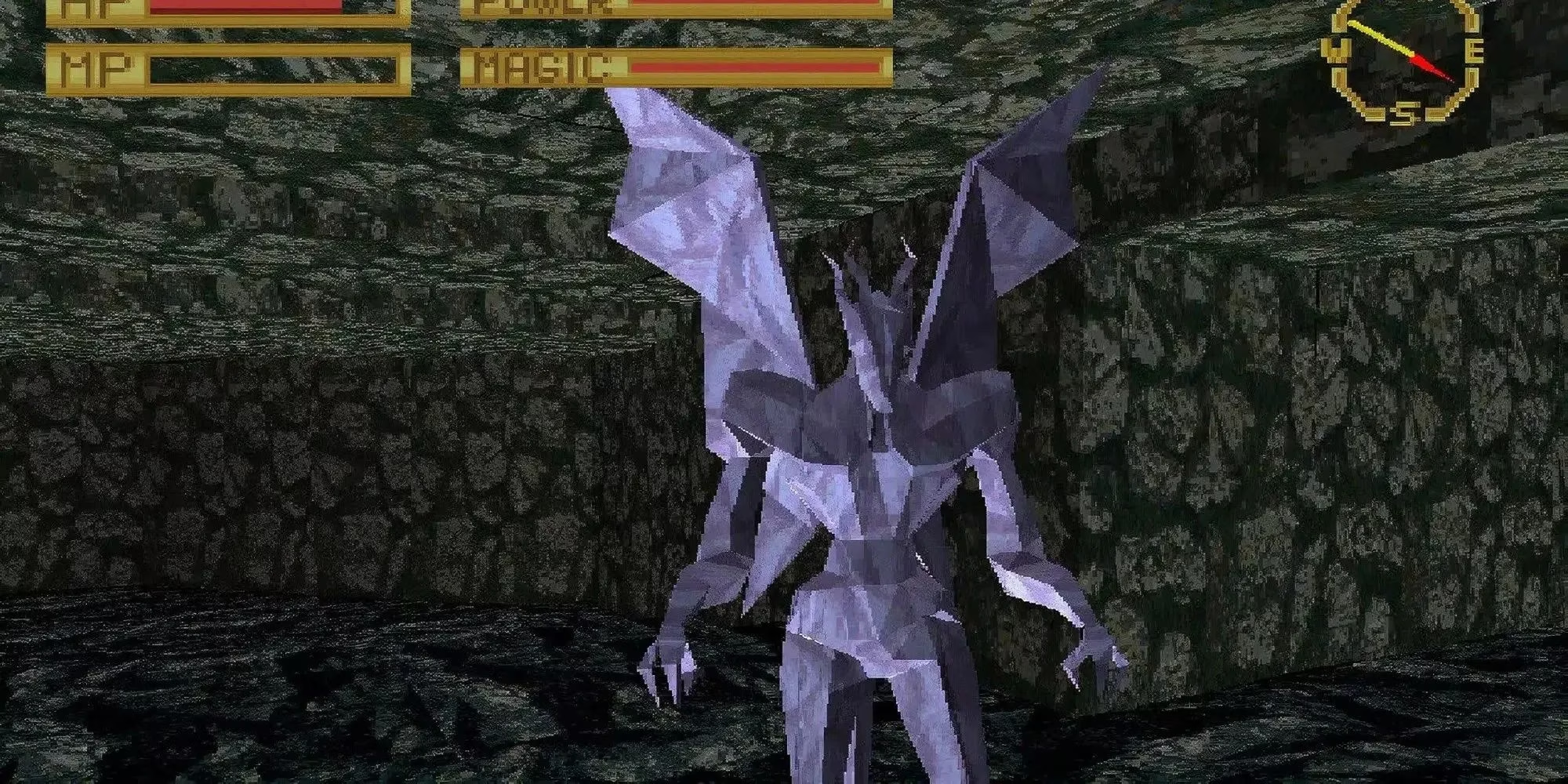
As of 2026, the Soulslike genre stands as a titan in interactive entertainment. FromSoftware's own Elden Ring achieved unprecedented mainstream success, outselling the entire Dark Souls trilogy and introducing its punishing yet rewarding world to tens of millions of new players. Other landmark releases, such as the critically acclaimed Black Myth: Wukong, which instantly became one of Steam's most-played titles, demonstrate the genre's massive global appeal. Beloved entries like Bloodborne and Lies of P have further expanded the genre's stylistic and mechanical boundaries.
Throughout this remarkable evolution, FromSoftware has remained steadfast in the core philosophy inherited from King's Field. Games like Elden Ring continue to offer a formidable, unforgiving challenge where victory is earned through perseverance, observation, and adaptation. Legendarily difficult encounters, such as the battles against Malenia or Consort Radahn, are direct spiritual descendants of the trials that divided players in the labyrinthine dungeons of King's Field decades ago.
It is a fascinating and somewhat paradoxical journey: a divisive, obscure PlayStation launch title inspired a spiritual successor that few had faith in, which in turn ignited the creation of one of gaming's most dominant and respected genres. The legacy is undeniable. The deliberate pacing, the atmospheric world-building, the emphasis on player-conquered adversity—all these elements that define the Soulslike experience can trace their lineage back to that initial, ambitious dive into a dark fantasy cave in 1994. King's Field proved that a game's initial commercial reception is not the final measure of its impact; its true influence can resonate and reshape an entire medium for generations to come. 🏰⚔️💀