In the landscape of modern video games, where predictability and accessibility often reign supreme, one title dared to defy convention and, in doing so, sculpted an entire genre. Released fifteen years ago, Demon's Souls began its journey as a niche PlayStation 3 exclusive in Japan. Its path to global recognition was not paved with massive marketing campaigns but with the potent currency of word-of-mouth praise and growing import demand, a grassroots movement so powerful it eventually compelled Sony to officially localize the game. The apathy and low expectations that initially surrounded its development, paradoxically, became the fertile ground from which a monumental legacy grew. At a time when mainstream gaming was leaning towards streamlined experiences, Demon's Souls emerged as a defiant, brilliant counterpoint—a love letter to challenge and discovery that carved a new, unforgiving path forward.
Why Was Demon's Souls Such a Revolutionary Title?
The game's philosophy was established by director Hidetaka Miyazaki, now an industry titan, who sought to create a grim, unforgiving fantasy. His approach was not to guide the player but to challenge them fundamentally. Imagine being thrown into a medieval castle with no tutorial, no clear objective, and only your instincts to rely on for learning movement, combat, and survival. This was the Demon's Souls experience. Its design demanded precision; every animation had a tangible weight and consequence. Attacking recklessly or dodging a fraction of a second too late could mean the difference between victory and a crushing defeat. The game communicated through action and consequence, not exposition.
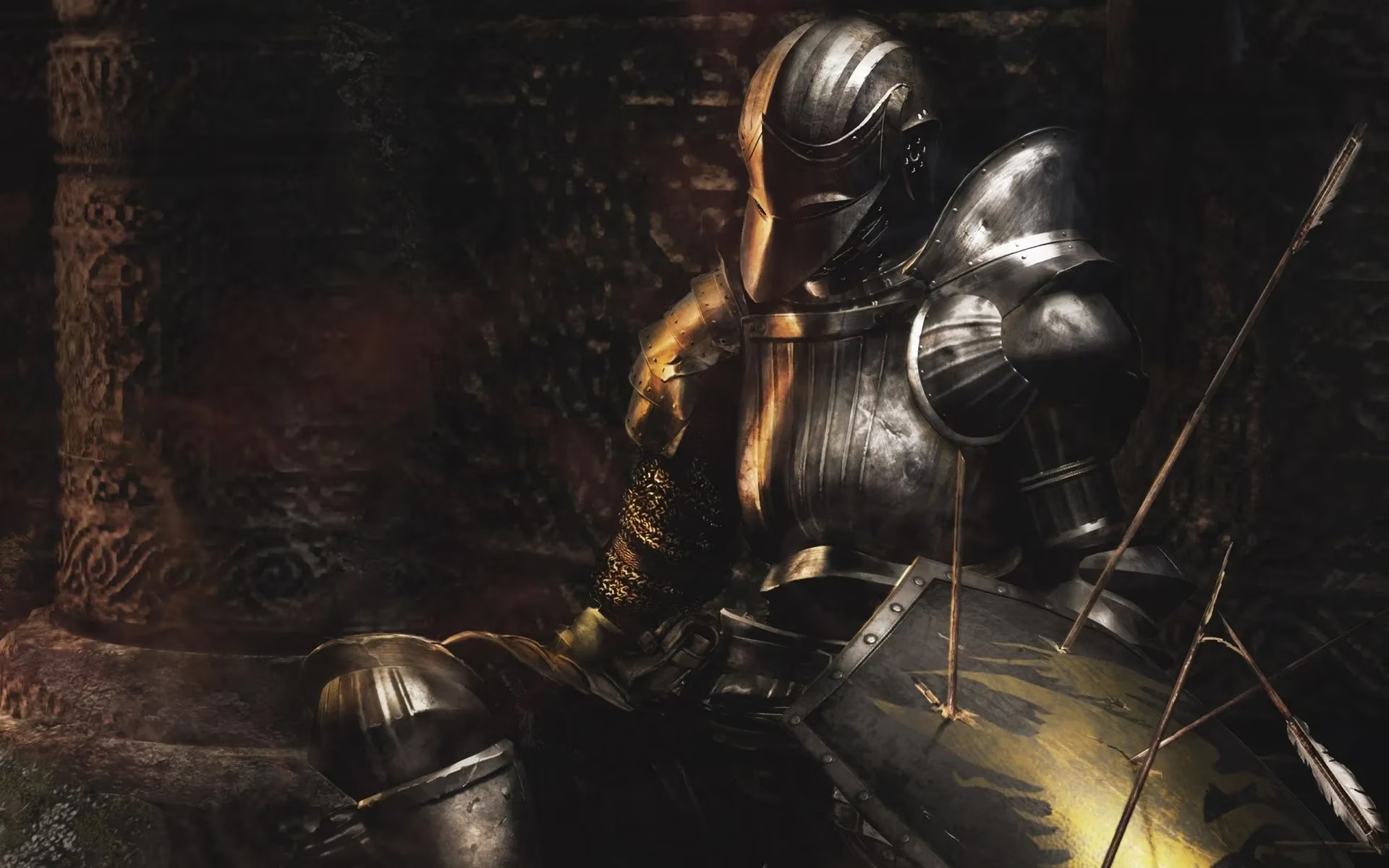
Central to its identity was the embrace of failure. You were meant to die—repeatedly. Each death in the cursed land of Boletaria was a lesson. The infamous mechanic of losing all accumulated souls (currency and experience) upon death, with only one chance to retrieve them, was a brutal and unfathomable concept in 2009. For many, it was a dealbreaker. Yet, for those who persevered, it reframed failure not as a punishment but as an integral part of the learning process. The game asked players to challenge themselves, to master its mechanics through relentless practice and keen observation. Was this cruelty, or was it a profound form of respect for the player's intelligence and perseverance?
The impact of this design was seismic. Demon's Souls did not just spawn the Dark Souls trilogy; it laid the foundational DNA for a lineage of masterpieces including Bloodborne, Sekiro: Shadows Die Twice, and the colossal Elden Ring. The latter stands as one of the most critically acclaimed and commercially successful games of all time, proving the enduring appeal and scalability of the formula Miyazaki first honed fifteen years ago. The core philosophies of nuanced combat, environmental storytelling, and rewarding exploration continue to bear fruit, influencing an entire generation of game design.
The Ripple Effect: How Did Demon's Souls Reshape the Industry?
The mainstream success of Demon's Souls served as a powerful wake-up call. It demonstrated conclusively that a significant audience not only tolerated but actively sought out substantial challenge. It proved that unforgiving gameplay mechanics and intricate, hostile world design could be powerful, immersive storytelling tools in themselves. The game's immersion stems from this intimacy; by dying repeatedly, players learn every crevice of a level, every pattern of an enemy. This knowledge, combined with the game's esoteric lore scattered throughout the environment, creates a uniquely personal and earned connection to the world.
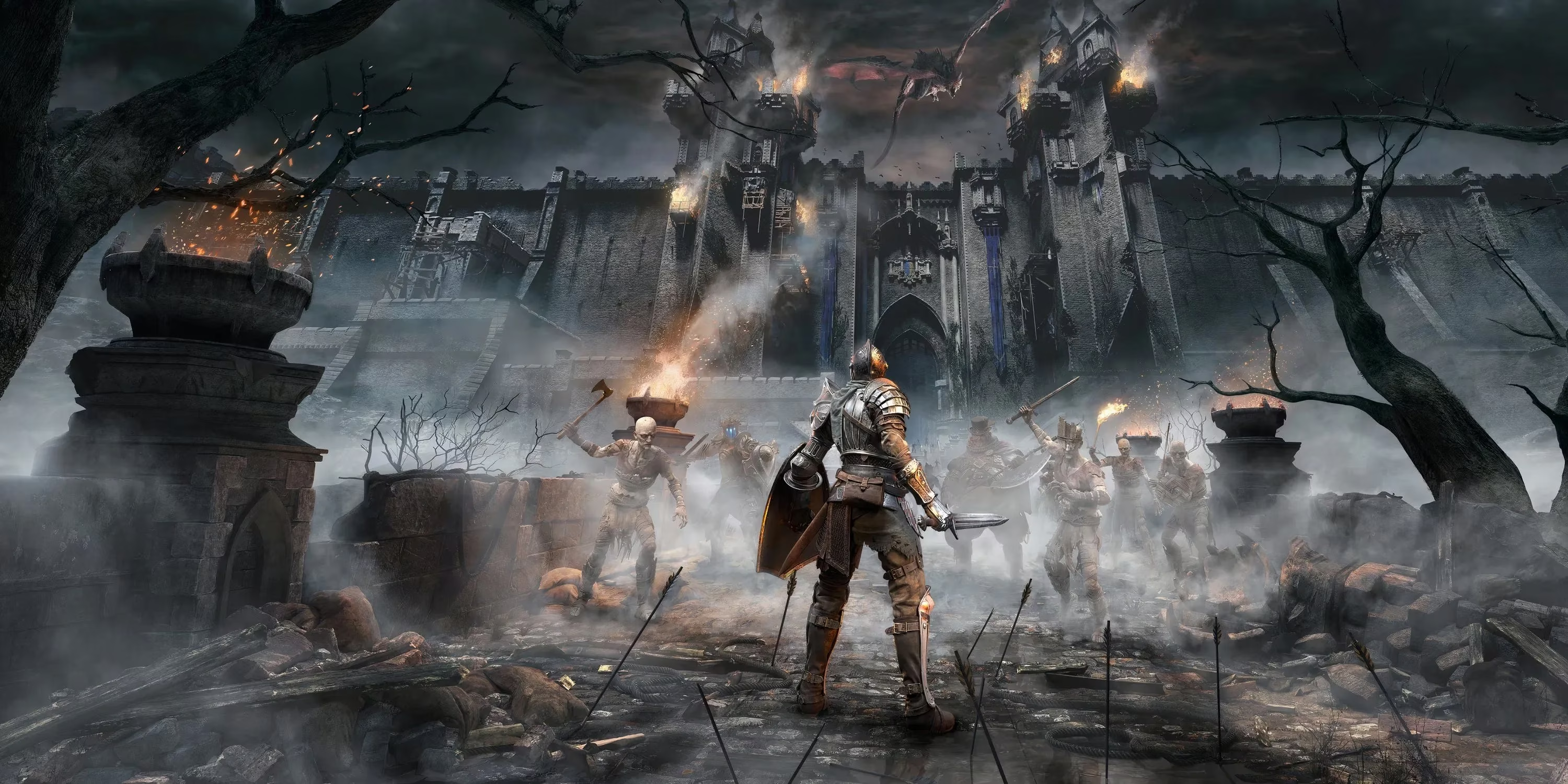
This influence is visible across the gaming spectrum. A wave of "Souls-like" games emerged, directly inspired by FromSoftware's blueprint. Titles like The Surge, Mortal Shell, Ashen, Lies of P, and even the critically beloved Hollow Knight either adopted the formula wholesale or used its core tenets—punishing combat, checkpoint-based progression, and atmospheric exploration—as a foundational framework. It's a fascinating thought experiment: what would the gaming landscape of the last decade look like if Demon's Souls had never found its audience? How different would our perception of difficulty and player agency be?
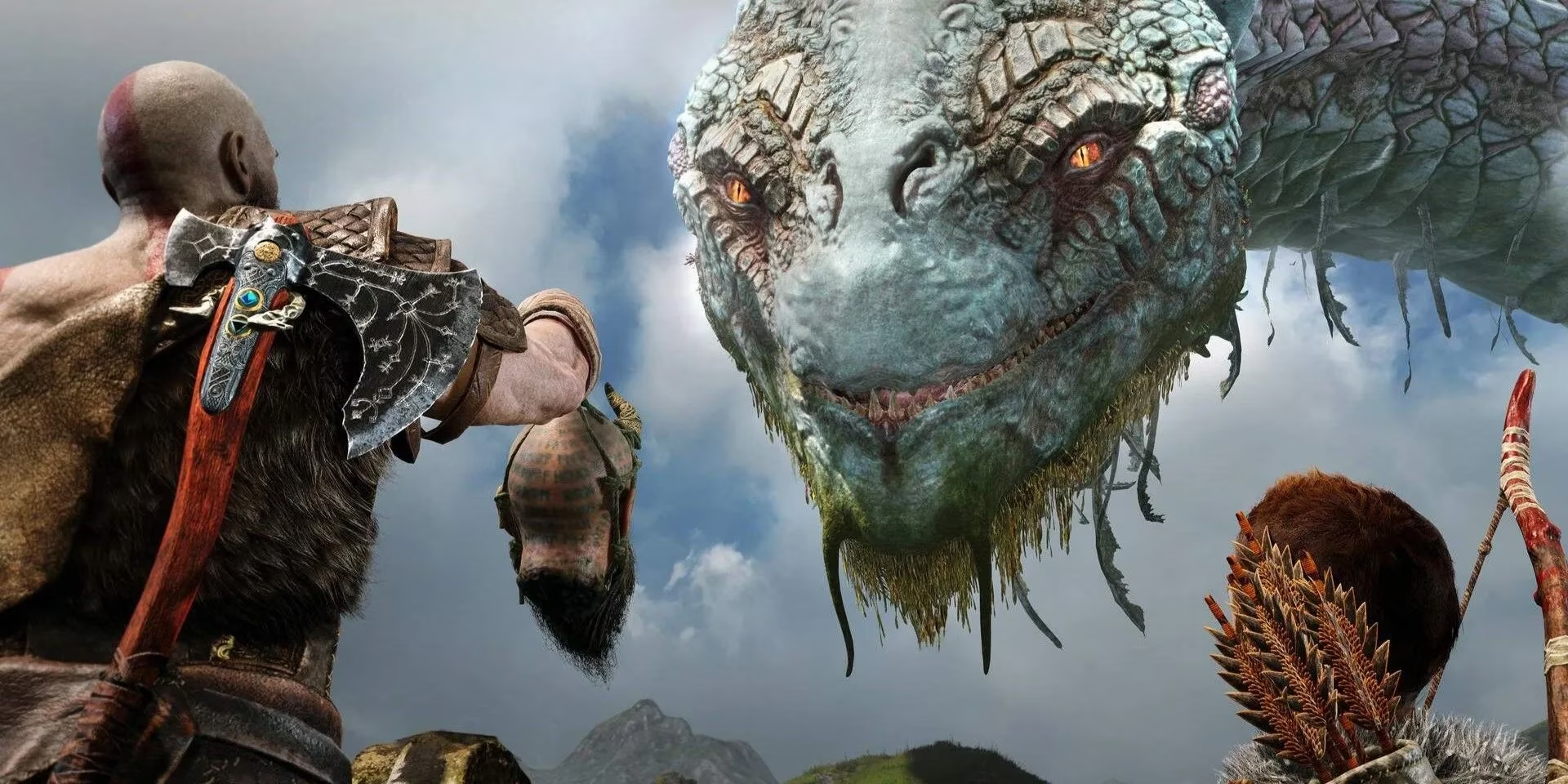
The influence extends beyond direct imitators. Major blockbuster franchises have subtly integrated lessons learned from Boletaria. The 2018 reboot of God of War, for instance, adopted a more methodical, over-the-shoulder combat perspective and a world rich with hidden lore, moving away from pure spectacle towards a more deliberate pace.
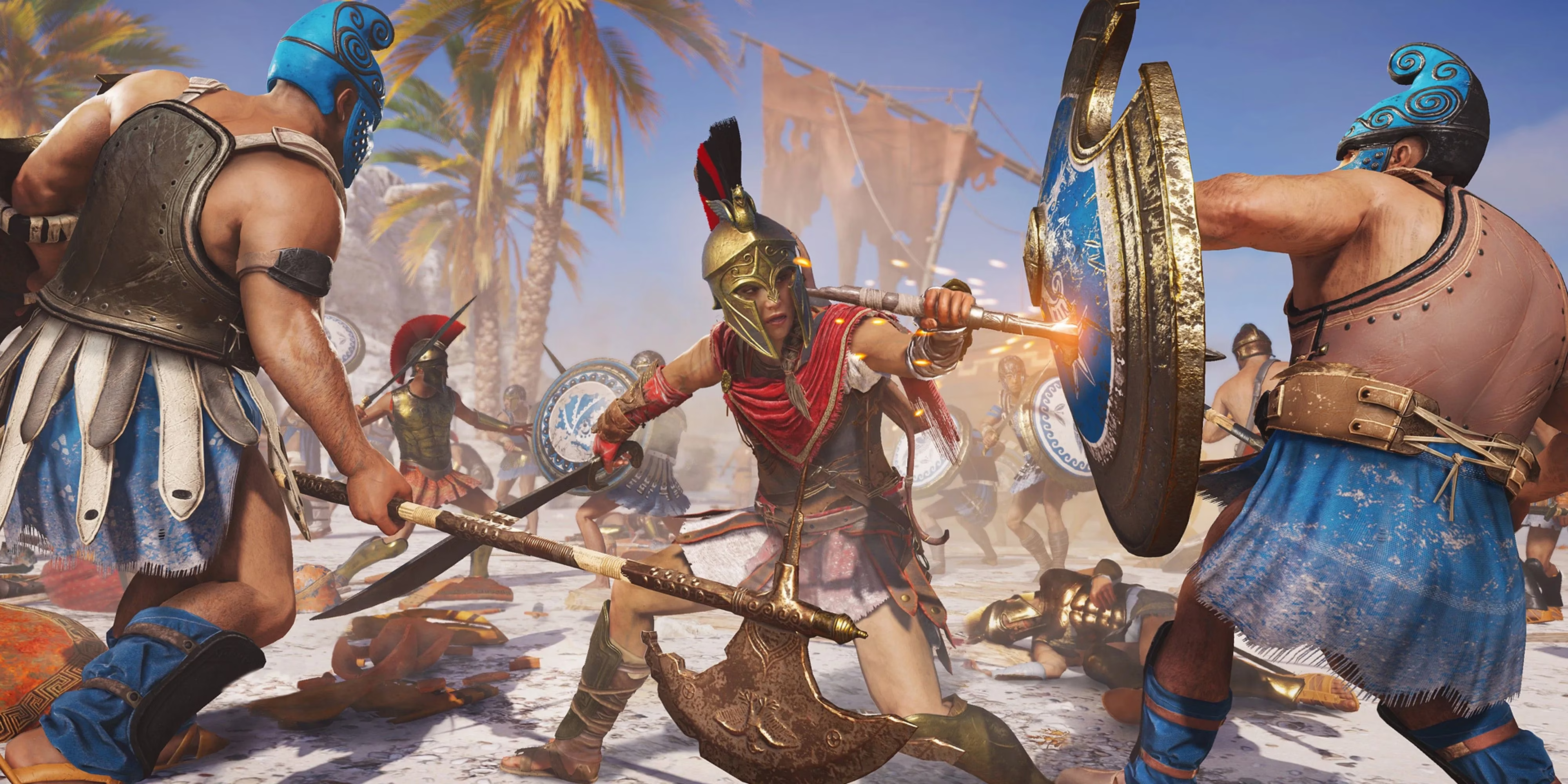
Similarly, the Assassin's Creed series, particularly entries like Odyssey and Valhalla, incorporated more RPG-like mechanics, challenging boss fights, and a greater emphasis on exploration and player-built progression—elements that feel spiritually indebted to the Souls-like revolution. These franchises learned from the best, proving that Demon's Souls formed a new bedrock of design innovation for studios of all sizes to draw upon.
A Timeless Legacy Proved by Revival
The ultimate testament to Demon's Souls' timeless design arrived in 2020 with Bluepoint Games' stunning PS5 remake. While visually transformed, the core experience remained untouched. Playing it was a stark reminder that despite the iterative brilliance of Dark Souls, Bloodborne, and Elden Ring, the original's loop of tense exploration, deliberate combat, and rewarding curiosity remains potent and unmatched in its purity. As it celebrates its 15th anniversary in 2026, its special status is undeniable. Demon's Souls was more than a game; it was a paradigm shift. It challenged industry norms, redefined player expectations, and created a design language that continues to inspire and captivate. It asked us not just to play, but to persevere, to learn, and to conquer—and in doing so, it forever changed what we expect from our virtual adventures.