I remember the stillness of the Roundtable Hold, a sanctuary that felt as permanent and unyielding as the roots of the Erdtree itself. It was meant to be a refuge, a place where we Tarnished, all clawing our way toward the same impossible throne, could lay down our blades and breathe. The air was thick with ambition and quiet desperation, a fragile truce woven from shared exile. That all shattered, for me, the day I found D, Hunter of the Dead, slumped on the floor, his lifeblood seeping into the ancient stones like a dark, accusing stain. Standing over him was Fia, the deathbed companion, her usual gentle demeanor replaced by a resolve as cold and sharp as a grave-marker. She spoke of betrayal and loyalties deeper than our fellowship, then vanished into the shadows, leaving behind a corpse and a mystery that gnawed at me like a parasitic root. This wasn't a random act of violence; it was an assassination, a surgical strike in a hidden war I was only beginning to understand. The sanctuary’s law against violence had been broken, and with it, the illusion that our struggles were merely personal. I had delivered the blade that led to his death, a weathered dagger that felt in my hand like a forgotten tooth from some long-extinct beast. The weight of my complicity settled on me, heavy and cold.
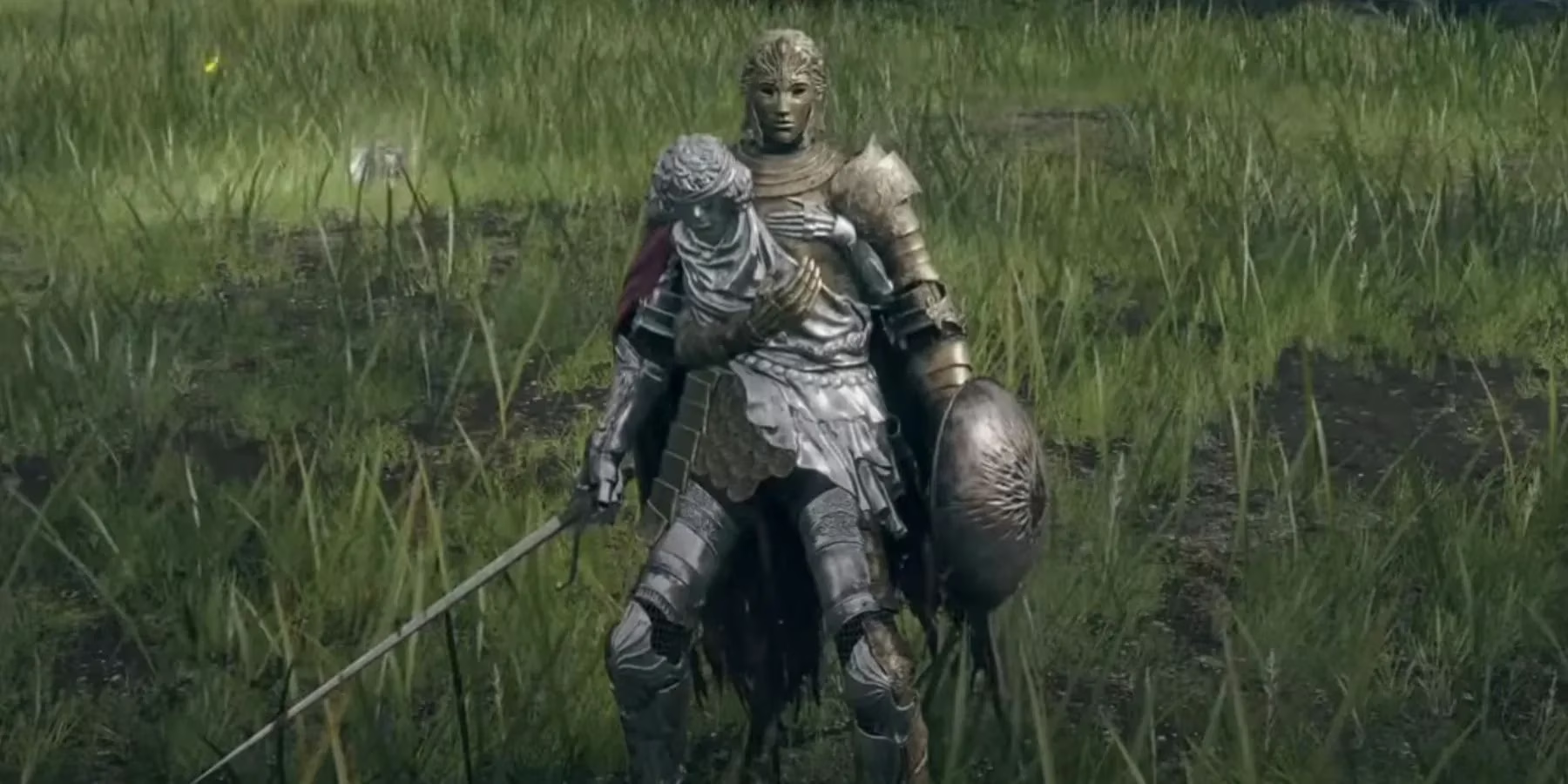
To understand this murder, you must first understand the hunter. D was a man carved from the rigid dogma of the Golden Order, his purpose as singular and unforgiving as a guillotine’s blade. He saw the world in absolutes: purity and corruption, order and chaos. His prey were 'Those Who Live in Death,' the undead who bore the cursed mark that spread like a spiritual plague after the murder of Godwyn the Golden. To D, they were an abomination, a stain on the world that needed purging. He hunted with a zeal that bordered on fanaticism, his intolerance a suit of armor thicker than his Twinned set. I learned from the sorcerer Rogier that they were once partners, but their paths diverged over a fundamental rift. Rogier came to see the afflicted undead as victims deserving of mercy, their condition a curse, not a choice. D could not—or would not—make that leap. His ideology was a sealed tomb, allowing for no new air, no light of compassion. This disconnect festered in the Hold, a silent tension as palpable as the hum of a drawn bowstring.
And then there was Fia. She was an oasis of calm in the Hold, offering an embrace that, while sapping my vigor, felt like a moment of genuine solace in a brutal world. But her comfort was a veil. Fia’s loyalty lay not with the Two Fingers or the dream of becoming Elden Lord, but with the Prince of Death himself, Godwyn. As a deathbed companion, her affinity was for the persecuted, for those existing in the twilight between life and death. Where D saw impurity to be cleansed, Fia saw kindred spirits to be protected. Her entire presence at the Roundtable Hold, I later realized, was a carefully laid trap, a spider patiently spinning its web in a corner everyone assumed was safe. D, in his relentless pursuit of the undead, had become a direct threat to her and those she championed. But her goal was more profound than mere self-preservation. She sought a fragment of power, a hallowbrand that was part of the splintered Death Rune, and D possessed it. Her plan was as meticulous as a master cartographer inscribing a fatal path: use me, an oblivious courier, to deliver the Weathered Dagger to D. This act was not a gift, but a key—a way to mark her target and lull him into a false sense of security within the sanctuary's supposed safety. She ambushed him not just as an enemy, but as a thief reclaiming a sacred relic, her betrayal as quiet and inevitable as dusk following day.
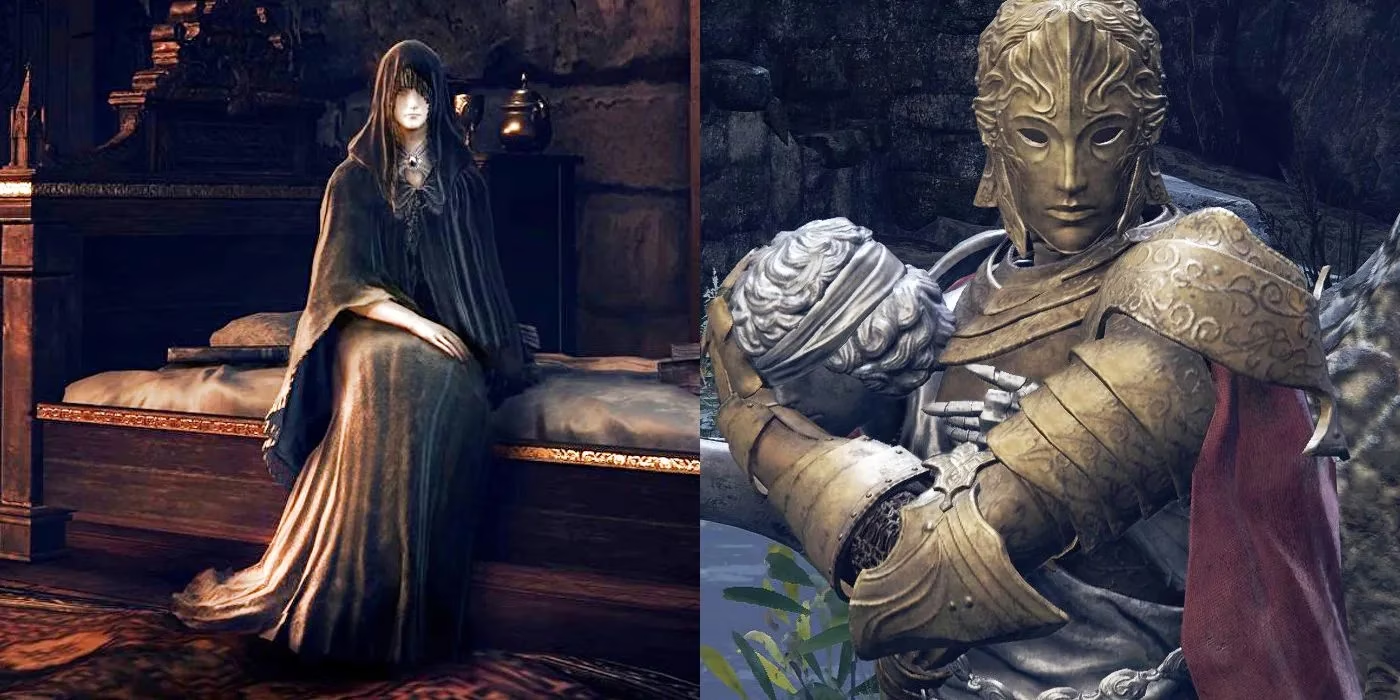
The aftermath was a lesson in the grim calculus of the Lands Between. Innocence is a luxury few can afford here. D, for all his noble knightly bearing, was a zealot whose purge would have continued without end, his righteousness as blinding as a polished helm in the noon sun. Fia, for her act of sanctuary-breaking murder, set in motion her own doom. By giving D’s armor to his grieving twin brother, I learned that no crime in this broken world goes unpunished; Fia was later executed for her transgression. Their conflict was a microcosm of the Shattering itself—two irreconcilable forces on a collision course, their ideologies as incompatible as fire and deep water, destined to consume each other. Pursuing their intertwined quests felt like watching a prophecy unfold, a murderous cycle written in the bedrock of the world. Yet, from this tragedy, a new possibility was born. By siding with Fia’s vision to the end, a Tarnished can usher in the Age of the Duskborn, an ending where death is restored to its natural place in the order. It is an imperfect resolution, born from betrayal and bloodshed, a future woven from a tapestry of conflicting loyalties where true peace remains as elusive as a mirage. The death in the sanctuary taught me that in the Lands Between, every hand extended in comfort might conceal a dagger, and every act of faith plants the seed for the next great conflict.