As I wander the shadowed groves of the Lands Between in 2026, the memory of the Erdtree's eclipse still feels fresh. The air is thick with the ghosts of countless fallen Tarnished, a testament to the crucible that was Shadow of the Erdtree. We all remember the initial, almost vertical wall of challenge it presented, a gauntlet that felt less like a game and more like trying to sculpt marble with a feather. Yet, the most profound comfort in that shared struggle came not from a patch note, but from a confession. The very architect of this beautiful, punishing world, Hidetaka Miyazaki, stood before us not as an untouchable god of game design, but as a fellow traveler, fumbling with his flasks and desperately scrounging for every advantage the game offered. His humility was a balm, a reminder that the true victory was never in flawless execution, but in the stubborn, collective will to rise again.
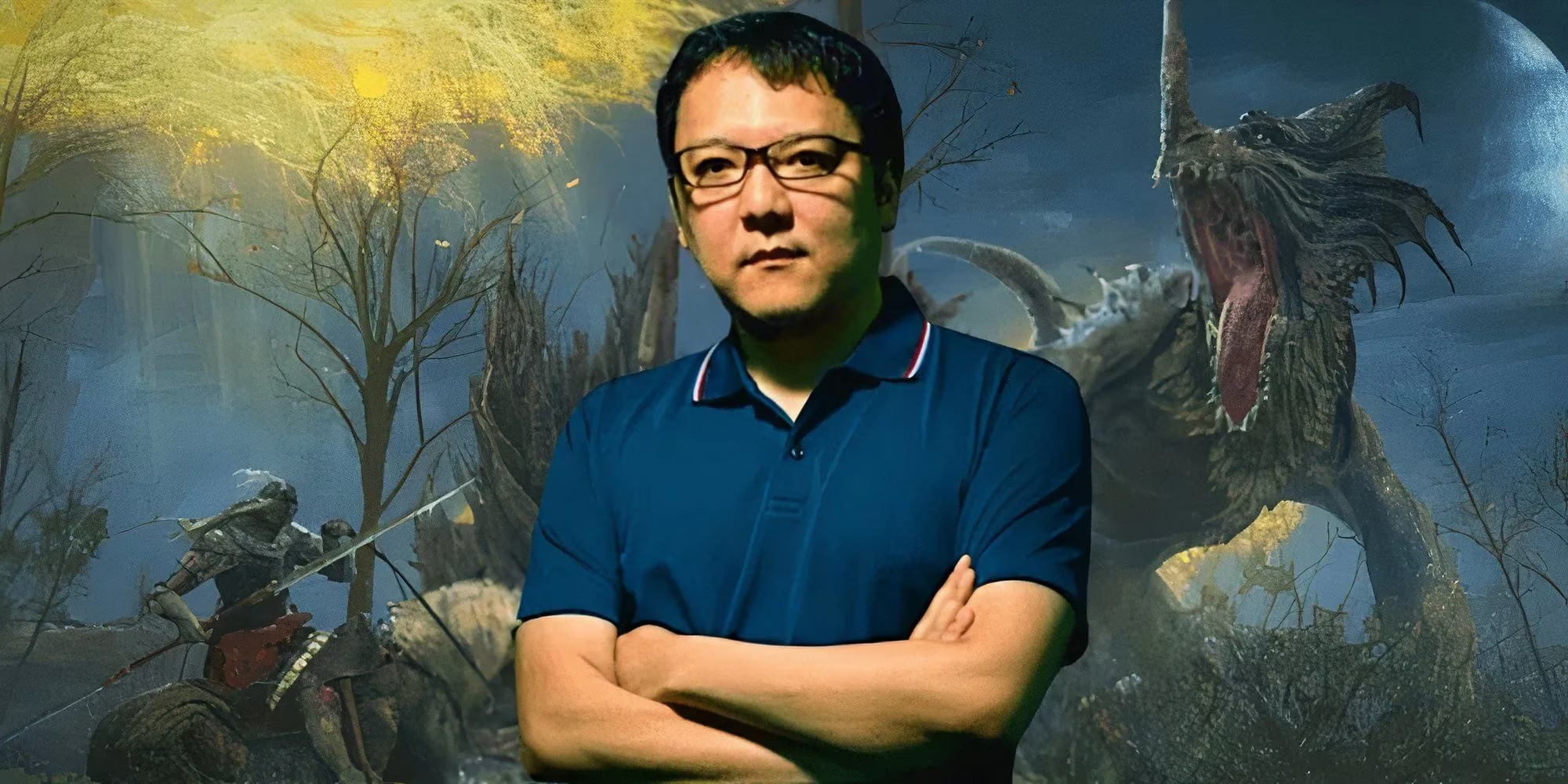
Miyazaki’s admission was a seismic shift in perspective. He broke his own post-release rule to journey through Elden Ring once more before the DLC, not as its director, but as a player. And what did he find? A world that resisted even its creator. "I want to preface this by saying I absolutely suck at video games," he stated, his approach a frantic gathering of "every scrap of aid that the game offers." For us, the players who had weathered the DLC's launch, this was a revelation. The difficulty wasn't a cold, calculated wall built to exclude; it was a mountain the builder himself found daunting to climb. His playstyle became a philosophy for the community: there is no shame in using the tools provided. The spirit summons, the overpowered ashes, the meticulously researched weaknesses—they weren't cheats, but essential pigments in the painting of our individual victories.
This ethos directly shaped the journey of Shadow of the Erdtree. Its launch was a cultural moment, a storm of exhilaration and frustration that briefly made the gaming world hold its breath. The difficulty was a living entity, a matryoshka doll of despair where conquering one fearsome guardian only revealed another, more intricate layer of challenge within. Yet, from this furnace emerged a legendary status. It dethroned The Witcher 3: Blood and Wine as the highest-rated DLC of all time, an achievement met with stunning sportsmanship from CD Projekt Red, who gifted FromSoftware a celebratory artwork. The calibration update that followed, making players relatively stronger, wasn't a surrender. It was a tuning, an acknowledgment that the symphony of combat needed its crescendos spaced to allow for breath, for the appreciation of the haunting melody beneath the clash of steel.
Miyazaki’s vision extends beyond the immediate fray. When asked about an Elden Ring film, he expressed open interest but profound self-awareness. "I don’t see any reason to deny another interpretation... a movie for example," he said, while clearly stating that FromSoftware shouldn't be at the helm. He envisions a partnership built on trust, allowing the world's essence to be translated by those with the specific "industry smarts" for cinema. This future-forward thinking shows a creator less concerned with rigid control and more with nurturing the life of his creation in the wider world. The game, and its brutal, beautiful DLC, are not endpoints but seeds.
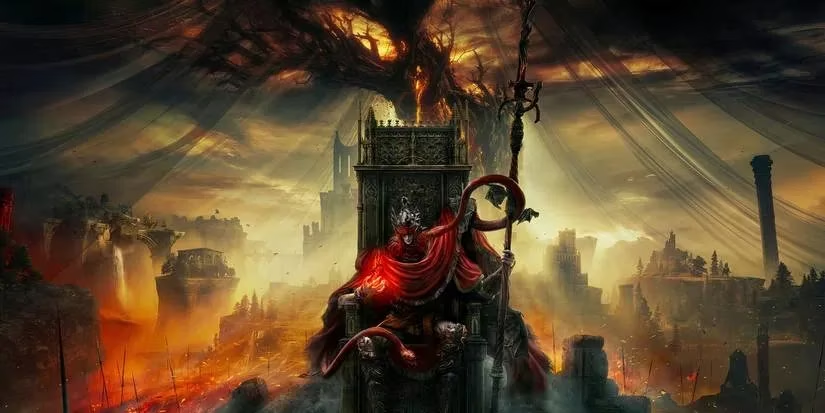
So here we are in 2026, looking back. The landscape of Shadow of the Erdtree is now familiar, its horrors mastered, its secrets laid bare. Yet, its legacy is multifaceted. It is:
-
A Testament to Collective Resilience: A challenge that unified a community in shared struggle and strategy.
-
A Lesson in Humility: A reminder from the top that perfection is not the prerequisite for engagement.
-
An Evolving Canvas: A world that was adjusted post-launch, proving that even masterpieces can benefit from a thoughtful touch-up.
The DLC's difficulty was never a locked door. It was, and remains, a complex dance of light and shadow, where victory is the momentary alignment where you step into the light while the enemy is cast in darkness. And Miyazaki, we now know, was dancing right alongside us, just as off-beat and determined. His journey tells us that in the shadow of the Erdtree, we are all Tarnished, and our shared, scrappy perseverance is the true grace.
| Aspect of the Experience | The Initial Challenge (2024) | The Evolved Perspective (2026) |
|---|---|---|
| Community Sentiment | Fractured, with intense debate on fairness | Unified, viewing the struggle as a rite of passage |
| Approach to Tools | Debated, with some seeing spirit ashes as 'easy mode' | Embraced, following Miyazaki's 'use everything' philosophy |
| The Difficulty Itself | A sheer cliff face to scale | A masterfully arranged labyrinth where the walls themselves tell a story |
| Legacy | A divisive but high-quality expansion | The highest-rated DLC, a benchmark for ambition |
The tale of Shadow of the Erdtree is no longer just about bosses defeated. It's about a creator's vulnerability becoming the community's strength, and a challenge that softened its edges not out of weakness, but to let more players hear its profound, whispering legend.