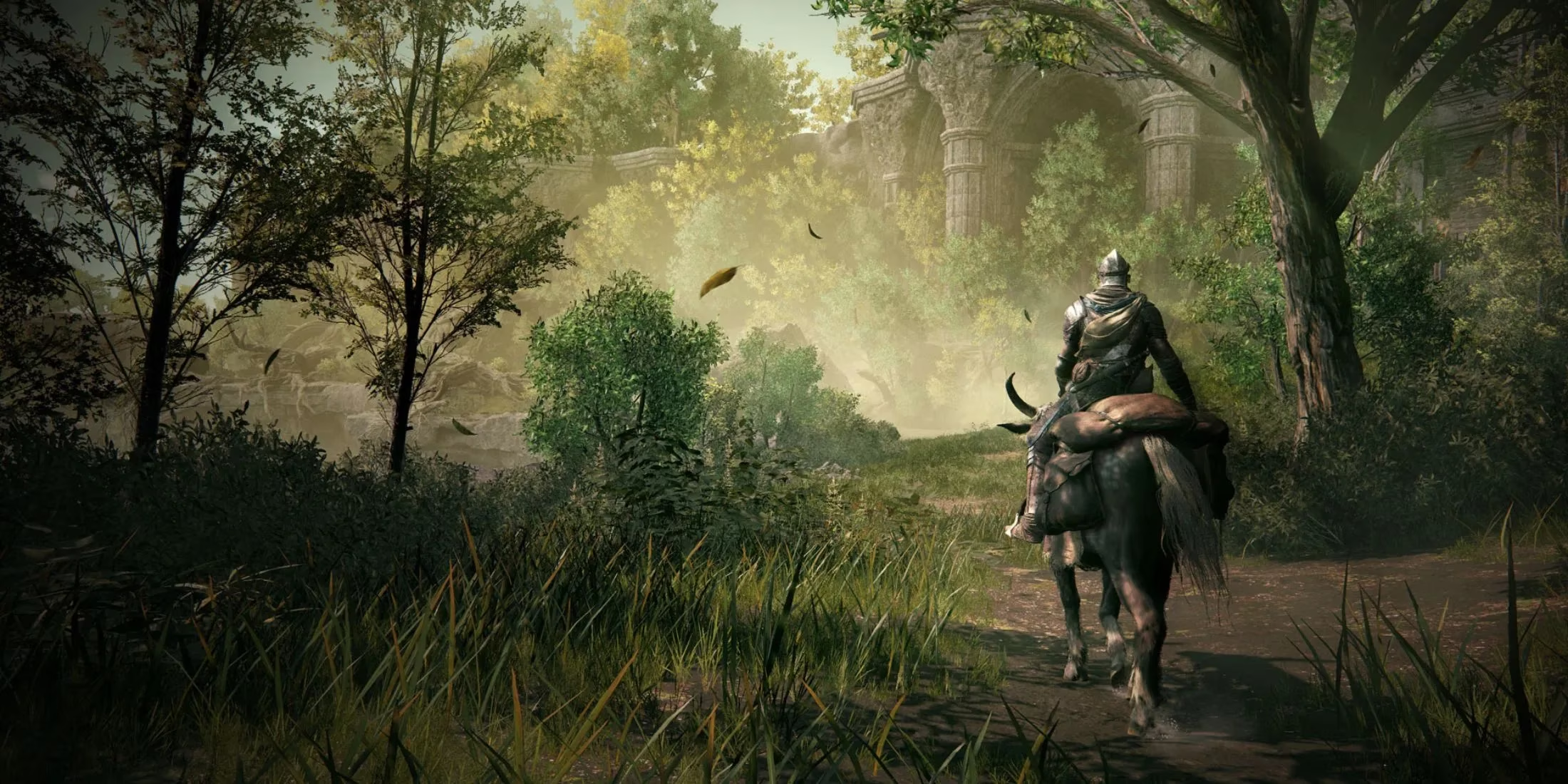
Choosing a starting class in FromSoftware's critically acclaimed action RPG, Elden Ring, remains a pivotal first step for any Tarnished venturing into the Lands Between. With ten distinct origins available, this initial decision shapes the early game experience, defining a character's strengths, weaknesses, and preferred combat tactics. While experienced players may relish the challenge of a difficult start, newcomers in 2026 continue to benefit from classes designed to ease the notoriously steep learning curve, making the opening hours more accessible and less punishing.

For players seeking the smoothest introduction to the game's mechanics, the Vagabond class stands out as the premier choice. Its defining feature is a robust and well-rounded stat distribution, providing a significant health pool and solid physical defenses right from the start. This resilience is crucial for surviving the aggressive foes found in Limgrave and beyond.
-
High Starting Vigor: Grants a larger health buffer for learning enemy attack patterns.
-
Balanced Strength and Dexterity: Allows effective use of a wide variety of early-game weapons.
-
Excellent Starting Armor: Offers substantial Damage Reduction and Resistances.
The Vagabond's starting equipment perfectly complements its durable nature. Players begin with a choice between a dependable Longsword or a Halberd, paired with a Heater Shield. This shield is a game-changer for beginners, as it can block 100% of physical damage when guarding. While blocking consumes Stamina, this setup enables a classic sword-and-board playstyle that can systematically overcome early threats like Godrick Soldiers, teaching fundamental combat principles of blocking, stamina management, and counter-attacking.

Beyond its defensive prowess, the Vagabond's balanced attributes offer remarkable flexibility for long-term character development. Unlike more specialized classes, the Vagabond can comfortably branch into basic magic or faith incantations later in the game without requiring extensive stat grinding or an immediate use of the Rebirth mechanic. This makes it an ideal 'jack-of-all-trades' foundation, allowing players to discover their preferred playstyle organically without being locked into a specific path from the first moment.
Of course, the Vagabond is not the only viable option for a manageable start. The magic-oriented Astrologer class provides a different but equally valid beginner-friendly approach. Starting with two Glintstone Sorceries—Glintstone Pebble and Glintstone Arc—the Astrologer specializes in ranged combat. This allows players to engage enemies from a distance, mitigating the class's lower starting health and physical defense. For those drawn to spellcasting, the Astrologer offers a powerful and safe way to navigate the early zones, where many enemies are primarily melee-focused.
However, the path of the Tarnished is not meant to be easy for everyone. In stark contrast to the forgiving nature of the Vagabond, several classes present a formidable challenge from the very first steps. These origins are best suited for seasoned Soulsborne veterans or players actively seeking a greater test of skill.
The most notorious example is the Wretch. This class begins at soul level 1, with minimal stats across the board and only a simple Club for equipment. The name says it all; the Tarnished starts in a frail state, with combat becoming a punishing struggle where every mistake is costly. Choosing the Wretch turns the opening hours into a pure test of player mastery, as there is no statistical cushion or specialized gear to rely upon.
Other classes, like the Warrior or Hero, may offer high damage output but often do so at the expense of defense or versatility, requiring more advanced knowledge of dodging, positioning, and enemy aggression to succeed. These builds can be powerful in the right hands but present a steeper initial hurdle for the uninitiated.

It is important to remember that the choice of a starting class is not a permanent prison. As the Tarnished gains levels, their build can be directed in countless directions, blending strength, dexterity, intelligence, and faith to create a unique hybrid. Furthermore, after defeating Rennala, Queen of the Full Moon, players unlock the ability to Rebirth, completely reallocating their stat points. This means a Vagabond can be reborn as a powerful sorcerer, or a Wretch can be reshaped into a mighty knight, though acquiring the appropriate new gear will still require exploration and runes.
Ultimately, the diversity of starting classes remains one of Elden Ring's greatest strengths, encouraging experimentation and multiple playthroughs. For the beginner stepping into this vast world in 2026, the recommendation is clear: the Vagabond provides the most forgiving and versatile foundation. Its combination of durability, effective starting gear, and flexible growth path makes it the ideal companion for those first, treacherous journeys through Limgrave. While other classes may better suit specific, pre-determined playstyles, for newcomers without a firm preference, one cannot go wrong by beginning their odyssey as a Vagabond.