A new decade unfolds, yet the digital landscape of interactive worlds hums with a familiar, if somewhat weary, melody. The 2020s, now firmly rooted in 2026, present a curious paradox: a wealth of masterfully crafted experiences that feel like echoes of a past era rather than bold declarations of a new one. The industry, a vast and complex ecosystem, seems caught in a moment of profound transition, its identity blurred by the long shadows cast by its own monumental past successes. It is an era defined by refinement, not revolution; by expansion, not inception. Where the 1990s birthed mascots and the 2010s embraced photorealism, the current decade wanders, searching for its own definitive voice amidst a cacophony of sequels, remakes, and the lingering specter of trends past.
🎮 The Ghosts of Innovation Past
A pervasive sense of déjà vu hangs over the gaming landscape. The technological leaps that once defined new eras have plateaued into iterative steps. Photorealism, a hallmark of the late 2010s, has reached a zenith so polished that its further evolution feels incremental rather than transformative. The promise of virtual reality, once heralded as the next great frontier, remains largely unfulfilled for the mainstream. A lack of bold studio investment and accessible marketing has kept VR an enthusiast's niche, a realm of potential still waiting for its Pokémon Go moment—a moment, ironically, that belongs to 2016. The dominant trends—live-service models, mobile gaming dominance—are not children of this decade but inheritors from the one before. The most tangible, frustrating hallmark of the 2020s has become the ever-lengthening shadow of development delays, a symptom of projects grown so vast and costly that their very scale threatens creative agility.
⏳ The Cost of Ambition: Scale, Sanitization, and Stasis
The artistic and financial calculus of game creation has fundamentally shifted. Titles now demand years of labor and budgets that rival blockbuster films, a reality that has fostered a climate of extreme risk aversion. This boardroom-mandated caution often leads to a sanitization of vision, where unique ideas are sanded down by focus groups and market analytics. The human cost is starkly visible in the relentless waves of industry layoffs, a tragic trend of the era. When these colossal, homogenized projects falter, it is not the strategies that are deemed faulty, but the creatives whose original sparks were dimmed. This environment stifles the raw, disruptive creativity that once propelled gaming forward. We build monuments, but we seldom lay new foundations. The cycle feels unsustainable, like Icarus soaring ever higher on wings of wax, perilously close to the sun.
| Decade | Defining Hallmark | Core Vibe |
|---|---|---|
| 1980s | Genre Birthplaces | Pioneering, Arcade Spirit |
| 1990s | Mascot Domination | Explorative, Technologically Revolutionary |
| 2000s | Online Immersion | Connected, Expansive |
| 2010s | Photorealism & Grounded Narratives | Cinematic, Polished |
| 2020s | Refinement & Scale | Iterative, Risk-Averse |
🏆 The Crown Jewels: Masterpieces on Borrowed Foundations
To speak only of stagnation, however, would be a grave disservice to the magnificent games that have graced this era. The 2020s have delivered titans that will be remembered for generations:
-
Elden Ring shattered conventions with its vast, hauntingly beautiful open world.
-
The Legend of Zelda: Tears of the Kingdom turned Hyrule into a physics-driven playground of limitless invention.
-
Baldur's Gate 3 presented a narrative tapestry of unprecedented depth and player agency.
Yet, herein lies the core of the identity crisis. These paragons, for all their glory, feel like the magnificent, final flowering of seeds planted in the 2010s. Elden Ring is a sublime evolution of the Souls-like architecture. Tears of the Kingdom is a direct, brilliant expansion upon the foundation laid by 2017's Breath of the Wild. They are peaks, but they are peaks of a mountain range whose initial tremors were felt a decade prior. They are faster, bigger, and more polished, but their genetic code is unmistakably inherited.
🔮 Looking Forward: The Flickering Light of a New Dawn
So, what defines the 2020s? It is an era of consolidation and reflection. It is the decade where the medium, having achieved staggering technical and narrative maturity, paused to catch its breath and perfect the forms it had already mastered. The identity is one of breathtaking polish applied to established blueprints. The rampant churn of sequels and remakes, while often excellent, reinforces a nostalgic feedback loop. The most ambitious projects currently in gestation, those that might dare to build a new paradigm, are likely destined for the 2030s canon.
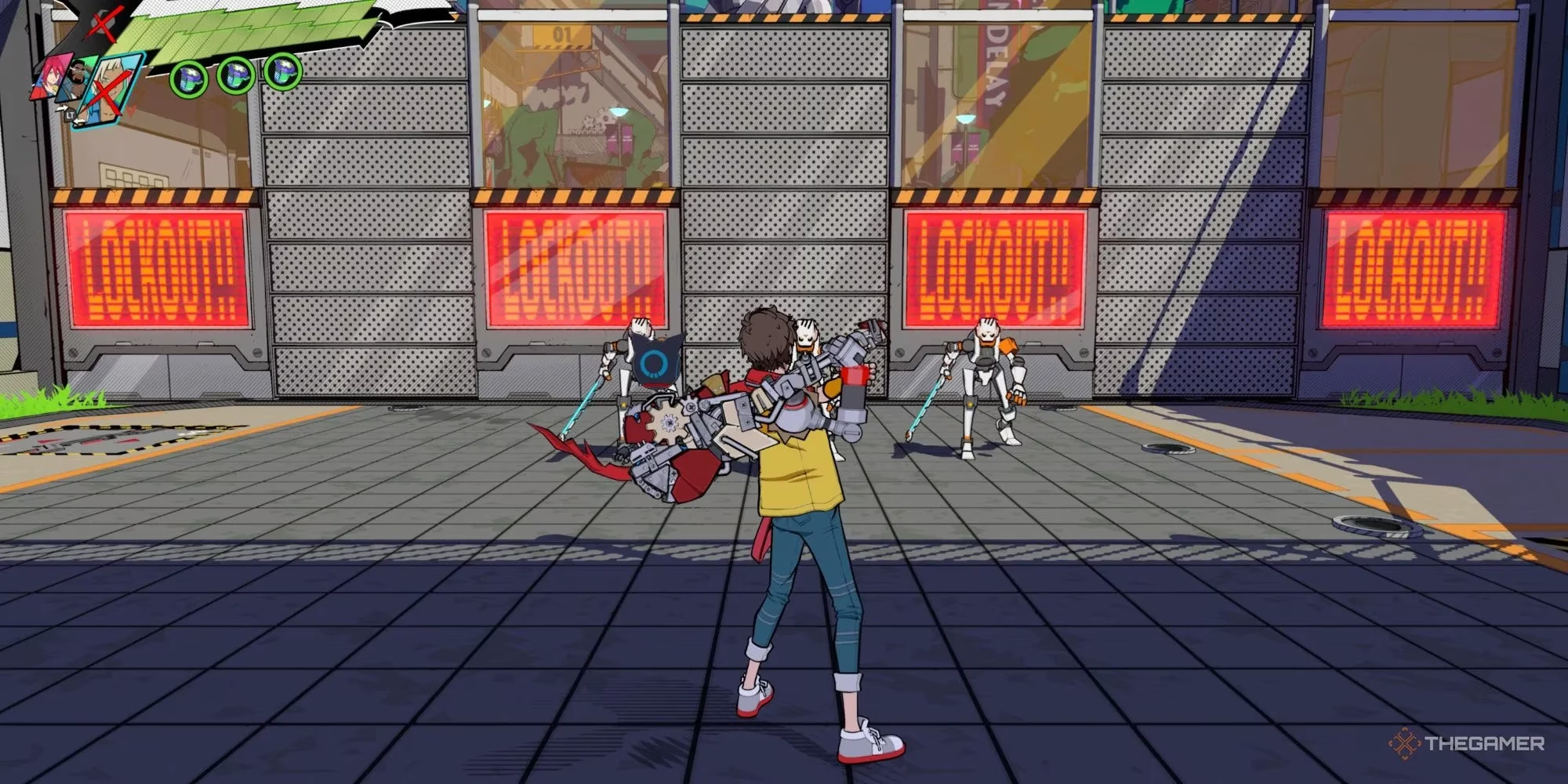
The hope for a distinctive identity now rests on the periphery. It lies in the vibrant, stylized defiance of titles that reject photorealism for bold artistry. It whispers in the innovative, smaller-scale experiments that manage to thrive despite the industry's gravitational pull toward blockbuster safety. The 2020s may ultimately be remembered as a necessary, if sometimes frustrating, interlude—a period of gathering strength, enduring painful contractions, and mastering scale. From this foundation of immense, polished craft, the true revolutionaries of the next decade must now rise. The stage is set, the tools are masterfully honed, and the audience waits with bated breath. Sooner or later, someone must truly do something new.