As a devoted Soulslike player who has spent countless hours (and suffered countless deaths) in these punishing worlds, I can tell you there's nothing more soul-crushing than a long, tedious run back to a boss that just handed you your rear end on a silver platter. That's where the humble shortcut becomes a beacon of hope, a tiny mercy in a merciless genre. While the challenge is a core part of the appeal—that rush of finally toppling a seemingly impossible foe—the journey back to them shouldn't feel like its own separate punishment. In my experience, the best Soulslikes are those that masterfully weave these clever pathways into their level design, respecting your time while maintaining the tension. Let's talk about some of the standouts that understand this delicate balance perfectly, especially in the context of 2026 where game design has evolved but these classics remain foundational.
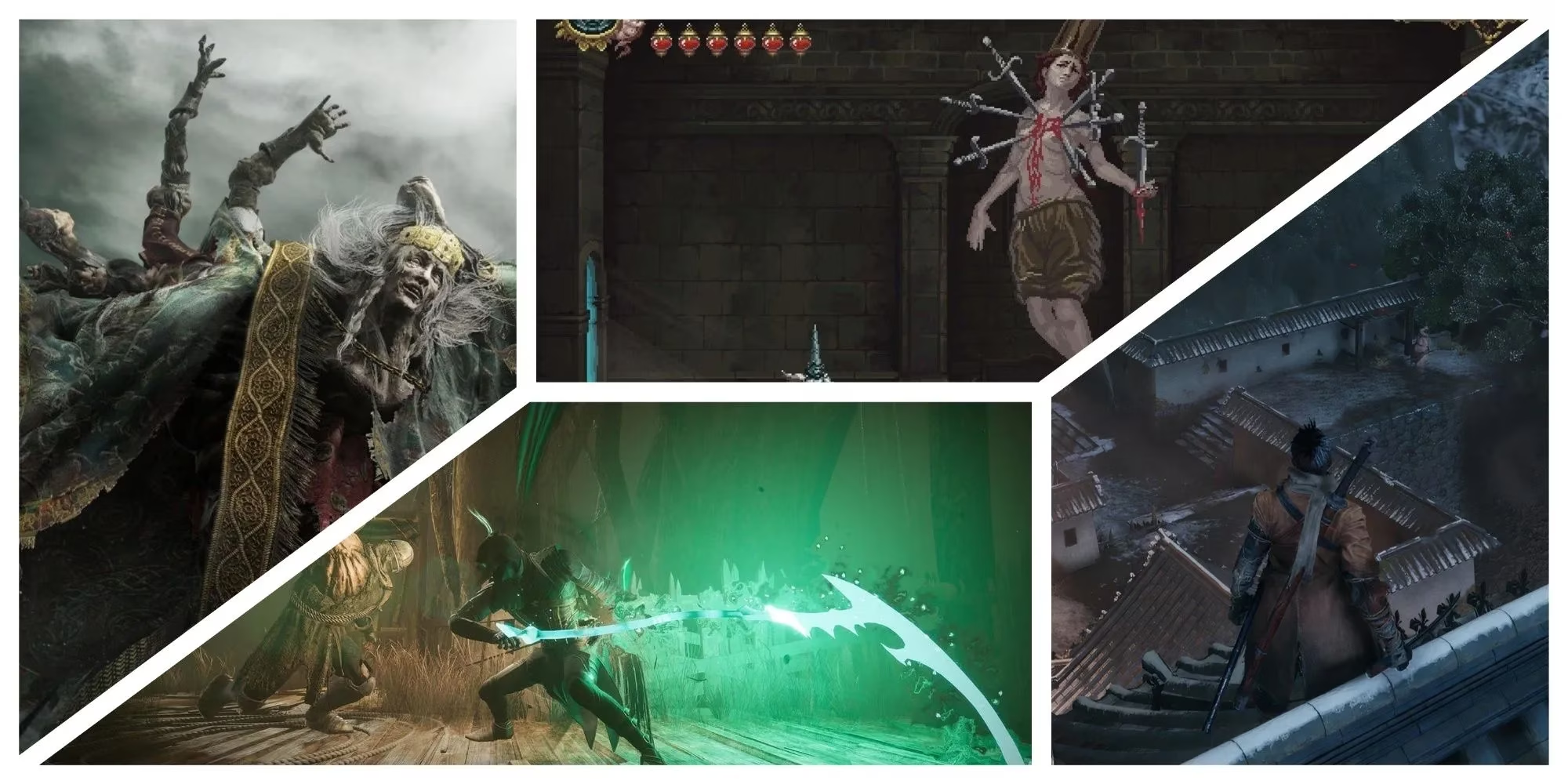
First up, let's talk about Thymesia. This game presents a fascinating twist where you, as Corvus, wield the very plague that's consuming the kingdom. 🦠 The combat is a frantic dance of claws and disease, and while the world is grim and oppressive, the developers knew when to offer a reprieve. The shortcuts here aren't as abundant as in some sprawling metroidvanias, but they are strategically placed. Finding one after a brutal gauntlet of monsters feels like discovering a secret lifeline, a direct route back to the heart of the infection without having to re-fight every single enemy. It's a reminder that even in a world "with no hope," smart design can give the player a fighting chance.
Then we have the 2D masterpiece, Salt and Sanctuary. Oh, how I adore this game! Its skill tree is a thing of beauty—massive, intricate, and full of possibilities. Your journey starts on a doomed ship, and from there, you're thrown into a world that perfectly translates the Soulslike ethos into a side-scrolling format. The map is a labyrinth, and the shortcuts are vital. Unlocking a gate or activating an elevator isn't just a convenience; it's a major strategic victory. It transforms a daunting, sprawling network of deadly platforms into a more navigable, interconnected world. The multi-boss battles are tough enough; I can't imagine having to trek through entire areas repeatedly just for another attempt. Thank goodness for those shortcuts!
Now, let's bow our heads in reverence to Blasphemous. This game is a religious experience in itself, drenched in haunting pixel art and themes of brutal penance. The world of Cvstodia is unforgiving, filled with traps and enemies designed to send you back to your last checkpoint. Its map is vast and complex, which makes every shortcut you discover feel like a divine blessing. 😇 While later titles (including its excellent sequel, Blasphemous 2, which expanded on weapons and exploration) offered more mobility options, the original's shortcuts were crucial. They weren't just doors; they were often clever environmental manipulations—breaking a floor, lowering a ladder—that made you see the level design in a new, connected light. Even with teleportation options, these paths felt more personal and earned.
Of course, we must pay homage to the titan: Bloodborne. To this day, I argue it's FromSoftware's most terrifying creation. The gothic, cosmic horror of Yharnam is unmatched. The panic of being chased through the narrow, lantern-lit streets of Central Yharnam by a mob is a core memory. Those first few shortcuts—opening the gate near the Central Lamp, or unlocking the elevator in the Cathedral Ward—are moments of pure elation. They transform Yharnam from an insurmountable maze into a place you can navigate, even master. The shortcuts here are expertly woven into the narrative and environment; pulling a lever to lower a bridge isn't just a gameplay mechanic, it's you slowly unraveling the city's cursed secrets, one accessible path at a time.
The precision of Sekiro: Shadows Die Twice deserves a special mention. With its fluid grappling hook movement, you'd think shortcuts would be redundant. But you'd be wrong! 🏯 The prosthetic arm lets you soar, but the level designers still placed crucial gates, paths, and passages that, when unlocked, turn a daunting vertical climb into a swift, shinobi-style infiltration route back to a boss like Genichiro or the Guardian Ape. It complements the movement system rather than replaces it, offering strategic checkpoints that let you focus on mastering the lethal dance of deflection, not on rerunning the same rooftops over and over.
Diving into the beautiful, haunting depths of Hollow Knight is a rite of passage. At first glance, its charming 2D style might deceive you, but Hallownest is as deep and punishing as any 3D Souls world. Here, shortcuts are intrinsically tied to your power progression. You don't just find a door; you earn the ability to open it. Maybe you need the Mantis Claw to wall-jump up a previously unreachable shaft, or the Monarch Wings to double-jump over a gap to create a new route. Each new ability retroactively turns old dead-ends into valuable shortcuts, making the entire world feel alive and dynamically connected to your growth. It's pure genius.
The sci-fi twist of The Surge 2 brings the shortcut philosophy to a dystopian city. In a world where humanity is tearing itself apart over dwindling resources, efficiency is key. The shortcuts here—often automated doors, security overrides, or zip-lines—feel technologically appropriate. Unlocking them as you explore the decaying urban sprawl of Jericho City gives you a tangible sense of reclaiming and mastering the environment from the rogue AI and maddened humans. It turns a hostile tech-nightmare into a circuit board you're learning to navigate, saving precious time (and sanity) during particularly intense sequences.
Finally, we arrive at the colossus: Elden Ring. The Lands Between is so vast, with an "outstanding Fast Travel system," that you might wonder if traditional shortcuts are even necessary. But they absolutely are! While you can warp between Graces, the micro-level design within legacy dungeons like Stormveil Castle, Raya Lucaria Academy, and the Leyndell Royal Capital is a masterclass in shortcut integration. Finding a hidden elevator that takes you from the bottom of Stormveil right back to the main gate, or unlocking a sealed door in Raya Lucaria that creates a straight path to the Debate Parlor, is incredibly satisfying. These shortcuts honor the classic Souls design within a new open-world framework. They streamline the exploration of these intricate, self-contained dungeons, ensuring that the focus remains on the breathtaking exploration and the "unbelievably powerful bosses," not on tedious backtracking. In 2026, as we see more games attempt the open-world Soulslike formula, Elden Ring's hybrid approach—world-spanning freedom paired with meticulously shortcut-filled dungeons—remains the gold standard.
So, to my fellow masochists and triumph-seekers, remember this: a great shortcut is more than just a time-saver. It's a reward for exploration, a clever piece of world-building, and a crucial pressure valve in games designed to test your limits. It's the game whispering, "Okay, that path was tough. You found the secret. Now, let's get you back to the real challenge." And in a genre built on monumental challenges, that small kindness makes all the difference. 😌