In a move that sent seismic shockwaves through the global media and gaming landscape, the titan of entertainment, Sony, is poised to execute a breathtakingly audacious acquisition. The target? None other than the Japanese media behemoth, Kadokawa Corporation. The prize that has everyone's heart pounding? A commanding 70 percent stake in the legendary studio FromSoftware, the architects of masterpieces like Elden Ring and Dark Souls. While the whispers from Reuters in late 2024 confirmed Sony's intense interest, the subsequent silence has been deafening. Now, in 2026, the chessboard is being set for what could be the most consequential power consolidation in modern interactive entertainment history. This is not merely a purchase; it is a declaration of war for creative and cultural dominance, a potential reshaping of the very fabric of gaming.
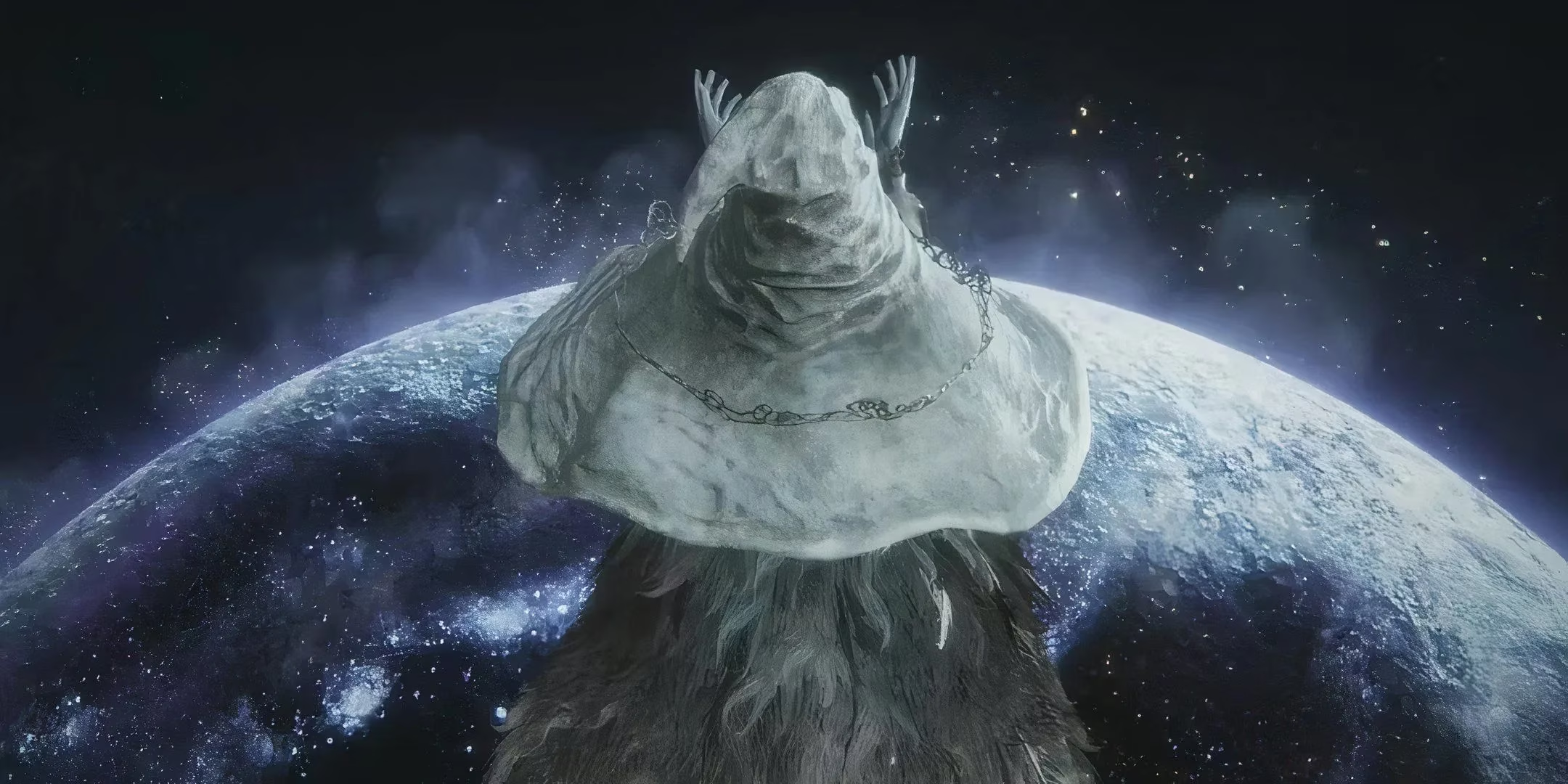
Let's be unequivocally clear: capturing Kadokawa is about securing an empire, not just a castle. This isn't simply buying a game developer. This is about absorbing a colossal cultural juggernaut. Kadokawa's portfolio is a treasure trove that would make any entertainment conglomerate weep with envy. Beyond the crown jewel that is FromSoftware, the company holds the reins to Spike Chunsoft, the powerhouse behind the explosively anticipated Dragon Ball: Sparking Zero. But the rabbit hole goes infinitely deeper. We're talking about dozens upon dozens of iconic anime studios, legendary manga publishing imprints, and sprawling media networks that form the backbone of modern Japanese pop culture. Sony isn't just buying a game studio; it's attempting to annex an entire creative continent.
Sony’s acquisition spree has been nothing short of a relentless, multi-billion-dollar march. The roster reads like a who's who of gaming: Bungie, Insomniac Games, Haven Studios. Yet, this aggressive strategy has been a double-edged sword of mythic proportions. For every Spider-Man 2, there has been a cataclysmic failure like Concord, a title so spectacularly rejected by players that it became a cautionary tale etched in fire, leading to studio closures and a chilling wave of layoffs across the PlayStation ecosystem. The acquisition of Bungie, in particular, is now whispered about in boardrooms as a cautionary tale of overpayment and strategic misalignment. Securing Kadokawa would be Sony's most daring attempt yet to counterbalance these stumbles with a universe of guaranteed prestige and fervent fan loyalty.
The Stakes in the Console War Arena
💥 Sony's Potential Arsenal: FromSoftware's Soulsborne catalog, Dragon Ball: Sparking Zero, Kadokawa's entire anime/manga pipeline.
💥 Microsoft's Counter: The Call of Duty empire (Activision Blizzard), The Elder Scrolls & Fallout (Bethesda), Minecraft.
💥 The Ultimate Prize: Narrative and cultural hegemony, driving platform loyalty beyond mere hardware specs.
The implications for the eternal PlayStation vs. Xbox conflict are apocalyptic in scale. Microsoft's earth-shattering purchases of Activision Blizzard and Bethesda fundamentally altered the battlefield, giving them control over franchises that are virtually institutions. Sony's potential capture of Kadokawa is the direct, calculated counter-punch. Imagine a world where the next groundbreaking, genre-defining epic from Hidetaka Miyazaki and FromSoftware is synonymous with the PlayStation brand. The sheer gravitational pull of that possibility could tilt the axis of the entire industry.
Yet, for all the corporate machismo and strategic posturing, a profound question lingers in the hearts of millions of fans: What happens to the art? FromSoftware has cultivated a reputation for uncompromising, singular vision. Their games are difficult, strange, and breathtakingly beautiful, operating on a frequency uniquely their own. The fear, that gnawing, persistent dread, is that absorption into a corporate giant like Sony could dilute that vision, sanding down the rough, brilliant edges in pursuit of broader commercial appeal. The soul of Elden Ring is not something that can be easily quantified on a balance sheet, and its preservation is the unspoken clause in this multi-billion-dollar deal.
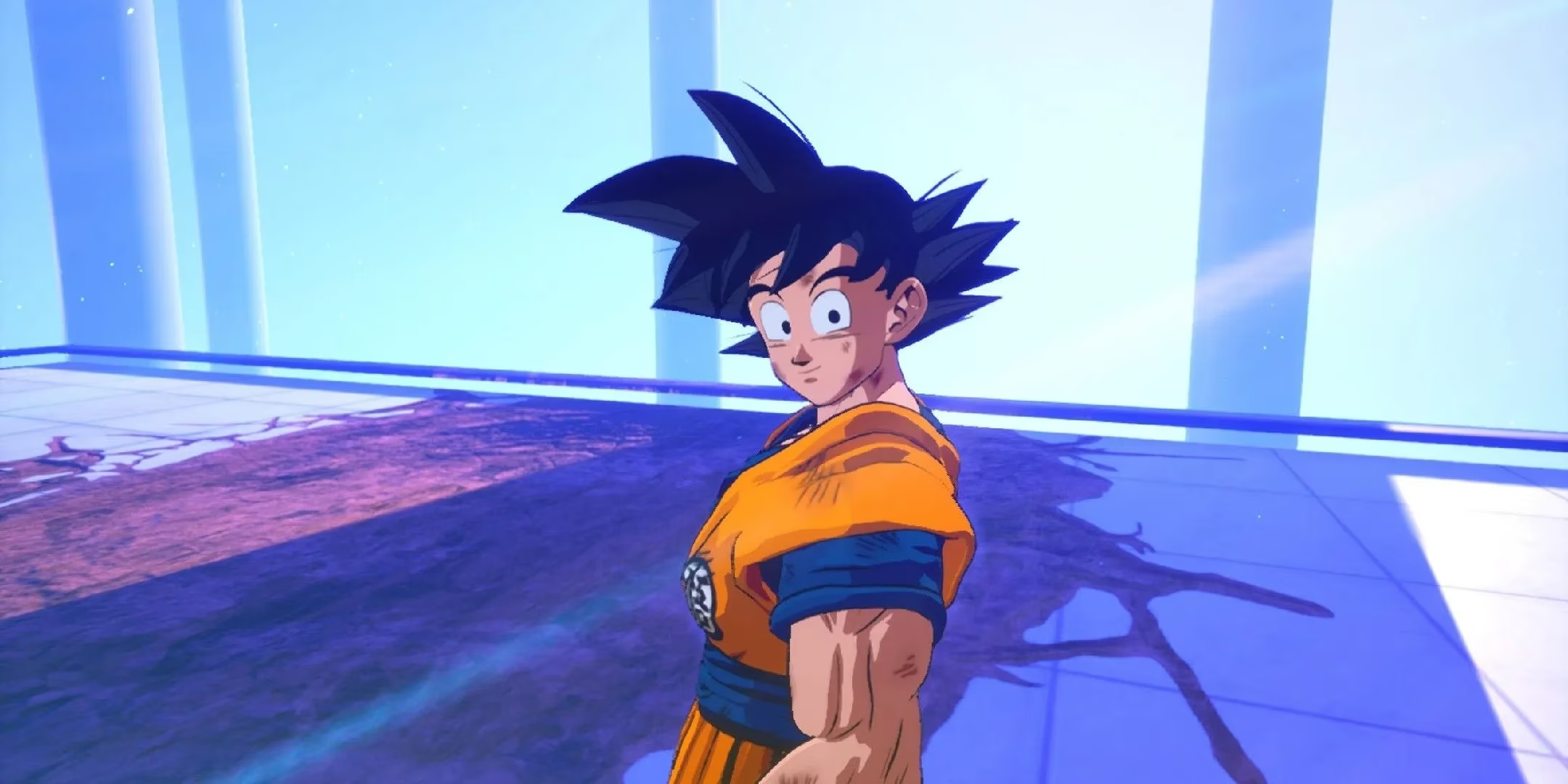
As we stand in 2026, the silence from both Sony and Kadokawa is louder than any press release. The talks that began years ago have either evolved into a meticulous, silent courtship or dissipated into the ether of failed corporate ambitions. The gaming world holds its breath. A finalized deal would not just be a transaction; it would be a tectonic event, heralding a new age where the lines between console manufacturer, game developer, and cultural curator blur into oblivion. It would signal Sony's ambition to not just compete in the game industry, but to own its past, present, and future narratives. The Age of Stars ending for Elden Ring hinted at a cold, uncharted future; Sony's move for Kadokawa threatens to make that metaphor a breathtaking, and perhaps terrifying, reality for us all.