Well, here I am in 2026, looking back at over a decade of having my soul crushed, my controller thrown, and my mind blown by FromSoftware. If there's one thing they do better than crafting excruciatingly difficult boss fights, it's crafting endings that stick with you long after the credits roll. Forget about happily ever after—these games specialize in the ambiguous, the melancholic, and the downright apocalyptic. And I love every second of it. Let's take a stroll down memory lane and rank the conclusions that have left the deepest scars on my psyche.
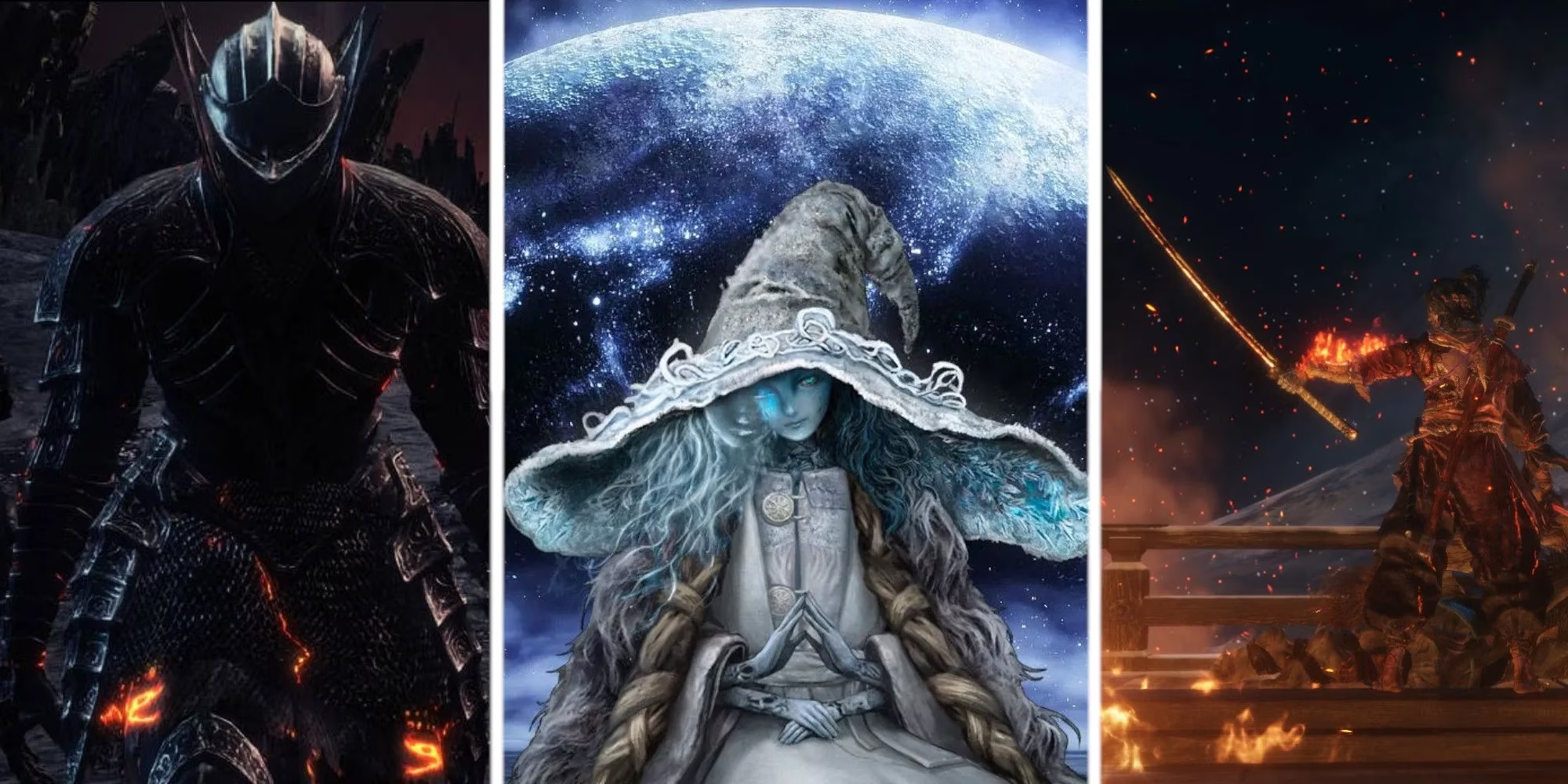
We have to start with the one that started the trend of giving us a choice. Back in Demon's Souls, choosing the Evil Ending felt like a genuine act of rebellion. The game never held your hand and said, "Hey, you're about to decide the fate of the world." You just... did it. Accepting the Old One's power and betraying the Maiden in Black was my first real taste of video game villainy. It wasn't profound, but the sheer agency of it—the feeling of being the architect of Boletaria's doom—was intoxicating. A simple, dark twist that set the stage for everything to come.
Then came Bloodborne, with its lore so thick you could chew it. The Honoring Wishes ending is the masterclass in bittersweet farewells. After that epic duel with Gehrman (still one of the best fights ever), you wake up in the morning sun, freed from the nightmare. But at what cost? You've left Gehrman trapped in his endless cycle, and the true horrors of Yharnam remain unexplained. It's a "good" ending that feels like a punishment, a middle ground that makes the world feel infinitely more complex and replayable. It’s the ending that makes you sit back and just think, "Wait, did I actually win?"
Speaking of playing the villain, nothing prepared me for the sheer, unadulterated chaos of the Lord of Frenzied Flame ending in Elden Ring. Most of us play RPGs as the good guy, right? Well, this ending requires you to burn that notion to the ground—quite literally. The quest to get it is obtuse, long, and forces you to betray Melina, who promises to hunt you down. The payoff? The entire Lands Between consumed by frenzied, chaotic yellow flame. It's a spectacle of pure destruction. But the real kicker is the post-credits scene with a vengeful Melina, raising a dozen unanswered questions. A perfect mix of jaw-dropping visuals and deep, lingering mystery.
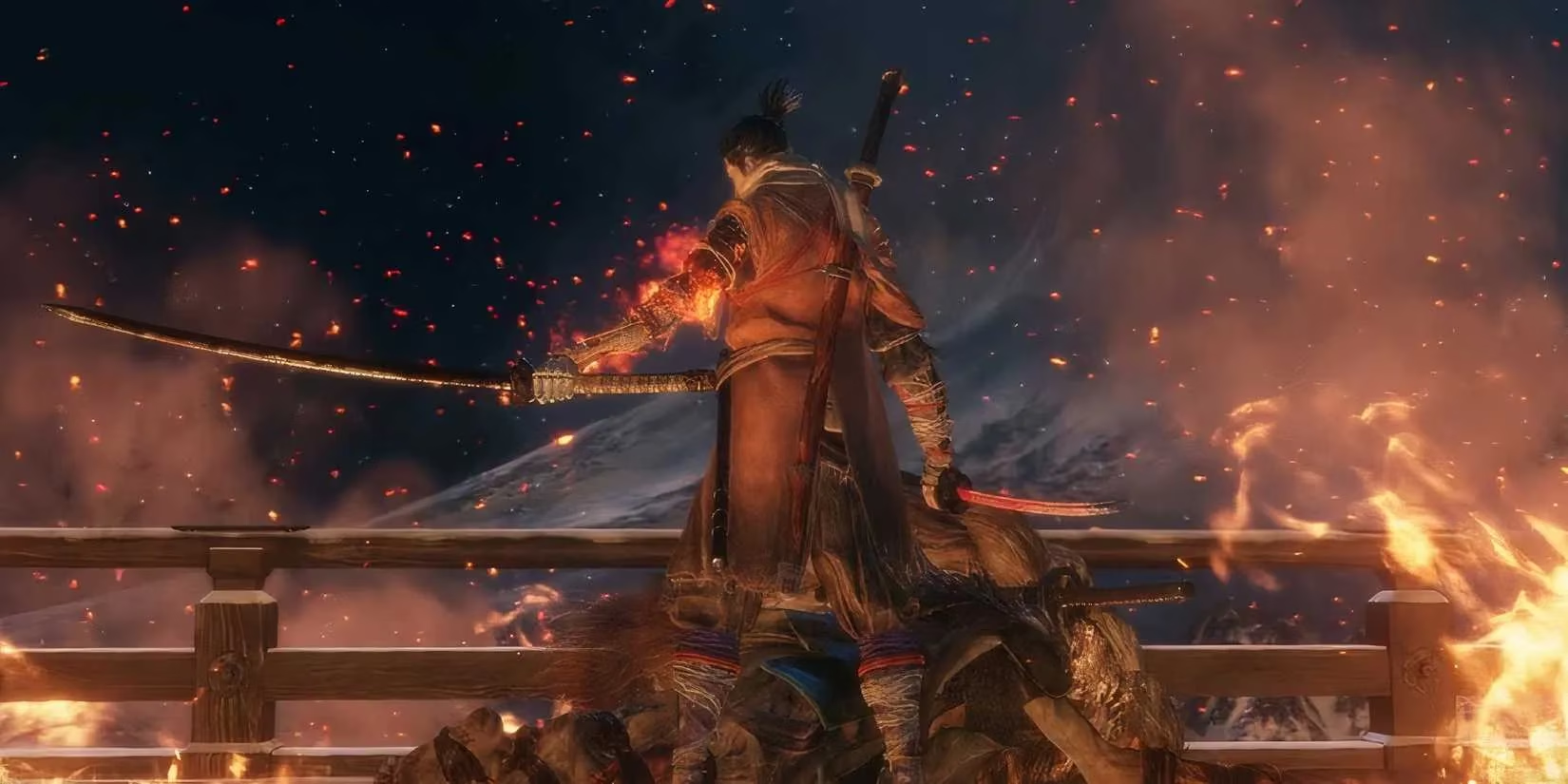
If we're talking about being the bad guy, Sekiro's Shura ending takes the cake for sheer narrative audacity. Choosing to obey the Iron Code and side with the Owl isn't just a different path—it's a narrative dead end that locks you out of half the game! FromSoftware literally penalized you for making the "wrong" choice, and I respect that brutal honesty. The resulting cutscene, where Sekiro gives in to hatred and becomes a demon, is chilling. The fear on Emma and Isshin's faces, the connection to the Sculptor's tragic past... it's arguably the best 'bad' ending they've ever crafted. It’s short, brutal, and incredibly effective.
Now, let's talk about the OGs. Dark Souls' To Link the Fire ending is the definition of iconic. By today's standards, it's not flashy. No giant explosions or cosmic revelations. You just... sit on a throne and burn. But that's the genius of it. After an entire game of being told you're the Chosen Undead, you finally fulfill your purpose. And then you're hit with this overwhelming feeling of emptiness. The Nameless Song plays, and you realize you're just a cog in a never-ending cycle. You, the player, feel just as enslaved as your character. It's a quiet, profound conclusion that established the thematic backbone for an entire trilogy.
Dark Souls 3 had the unenviable task of ending that trilogy, and the Usurpation of Fire ending is how you stick the landing. The entire game feels like a long, slow goodbye, and this ending—achieved through Yuria's questline—is the final break from the cycle. Instead of linking or extinguishing the fire, you usurp it, claiming its power for the Hollows. It feels like a genuine conclusion, especially when paired with the Painter's dialogue in The Ringed City DLC, hinting at a new world painted with the Dark Soul. The music swells, the fire fades to black, and you're left knowing the saga is truly, finally over. It's grand, symbolic, and deeply satisfying.
Here’s a hot take for 2026: Dark Souls 2: Scholar of the First Sin has the single most profound ending in the series. The Leave the Throne ending is a masterpiece of subversion. After two games of being told to link the fire, you're given a third option by Aldia, the Scholar of the First Sin: walk away. Reject the throne, reject the cycle, and seek a path beyond light and dark. Aldia's monologue is, without exaggeration, one of the best in gaming history. The voice acting, the philosophical weight, the context—it's unforgettable. It’s the bold, intellectual ending that proves Dark Souls 2, for all its flaws, had something truly special to say.
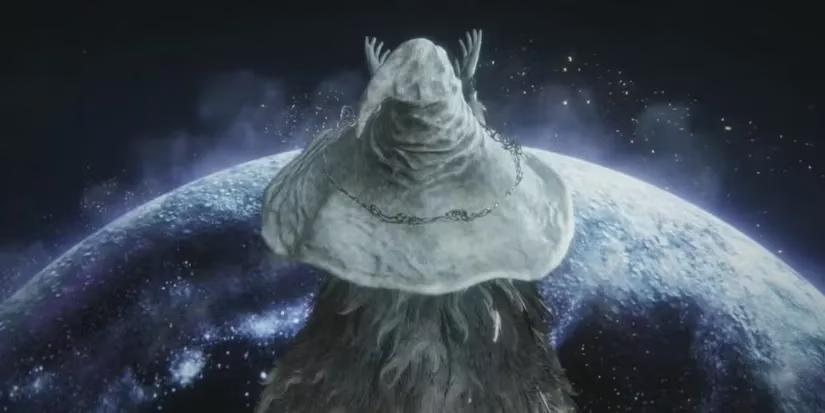
Back to Elden Ring for what might be its most beautiful finale. The Age of Stars ending is the reward for completing one of gaming's greatest questlines: Ranni's. After helping the four-armed witch demigoddess assassinate her own Two Fingers, you get... married? And then you embark on a thousand-year journey into the cosmos with her, leaving the Lands Between behind to its own fate. The image of Ranni holding aloft the head of Marika/Radagon, revealing the dark moon, is pure visual poetry. It's hopeful, mysterious, and feels like a true reward for dedication. It’s not about fixing the world, but leaving it behind for something utterly new and unknown.
My personal favorite, and the one that makes me desperately hope for a sequel (FromSoftware, please!), is Sekiro's Return ending. This is the "true" ending, hidden behind an insanely convoluted series of steps involving frozen tears, divine children, and everblossom branches. The payoff? Instead of a bittersweet farewell or a tragic death, Sekiro sets sail with the Divine Heir to the birthplace of the Dragon's Heritage, potentially to return its power and break the cycle of immortality. It's complex, hopeful, and opens up a world of possibilities. It feels like the first chapter of a much larger story, and as a reward for player mastery and perseverance, it's absolutely invaluable.
And now, the number one spot. The crown jewel. The ending that combines cosmic horror, personal ascension, and sheer, unfiltered spectacle into a perfect, mind-bending climax. Of course, it's Bloodborne's Childhood's Beginning. After consuming three One Third of an Umbilical Cord (yes, really), you defeat the Moon Presence and ascend to become a newborn Great One. You, the player, transcend humanity. The cinematic is flooded with haunting imagery and unanswered questions. What does it mean? What will you become? The game doesn't care to explain, and that's why it's perfect. It fully embraces its Lovecraftian roots—the ultimate horror is the incomprehensible. It is, without a single doubt, the best ending in the Soulsborne canon. It’s flawless, self-contained, and an unforgettable capstone to a masterpiece.
So there you have it. From becoming a god to burning the world, these are the endings that define FromSoftware's legacy. They don't tie things up with a neat bow; they leave you with more questions than answers, and that's exactly why we keep coming back for more. Now, if you'll excuse me, I have a sudden urge to go start a new game... and maybe make some very, very bad choices. 😈