As I sit here in 2026, reflecting on a decade of gaming evolution, I find myself drawn back to experiences that didn't hold my hand. The most profound adventures I've ever had were not those that guided me along a golden path, but those that left me alone in a vast, whispering world, armed with nothing but my own curiosity. These are the open-world games that treat players not as tourists, but as pioneers, where figuring things out isn't just a mechanic—it's the very soul of the experience.
The Long Dark: A Symphony of Silence
My first memory is of the biting cold. The Long Dark drops you into the frozen Canadian North with the gentle guidance of a snow leopard—silent, watchful, and utterly indifferent to your survival. Here, the world itself is the narrator. There are no glowing quest markers, no friendly NPCs with exposition dumps. Survival is a puzzle where the pieces are scattered by the wind. You must learn to read the landscape like a fading map: the subtle discoloration of bark hinting at potential tinder, the distant caw of crows signaling carrion, the ominous silence before a blizzard descends. Starvation, hypothermia, and predators aren't just obstacles; they are the core curriculum of this harsh academy. Managing your meager resources feels less like inventory management and more like conducting a fragile orchestra where one wrong note, one misjudged calorie, brings the entire symphony to a silent end. The game's desolate beauty is its greatest teacher, forcing you to become an expert in your own desperation.
The Outer Worlds: A Galaxy of Unwritten Rules
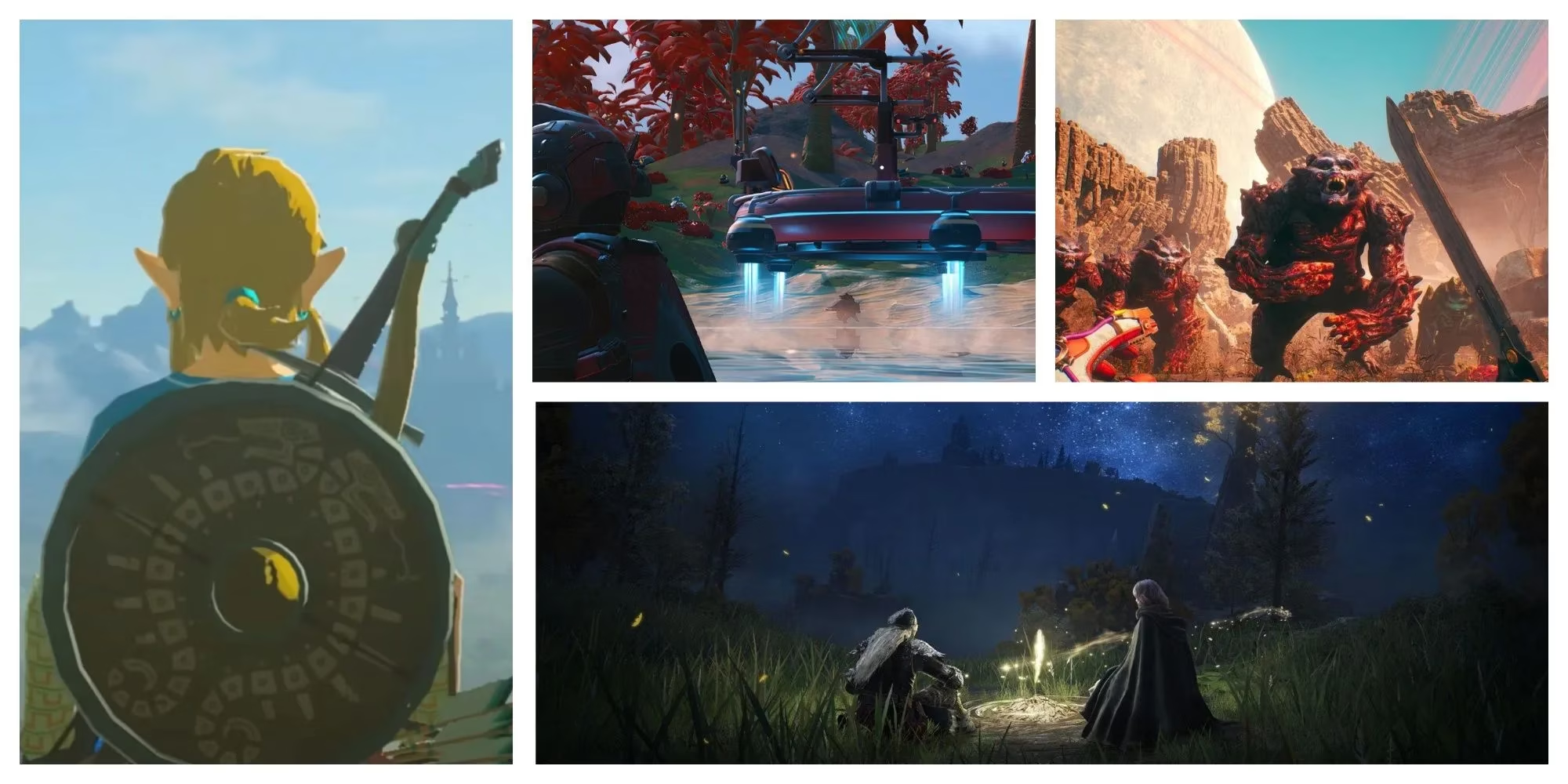
Is it truly open-world? The debate rages on, but from my cockpit, flying between the speckled planets of Halcyon, it felt boundless. The Outer Worlds presents itself with corporate clarity—neat objective logs and clear mission statements. But this is a facade, as thin as the atmosphere on Terra 2. The moment you step off the beaten path, the game's true nature unfolds. You are an archaeologist of the present, sifting through the derelict settlements and wild frontiers. NPCs offer quests, but they are scattered like confetti after a riot, with no priority or clear starting point. Exploring the wilderness is a gamble; danger doesn't announce itself with roaring music or red indicators. A seemingly peaceful grove might hide a nest of raptidons, their aggression as sudden and violent as a capacitor discharge. The game hands you the reins and says, "The story is out there. Go write your own chapter." You piece together the narrative from environmental cues, discarded logs, and the weary eyes of colonists, making every discovery feel earned, not given.
No Man's Sky: The Infinite Equation
No Man's Sky is the grand paradox of gaming—a universe of 18 quintillion planets that feels profoundly intimate because you are almost always alone with its mysteries. It is the ultimate sandbox, but one where you must discover the shape of the shovel yourself. The game is a sprawling library where the indexes have been burned. You are rarely told how to do anything: how to efficiently gather the rare resources humming beneath a magenta sea, how to sequence complex crafting recipes for starship upgrades, or which of the infinite planets might hold the key to your next base. Resource management and crafting are not side activities; they are the fundamental language you must decipher to survive. Progress feels less like climbing a ladder and more like solving an endless, beautiful equation where the variables are entire ecosystems. The loneliness is not a bug; it's a feature, making each cracked planetary code and each successfully built farm feel like a message sent back from the edge of existence.
The Legend of Zelda: Breath of the Wild: The Alchemist's Playground
Hyrule, in its post-Calamity state, is a kingdom of quiet whispers and unspoken recipes. While the silhouette of Hyrule Castle always looms, the path to it is yours to forge. The game gives you tools—runes, a paraglider, a curious mind—and then steps back. Combat mechanics, from perfect dodges to the arcane art of shield surfing, are secrets held by the world itself, learned through failure and observation. But the true magic lies in experimentation. The cooking pot becomes an alchemist's crucible. You are left to figure out which ingredients to mix, combining spicy peppers and fresh meat not because a recipe book told you, but because the freezing mountains demanded it. Will these dubious-looking mushrooms and a restless cricket create a elixir of stealth or a poisonous brew? The game delights in letting you find out, turning every discovery into a personal eureka moment. The wilderness isn't just a backdrop; it's a partner in your experimentation, offering clues through climate, enemy behavior, and hidden Korok puzzles.
Elden Ring: The Unmapped Myth
FromSoftware took its legendary difficulty and poured it into a world as vast and intricate as a spider's web woven from moonlight and myth. Elden Ring's Lands Between is the first true open-world from the studio, and it is a masterclass in opaque guidance. The golden rays of grace point vaguely, like a compass affected by a powerful magnetic storm. You have absolute freedom to explore, which is both a gift and a trap. You might spend hours farming runes in a lovely, sun-drenched valley, only to turn a corner and encounter a boss that dismantles you in two blows—a reality check as brutal and sudden as a glacier calving. There are few indications of where the crucial Sites of Grace are, or how the world's regions secretly intertwine like the roots of an ancient, massive tree. The game doesn't build a story for you; it gives you the fragments of a shattered myth and lets you piece together your own legend, whether you become a powerful mage by uncovering hidden sorceries in sealed ruins or a relentless warrior by conquering ever-greater challenges. The reward is a sense of accomplishment that feels genuinely mythic, because you were the cartographer of your own fate.