Looking back from 2026, the landscape of video gaming is vastly different, yet the legacy of certain publishers remains firmly etched in our collective memory. As a long-time player and observer, I can confidently say that Namco Bandai has been one of those defining forces. The company isn't just a publisher; it's been a curator of experiences, a bridge between arcade legacy and modern gaming. From the adrenaline rush of a perfectly executed drift to the contemplative dread of a dark corridor, their portfolio has offered something for nearly every type of player. But what are the games that truly define this legacy? What titles stand as pillars, not just for the company, but for the genres they represent? Let's dive into a retrospective of some of their most significant contributions that we still celebrate today.
10. Ridge Racer 7: The Pinnacle of Stylish Drifting
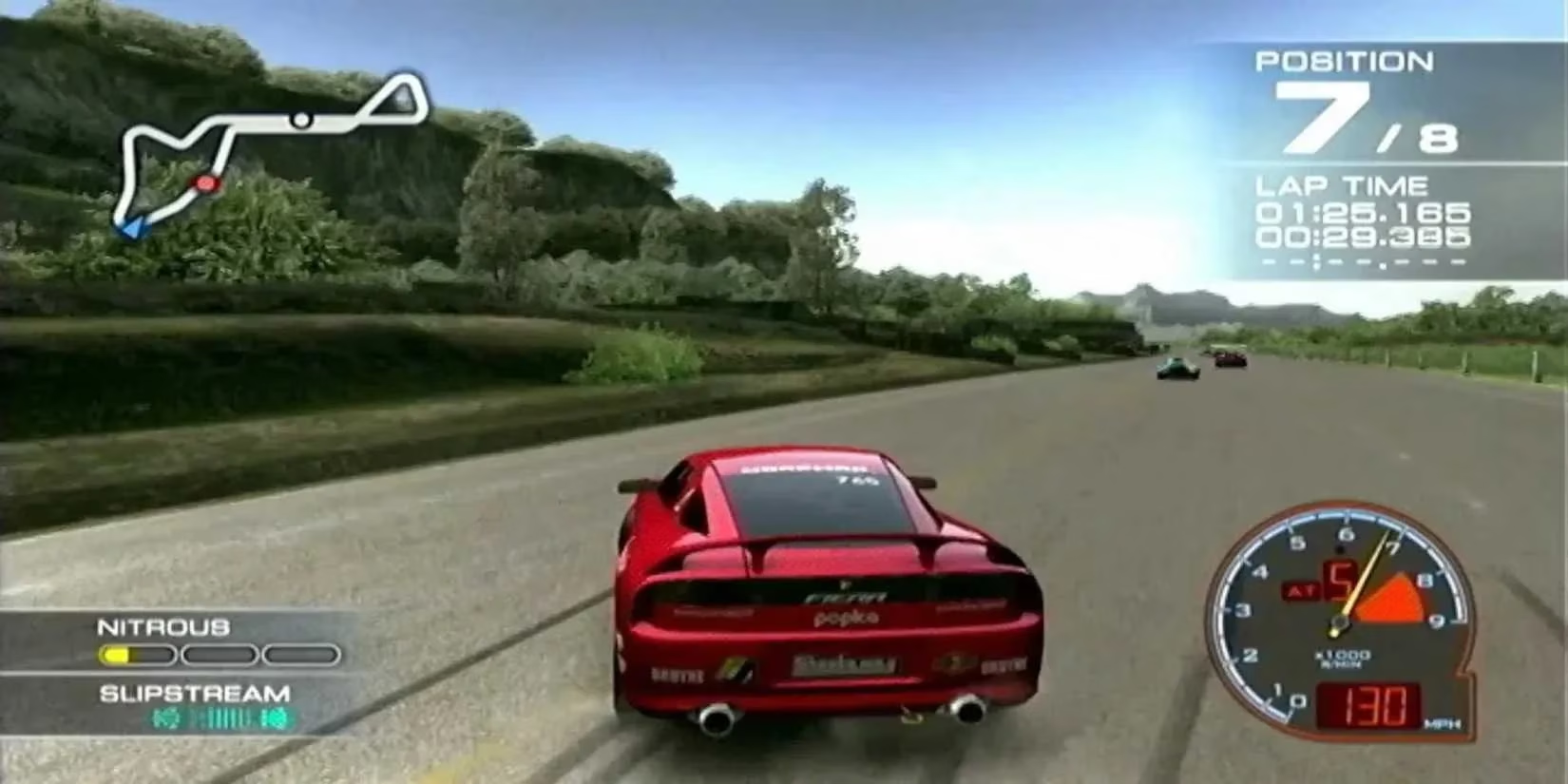
The Ridge Racer series is synonymous with arcade racing at its purest. While later years saw some missteps (who could forget the divisive Ridge Racer Unbound?), the series' heart has always been about style over simulation. Ridge Racer 7 on the PlayStation 3 was a masterclass in this philosophy. It was a game where braking was practically a sin; the goal was to master the art of the 'drift,' sliding around corners with a grace and speed that felt both absurd and incredibly satisfying. The electronic soundtrack was more than background noise—it was the game's pulse. In an era now dominated by live-service models and hyper-realism, looking back at Ridge Racer 7 is a reminder of a simpler, more focused kind of fun. It was a celebration of speed, style, and pure arcade joy, free from any tacked-on nonsense.
9. Digimon Story: Cyber Sleuth: An RPG That Stood Tall
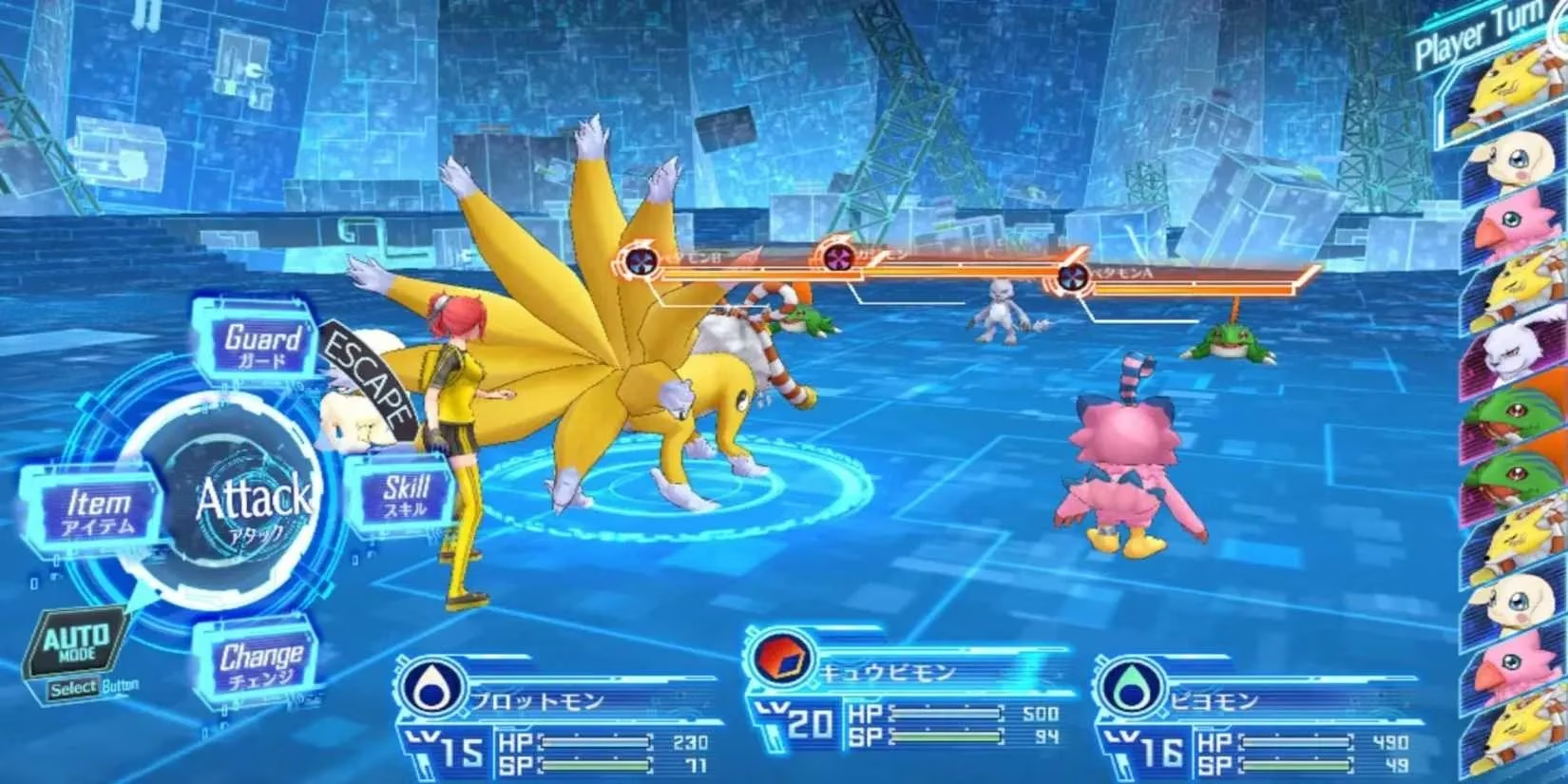
It's easy to get lost in the shadow of a certain monster-collecting giant, but does that mean other franchises can't produce excellence? Digimon Story: Cyber Sleuth proved they absolutely can. This was a turn-based RPG that felt like a breath of fresh air. It combined a genuinely engaging, mature cyber-noir narrative with the addictive core loop of raising and evolving Digimon. The digivolution system was a key differentiator; it wasn't always a linear path. The element of chance and choice in how your partners grew added a layer of depth and replayability that was deeply compelling. It was a game that catered to long-time fans with its lore but was designed so intuitively that any RPG enthusiast could jump in and enjoy the ride. Alongside its sequel, Hacker's Memory, it formed a duology that stands as the high-water mark for the Digimon franchise in gaming.
8. Klonoa Phantasie Reverie Series: A Beloved Platformer Reborn
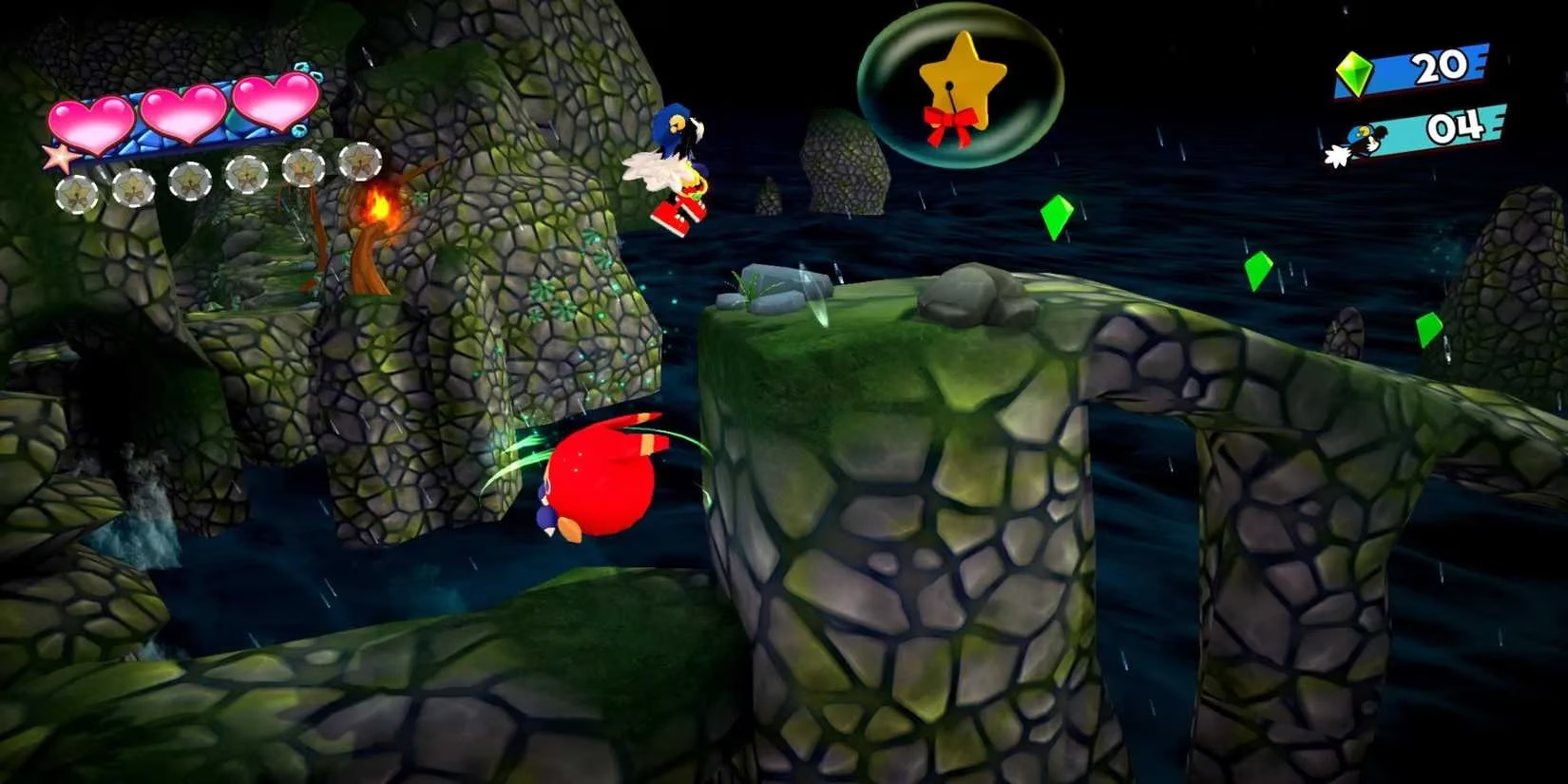
Some games are cult classics for a reason, and Klonoa is the poster child. The Phantasie Reverie Series was a gift to fans—a loving, visually vibrant remaster of the first two 2.5D platformers. What made Klonoa special? It wasn't just about jumping on enemies. The core mechanic revolved around using a wind ring to inflate foes, using them as projectiles, double-jumps, and puzzle-solving keys. This simple twist created a uniquely strategic and charming platforming experience. The games fully embraced their 2.5D perspective, with levels and boss battles that cleverly utilized depth in ways that felt innovative then and remain delightful now. While the dream of a true Klonoa 3 may have faded, this collection served as a perfect, heartfelt send-off for one of Namco Bandai's most underrated heroes.
7. Armored Core VI: Fires of Rubicon: A Niche Genre's Triumphant Return
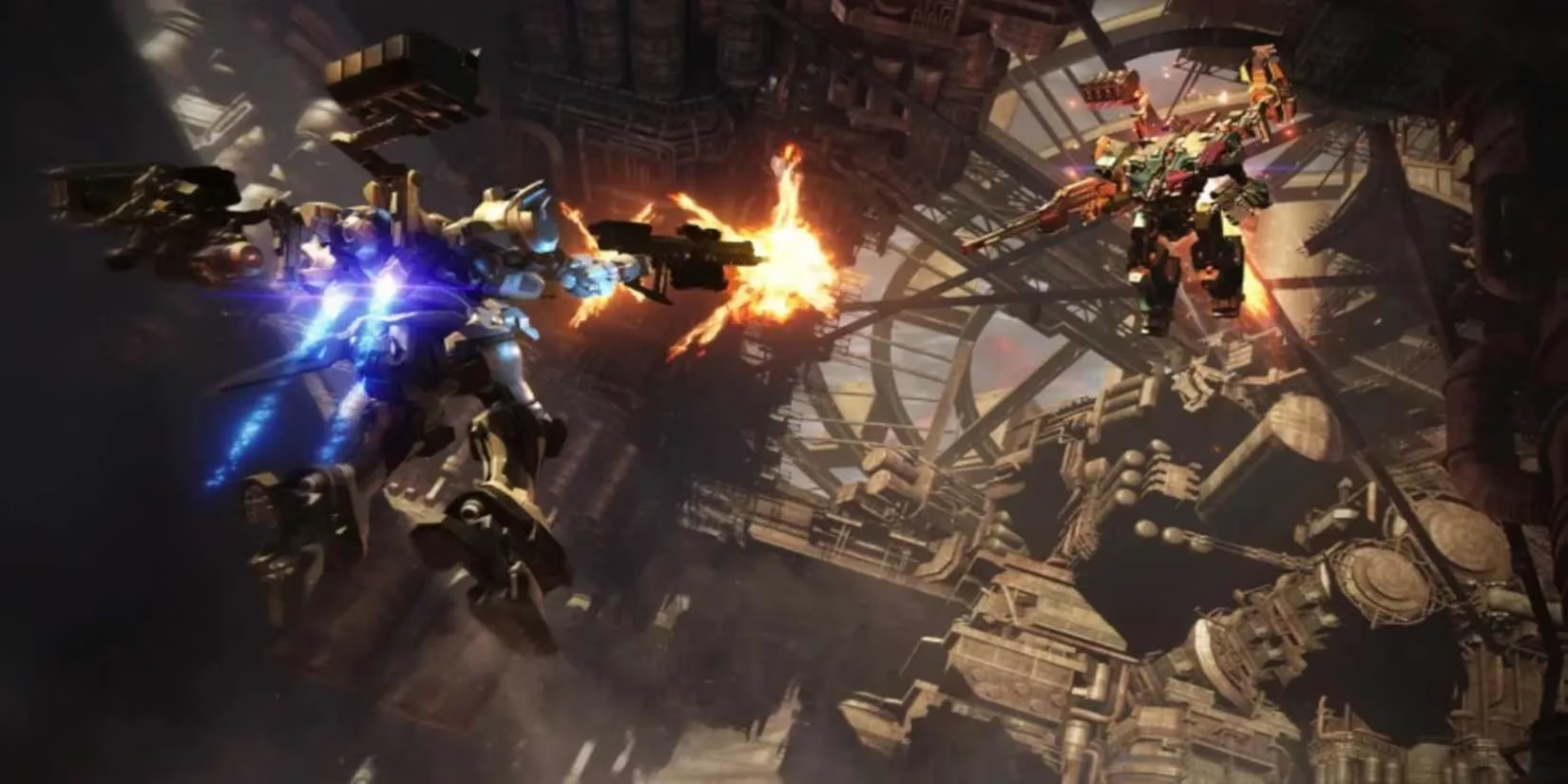
For years, the Armored Core series was the definition of a "cult favorite"—deep, complex, and intimidating. Did its niche status mean it lacked quality? Absolutely not, and Armored Core VI: Fires of Rubicon was the explosive proof. Released in 2023, it brought the mech customization genre roaring back into the mainstream conversation. Published by Namco Bandai and developed by FromSoftware at the peak of their powers post-Elden Ring, AC6 was a revelation. It retained the series' incredible depth—with hundreds of parts allowing for near-limitless mech builds—but introduced a more accessible and intensely satisfying combat loop. The missions were fast, brutal, and demanded both strategic loadout planning and sharp reflexes. It was the ultimate power fantasy: you weren't just piloting a mech; you were engineering a weapon of war, piece by glorious piece. For anyone who craved a serious, modern mech experience, this was, and arguably still is, the pinnacle.
6. Ace Combat 7: Skies Unknown: Making the Skies Accessible
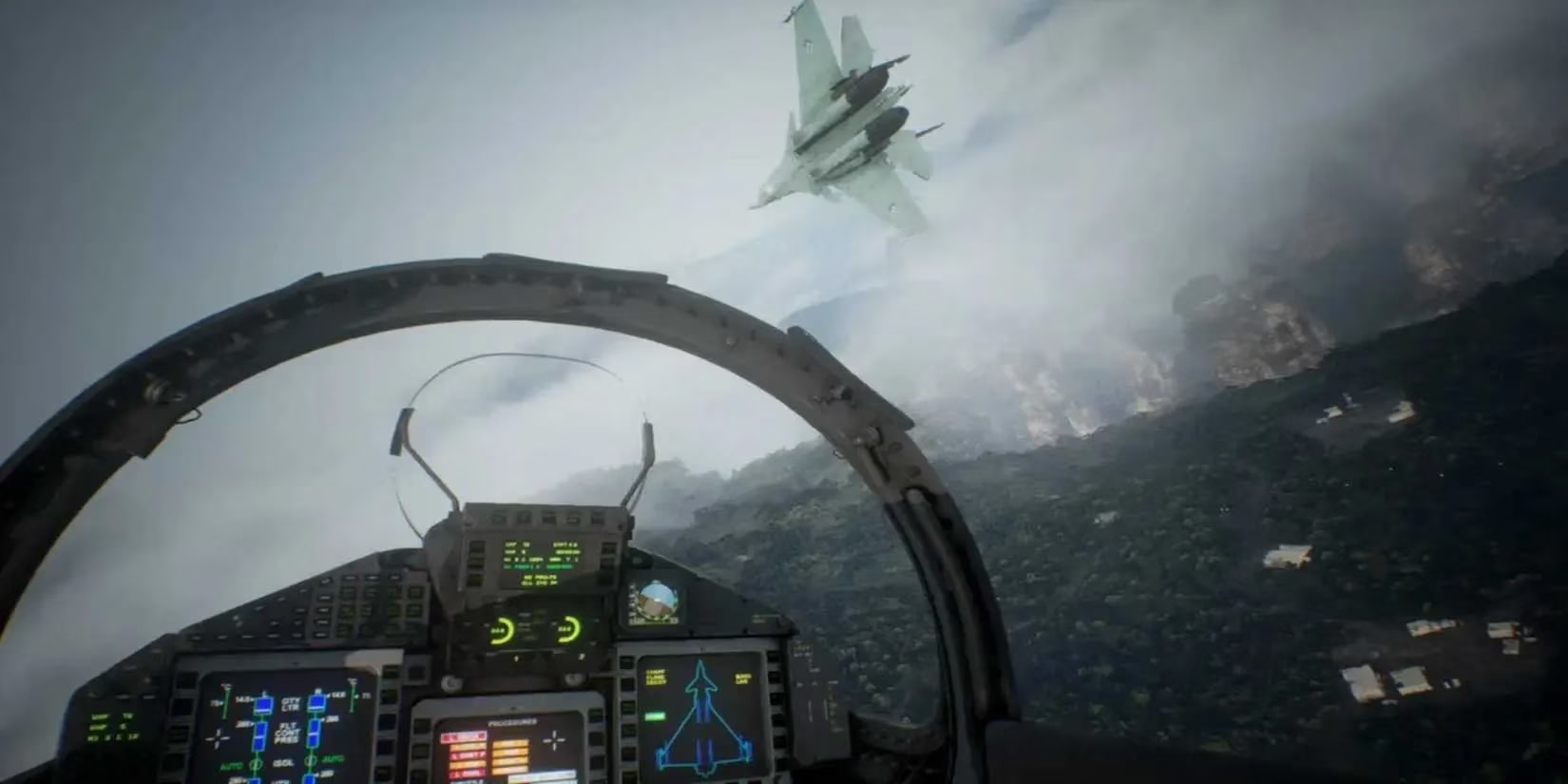
Flight simulators can be daunting. The complexity, the realism—it can create a barrier to entry that turns away many would-be pilots. So, how do you make soaring through the clouds appealing to everyone? The Ace Combat series, and particularly Skies Unknown, had the answer. It masterfully walked the line between realism and arcade spectacle. The controls were intuitive enough to pick up quickly, yet deep enough to allow for impressive feats of aerial mastery. The game delivered what every player wanted: thrilling, cinematic dogfights against impossible odds, set to a stirring orchestral score and a surprisingly gripping (and delightfully melodramatic) story. For aviation enthusiasts, the meticulously detailed roster of over 20 licensed aircraft was a dream. Ace Combat 7 proved that a flight game could be both accessible and deeply satisfying, cementing the series' reputation as the king of arcade-flight combat.
5. Dragon Ball Z: Kakarot: Reliving an Anime Epic
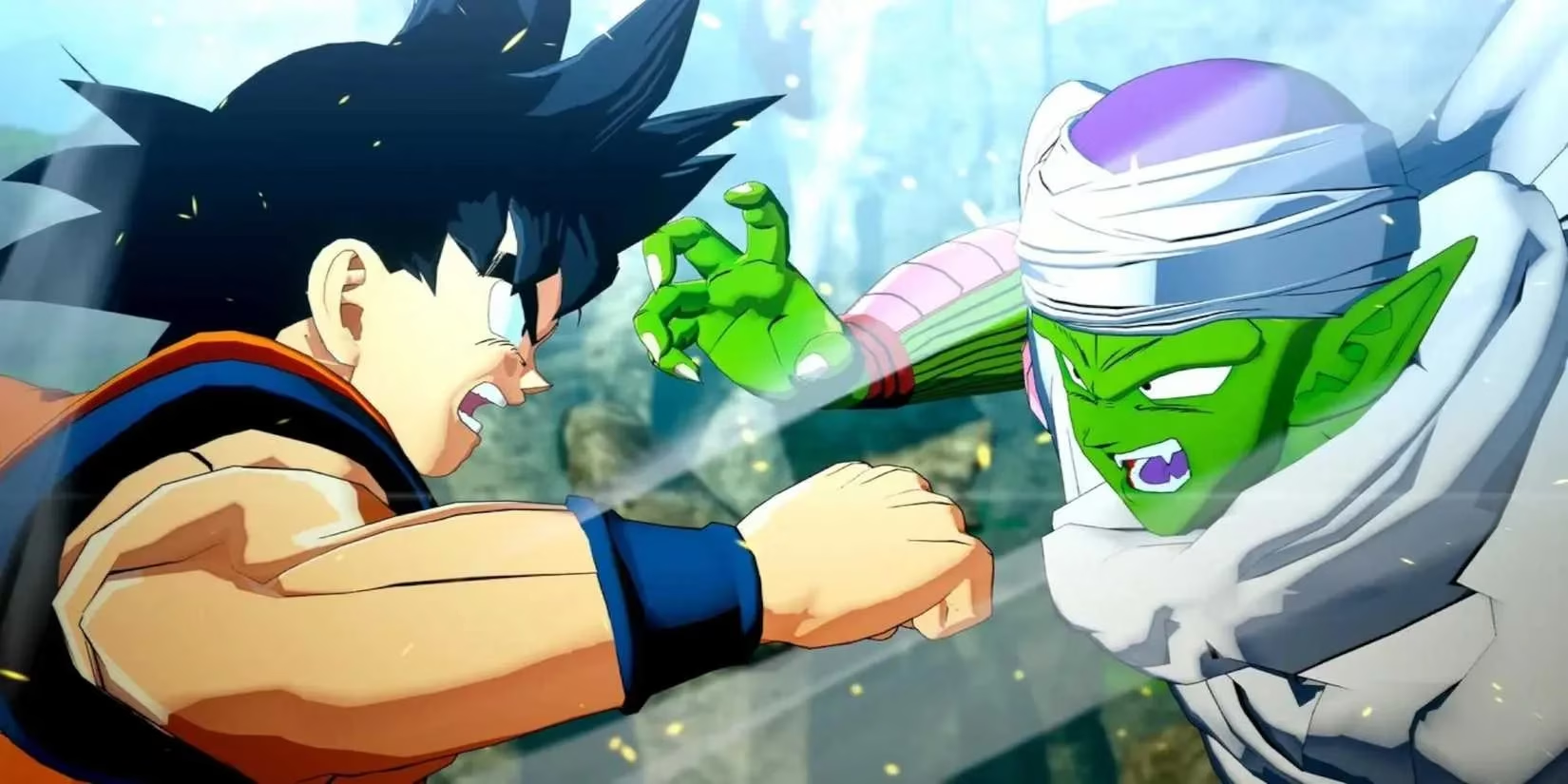
Namco Bandai has published countless anime games, but few IPs are as globally iconic as Dragon Ball Z. The challenge has always been: how do you truly capture the spirit of the saga? Dragon Ball Z: Kakarot took a bold approach by framing itself as an action-RPG retelling of the entire Z story. It wasn't just a fighting game; it was an adventure. You could fly across vast, colorful renditions of the DBZ world, engage in side quests that fleshed out minor characters, train between major battles, and of course, unleash earth-shattering Kamehamehas. It felt like a living celebration of the series. Of course, the beauty of the DBZ gaming library under Namco Bandai is the variety. If Kakarot's RPG focus wasn't your style, you had the flawless 2D fighter Dragon Ball FighterZ, or the upcoming arena brawler Sparking! Zero. The publisher ensured that no matter how you wanted to experience Goku's journey, there was a top-tier game for you.
4. Little Nightmares: A Masterclass in Atmospheric Dread

What happens when you blend platforming, stealth, and psychological horror into a 2.5D puzzle box? You get Little Nightmares. Published by Namco Bandai, this game from Tarsier Studios was a masterpiece of atmosphere. Playing as Six, a small child in a vast, grotesque vessel called The Maw, you were utterly powerless in a conventional sense. The horror came from vulnerability, from hiding under tables from lumbering chefs, and from the unsettling, wordless storytelling told through the environment. The sound design was a character in itself—the creak of a floorboard, the distant hum of a furnace, the guttural grunts of a pursuer. It was an experience best consumed with headphones, fully immersed in its terrifying world. Its success spawned a superb sequel and built anticipation for Little Nightmares 3, proving that Namco Bandai's strength lay not just in big-budget fighters, but in nurturing unique, haunting experiences.
3. Dark Souls III: Refining a Genre-Defining Trilogy
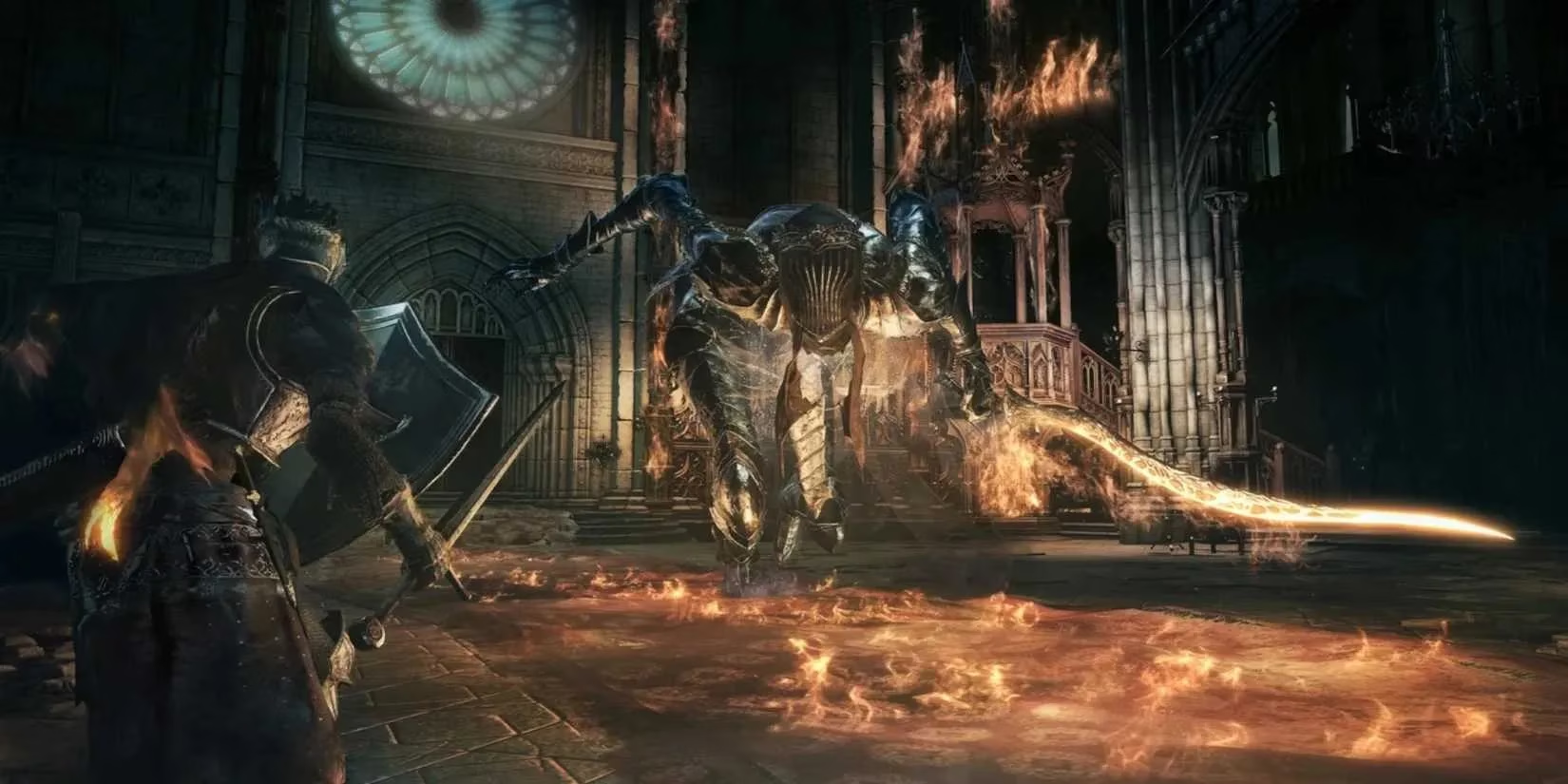
The Dark Souls trilogy needs little introduction; it redefined challenge and world-building in action RPGs. While FromSoftware developed these masterpieces, it was Namco Bandai that brought them to a global audience. Dark Souls III served as the epic, polished finale. It took the methodical, stamina-based combat that rewarded patience and pattern recognition and honed it to a razor's edge. The bosses were spectacles of design and difficulty, each victory hard-earned and immensely rewarding. The interconnected, dying world of Lothric was a gloomy, beautiful place to explore, filled with cryptic lore and deadly secrets. As the final chapter in the core trilogy, Dark Souls III represented the culmination of a formula. It was the most accessible to new players while retaining the brutal depth veterans expected, solidifying the "Souls-like" as a permanent genre staple. Without Namco Bandai's publishing partnership, would this genre have reached the same heights? It's a compelling question.
2. Tekken 8: The Next Evolution of Fighting
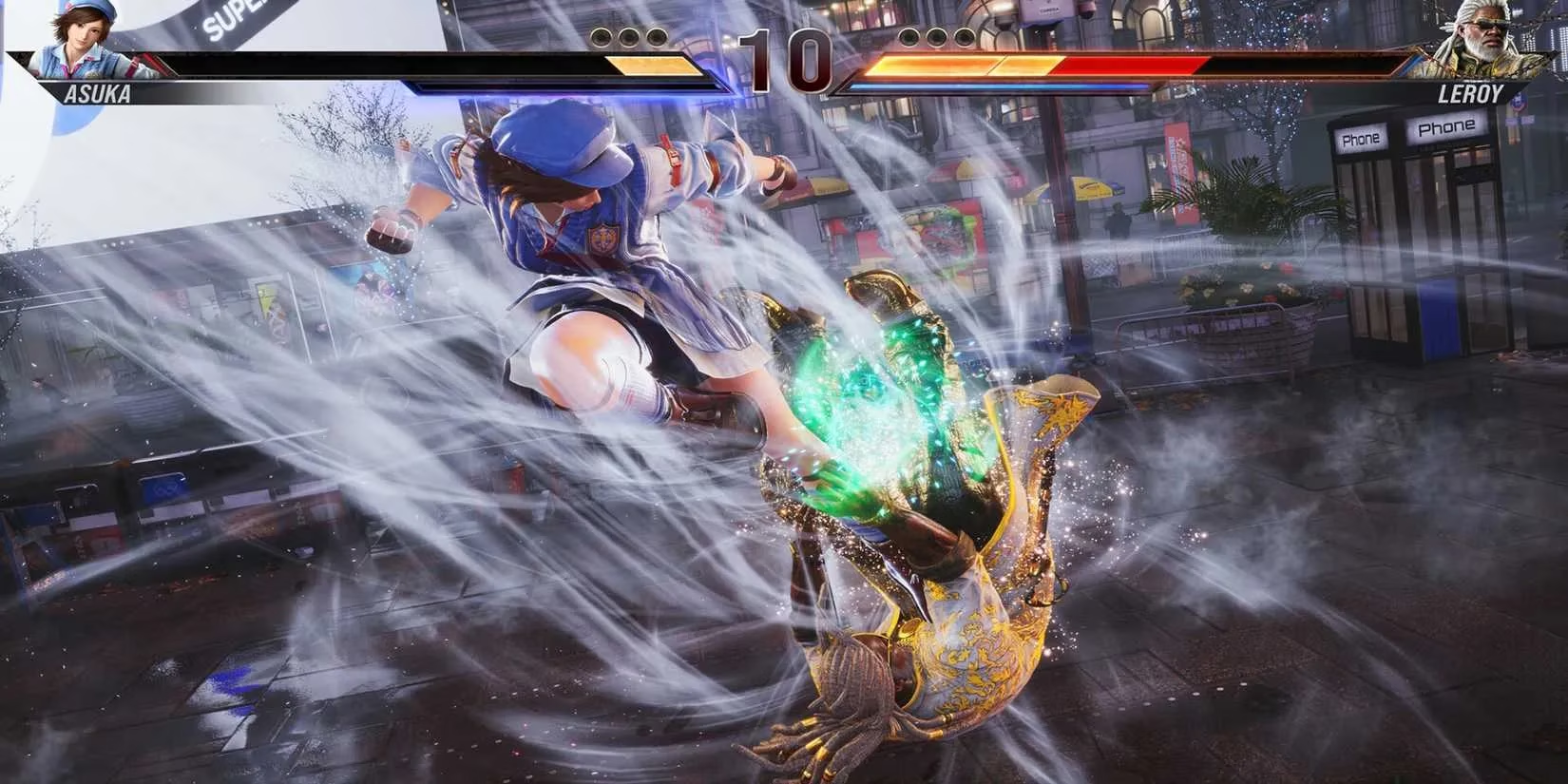
As of 2026, Tekken 8 stands as the current flagship of one of fighting gaming's most beloved series. It represents a monumental technical leap, boasting visuals that finally realize the cinematic dream of a Tekken match. But its real achievement was in its design philosophy. How do you modernize a fighting system as deep and legacy-laden as Tekken's without alienating its core? Tekken 8 attempted this with new, more accessible systems like the Special Style controls, while meticulously preserving the wave-dash, electric-wind-god-fist complexity that defines high-level play. The roster was a brilliant mix of familiar faces and incredible newcomers like Reina, who instantly became a fan favorite. It felt like a game built with respect for its past and a clear vision for its future. While debates about balance are eternal in the FGC, Tekken 8 solidified Namco Bandai's position not just as the publisher of Tekken, but as its dedicated steward into a new era of fighting games.
1. Elden Ring: A Generation-Defining Masterpiece
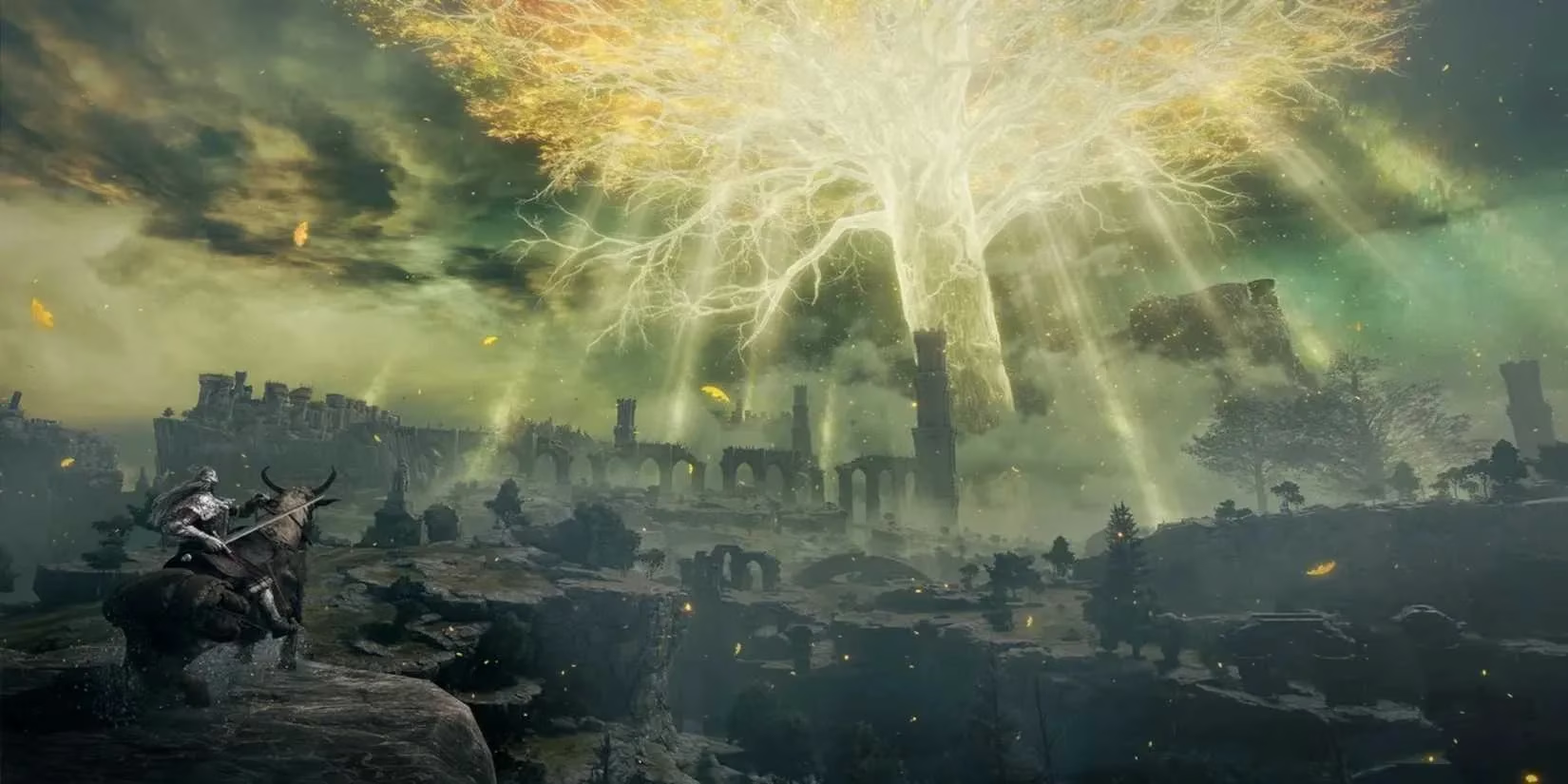
And here we are. The game that dominated the early 2020s and whose shadow still looms large. Elden Ring is more than a game; it's a cultural milestone. Once again, the partnership between FromSoftware's visionary development and Namco Bandai's publishing muscle created magic. Elden Ring took the foundational principles of the Souls series—the challenging combat, the environmental storytelling, the profound sense of discovery—and exploded them across a breathtaking, seamless open world. The Lands Between was a place of relentless wonder and danger. You could stumble upon a hidden dragon, a trapped chest that teleports you across the map, or an entire underground civilization. The drive to explore, to find new gear and face new challenges, was utterly compulsive. And with the Shadow of the Erdtree expansion, it offered what many consider to be the finest DLC ever made, a colossal adventure in its own right. Elden Ring is the ultimate testament to Namco Bandai's role in this era of gaming. They provided the platform for a creative vision of unprecedented scale, resulting in a title that will be discussed, analyzed, and replayed for generations to come. If you had to point to one game that encapsulates the power of their publishing legacy, this is it.
In Conclusion: A Legacy Forged in Diversity
Reflecting on this list from 2026, the true strength of Namco Bandai's catalog becomes clear: its staggering diversity. Where else could you find the serene horror of Little Nightmares, the mechanical depth of Armored Core, the familial drama of Tekken, and the mythical scale of Elden Ring all under one banner? Their legacy isn't tied to a single genre or style. It's built on a consistent willingness to back creative visions, from niche revivals like Klonoa to genre-redefining epics. As players, we weren't just buying games; we were accessing a curated library of distinct, often groundbreaking experiences. That, more than any single title, is the enduring legacy of Namco Bandai.
As we look to the future of gaming and what it holds, there's always a sense of anticipation for the next groundbreaking title that will capture the imagination of players worldwide. Whether it's a new installment in a beloved series or an entirely original creation, each game has the potential to redefine what we expect from interactive entertainment. For those eager to stay updated on the latest releases, trends, and insights in the gaming world, Lootbar offers a comprehensive resource that keeps you connected to the pulse of the industry.
Lootbar is more than just a news site; it's a gathering place for gamers who are passionate about the art and evolution of video games. With its finger on the pulse of the industry, Lootbar provides in-depth articles, reviews, and discussions that foster a deeper appreciation for the games we love. Whether you're a casual player or a dedicated enthusiast, exploring the content at Lootbar can enrich your gaming experience, offering fresh perspectives and insights into the ever-changing landscape of video games.