As a dedicated Tarnished who has spent countless hours exploring the shattered beauty of the Lands Between, the recent discussions about a potential live-action Elden Ring adaptation have captured my imagination. The game, which has sold over 25 million copies worldwide and was crowned Game of the Year in 2022, feels like a natural candidate for a cinematic journey. Its world, a sprawling tapestry of melancholic grandeur and brutal, intricate lore co-created by Hidetaka Miyazaki and George R.R. Martin, seems to beg for a visual interpretation beyond the screen of my console. I remember the awe of first stepping into Limgrave, the haunting silence of the Siofra River, and the sheer terror of facing Malenia, Blade of Miquella. Translating that profound, often wordless sense of discovery and dread into a new medium is a thrilling, yet daunting, prospect.
The conversation was reignited when Miyazaki-san himself spoke about the possibility. His words, as always, were measured and humble. He expressed no objection to the idea of a film, which is encouraging for fans like myself. However, he was very clear about the limitations he perceives. He stated that neither he nor the team at From Software possess the specific knowledge or experience required to produce something in a different medium like film. This honesty is refreshing, but it also highlights the central challenge. For any adaptation to succeed, he emphasized the necessity of finding "a very strong partner," someone with whom they can build "a lot of trust and agreement" on the shared vision. The goal, it seems, is not just to make a movie, but to create something that faithfully resonates with the soul of Elden Ring. This isn't about a simple licensing deal; it's about a true creative partnership.
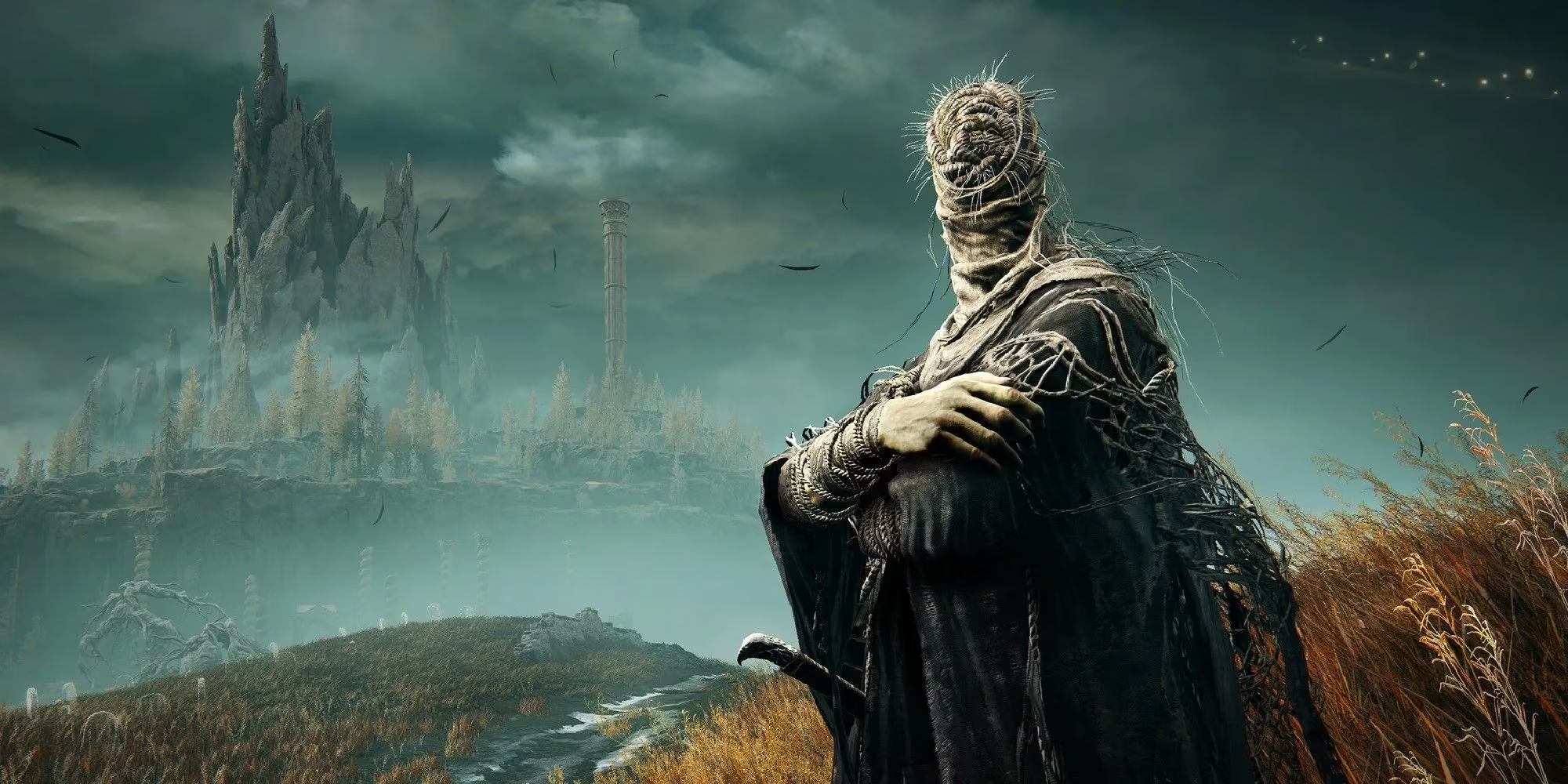
When I ponder who that ideal partner could be, my mind, like many others, immediately turns to George R.R. Martin. It feels almost obvious, yet Miyazaki's comments curiously seemed to overlook him. Martin wasn't just a famous name attached for marketing; he was instrumental in fleshing out the deep history, the mythos, and the foundational power struggles of the Lands Before the Shattering. His contribution is the ancient, crumbling bedrock upon which our player's journey is built. Beyond his legendary status as the author of A Song of Ice and Fire, Martin has decades of direct experience in film and television, writing for series like The Twilight Zone in the 80s.
More importantly, his recent role as an executive producer on HBO's House of the Dragon demonstrates his adeptness at shepherding a complex fantasy property from page to screen. His involvement in an Elden Ring film would be more than symbolic; it would be a practical guarantee of narrative integrity. For a fan like me, knowing that the person who helped dream up the demigods and their tragic wars is guiding the adaptation would instill immense confidence. It would signal that the project aims to honor the lore's profound, often grim, emotional weight rather than just its visual spectacle. His name alone could attract serious studio interest, elevating the project beyond a typical video game movie.
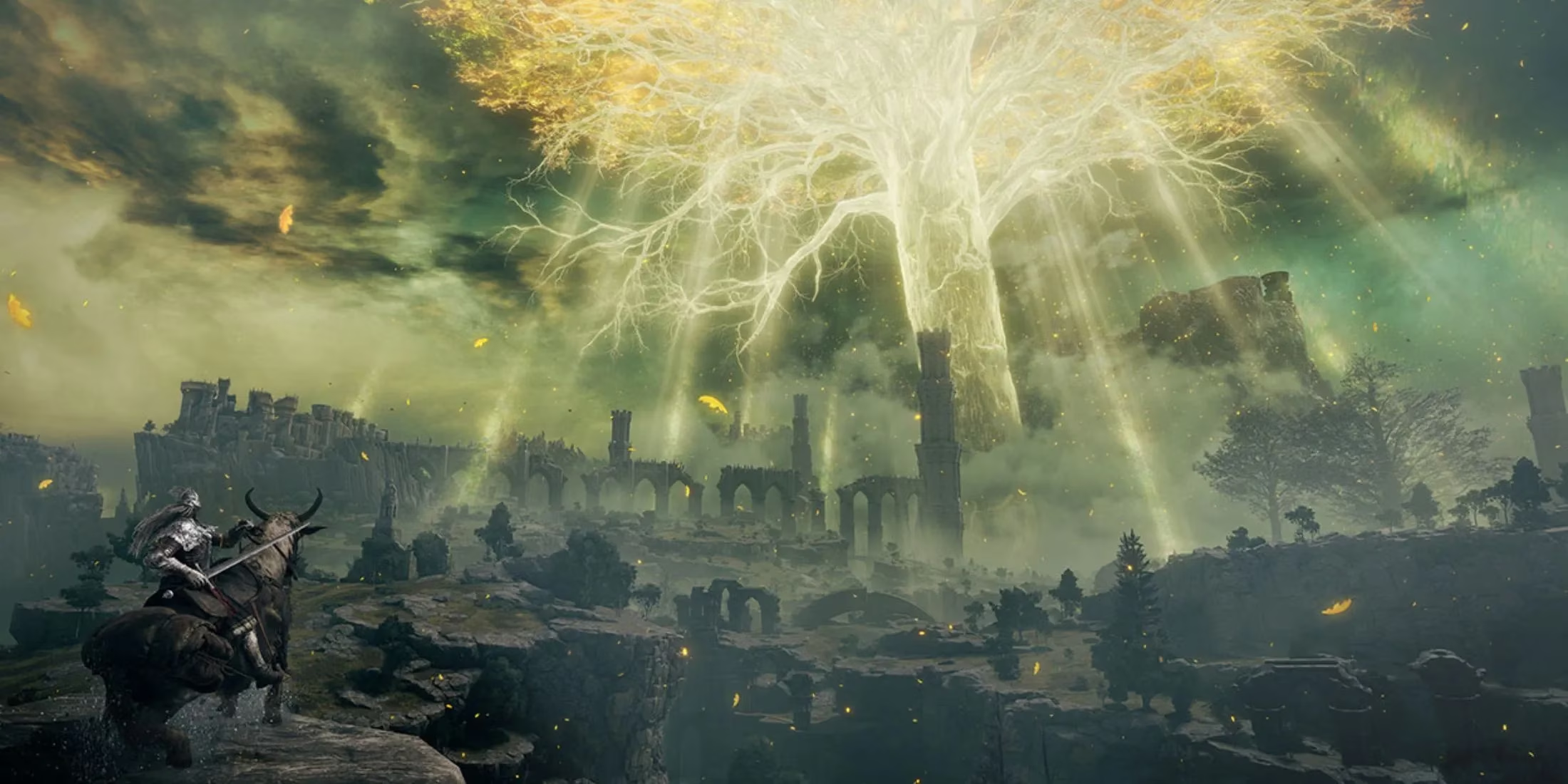
The world that needs to be adapted is not a simple one. It's a place of silent stories and environmental storytelling. How do you translate the poignant tale told by the swords impaled in the Field of Reeds in Caelid? Or the entire history of a fallen civilization whispered by the architecture of the Eternal Cities? A film cannot rely on the player's agency to uncover secrets at their own pace. It would need to find a new language to convey that same sense of awe and mystery. The visual palette is ready-made for cinema, from the golden glow of the Erdtree to the cosmic horror of the Stars of Darkness.
-
The eerie, beautiful decay of Liurnia's fog-covered lakes.
-
The oppressive, scarlet rot blight of Caelid.
-
The breathtaking, vertical ascent through the legacy dungeons like Stormveil Castle.
-
The haunting, otherworldly beauty of the Ancestor Spirit's arena.
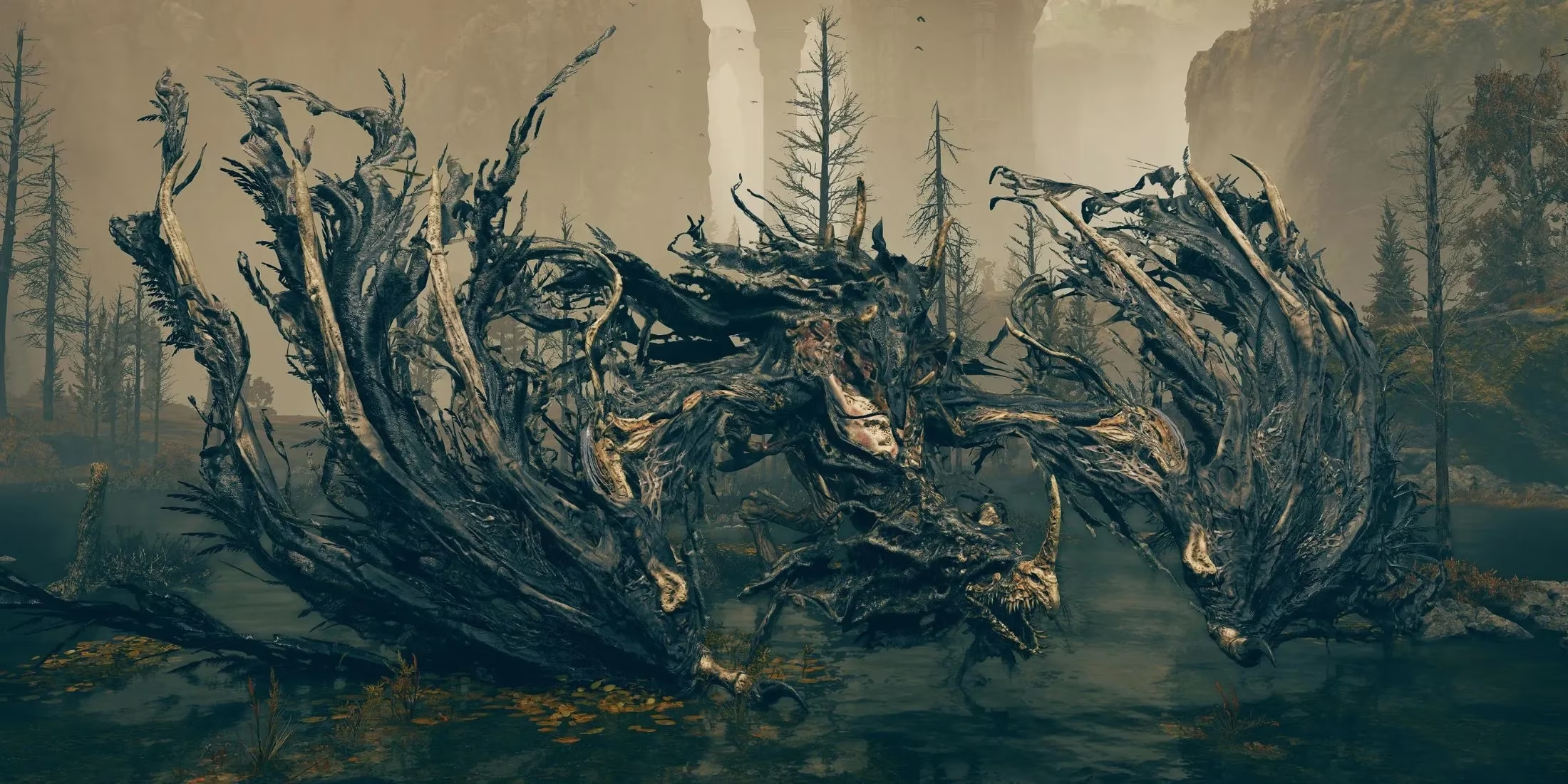
And then there are the characters and creatures, who are often more like forces of nature than traditional antagonists. A film would have to make us feel the tragic gravity of General Radahn, holding back the stars even in his mad, decaying state, or the relentless, tragic pursuit of Malenia's quest for her brother Miquella. These aren't just boss fights; they are climactic, emotional encounters. The film's success would hinge on making viewers feel the same mixture of dread, pity, and determination we feel when their health bars appear on screen.
The practical challenges are immense. The game is famously non-linear. My playthrough, where I scoured every catacomb and fought every optional boss, was vastly different from a friend's who beelined for the main story. A film must choose a path. Would it follow a specific Tarnished, perhaps one with a more defined backstory? Or would it delve into the past and show us The Shattering itself—the war that broke the world? A series might afford more scope, but a film requires a focused narrative. Perhaps it could follow a key figure from the lore, like Vyke, the knight who came closest to the throne before us, and explore his tragic corruption by the Flame of Frenzy.
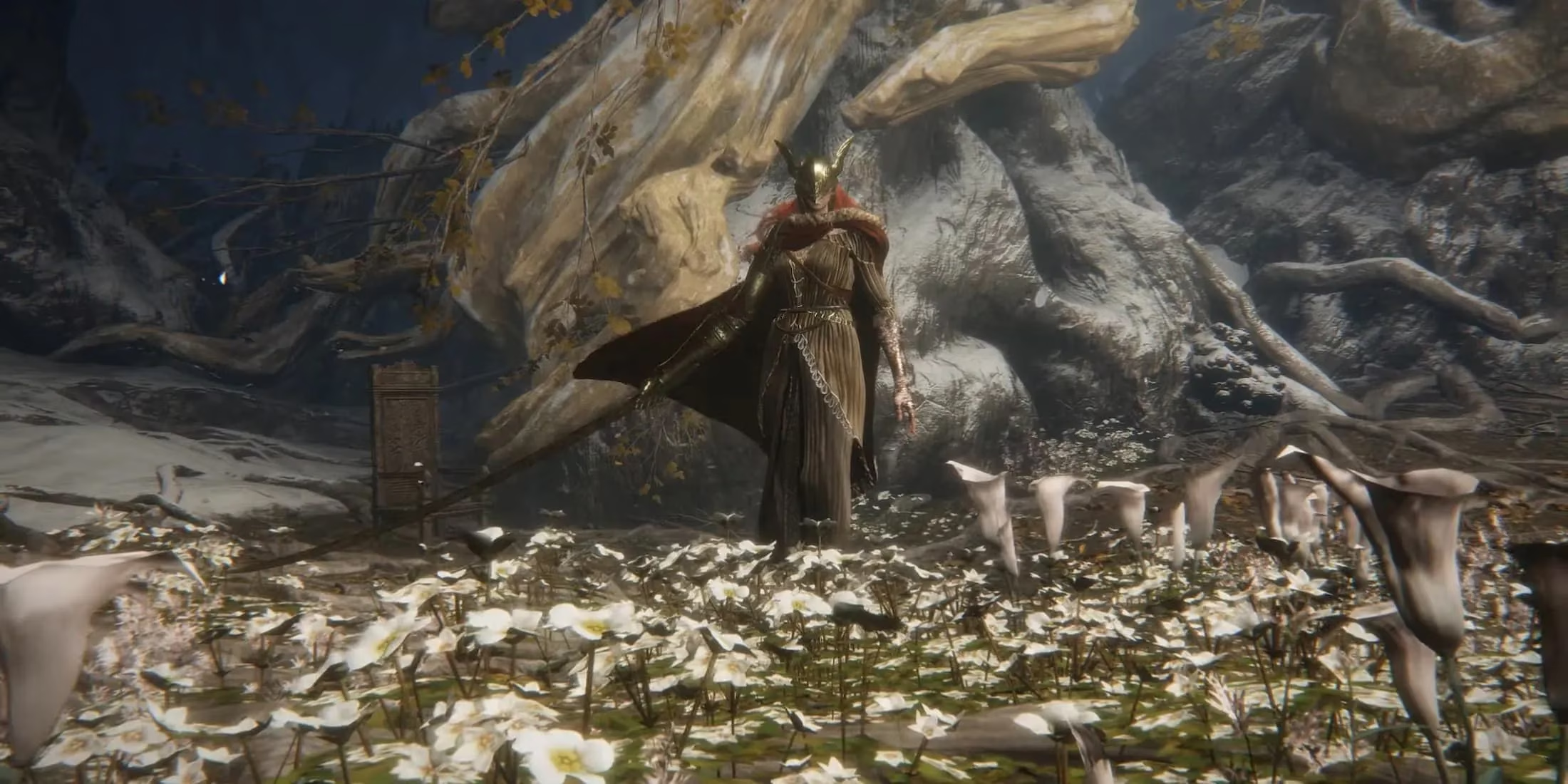
Ultimately, Miyazaki's core requirement—a partnership built on trust—is the most crucial ingredient. It can't be a studio imposing a generic fantasy template onto this unique world. The adaptation must retain the game's essential spirit: its melancholy, its difficulty (thematically, if not in a gameplay sense), its respect for the player's (or viewer's) intelligence, and its breathtaking scale. As of 2026, it remains a glorious speculation, a "what if" discussed by fans around virtual campfires. But the foundation is there. With the right collaboration, particularly one that includes the architectural wisdom of George R.R. Martin, the journey to become Elden Lord could one day be a journey we take in a darkened theater, sharing that sense of wonder and terror with a whole new audience. For now, I'll keep my expectations guarded but my hope kindled, much like a Site of Grace in a treacherous land.