Ever since I first picked up a controller, I’ve been fascinated by the portal video games offer into other lives. It’s not just about playing a game; it’s about becoming someone else, crafting a persona from scratch, and living their story. This magic is at the heart of the Role-Playing Game (RPG) genre, where customization isn't just a feature—it's the soul of the experience. In 2026, looking back at the landscape of action RPGs, I’m struck by how several titles have mastered this art, allowing me to not just play a character, but to truly become them, shaping every facet of their appearance, abilities, and destiny.
My adventure often begins with a face in a mirror. Black Desert Online was one of the first games to truly mesmerize me with this step. I remember spending hours, lost in its incredibly detailed character creator, sculpting cheekbones, adjusting the arch of an eyebrow, and crafting a visage that felt uniquely mine. It was more than an avatar; it was a digital self. As an open-world MMO, the journey continued with tailoring my class and build to my playstyle. Whether I wanted to be a nimble striker darting across the battlefield or a formidable guardian holding the line, the game’s systems allowed my creation to come alive in combat, making every venture into its world feel deeply personal.
The thrill of build creation reached a fever pitch for me with Path of Exile 2. I recall watching those viral reaction videos at launch, and the hype was real. Stepping into the world of Wraeclast, I was overwhelmed—in the best way—by the sheer depth of its customization. While my character's face might have been standard, their soul was anything but. The skill web is a masterpiece of player agency. I could fashion a necromancer who specialized in volatile minions, a rogue who blurred the lines between shadow and steel, or a warrior whose very attacks altered the landscape. Loot wasn’t just about power; it was a key that could unlock entirely new playstyles, making each enemy felled a step toward a new self.
For a more narrative-driven, yet equally customizable epic, Dragon Age: Inquisition holds a special place. The Frostbite engine, at the time, felt revolutionary. I could pore over intricate facial details, crafting an Inquisitor whose stern gaze or kind smile felt right for the heavy mantle of leadership. This personal touch made the weight of Thedas’s fate feel more intimate. Beyond looks, the blend of tactical and action combat was a playground. Deciding whether my Inquisitor would be a knight-enchanter weaving magic into swordplay, a tempest rogue controlling the battlefield, or a champion tank shrugging off blows fundamentally shaped my story and relationships with my companions.
Then there are the worlds where I build not just a character, but a life. Fallout 4 dropped me into the Commonwealth’s irradiated embrace and said, "Survive, your way." My Sole Survivor could be a silver-tongued diplomat, a brutish scavenger, or a genius tinkerer. The S.P.E.C.I.A.L. and Perk system was my blueprint. Investing in Charisma opened peaceful resolutions, while a focus on Strength and Melee weapons led to a more... direct approach. The pinnacle was crafting—modifying a simple pipe pistol into a legendary weapon, or building a settlement from scrap. Here, customization extended from my character’s psyche to the very world around me.
The call of Sanctuary is eternal, and Diablo 4 answered with a symphony of class identity. Creating my character here was about embracing an archetype and then twisting it to my will. Would my Necromancer command a legion of skeletons or wield bone and shadow directly? Would my Druid be a storm-caller or a shapeshifting beast? Each class felt profoundly distinct, not just in ability but in visual flair and gameplay rhythm. The loot chase was about finding gear that didn’t just increase numbers, but enabled new, devastating skill synergies, allowing my demon-slaying persona to evolve continuously.
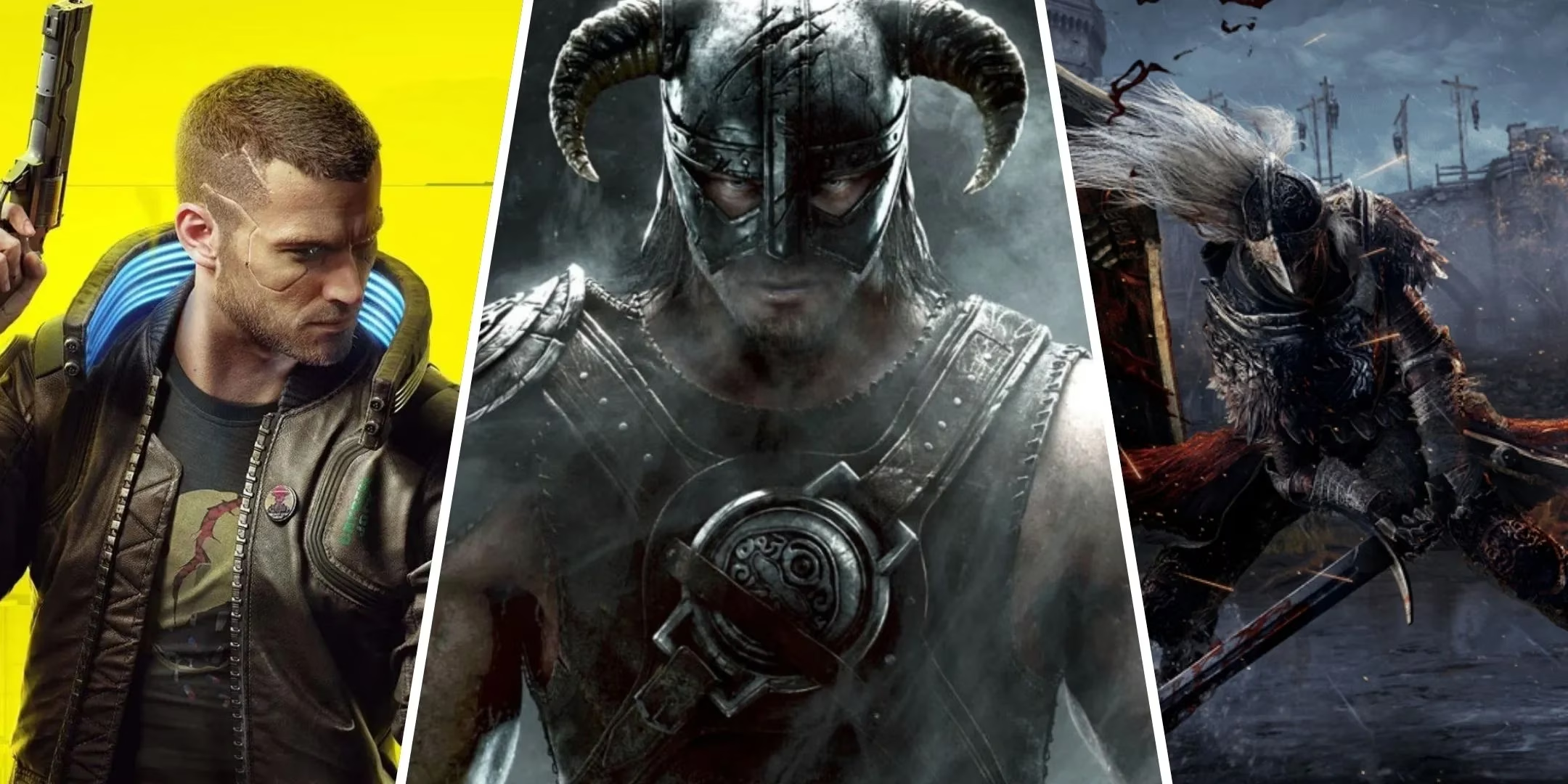
In the Lands Between, Elden Ring presented customization as a key to survival. The character creator finally allowed me to craft a Tarnished who didn’t look permanently grimacing! But the true artistry was in the buildcraft. This was a game of endless combos. I could be a spellblade, a colossal weapon-wielding brute, a nimble archer, or a faith-fueled fanatic. Mixing and matching weapons, ashes of war, spells, and talismans was a puzzle with a thousand solutions. Overcoming a brutal boss often meant going back to my grace site and rethinking my entire build—a deeply satisfying loop of personal adaptation.
Monster Hunter: World taught me that the ultimate customization could be the tool in my hands. Choosing a weapon wasn’t a minor stat choice; it was choosing an entirely different game. The methodical rhythm of the Great Sword felt worlds apart from the acrobatic flow of the Insect Glaive. As I progressed, the endgame became a hunt for the perfect build. Decorations and armor skills let me tailor my hunter to counter specific monsters—prioritizing earplugs for a roaring fiend, or blast resistance for an explosive foe. Mastery was less about raw skill and more about the intelligence of my preparation.
Night City promised a future where the self was hardware. Cyberpunk 2077 delivered a cybernetic playground where customization was the core theme. I didn’t just create V; I upgraded them. Choosing between mantis blades for lethal stealth or a projectile launch system for chaos, investing in hacking to become a netrunner ghost, or boosting my body to become a chromed-up tank—each choice reshaped how I interacted with the entire city. The aesthetic customization, from hair implants to synthetic skin, meant my V’s appearance could reflect their gritty, corporate, or punk-rock soul.
Dragon’s Dogma 2 captured my heart with its sheer, unadulterated freedom. Its character creator is a powerful tool for artistry, letting me craft a hero or heroine of startling uniqueness. But the magic is in the Vocations. Switching from a Mystic Spearhand to a Trickster wasn’t a minor shift; it was a paradigm change in how I perceived and engaged with the world. The ability to hybridize skills and constantly experiment meant no two journeys up a griffin’s back or into a dragon’s lair were ever the same. My Arisen was a perpetual work-in-progress.
And finally, there’s Skyrim. Even now, in 2026, its siren song of freedom remains potent. Its genius is in organic progression. I didn’t pick a "class"; I became one by doing. If I used a sword and shield, I grew into a warrior. If I snuck through shadows, I became a thief. I could be a heavy-armored battlemage or an illusionist assassin. The world didn’t put me in a box; it gave me tools and said, "Go." This lack of rigid structure is the ultimate customization, allowing for truly emergent, personal stories where the Dragonborn is whoever I will them to be.
| Game | Customization Focus | Key Strength |
|---|---|---|
| Black Desert Online | Visual Fidelity & Class Builds | Unparalleled detail in facial/body sculpting |
| Path of Exile 2 | Deep Mechanical Buildcraft | Vast, interconnected skill web enabling endless builds |
| Dragon Age: Inquisition | Narrative Identity & Combat Style | Blend of deep visual creator and impactful class abilities |
| Fallout 4 | Character Personality & World Crafting | S.P.E.C.I.A.L. system and settlement building extend role-play |
| Diablo 4 | Archetypal Class Fantasy | Strong, distinct class identities with deep skill customization |
| Elden Ring | Versatile Combat & Survival Builds | Countless combinations of weapons, skills, and magic |
| Monster Hunter: World | Weapon-Based Playstyle & Gear Optimization | Each weapon type is a unique game; gear builds for specific hunts |
| Cyberpunk 2077 | Cybernetic Enhancement & Style | Theming customization around body mods and implants |
| Dragon’s Dogma 2 | Vocation Freedom & Hybridization | Seamless swapping between radically different combat roles |
| The Elder Scrolls V: Skyrim | Organic, Unstructured Progression | "Become what you do" philosophy allows for pure emergent role-play |
Reflecting on these journeys, I realize that for me, the greatest action RPGs are those that hand me the chisel and say, "Carve your own statue." They understand that power fantasy isn't just about defeating enemies; it's about the power of self-creation. In 2026, this tradition is stronger than ever, with each of these titles offering a unique workshop where I can forge not just a hero, but a legacy. The adventure is always waiting, and the first step is always deciding who I will be.