It's 2026, and the legacy of FromSoftware's masterpieces continues to grow stronger than ever. Looking back, my journey into the punishing yet beautiful world of Soulsborne games began as many do: with a mix of excitement and sheer terror. I remember the confusion, not knowing where to start among the various titles with their daunting reputations. Having now conquered them all, I want to share the path I wish I had taken—a curated order designed to build your skills and appreciation, transforming frustration into pure, unadulterated triumph.
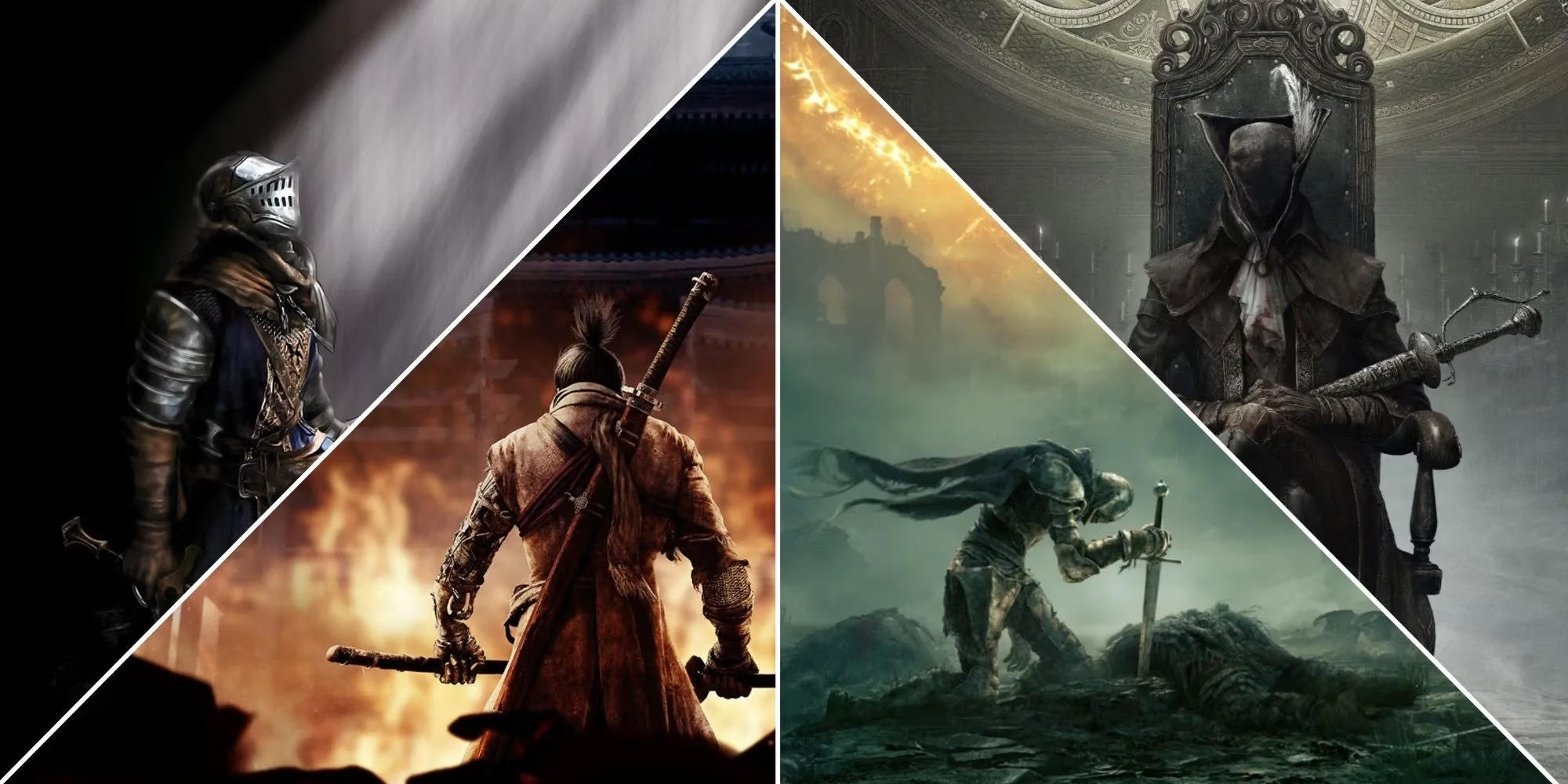
For me, Elden Ring was the perfect, welcoming gateway. It truly is the Soulsborne formula refined to perfection. FromSoftware poured all its years of hard-earned experience into this masterpiece, creating a game that masterfully lowers the barrier to entry without sacrificing an ounce of its iconic identity. The vast, breathtaking open world of The Lands Between became my playground. Its great depth of customization, the always-helpful online mode, and the versatile spirit summoning system meant it was rare for me to ever feel truly stuck. Unlike the older titles, I always had options: I could explore another hauntingly beautiful region, farm runes to level up, improve my arsenal of weapons and armor, or call upon a friend (or a brave stranger) for aid. This incredible freedom allowed me to adjust the game's legendary difficulty according to my own abilities and mood. Whether I wanted a brutal, purist challenge or a more guided tour of its lore-rich landscapes, the power was in my hands. That adaptability is the golden key that makes Elden Ring the unequivocal best first step.
From the golden plains of Limgrave, my journey took a gothic turn to the nightmare-ridden streets of Yharnam. Bloodborne presented a different kind of challenge. A consistent opinion I share with many veterans is that, in retrospect, its bosses offer a slightly more accessible difficulty curve than some of its peers. The obstacles that typically halt progress in other games aren't as fiercely present here. Sure, the healing system (those precious Blood Vials!) and the intricate, oppressive level design of Central Yharnam initially overwhelmed me. However, Bloodborne makes up for it with combat systems that are easier to digest, largely because it leans away from heavy RPG mechanics.
-
Weapons are few, but each is a unique masterpiece, all perfectly viable from start to finish.
-
Armor is more about fashion than deep stat optimization, freeing you from constant inventory anxiety.
-
The relative linearity of its world (compared to Elden Ring) means you can focus on mastering the aggressive, rally-based combat without worrying if you're "in the right place."
Mastering the parry mechanic with the trusty Blunderbuss or Pistol simplifies so many encounters, turning terrifying bosses into exhilarating dances. Once it clicked, the game felt more manageable than its fearsome reputation suggested.
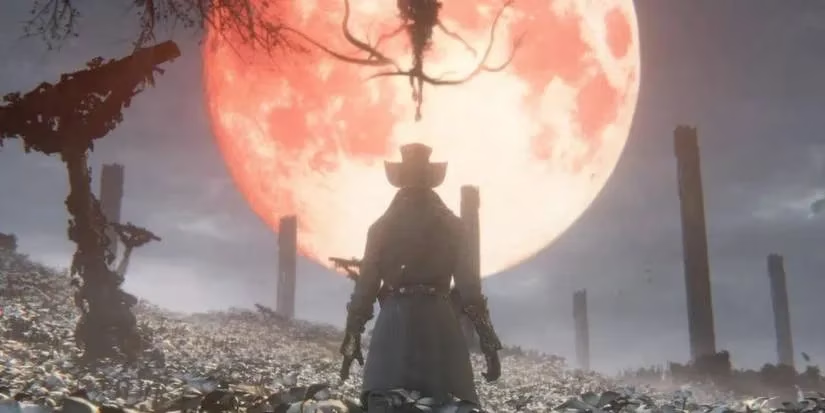
Feeling confident after Yharnam, I decided to visit the roots of it all: Demon's Souls. As the first of the modern Soulsborne phenomena, its obtuse nature is understandable. This was FromSoftware's pioneering venture, and that pioneering spirit translates into unique player discomforts. Following in Bloodborne's footsteps (or rather, preceding it), the maze-like level design and finite healing items keep you on edge. However, the real dangers that can scare away a new player are the arcane mechanics like World Tendency and the Human/Soul Form system. These are not explained well and can permanently affect your game world!
Yet, there's a balance. Most bosses are slower, with more predictable patterns and gimmicks that are easier to decipher. Combat-wise, it's arguably the most straightforward of the Souls games. This accessibility makes up for the sometimes-poor aging of its other systems. Part of me wants to recommend starting here to witness the genesis of a genre, but I believe playing it third allows you to appreciate its historical importance without the frustration driving you away for good.
Now, it was time for the true test. Dark Souls represents, for me and many, the genuine beginning of the long, interconnected journey. It was the franchise's first true turning point. In terms of accessibility, it's a perfect middle ground—a notable challenge for a now-seasoned beginner, but it rarely feels unfair. Its systems, from bonfires to Estus Flasks, are deeply satisfying and well-structured. Lordran is a world of breathtaking verticality and hidden secrets.
Consequently, the demand for the player's skill is much greater. Enemy patterns grow more complex, foes become smarter and more deceptive, and the legendary level design requires constant attention. It's quite easy to get lost in the depths of Blighttown or the twisting passages of Sen's Fortress and feel that classic Souls frustration. Even so, Dark Souls is as accessible as it is demanding. It is the crucible that defines whether you have what it takes to overcome the most brutal challenges in FromSoftware's catalog. Beating Ornstein and Smough for the first time remains one of my top gaming achievements.
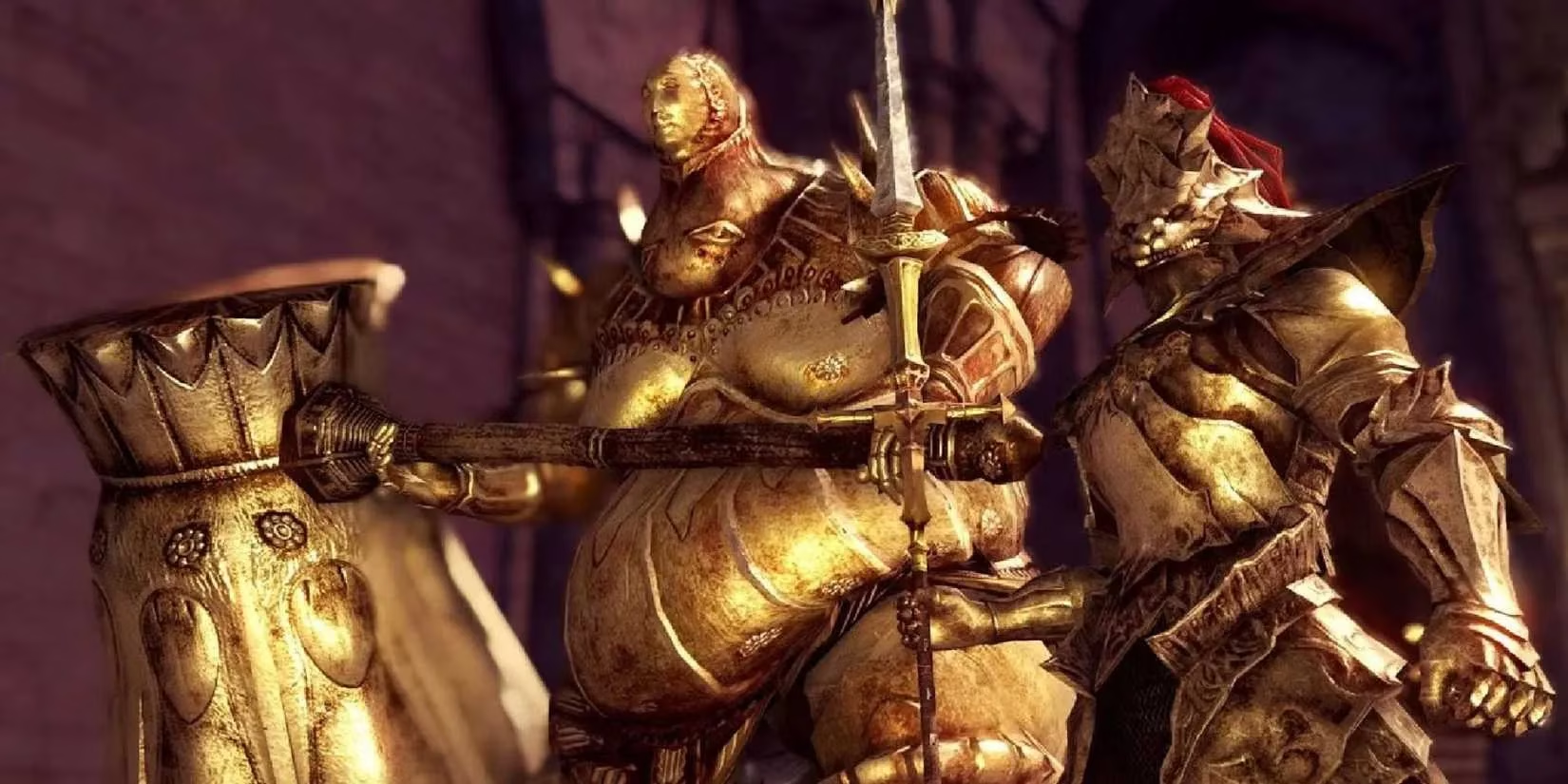
Despite the common advice to skip Dark Souls 2, I strongly encourage playing it right after the first. This admirably inventive sequel strives desperately to offer something new, even if it stumbles frequently. The lands of Drangleic feel different, and the game introduces many novel ideas. Both areas and bosses are often more difficult than Dark Souls, though this is frequently due to performance issues like enemy crowd placement and famously questionable hitboxes. It's normal if you lose more lives to perceived unfairness than to pure inability.
However, to dismiss it is to miss out. Dark Souls 2 features one of the most varied and deep combat systems in the series, with a staggering array of weapons, spells, and builds. The room for experimentation and replayability is practically endless. Furthermore, the title reaches very high peaks, especially in its outstanding DLC chapters. Playing it here allows you to enjoy the trilogy's emotional closure in a much richer, more complete way. It's the essential, flawed middle chapter.
And so, we arrive at the grand finale of the trilogy. Dark Souls 3 is the logical narrative sequence and represents the absolute refinement of the Dark Souls formula. I will always advocate playing the trilogy in release order for this reason. It serves as the epic, golden ending, concluding the series' journey with profound resonance. From a gameplay and story perspective, it's the most pleasing way to culminate your time with one of gaming's best trilogies.
The primary reason for its placement, however, is the sheer spike in boss difficulty. The average challenge presented by Dark Souls 3's lords is considerably higher than its predecessors. If you include the DLCs—and you absolutely must—the situation becomes legendary, featuring some of the most brutally magnificent bosses in video game history. Starting your Souls journey here would have been a mistake, as it's the most hard-hitting and mechanically robust. Playing in order lets you naturally enjoy the developer's evolution and the satisfying crescendo of difficulty, perfectly preparing you for what's next.
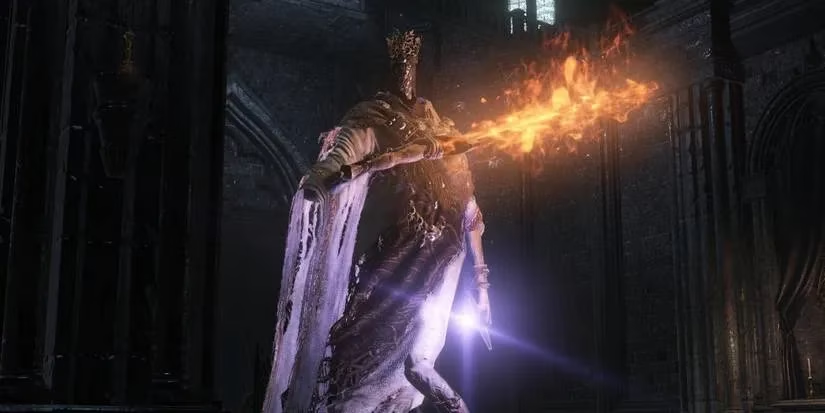
There is no better way to end your pilgrimage through the Soulsborne universe than with the game that breaks all its rules: Sekiro: Shadows Die Twice. It is the least Soulsborne of them all and stands as one of the most difficult games ever created, but by this point, you will be prepared—in mind, if not in muscle memory. Preparation is relative here, for Sekiro speaks a unique, demanding language. Gone are the RPG mechanics, the summons, the safety net of over-leveling. With a very limited toolkit, your only option is absolute mastery.
This makes it the perfect capstone. It's not only the most demanding test but also the most different. Having played the rest of FromSoftware's catalog will put your mind in the resilient, observant state needed to learn, but your hands will have to adapt all over again. Sekiro depends on your ability to enter a state of perfect flow, parrying, countering, and dancing with its shinobi and monstrosities. Its bosses, main and optional, are monumental challenges for the most veteran players. Yet, overcoming them provides a sense of satisfaction unlike any other. It truly is one of the best and most rewarding games of all time, a final, exquisite lesson in perseverance and skill. And after conquering Sekiro, you'll be ready for whatever FromSoftware dreams up next. The journey is hard, but oh, is it worth it. 🗡️🛡️
Completing the journey through the Soulsborne series is more than just finishing games; it's about embracing a challenging adventure and growing as a player. As you conquer these formidable titles, you might find yourself yearning for a deeper connection to the gaming world or seeking new ways to enhance your experience. For those looking to expand their gaming horizons or discover unique insights into the world of gaming, Lootbar offers a treasure trove of information and resources. Whether you're hunting down rare collectibles or exploring the latest trends in gaming, Lootbar is an excellent companion for any dedicated gamer.