As a Tarnished who finally achieved the title of Elden Lord in 2026, I can confidently say that FromSoftware's masterpiece, the 2022 Game of the Year winner, remains one of gaming's most monumental achievements. Even years later, the vast, intricate world of the Lands Between, co-created by George R. R. Martin, continues to captivate and challenge players. My initial journey was filled with confusion and unintended hardship, but through experience, I discovered a progression path that allowed me to witness the game's majesty without being overwhelmed by its notorious difficulty. This is the route I wish I had known from the start.
My adventure, like all others, began in the sprawling fields of West Limgrave. This region serves as a surprisingly gentle introduction to a Soulsborne world, as long as you heed the unspoken rule to avoid the imposing Tree Sentinel guarding the path from the start. I learned the hard way that rushing towards the looming Stormveil Castle leads directly to the game's first major obstacle: Margit, the Fell Omen. 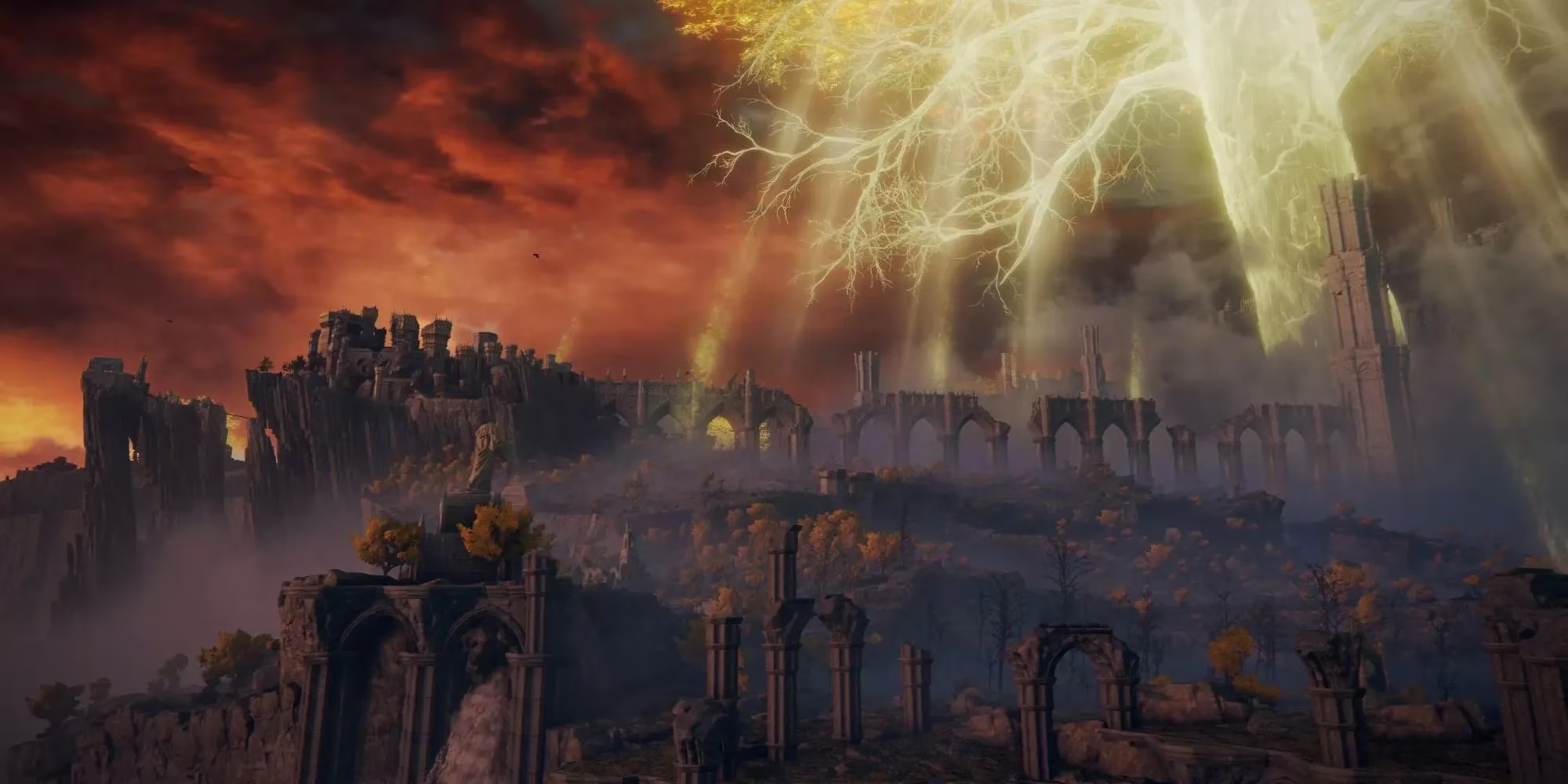 Instead, I spent my early hours exploring every nook and cranny of Limgrave. I challenged the minor bosses lurking in caves and catacombs, gathered crucial crafting materials, and discovered unique armaments that would define my build. Conquering the challenges of Castle Morne in the south became my personal benchmark; once I emerged victorious, I felt prepared to face Margit and breach the gates of Stormveil Castle, the game's first proper legacy dungeon.
The mist-shrouded expanse of Liurnia of the Lakes was my next destination. This is where the world truly opens up, and the narrative threads woven by FromSoftware begin to intertwine. I made it a habit to speak with every NPC I encountered, as their quests often lead to profound revelations and powerful rewards. Scouring the region's many caves, catacombs, and evergaols is essential—these hidden locales often house special weapons, sorceries, and incantations that can completely reshape your combat approach. After obtaining the Glintstone Key and bolstering my strength, I ventured into the grand Raya Lucaria Academy. Defeating the magical guardians within not only granted me a second Great Rune but, crucially, unlocked the ability to respec my character, a feature that allowed for immense experimentation.
With two Great Runes, the path to the royal capital, Leyndell, was technically open. However, bypassing the game's central continents would mean missing some of its most iconic moments. My journey diverged into two equally daunting directions: the scarlet-rotted wasteland of Caelid, a zone infamous for its brutal difficulty, and the golden, war-torn Altus Plateau. I tackled both, exploring their treacherous landscapes and confronting their fearsome denizens. This prepared me for the fiery, twisted ascent of Mt. Gelmir and the deceptive halls of Volcano Manor. Following this sequence ensures you experience legendary events like the Starscourge Radahn festival, a spectacle no player should miss. Only after these trials did I feel worthy to approach the Erdtree-capital, delving into its glorious streets and its horrifying, filth-ridden underbelly, the Subterranean Shunning-Grounds.
The final act of the game is where Elden Ring sheds any pretense of mercy. After a pivotal event in the capital, the world changes, and the difficulty escalates dramatically. The path becomes more linear, leading through the frigid, punishing Mountaintops of the Giants. 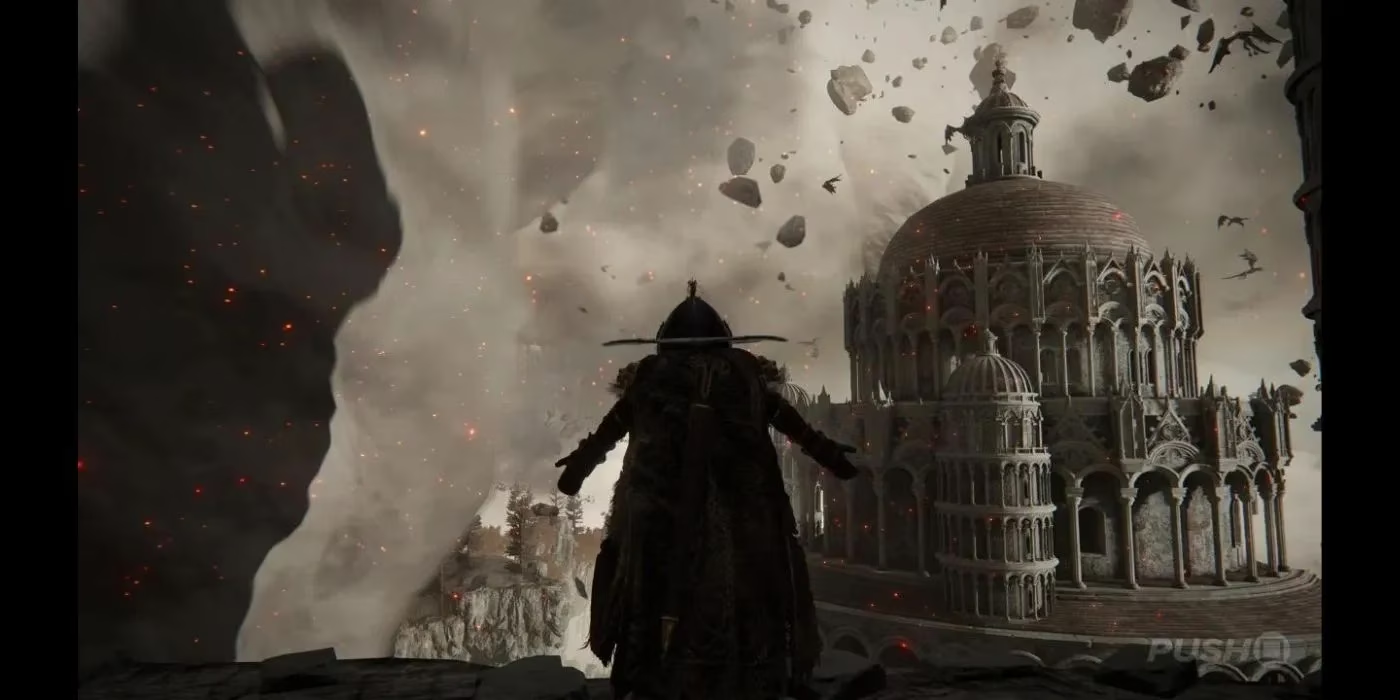 A word of caution: progressing through the Mountaintops will irreversibly alter the state of the world, locking out certain quests and interactions. I made sure to complete all outstanding business—particularly lengthy NPC questlines—before proceeding. The culmination of this journey takes you to the Crumbling Farum Azula, a breathtaking archipelago suspended in a storm. Once you step onto its ruins, you are committed to seeing it through to the end, facing some of the game's most formidable foes before returning to a transformed capital for the final confrontations.
This structured path is designed to naturally elevate your power level while ensuring you witness the bulk of the content FromSoftware meticulously crafted. However, becoming Elden Lord is not the absolute end. The most daunting challenges are, in fact, optional. After the credits rolled, I sought out the most fearsome warriors in the Lands Between. I journeyed to the concealed Haligtree to duel the legendary Malenia, Blade of Miquella, arguably the game's ultimate test of skill. 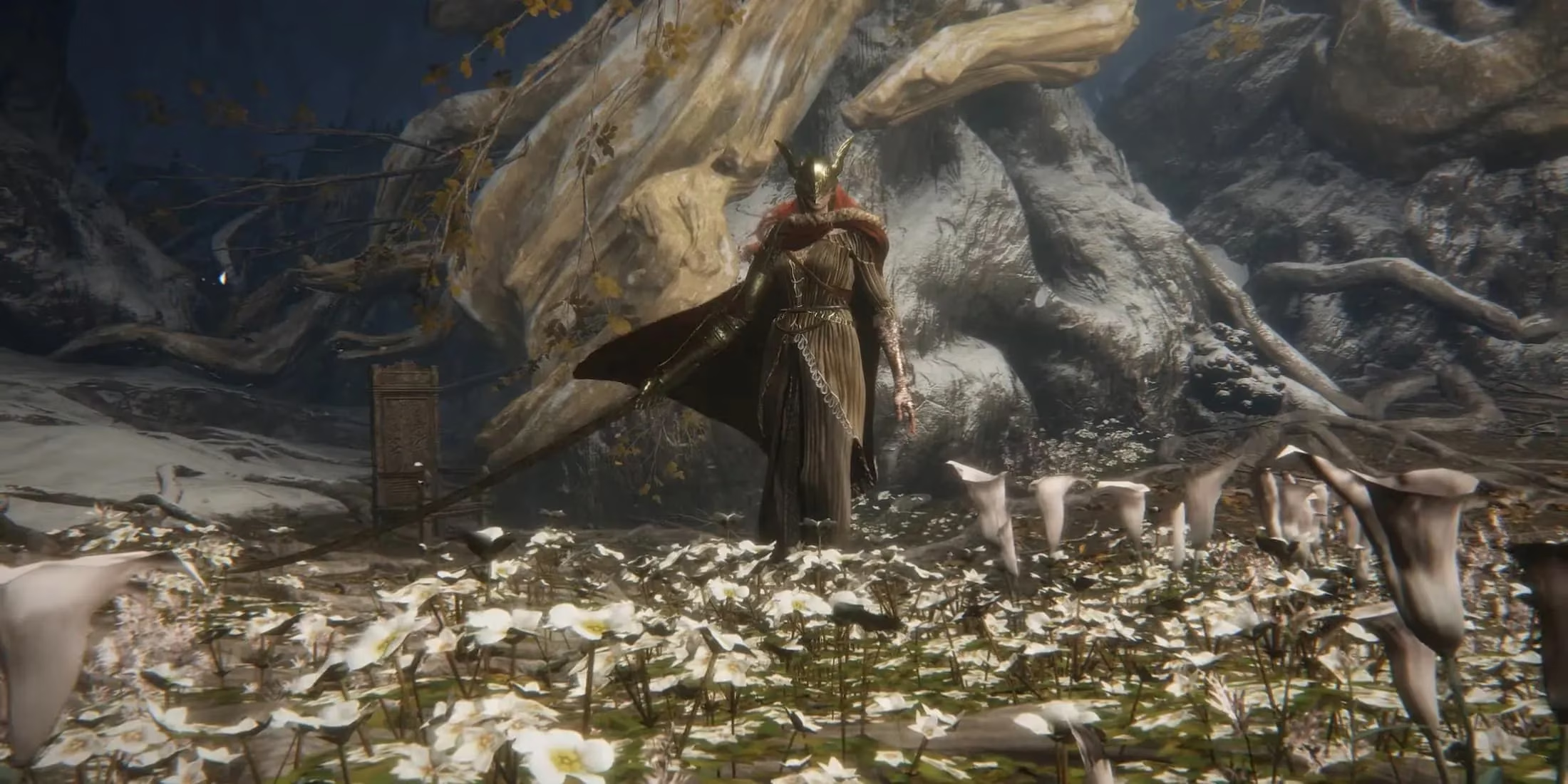 I also descended into the blood-soaked depths of Mohgwyn Palace to battle Mohg, Lord of Blood, a confrontation that is essential for those seeking a specific, profound ending to their saga.
Looking back, my progression can be summarized in this recommended order:
| Phase | Key Regions | Major Objectives |
|---|---|---|
| Early Game | Limgrave, Weeping Peninsula | Explore, gather gear, defeat minor bosses, conquer Castle Morne & Stormveil Castle. |
| Mid Game I | Liurnia of the Lakes | Complete Raya Lucaria Academy, unlock respec, follow NPC quests. |
| Mid Game II | Caelid, Altus Plateau, Mt. Gelmir | Experience Radahn's festival, explore Volcano Manor, gather more Great Runes. |
| Late Game | Leyndell Royal Capital | Infiltrate the capital and its sewers. |
| End Game | Mountaintops of the Giants, Crumbling Farum Azula | Complete world-altering events, face the final bosses. |
| Post-Game / Optional | Miquella's Haligtree, Mohgwyn Palace | Challenge Malenia and Mohg for the ultimate bragging rights. |
This journey is not about rigidly following a checklist, but about embracing a rhythm of exploration and conquest. The beauty of Elden Ring is that it respects your agency; you can deviate from this path at any time. Yet, for a Tarnished seeking a comprehensive and balanced experience—one that builds power and knowledge gradually to face the escalating horrors—this route proved invaluable. It transformed my pilgrimage from a frantic struggle for survival into a measured, epic odyssey across a broken world, allowing me to fully appreciate every terrifying, beautiful detail that makes this game a timeless classic.