As a lifelong gamer, I've come to realize that the most profound sense of accomplishment doesn't come from an easy victory. It emerges from the crucible of repeated failure, the relentless process of trial and error. In 2026, this design philosophy feels more relevant than ever, a timeless dance between player and challenge. Over the years, I've explored countless worlds where success is hard-earned, and my skills were forged not by leveling up a character, but by leveling up myself. The feeling of finally overcoming an obstacle that has bested you dozens of times is a unique kind of magic, a personal triumph that no other form of entertainment can replicate. These are the games that taught me the most about patience, adaptation, and the sweet taste of a victory born from countless attempts.
9. Elden Ring: The Ultimate Challenge
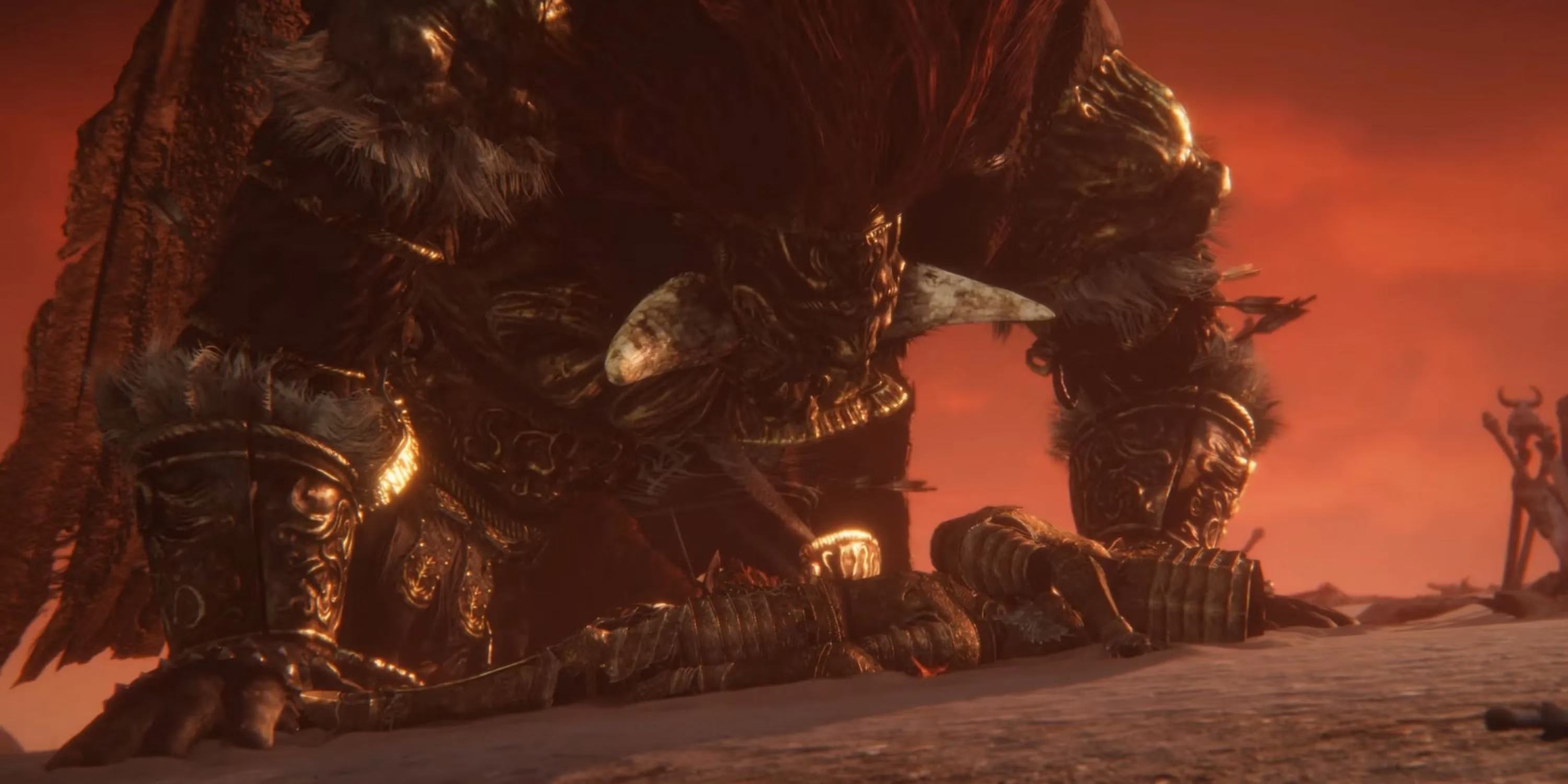
My journey through the Lands Between was a brutal, humbling, and ultimately glorious saga. Elden Ring, the most expansive and challenging Souls-like experience to date, is a masterclass in iterative learning. I can still vividly recall the first time I faced a major boss, brimming with confidence, only to be swiftly and mercilessly cut down. And again. And again. It was a cycle I came to know intimately: death, respawn, analyze, adapt. Each defeat wasn't a setback; it was a lesson. I learned the subtle tells before a devastating swing, the exact timing for a dodge, and the brief windows to launch a counterattack. The true genius reveals itself when a boss you've memorized suddenly transforms, unveiling a terrifying second phase with a completely new arsenal. The initial shock is palpable, but the process begins anew, and the eventual victory is all the sweeter. This game doesn't just test your reflexes; it forges your perseverance.
8. Mirror’s Edge: The Rhythm of the City

Shifting from dark fantasy to luminous futurism, Mirror’s Edge taught me that trial and error isn't just about combat—it's about flow. As Faith, I learned to see the city not as a collection of buildings, but as a series of interconnected pathways. The satisfaction of a perfectly chained run, leaping between rooftops and sliding under barriers, is immense. But to reach that fluid state, I had to fail. Oh, how I failed. Misjudging a jump by a fraction of a second meant a long, painful fall to the streets below. A mistimed disarm attempt left me vulnerable. Each mistake was a data point. Through repetition, the complex sequences of button presses became muscle memory. The trial-and-error process transformed me from a clumsy newcomer into a free-running virtuoso, moving through the environment on instinct alone. It was a beautiful, punishing lesson in rhythm and precision.
7. Celeste: A Mountain of Mistakes
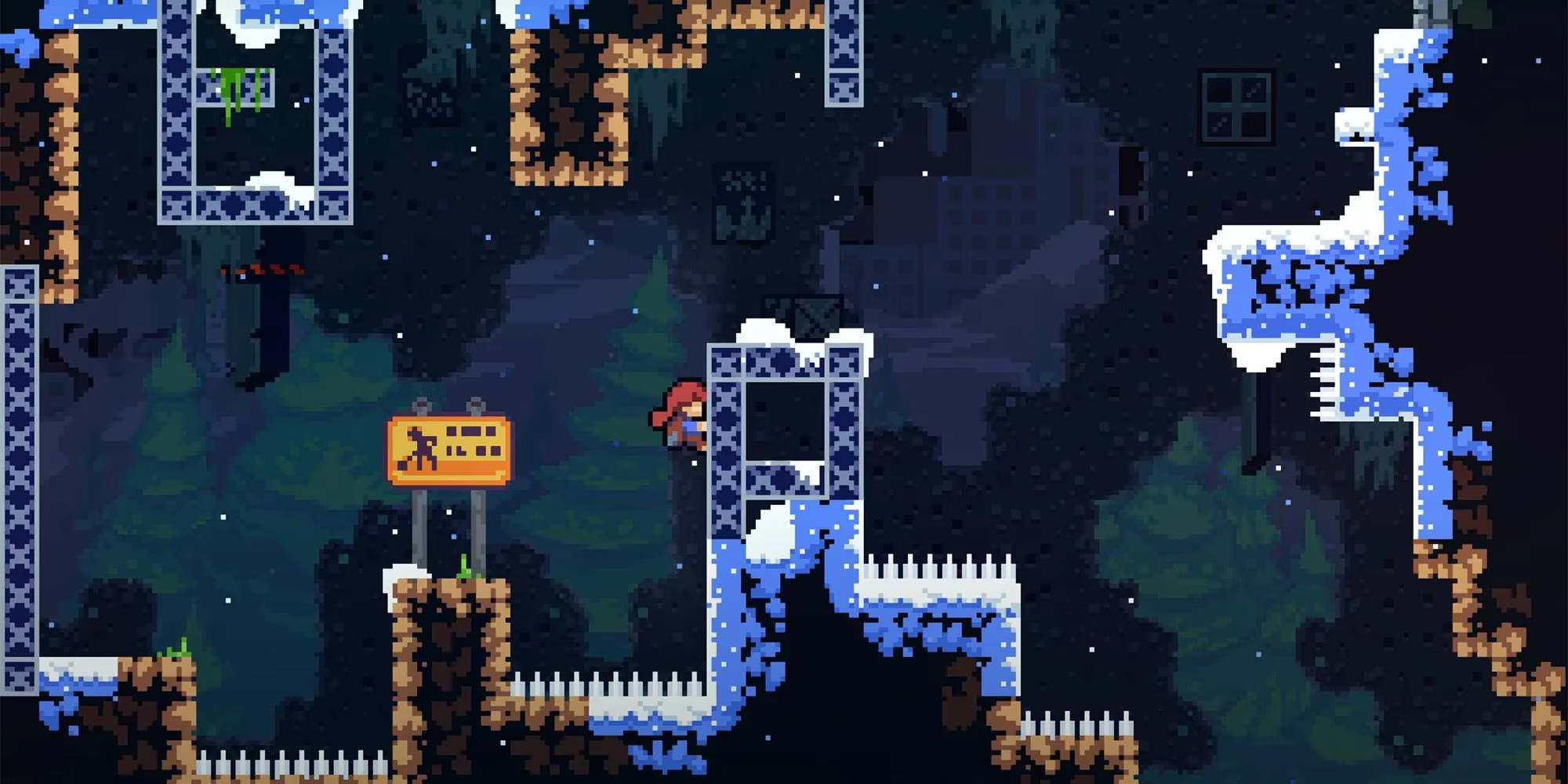
Celeste is a deceptively simple game with a profoundly deep well of challenge. On the surface, it's Madeline's journey up a mountain. In practice, it was my journey through thousands of tiny, precise failures. The controls are beautifully straightforward: jump, dash, climb. Mastering them, however, is a relentless exercise in trial and error. Each screen is a self-contained puzzle of timing and momentum. I'd cling to a wall, dash across a gap, only to be spiked by a floating obstacle I didn't see. Death was instantaneous and frequent—the game's death counter became a badge of honor. But with each respawn, which is mercifully immediate, I'd inch closer. I'd learn the exact pixel to jump from, the perfect moment to dash, and how to use moving platforms as launching pads. Celeste’s message is clear: the path to the summit is paved with failures, and every single one makes you stronger.
6. Cuphead: Dancing with Cartoon Chaos
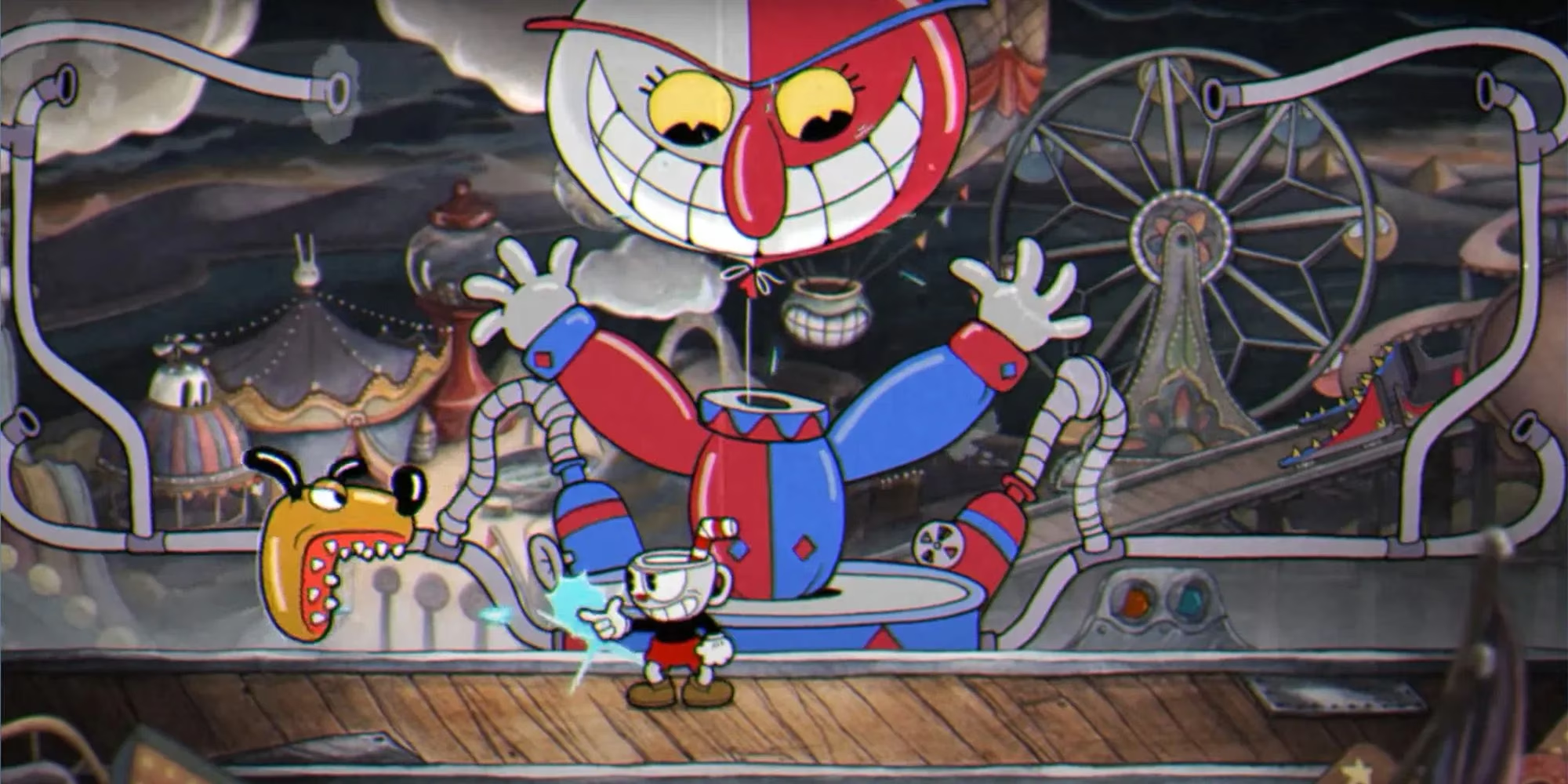
If any game can be called the undisputed monarch of trial and error, it's Cuphead. This run-and-gun masterpiece, with its stunning 1930s cartoon aesthetic, is a relentless gauntlet of boss fights. Each encounter is a unique spectacle of animated chaos. The first time I faced a boss, I was overwhelmed—a barrage of projectiles, transforming attack patterns, and screen-filling chaos. There is no universal strategy here. Beppi the Clown demands a different dance than the howling botanist Baroness von Bon Bon. The process is pure experimentation: die, learn a pattern, die again learning the next, and discover that the boss has two more phases waiting. Weapon choice becomes part of the experiment. Is the spread shot or the homing missiles better for this phase? The cycle of attempting, failing, and adapting is the core gameplay loop, and finally seeing "A KNOCKOUT" flash on the screen after dozens of tries is an exhilarating rush of relief and pride.
5. Resident Evil 2: Scouting Through Death
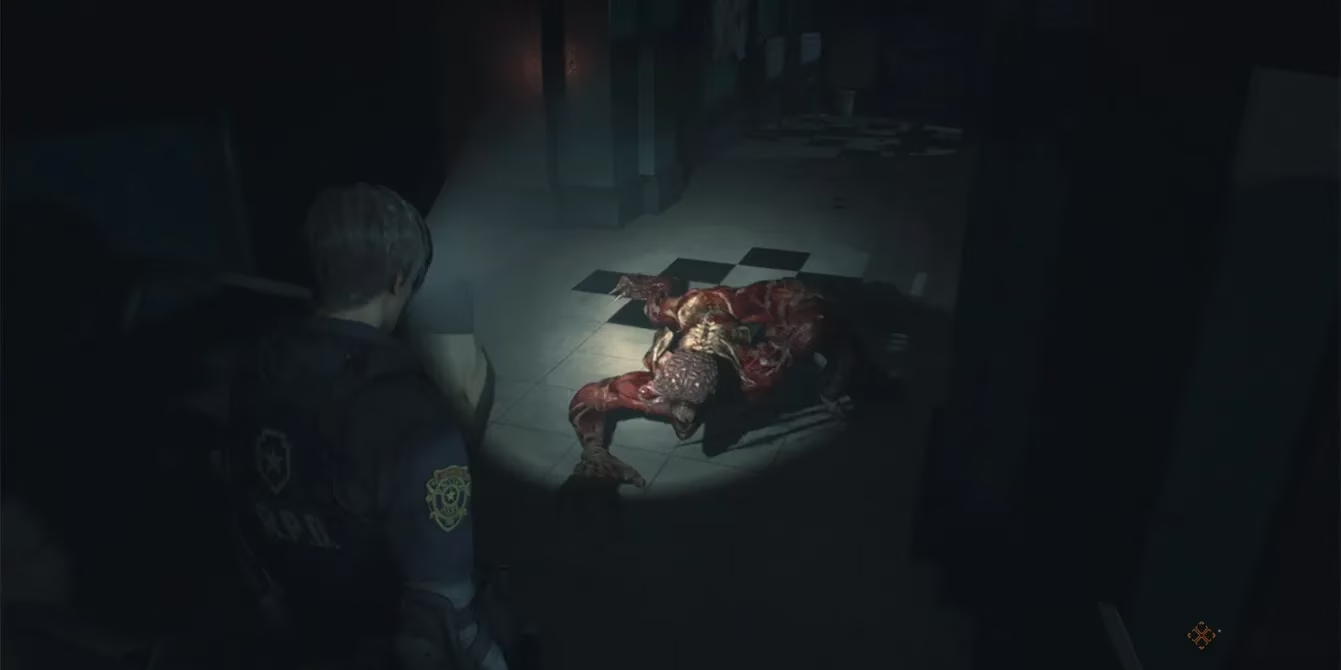
The trial and error in Resident Evil 2 is of a different, more dread-filled variety. It's not about mastering combos, but about resource management and information gathering. In the cramped, zombie-infested halls of the Raccoon City Police Department, every bullet and herb is precious. My most valuable resource, I learned, was knowledge—and the cheapest way to get it was often to die. I'd save my game at a strategic point, then venture into unknown corridors as a scout. I'd discover a Licker waiting around a corner, or that a door required a specific key, or that a path was a one-way trip. Then, inevitably, I'd be overwhelmed. But upon reloading, I was no longer blind. I knew what lay ahead, how many inventory slots to clear, and which route to take. This morbid reconnaissance turned failure into a tactical tool, making survival less about luck and more about learned, careful planning.
4. Darkest Dungeon 2: The Cost of Knowledge
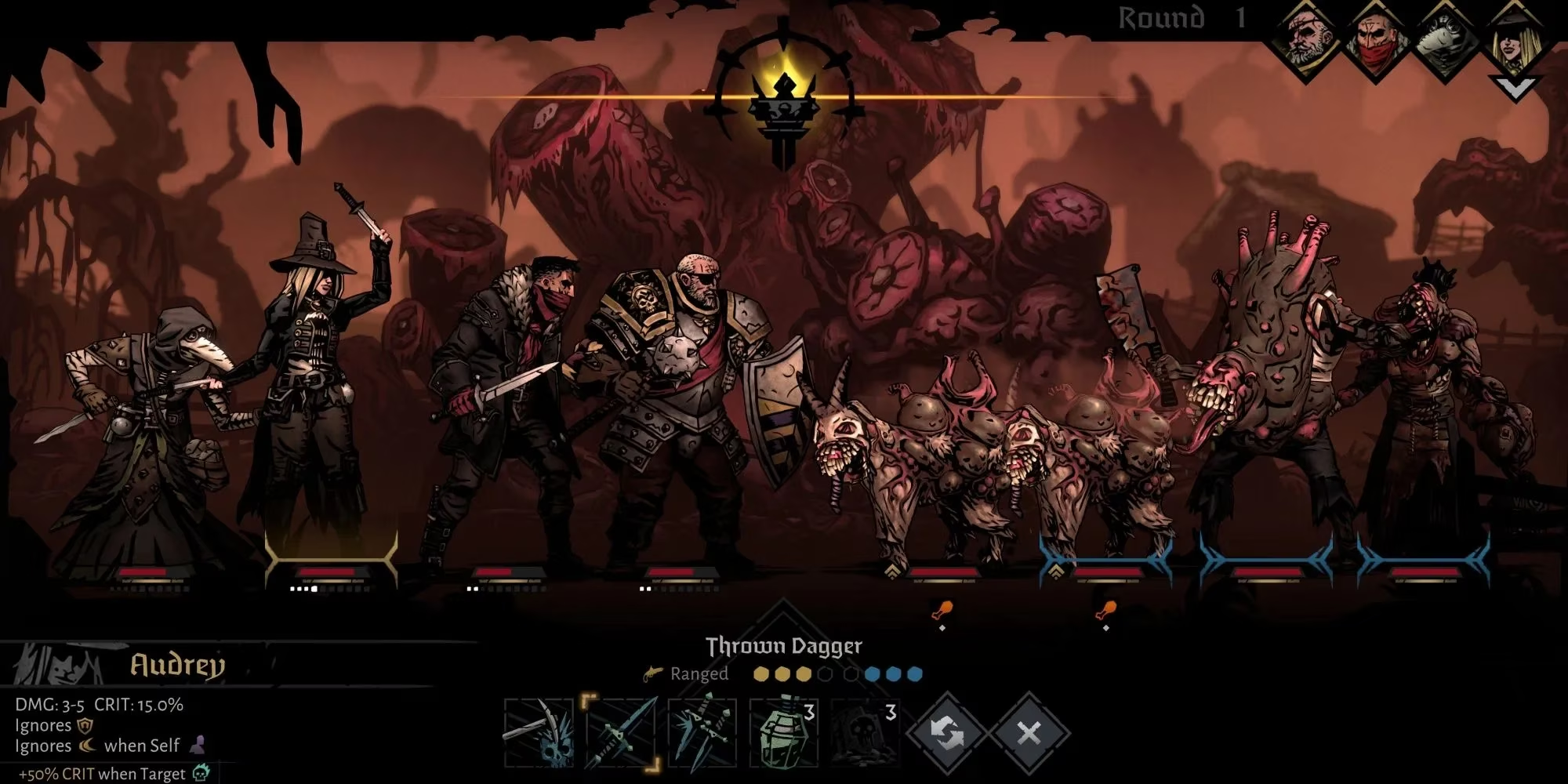
Darkest Dungeon 2 elevates trial and error to a brutally high-stakes affair. Here, failure has permanent consequences. Heroes who die in the twisted, episodic journeys are gone for good. This created a chilling but fascinating meta-game of sacrifice. I learned to send parties I considered "expendable" into unknown regions. Their mission wasn't necessarily to succeed, but to gather intelligence. One ill-fated expedition taught me that a certain area had a high blight risk, so my next team packed extra antivenom. Another group was wiped out by a boss's devastating area-of-effect attack, revealing the critical need for a specific hero skill to counter it. Their deaths were not in vain; they were the painful price paid for the knowledge needed to guide my favored heroes to victory later. It's a cold, strategic layer of trial and error that weighs heavily on every decision.
3. Hades 2: The Cycle of Mastery
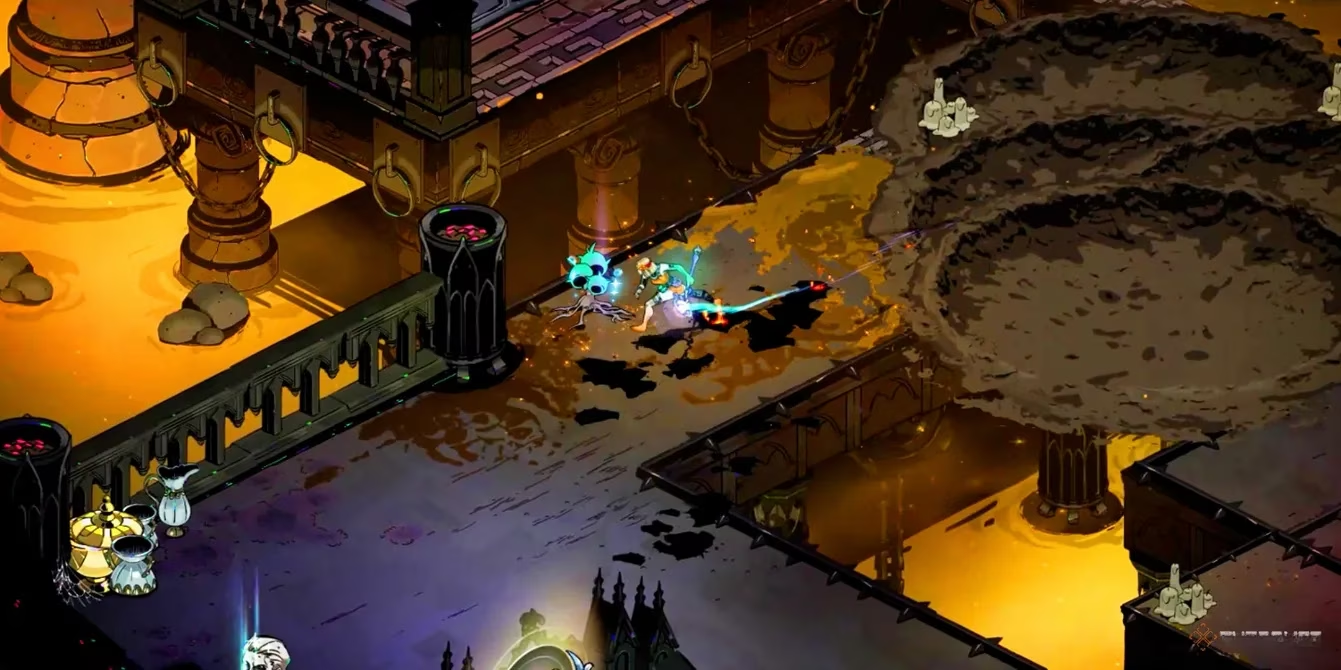
As Melinoë in Hades 2, I embraced the cycle of death as a fundamental part of growth. The game expertly weaves its trial-and-error gameplay into the very fabric of its narrative. Each escape attempt from the Underworld is a lesson. Early on, I'd die quickly, but I'd return to the hub with precious resources to unlock new weapons, abilities, and buffs. The real learning, however, was personal. I had to experiment with different weapon aspects and magic combos to find what suited my style. I learned through repeated failure which enemy types to prioritize, how to use the environment to my advantage, and when to use my limited magic for offense or defense. Every run, successful or not, made me slightly stronger and vastly more knowledgeable. The game encourages adaptation, pushing you to try tools you might ignore. Victory isn't about getting a lucky run; it's about the accumulated wisdom from hundreds of failures finally clicking into place.
2. Metal Gear Solid 5: The Phantom Pain: Plans vs. Reality
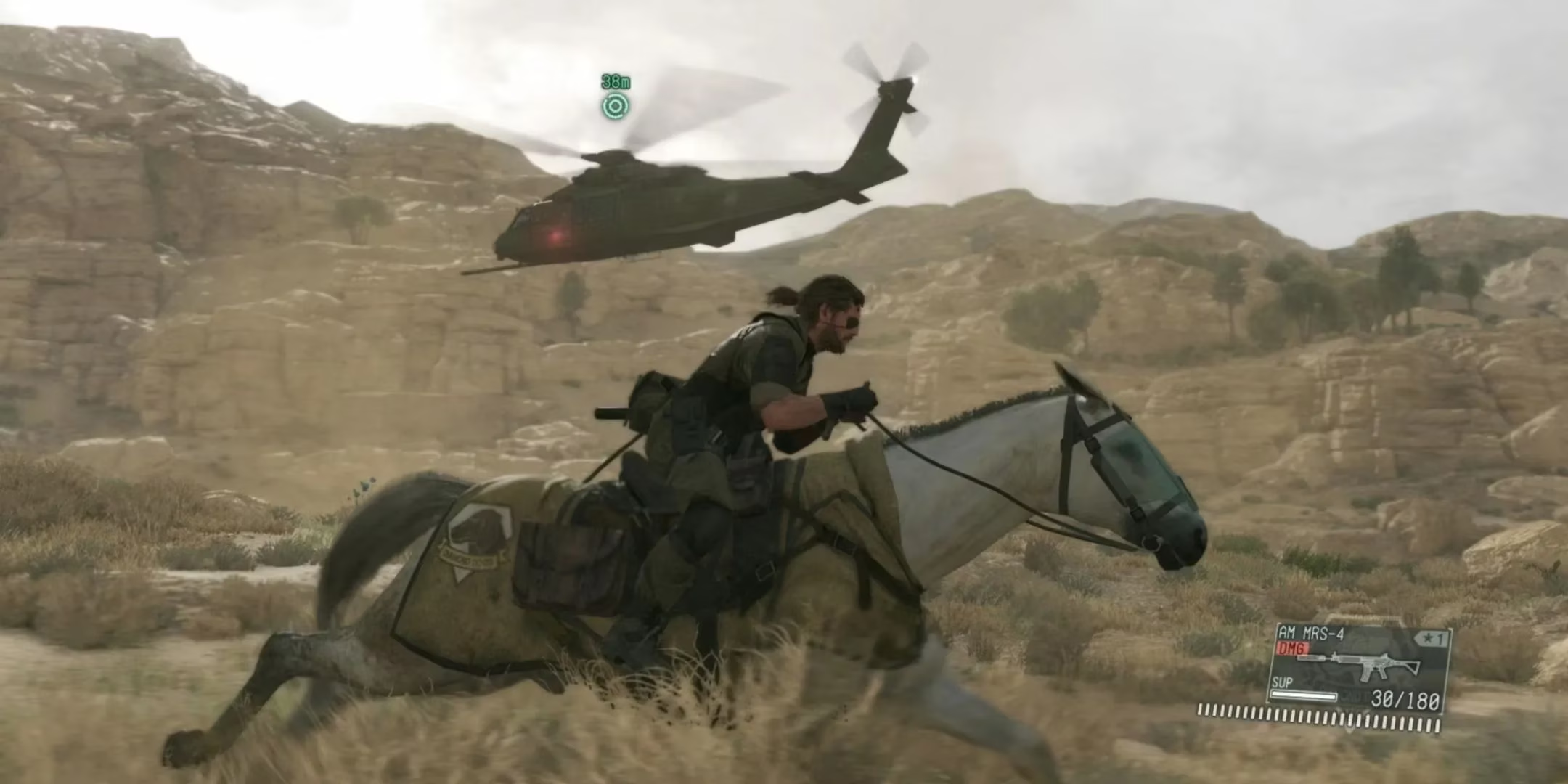
Metal Gear Solid 5: The Phantom Pain offered a sandbox for trial and error on a grand, tactical scale. Before infiltrating an enemy outpost, I'd spend minutes scouting from a ridge, tagging every soldier, noting patrol routes, and formulating what I thought was a perfect, ghost-like plan. This was the "trial" phase. The "error" phase began the moment my plan met reality. Maybe I misjudged the sightline of a guard, or a truck full of reinforcements arrived unexpectedly. Suddenly, my perfect stealth run was compromised. But here's the magic: the game doesn't punish you for this; it challenges you to adapt on the fly. Do I retreat and hide? Do I switch to aggressive stealth? Do I call in an airstrike? Each failed infiltration taught me more about the game's incredibly deep systems and AI behavior than a flawless one ever could. It was a constant, thrilling lesson in improvisation.
1. Dead Cells: The Reckless Rush
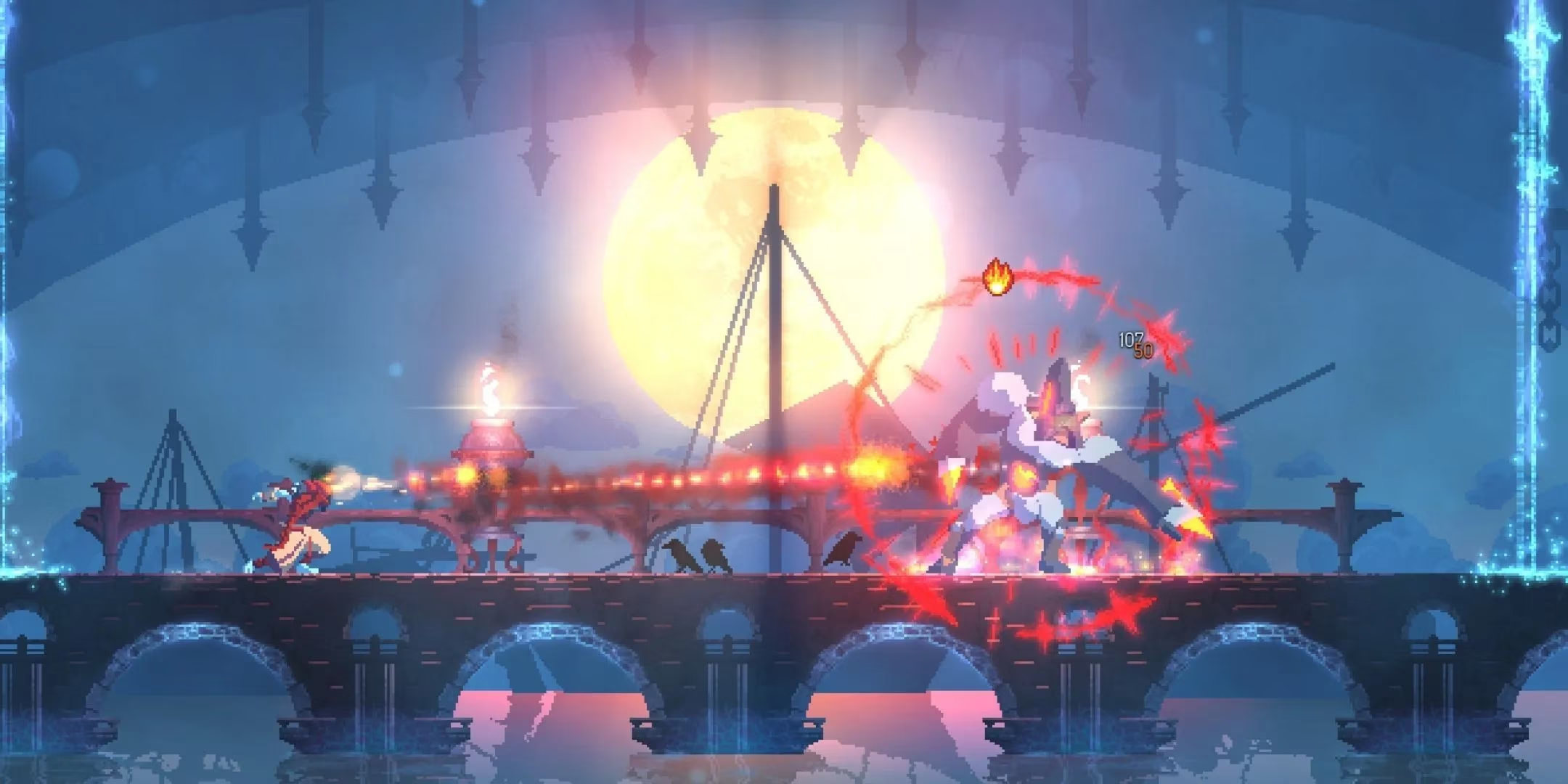
My adventures in Dead Cells perfectly encapsulate the risky, rewarding heart of trial and error. This "roguevania" punishes caution as much as recklessness. Initially, I played it safe, meticulously clearing every corner of each biome. But the game incentivizes speed, offering timed doors with fantastic loot. So, I changed tactics. I started rushing, which led to a spectacular increase in my death count. I'd blunder into traps, get swarmed by enemies I didn't scout, and face bosses under-equipped. Yet, each frantic, failed run was incredibly educational. I learned the attack patterns of every enemy type through brutal repetition. I discovered which weapons synergized for devastating combos. I internalized the layout of biomes. The trial and error here isn't just about beating a level; it's about optimizing an entire run, balancing risk and reward at a breakneck pace. The moment when you finally chain together a perfect, swift, and deadly run is the ultimate payoff for all those reckless, failed attempts.
Conclusion: The Wisdom of Failure
Looking back on my journey through these worlds, the common thread is clear. In 2026, as game design continues to evolve, the timeless appeal of trial and error remains. These games didn't just entertain me; they taught me resilience. They showed me that failure is not an end state, but a necessary step on the path to mastery. Each death, each mistake, each reload was a lesson that made the final, hard-earned victory profoundly personal and satisfying. In a world that often prioritizes instant gratification, these games stand as monuments to the power of perseverance, proving that the greatest triumphs are those we wrestle from the jaws of repeated defeat.