As I stood before the mirror, the final piece of armor clicking into place, I wasn't just looking at a reflection anymore. I was looking at Malenia, Blade of Miquella. The transformation was complete. The journey to become one of Elden Ring's most iconic and formidable demigods began not long after the game's initial release, a journey fueled by equal parts admiration and sheer intimidation. Her reputation precedes her; in a FromSoftware title renowned for its punishing difficulty, Malenia stands as a peak—a challenge that has broken countless Tarnished. Yet, it was her tragic grace, that perfect fusion of beauty and lethality, that captured my imagination. It wasn't enough to simply defeat her in the game. I wanted to understand her, to wear her story, and to bring a piece of that haunting world into our own. This cosplay became my pilgrimage.
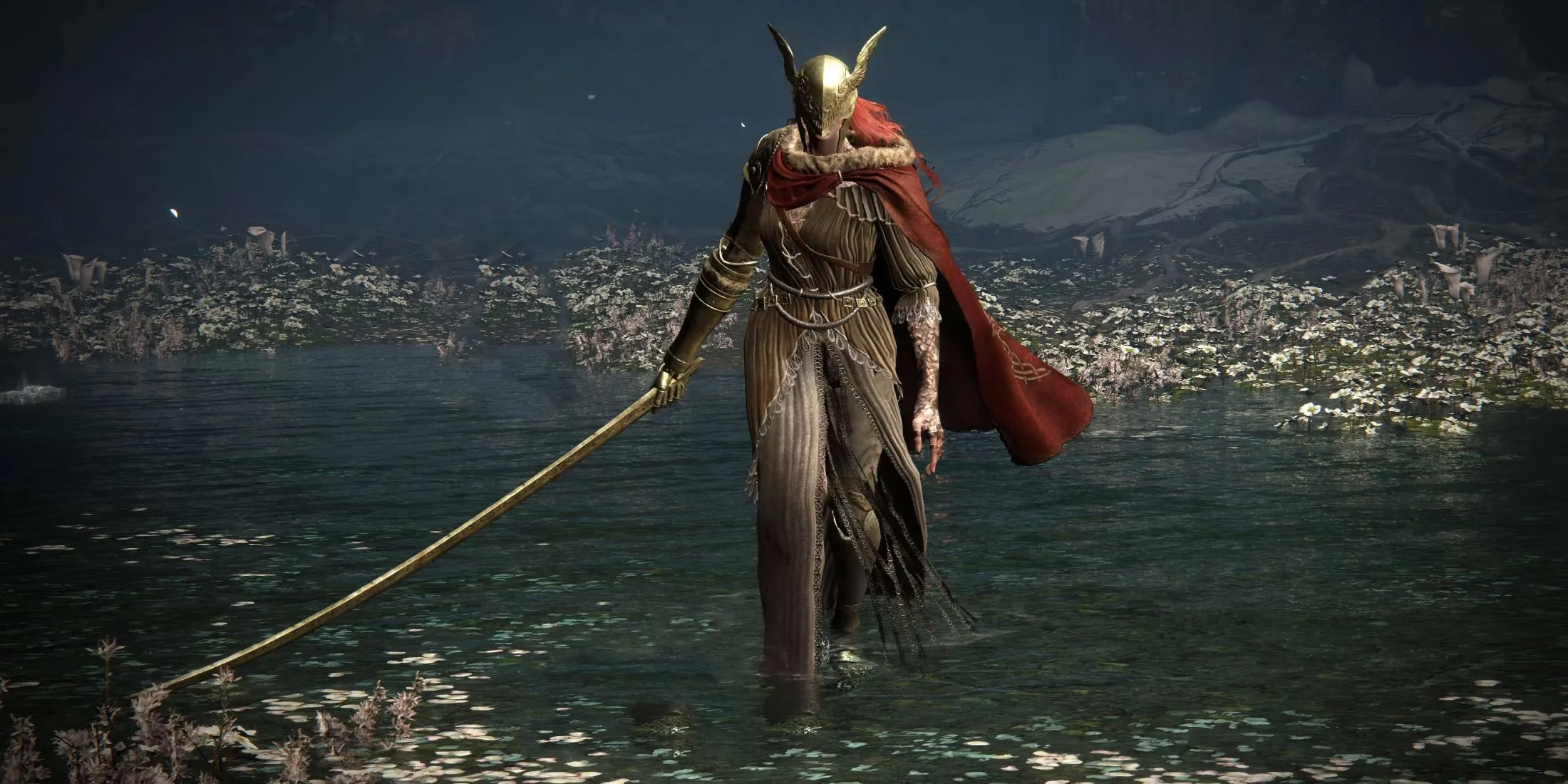
The heart of the project, of course, was the armor. Every plate of her golden, unalloyed armor had to be crafted with precision. I spent months studying in-game models and concept art, translating digital artistry into physical form. The pauldrons, the greaves, the intricate floral motifs etched into the metal—each piece was a puzzle. I remember the countless hours spent shaping foam and worbla, the smell of primer and paint, and the meticulous weathering to give it that battle-worn, ancient feel. The helmet was a project in itself, a symbol of her sealed divinity and her tragic rot. Creating its elegant, winged silhouette was a challenge I relished.
But the armor was just the shell. The true soul of Malenia lies in the details that make her more than just a warrior. This meant mastering the prosthetics. Her right arm, lost to the Scarlet Rot, replaced by a graceful, deadly blade of unalloyed gold. Crafting a functional, wearable version of this that maintained its elegant, lethal lines was perhaps the most technically demanding part. Then came the left arm, the one shrouded in bandages, hinting at the corruption she fights to contain. Getting the look of aged, stained linen just right took more trial and error than I care to admit!
The most haunting aspect, however, is her gaze. In the game, Malenia's eyes are a milky, sightless white, a result of her affliction and her brother Miquella's attempted cure. To capture this, high-quality scleral contact lenses were essential. Sliding them in was the final, transformative step. My vision blurred slightly, the world taking on a soft, diffuse quality. In that moment, the last vestige of myself faded away. Looking in the mirror, I no longer saw my own eyes looking back. I saw the blind, unwavering resolve of the Goddess of Rot. It was an eerie, powerful feeling that truly sold the illusion.
The reaction when I first shared images online was overwhelming. The Elden Ring community is incredibly passionate and discerning. They notice everything! The praise for the armor's accuracy was gratifying, but the comments that touched me most were those about capturing her presence—her solemn, tragic bearing. Fans would dissect the photos, praising the texture of the bandages or the exact hue of the gold paint. Some even debated, just as the article mentioned, whether the white eyes were contacts or masterful photo editing. That level of engagement showed me that this wasn't just a costume; it was a shared piece of art, a tribute that resonated with others who loved this character and her story.
This experience connected me to a vibrant subculture. Elden Ring cosplay has become a massive phenomenon. At conventions now in 2026, you're just as likely to see a Radahn or a Ranni as you are characters from more traditional franchises. The designs are just that compelling. I've seen breathtaking renditions of bosses like Mohg, Lord of Blood, with elaborate winged helms and tridents, and delicate, ethereal cosplays of Millicent. We, as a community, are drawn to these flawed, powerful beings. Cosplaying them is a way to explore their narratives physically, to embody their struggles and their majesty.
With the phenomenal success of the Shadow of the Erdtree expansion still fresh in everyone's minds, the future of the Lands Between feels more alive than ever. The DLC introduced new characters with equally stunning designs, already inspiring a new wave of cosplay creativity. While the community speculates about a potential sequel—a natural next step after such a landmark game—the legacy of the original cast remains untouchable. Characters like Malenia have cemented their place in gaming history.
For me, this project was more than crafting armor and applying makeup. It was a deep dive into a character defined by resilience in the face of a cursed destiny. She is not a villain, but a tragic figure fighting for her brother and against her own decaying nature. Wearing her likeness was a way to honor that complexity. The process taught me patience, craftsmanship, and the power of communal passion in gaming. When I don the helmet and hold the blade, I don't feel like I'm pretending to be a video game boss. For a moment, I feel like a storyteller, helping to keep the legend of the Blade of Miquella alive, long after the console has been turned off. And in the eyes of fellow Tarnished who recognize the effort, that story finds its true completion.