I still remember the tremors in my hands, the cold sweat on my forehead, and the deafening roar of my own heartbeat as I watched the Elden Beast dissolve into golden mist. After 166 grueling hours and a staggering 1,701 deaths, I, like streamer Kai Cenat, had finally conquered The Lands Between. In that explosive moment of pure, unadulterated triumph, I screamed until my voice was raw, my arms flung wide as if trying to embrace the victory itself, before collapsing back into my chair, utterly spent and profoundly changed. That wasn't just beating a game; that was a pilgrimage.
We've all been there, haven't we? That specific brand of madness where you slam your controller down, swear you're done, only to find your hands guiding the character back to the fog gate mere minutes later. The siren song of "just one more try" is the beating heart of every true soulslike. For years, the gaming community has waged a holy war over difficulty in FromSoftware's masterpieces. I've stood on both sides of that battlefield. I vividly recall my first, humiliating foray into Drangleic in Dark Souls 2. I was crushed, pulverized, and demoralized so thoroughly that I ejected the disc, declaring the entire genre "not for me." It was a defeat I wore like a scar.
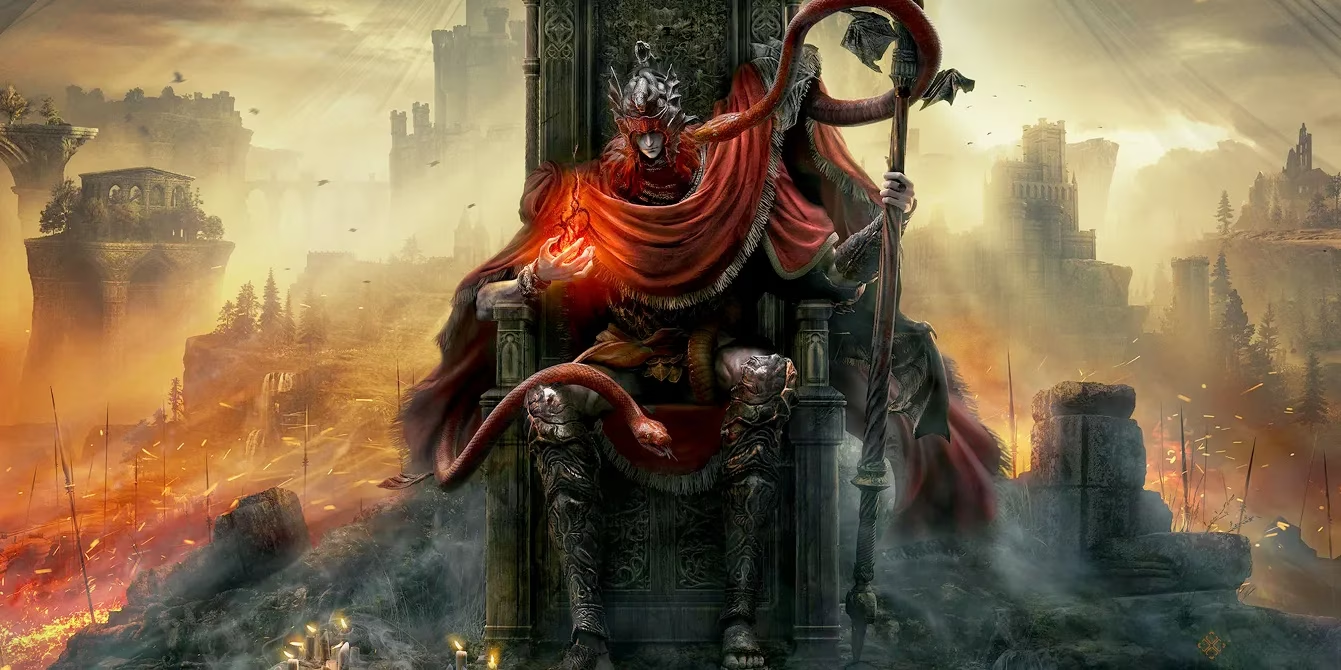
What dragged me back from the abyss? A friend's desperate plea for a co-op partner. Even with a seasoned guide by my side, the learning curve was a vertical cliff. The words "YOU DIED" weren't just a game over screen; they became a personal mantra, a haunting specter in my dreams. But here's the secret they don't tell you: every death was a lesson. Every misstep taught me spacing. Every greedy attack taught me patience. Every ambush taught me awareness. I was being forged in the fires of failure, and I was slowly, painfully, becoming stronger.
And then came the moment. After a hundred-hour odyssey of despair and tiny victories, I stood before Nashandra. My entire being was focused into a single point of light. I saw every twitch of her robes, predicted every sweep of her scythe. My heart was a drum solo in my chest as I rolled, parried, and struck. When that final sliver of health vanished, time didn't just stop—it shattered. Walking up to that throne, ready to claim my hollowed crown, was a satisfaction so deep and personal that no other game has ever replicated it. I didn't just win; I earned it. The growth wasn't just in my character's stats; it was in my soul. Suddenly, New Game+ felt natural. Other Souls titles felt familiar. The adversity hadn't broken me; it had rebuilt me into a patient, determined, and resilient player.
This is the core truth of FromSoftware's worlds:
-
They are not about power fantasy; they are about perseverance fantasy.
-
The challenge is not a barrier; it is the narrative.
-
Every boss is a mountain, and the summit view is only sweet because of the climb.
Look at Gwyn, the Lord of Cinder. By the time we find him, he's a pathetic, hollowed remnant, desperately clinging to a dying Age of Fire by burning his own soul. He is the embodiment of giving up, of stagnation. We, the players, are his antithesis. Our entire journey is defined by our refusal to go hollow, to give in. The difficulty is the crucible that makes this theme tangible. Without the relentless challenge, the story of perseverance is just empty words on a screen.
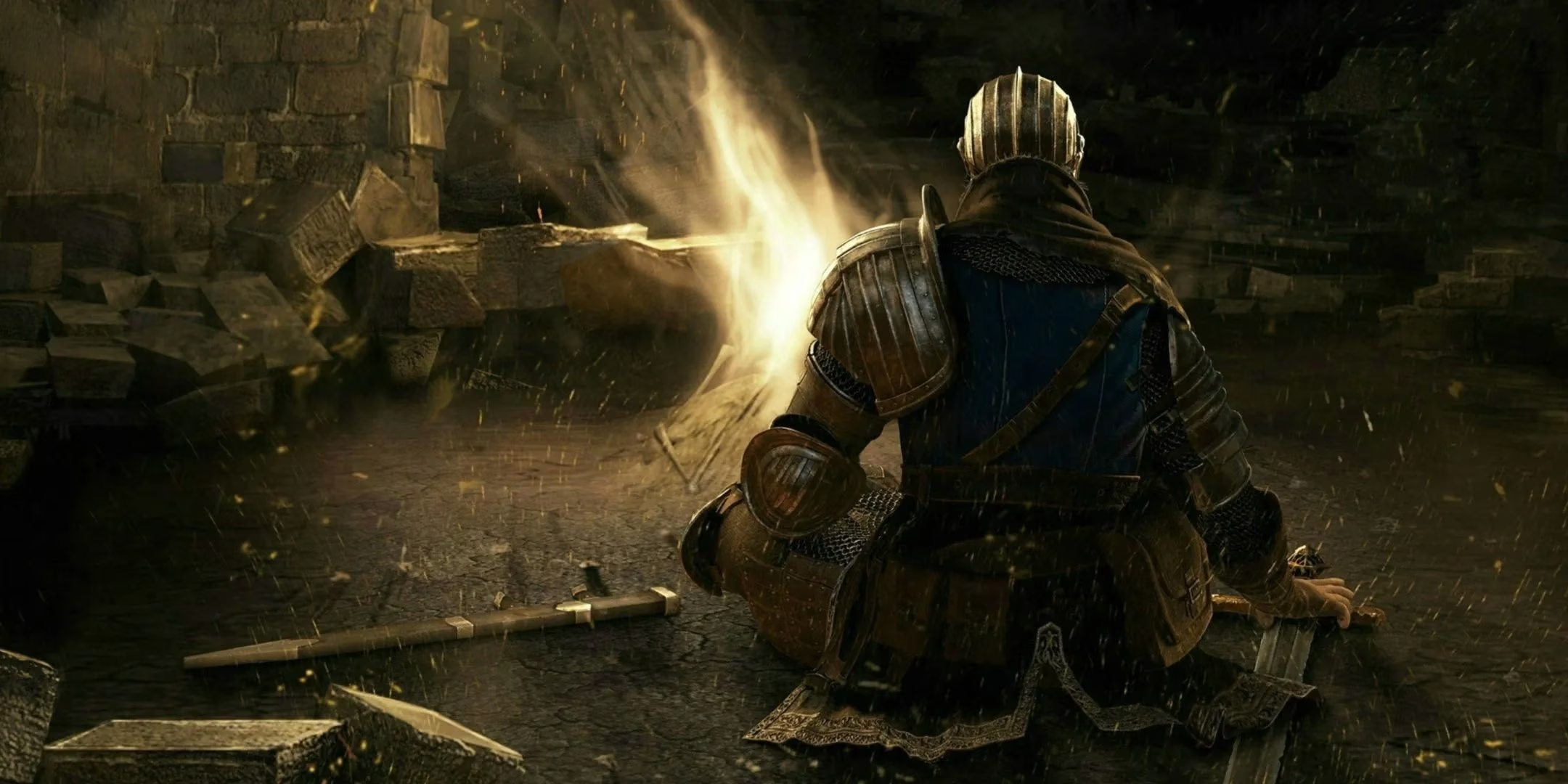
So many games in 2026 try to mimic the "soulslike" formula—the bonfires, the estus flasks, the cryptic storytelling. But so few understand the alchemy. They treat difficulty as a slider setting or a marketing bullet point. In true soulsbornes, it's the atmosphere itself. It's the dread in the air of Blighttown, the oppressive silence of Ash Lake, the sheer scale of Limgrave that makes you feel insignificant. Overcoming isn't just about winning; it's about conquering that atmosphere, about lighting a torch in the overwhelming dark.
| The Easy Path | The Soulsborne Path |
|---|---|
| Immediate gratification | Hard-earned euphoria |
| Power given | Power earned |
| A story witnessed | A story lived |
| A game completed | A trial survived |
Pushed to the brink, the easy choice is to lower the difficulty. But in forcing yourself to grapple with the challenge, to learn its language and rhythms, the spoils become infinitely richer. The victory is yours. Not the game's, not the character's—yours. This is why the difficulty is non-negotiable. It's woven into the genre's DNA. You don't have to scream and leap from your chair like Kai Cenat did (though, let's be honest, we've all been there). That burst of relief, that cathartic sigh after finally felling Margit or outlasting Malenia—that feeling is the entire point. It's a feeling so integral to the experience that playing it any other way would be like reading a summary of a symphony instead of hearing it performed. In 2026, in a world of instant access and curated experiences, soulslikes remain a sacred space where triumph has weight because struggle has meaning. And I wouldn't have it any other way.