As a Tarnished who has walked the shattered lands countless times since the Elden Ring was broken, I’ve faced every demigod, every horror the world could conjure. Yet, even now in 2026, the community chatter still often misses the mark. Everyone remembers the spectacle—Malenia’s scarlet bloom, Radahn’s gravity-defying spectacle. But ask me which demigod truly commanded the most terrifying, unyielding power during the Shattering, and my mind doesn't go to the Blade of Miquella or the Starscourge. It goes to the cursed king, the guardian of the Erdtree’s roots, the one who held the very heart of the world against all comers: Morgott, the Omen King.
Isn't it curious how history favors the flashy over the foundational? We have a famous trailer immortalizing the stalemate between Malenia and Radahn, a conflict so devastating it poisoned an entire region. Yet, what of the demigod who single-handedly defended the Royal Capital of Leyndell, the most coveted prize in all The Lands Between, and emerged victorious from countless duels? The evidence of his supremacy has been staring us in the face since our journey began.
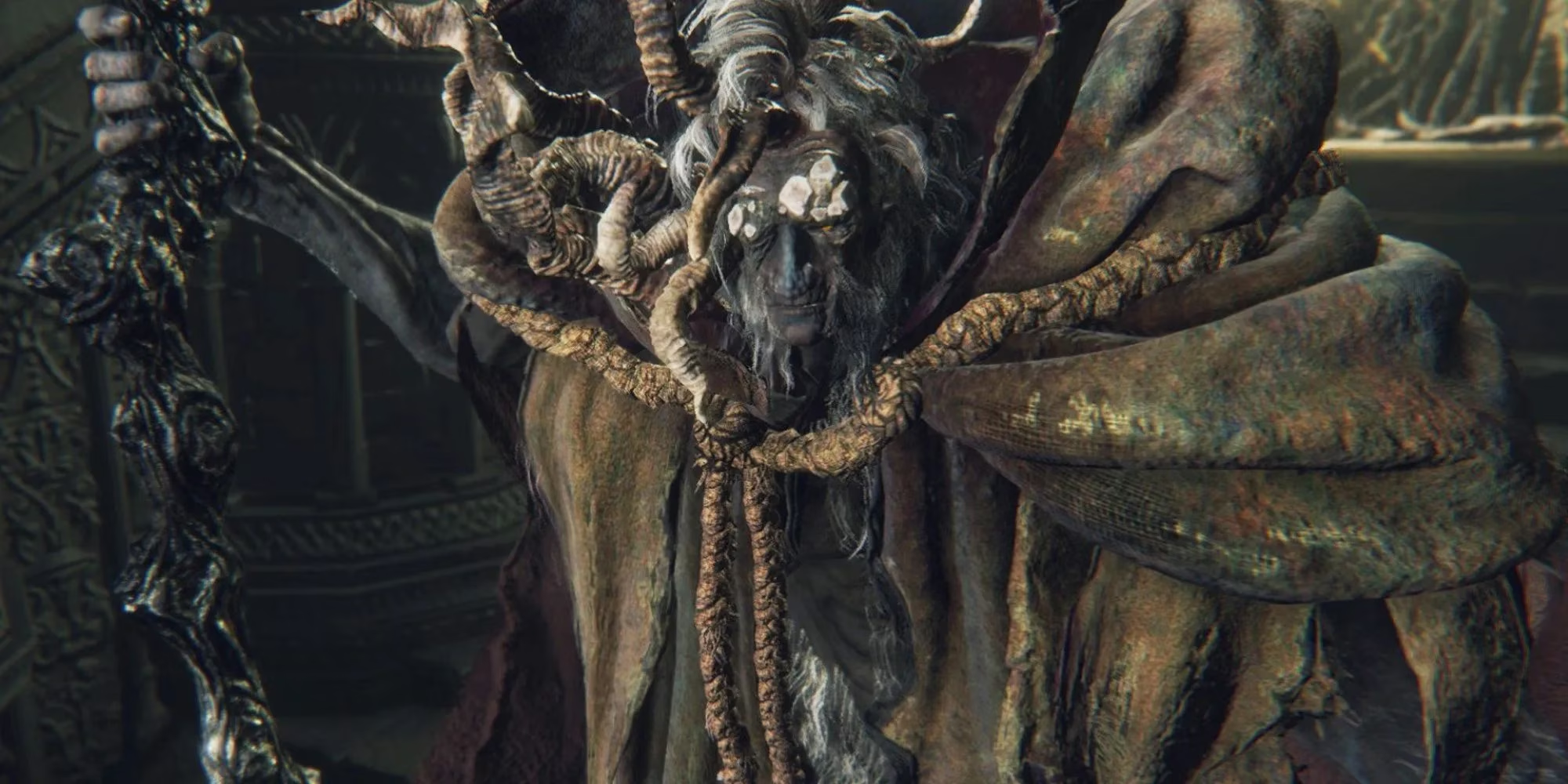
Remember the opening cinematic? That single, powerful still frame tells a story many choose to overlook. There stands Morgott, his cursed form imposing, looking down upon a fallen Radahn. This isn't a scene of two equals clashing; this is a victor and the vanquished. The spawn of Radagon and Rennala, the mighty Starscourge, was bested. Some on the forums called Radahn a 'fraud' for this, but that misses the point entirely. Radahn wasn't weak. The truth is far more compelling: Morgott was simply stronger. His lineage as the direct offspring of Queen Marika and the first Elden Lord, Godfrey, speaks to a potency and purity of blood that arguably surpasses even the beloved heroes of the Shattering.
So, what does true power look like in a time of chaos? It isn't just about causing a cataclysm; it's about control, endurance, and an unbreakable will. While others waged war for personal glory or twisted ideals, Morgott's purpose was singular: protect the Erdtree and the capital at all costs. And protect it he did. From the item descriptions we've pieced together over the years, we know that as Margit, his veiled alter-ego, he "slaughtered countless champions." He wasn't just a king on a throne; he was the final, insurmountable wall that met every ambitious Tarnished and power-hungry demigod who sought the throne.
Let's compare the contenders logically. We often judge power by the boss fight we experience, but is that truly fair?
| Demigod | Key Feat (Lore) | Perceived Boss Difficulty | The Reality |
|---|---|---|---|
| Morgott, the Omen King | Defeated Radahn, defended Leyndell, slew countless champions. | Considered relatively easy by late-game standards. | A tactical genius and powerhouse, often faced when players are over-levelled. |
| Starscourge Radahn | Held the stars, fought Malenia to a standstill. | Legendary, challenging festival fight. | A mighty warrior, but was shown defeated by Morgott. |
| Malenia, Blade of Miquella | Unleashed the Scarlet Rot, technically undefeated. | Arguably the hardest mechanical fight. | Unmatched in a duel of attrition, but a strategic liability. |
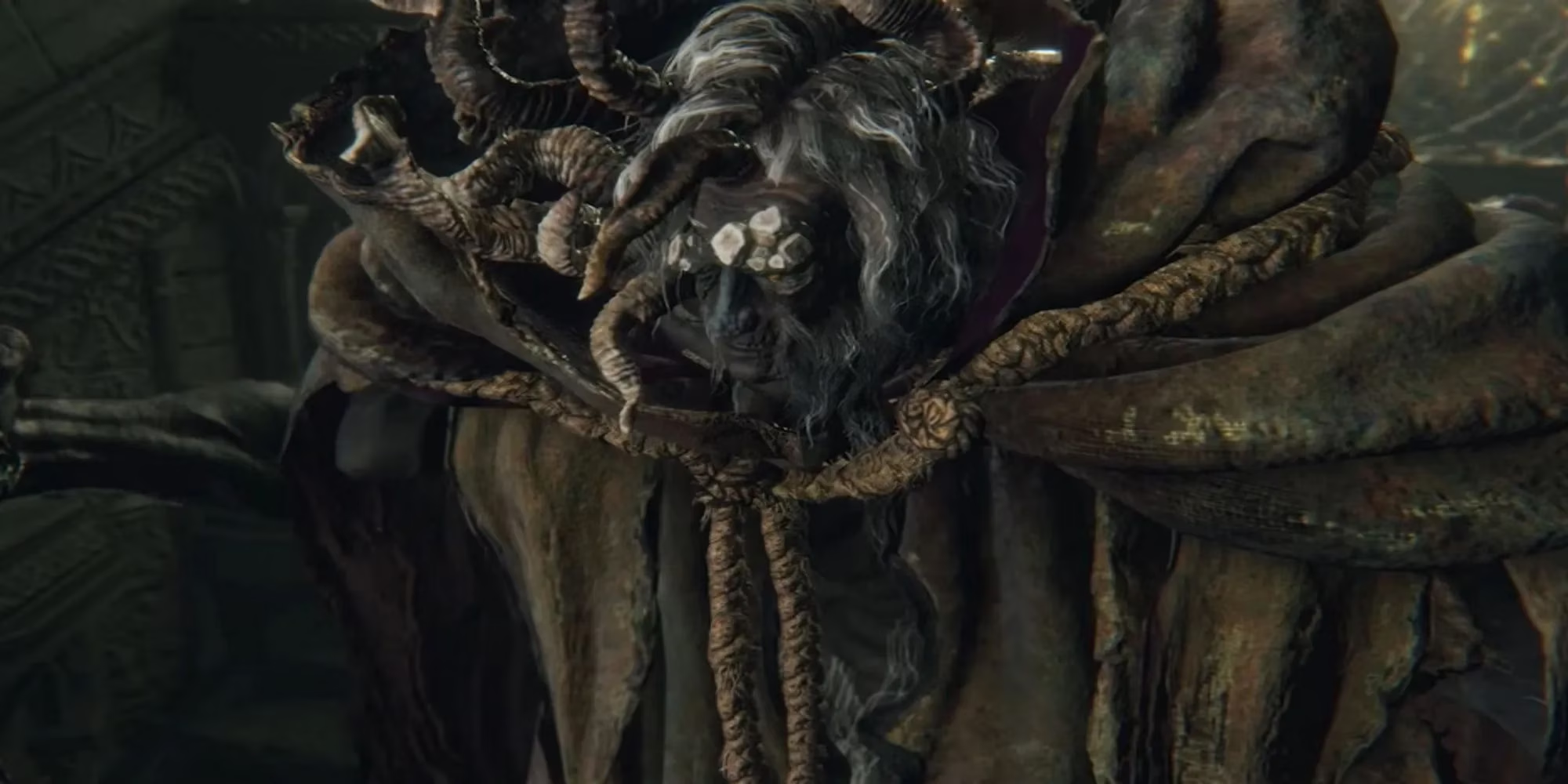
This disparity between lore and gameplay is the crux of why Morgott is so underestimated. By the time we Tarnished reach the foot of the Erdtree, we've explored every corner, gained immense power, and perhaps even cheesed a few bosses. We face a Morgott who is likely weary from centuries of eternal defense, and we defeat him. That victory colors our perception. We think, "He wasn't so tough." But we weren't fighting the Morgott who stood against the Shattering at its peak. We fought the last vestige of a king clinging to a duty no one else valued. His health pool may not be the largest, but his resolve was the absolute greatest.
Why does this matter even now, years later? Because understanding Morgott is understanding the core tragedy of Elden Ring. He possessed the strength, the lineage, and the right to claim the title of Elden Lord for himself. Yet, cursed by his Omen blood and bound by a twisted sense of loyalty to a Golden Order that reviled him, he used that supreme power only to maintain a broken status quo. He was strong enough to defeat Radahn, strong enough to hold the capital, but not strong enough—or perhaps not willing enough—to break free and claim his own destiny. Isn't that the most powerful tragedy of all? To have the strength to rule the world, but only the will to be its jailer?
So, let's set the record straight. Malenia may be the skill check that breaks players. Radahn may be the cosmic spectacle we all love. But Morgott, the Omen King, was the demigod whose strength defined the era. He wasn't just participating in the Shattering; he was the immovable object against which the forces of the Shattering broke. The next time you recall the legends of The Lands Between, give the cursed king his due. His throne was not taken by force during the war; it was held, through sheer might and indomitable will, until the very end.