In the sprawling, myth-drenched world of Elden Ring, few locations embody the game's dense lore and tragic ambition quite like Miquella's Haligtree. Tucked away in the frigid, inaccessible Consecrated Snowfield, this towering, pale imitation of the Erdtree stands as a monument to defiance and a failed dream. It was conceived not as a challenger to the Golden Order's dominance, but as a sanctuary from its rigid doctrines—a place where the cursed, the outcast, and the forsaken could find solace under the benevolent gaze of Miquella the Kind. Its very existence, a whispered secret against the blinding radiance of the Erdtree, prompts profound questions about divinity, growth, and the nature of refuge in a world ruled by distant, uncaring gods.
The Genesis of a Sanctuary: Blood and a Broken Promise
From their birth, the twin Empyreans Miquella and Malenia were marked by cruel curses. Malenia was ravaged by the Scarlet Rot, while Miquella was imprisoned in a body of eternal childhood, forever stunted. To Miquella, these afflictions were not just personal tragedies but symptoms of a flawed world, one held in thrall to the meddling Outer Gods. His answer was Unalloyed Gold—a purer, softer, and more malleable substance than the lustrous gold of the Golden Order. With it, he sought to forge a path free from external divine influence. The Haligtree was the first and most grand of these endeavors.
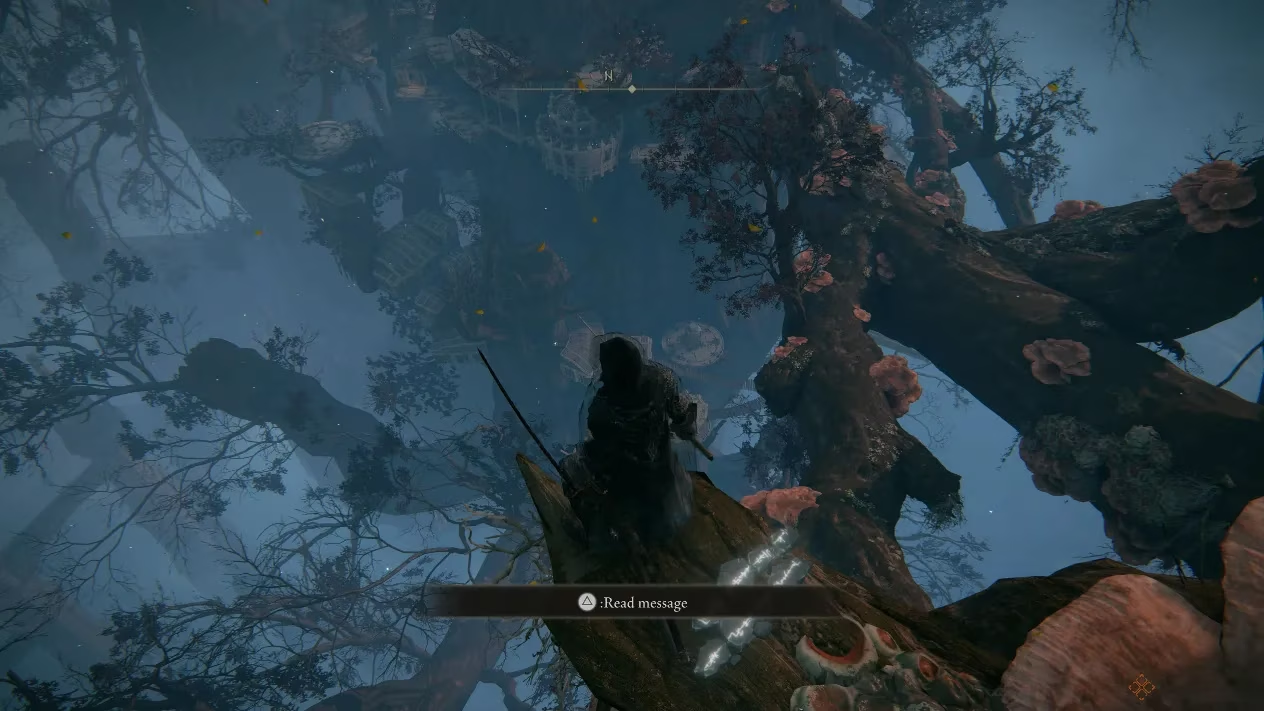
The Haligtree's origins are shrouded, much like the history the Golden Order prefers to obscure. What is known comes from fragments within the tree itself. The Haligtree Knight Armor reveals a poignant truth: the tree was "watered with Miquella's own blood since it was a sapling." His potent blood, carrying the very essence of his eternal youth, was meant to nurture a new Erdtree, a new axis for a gentler world. Yet, this act was a double-edged sword. Like a seed planted in sterile glass, nothing born of Miquella's cursed blood could ever truly reach fruition. The Haligtree grew, but it failed to become a true Erdtree, remaining forever a pale, brittle simulacrum—a promise unfulfilled, much like its creator.
A Haven for the Forsaken: The Haligtree's True Purpose
For the oppressed peoples of The Lands Between, the Haligtree was less a symbol of failed godhood and more a beacon of hope. This was most profoundly true for the Albinaurics, artificial beings scorned by the natural order the Golden Order upheld. To them, the Haligtree was a Promised Land. Their plight moved the noble knight Loretta, who abandoned her liege, the Carian Royals, to become the Haligtree's stalwart guardian. She was so devoted that rumors spread she was an Albinauric herself—a notion the Golden Order's followers could not fathom, as her empathy was as alien to them as the Albinaurics' artificial origins.

The sanctuary's embrace extended further. Misbegotten, hybrid creatures despised by the Order, also pilgrimaged to its roots. One even wielded the Golden Order Greatsword, a stark irony highlighting that their yearning for grace and divinity was no different from any other being's. Miquella accepted them all. He became the lord they prayed for, a figure whose compassion was as unalloyed as his gold. In a realm where faith was weaponized, the Haligtree stood as a cathedral of radical acceptance, its halls echoing with the prayers of those the Erdtree had cast out.
The Cocoon and the Consort: Miquella's Desperate Gambit
Miquella's ambitions, however, stretched far beyond providing refuge. His eternal childhood was a cage preventing him from ascending to godhood and challenging the Outer Gods directly. The Haligtree, therefore, became the base of a more audacious plan. He would use it not just as a sanctuary, but as a chrysalis. After the tree itself failed to usurp the Erdtree, Miquella embarked on his most drastic measure: he embedded himself within the Haligtree's trunk.
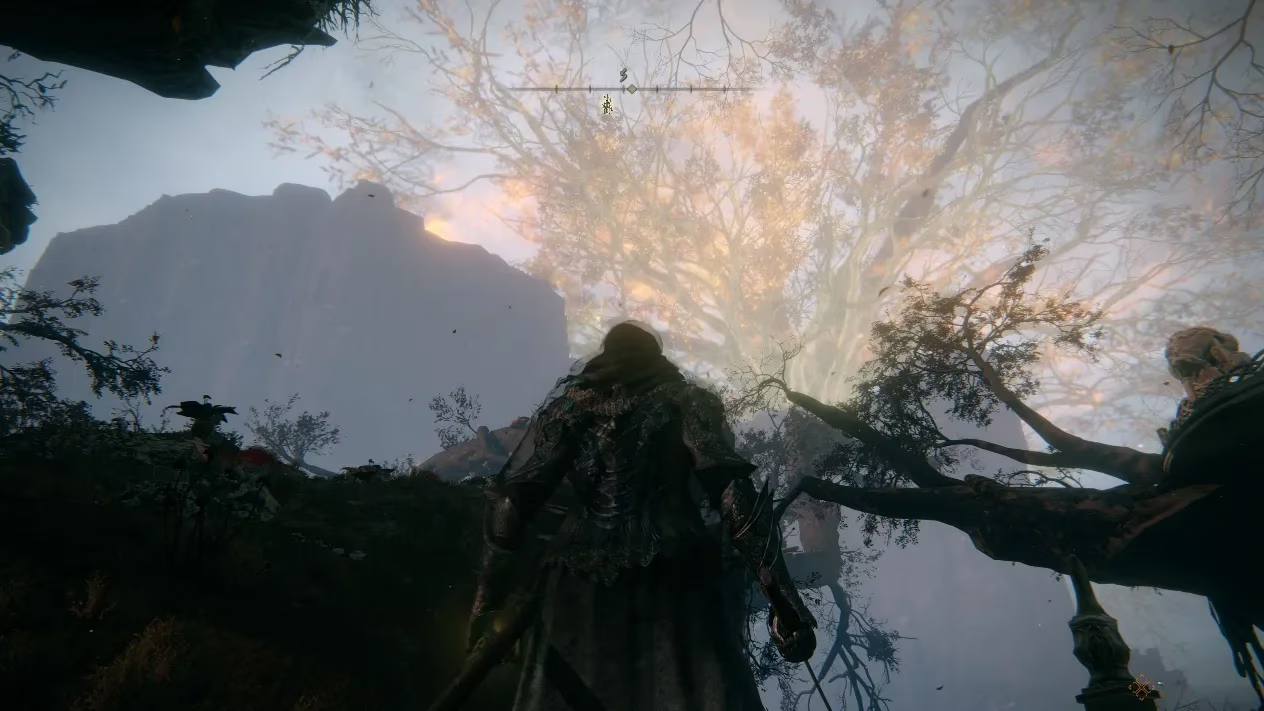
This was an act of symbiotic incubation; he would grow with the tree, forcing a maturity his curse denied him. The plan was tragically interrupted by Mohg, Lord of Blood, who kidnapped the vulnerable Empyrean. Yet, revelations from 2024's Shadow of the Erdtree expansion reframe this event. It is now understood that Miquella, in his growing power, may have subtly charmed Mohg, using him as a bloody chariot to reach the Formless Mother. His time within the Haligtree, though cut short, had granted him enough growth to commune with Outer Gods. He used the Formless Mother's power and his own divine blood as a key to the Realm of Shadow—a realm as elusive and shifting as a mirage in the desert. His entombment in the tree was not merely passive waiting; it was the first step in a convoluted alchemical process to transmute a cursed child into a compassionate god.
Arboreal Lineage: The Crucible's Golden Thread
Trees in Elden Ring are not mere flora; they are genealogical charts of power, each a testament to the faction that cultivates it. The radiant Erdtree is the seat of Marika and the Greater Will. But it is predated by the concept of a Great Tree, a primordial form referenced by relics like Siluria's Tree. Shadow of the Erdtree introduced the Scadutree, the gnarled, blackened holy symbol of the Hornsent, which appears as two trees violently intertwined in a spiral.
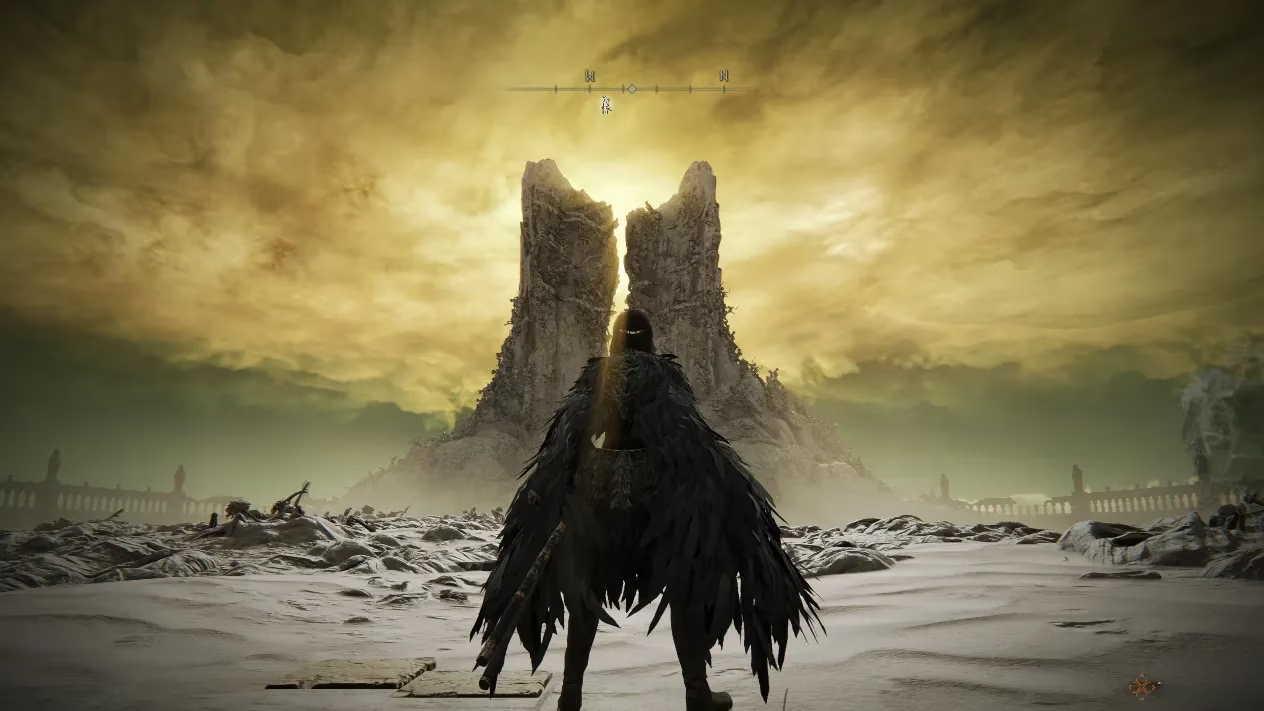
This spiral motif is the connective tissue. It echoes in the designs of Miquella's Haligtree knights and incantations, suggesting a shared, ancient origin. The common ancestor of all these trees is the Crucible—the chaotic, primordial forge of life itself. In alchemy, the crucible's purpose is transformation, with the ultimate goal being the creation of gold. This metaphor burns at the heart of Elden Ring's world:
-
The Erdtree represents the finished, polished gold of the established Order.
-
The Scadutree is gold corrupted and hardened by zealotry, like ore forged under a tyrannical heat.
-
The Haligtree is Unalloyed Gold: pure, soft, and unfinished, still within its own crucible, yearning for a final, benevolent form it can never achieve.
All sap that flows—whether the blinding grace of the Erdtree, the blackened gold bleeding from the Scadutree, or the nourishing blood Miquella fed to his sapling—stems from that same molten, ancient source. The Haligtree, therefore, is more than a location. It is Miquella's unfinished magnum opus, a testament written in bark and blood. It is a refuge that became a cocoon, a divine project that remained eternally embryonic, and the clearest symbol of a love for the unwanted, which ultimately proved more potent—and more tragic—than any desire for mere dominion.