In the ever-evolving landscape of digital entertainment, a seismic shift occurred over the weekend when mega-streamer Kai Cenat finally conquered Elden Ring after a grueling 166-hour odyssey. This wasn't just another stream; it was a cultural event. Cenat, a personality built on the reliable, algorithm-friendly pillars of Grand Theft Auto Online and Call of Duty, ventured far beyond his comfort zone into the punishing, beautiful world of FromSoftware's masterpiece, dying over 1,700 times in the process. For an audience accustomed to watching him dominate or goof around in familiar sandboxes, this was like watching a fast-food critic suddenly develop a profound appreciation for a meticulously crafted, 12-course Michelin-starred meal. The implications for gaming culture are, frankly, huge.
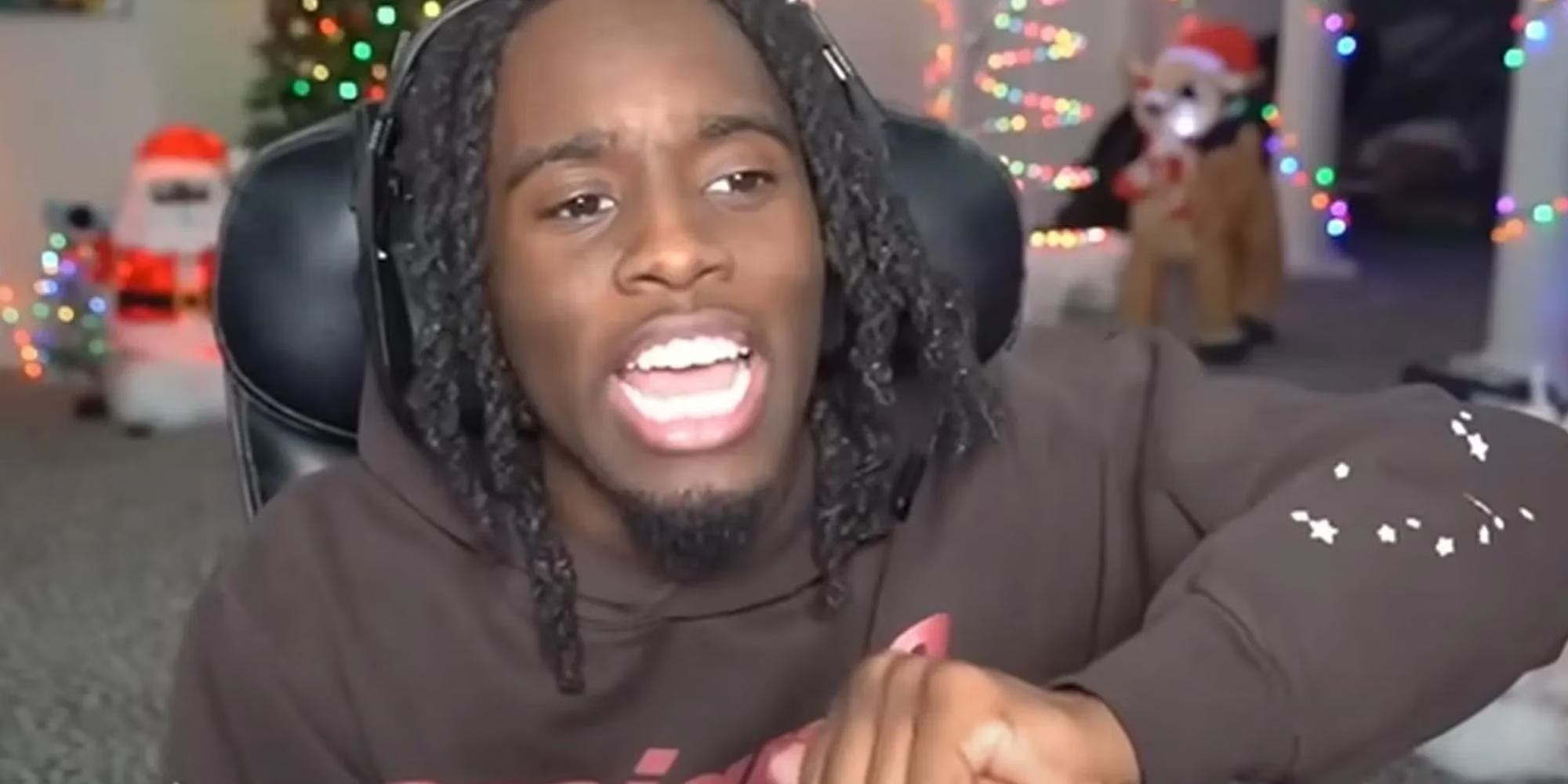
Let's be real: many of the planet's top streamers aren't "gamers" in the traditional, sweaty-palmed sense. They are performers, comedians, and parasocial relationship architects whose content often revolves around reacting, chatting, and cultivating a vibe. Gaming is just one tool in their extensive kit. Kai himself has spent thousands of hours playing games, but an equal amount of time has been dedicated to hanging out with friends and creating what is essentially a never-ending, interactive live podcast. There's absolutely nothing wrong with that model—entertainment is entertainment. For a generation raised on smartphones and multitasking, streams are the new primetime TV, perfect for "second-screen viewing" or just vegging out after school. This places streamers like Cenat at the very heart of modern pop culture, wielding influence that rivals traditional celebrities.
Yet, there's a curious paradox in this power. Despite operating in the gaming sphere, most elite streamers stick to a painfully narrow playlist. It's a world of safe bets:
-
The Endless Shooter Grind (Call of Duty, Apex Legends)
-
The Virtual Sports Arena (FIFA, NBA 2K)
-
The Chaotic Sandbox (Grand Theft Auto Online, Fortnite)
Cenat was the poster child for this trend. His brand was built on accessibility and instant gratification. Even his GTA time was spent in the lawless playground of Online, not the narrative-rich story mode. He was the rule, not the exception. So, the fact that he not only played but completed both Ghost of Tsushima (the 2020 Game Awards' Player's Voice winner) and Elden Ring (the undisputed Game of the Year for 2022) is nothing short of revolutionary. It took 27 months after its release for a streamer of his magnitude to tackle Elden Ring on camera! This act alone makes him a pioneer among his peers.
For his massive, often young audience whose gaming worldview is shaped by what they see on Twitch or YouTube, Cenat's journey is a gateway drug to a richer, more diverse gaming diet. It demonstrates there's a whole universe beyond the starter pack of CoD and FIFA. Maybe they won't jump straight to indie darlings like Citizen Sleeper, but this could be the nudge that leads them to epic narratives like God of War or The Last of Us, and eventually to weirder, wonderful experiences like Control or Like a Dragon. If streamers are to be lasting pillars of the gaming ecosystem, they need to evolve from algorithm-chasing performers into genuine tastemakers and curators. Cenat's detour proves there's an appetite for it.
But let's not gloss over the sheer bravery (or madness) required. Elden Ring is a monster. It is deliberately, joyously difficult. For someone whose brand isn't built on "git gud" skill showcases, it was a massive risk. Streamers at this level are often insulated from failure; they can buy advantages in live-service games or surround themselves with sycophants in a "Just Chatting" stream. In the Lands Between, none of that matters. You cannot monetize your way out of a boss fight. 💀
Victory is purchased only with blood, sweat, and a mountain of corpses. Cenat had to publicly die, over and over, often in silly, embarrassing ways. He had to confront being "not good enough" in front of millions. That's a profoundly vulnerable space for an online persona built on confidence and control. Interestingly, this struggle seemed to bring out a more authentic side of him. In reflection, he moved past the performative screams and chair-jumping of viral clips. He just... talked. He spoke to his camera, to his community, about the raw, earned satisfaction of overcoming a monumental challenge through perseverance. That's a feeling no loot box or paid shortcut can ever provide.
This is the real magic of the moment. It wasn't just about beating a hard game. It was about a top influencer experiencing and sharing the core, transformative joy of gaming: triumph through struggle. The hope now is that this feeling lingers. That it inspires Cenat to occasionally ditch the safe playlist for another off-piste adventure (Bloodborne, anyone?). More importantly, that it shows other streamers the value of individuality over algorithmic conformity, and pushes millions of viewers to explore the vast, incredible library of games that exist beyond the streaming mainstream. The path has been shown; it's littered with Grace Sites and lost runes, but it's a path worth taking.