When the invitation to preview Elden Ring Nightreign landed in 2026, my initial reaction was pure disbelief. Anyone who knows my gaming habits understands that the punishing, solitary trials of FromSoftware's signature style are about as appealing to me as a tax audit. At this point in my life, my idea of a challenge is mastering a new recipe or finally organizing my digital photo library, not repeatedly dying to a boss that looks like a discarded sculpture from a nightmare factory. Yet, driven by a mix of professional curiosity and a free lunch, I decided to see what this new expansion, touted as a radical departure, was all about. What I discovered wasn't just a new mode for Elden Ring—it was a brilliantly designed gateway drug that masterfully repackaged the Souls experience into something I, a lifelong skeptic, could not only tolerate but actively crave.

You Don't Need to 'Git Gud' to Have a Blast
The genius of Nightreign reveals itself the moment you drop in with your squad. The best way to describe it? Imagine if Risk of Rain 2 and Apex Legends had a baby, and that baby was raised by the haunting, lore-rich world of The Lands Between. Each run, or 'Cycle', begins with your team of up to four players spawning into a vast, semi-persistent map teeming with enemies, hidden loot caches, and optional challenges. Your goal isn't a linear march to a boss; it's a frantic, time-limited scavenger hunt to gather as much XP and powerful gear as possible before the 'Boss Phase' initiates. Succeed, and you ascend to a new, harder Cycle with better rewards. Fail, and you start fresh. The entire experience is condensed into a tight, intense loop of just a few Cycles, making it feel less like a marathon and more like a perfectly paced heist movie.
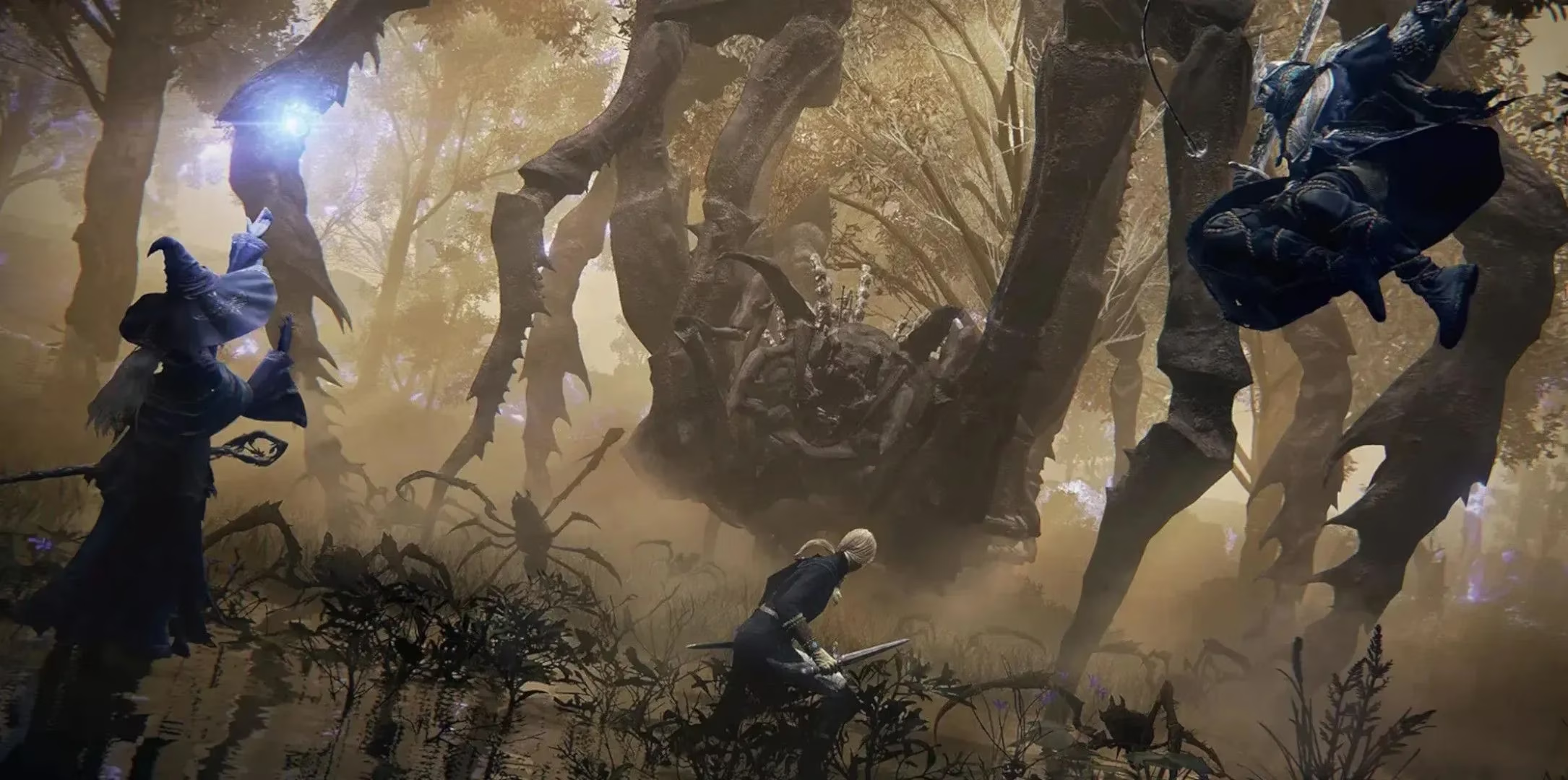
My biggest fear was being the anchor dragging my team down. Bandai Namco's pre-event suggestion to 'brush up' on my Elden Ring skills sent shivers down my spine. But Nightreign's co-op design is its secret weapon. While my veteran colleagues engaged in elegant, high-skill duels with the frontline horrors, I found my niche. I became the squad's opportunistic fox, circling the chaos to deliver devastating backstabs that felt like striking a gong—the impact was both visceral and hugely satisfying. When the team got overwhelmed, my cautious playstyle meant I was often the last one standing, allowing me to play the crucial support role and revive my fallen comrades. The game's balance ensures that raw skill isn't the only path to victory; tactics, positioning, and teamwork are equally vital currencies.
Turning Traditional Flaws into Co-op Features
One of the core pain points of traditional Soulslikes is the brutal punishment for failure. Losing all your hard-earned runes and trudging back through a gauntlet of enemies to re-challenge a boss feels, to many, like having your time systematically erased. Nightreign cleverly reframes this entire concept. As a roguelite, every run ends in a reset, whether you triumph over the final boss or fall in the first five minutes. This universal mechanic transforms failure from a personal failing into a fundamental part of the game's rhythm. Dying doesn't feel like a waste; it feels like the closing of one chapter and the exciting, unpredictable start of another. The world layout is fixed, fostering mastery, but loot, events, and enemy placements have enough randomization to make each new drop feel like opening a mysterious, combat-focused piñata.
Most importantly, you never face this cycle alone. The shared burden of potential failure is a game-changer. A catastrophic team wipe at the final boss's last sliver of health transforms from a controller-throwing moment of rage into a communal event met with laughter and immediate plans for the next run. The blame is diffuse, the frustration communal, and the drive to try again is instantly reignited by your teammates. It provides the perfect 'plausible deniability' for any mistakes—sure, someone might have triggered that deadly area-of-effect attack, but with everyone scrambling, who can really say who?

The Verdict: A Masterful Genre Fusion
Let's be clear: Elden Ring Nightreign still contains the DNA that made me avoid its parent game. The combat can feel as unwieldy as piloting a forklift in a ballet, the gothic-fantasy aesthetic sometimes borders on generic dark fantasy wallpaper, and the bosses remain brutally demanding. It has all the traditional FromSoftware ingredients I typically dislike.
However, by brilliantly splicing them with the addictive, session-based loops of modern roguelites and the social, strategic joy of a tight-knit co-op experience, Nightreign has created something entirely new and compelling. It's a game that understands not everyone wants a solitary test of endurance, but many still crave deep challenge, rich worlds, and epic victories—just shared with friends. It's the ultimate compromise, and in 2026, it stands as one of the most inventive and accessible ways to experience the thrill of a Soulslike without needing to 'git gud' alone in the dark. For this former hater, that's nothing short of a miracle.
Quick Summary of Nightreign's Core Loop:
| Phase | Activity | Goal |
|---|---|---|
| Scavenge Phase | Explore map, defeat enemies, complete events, find loot. | Power up your character as much as possible before the timer ends. |
| Boss Phase | Defeat the zone's boss enemy. | Survive and win to advance to the next, harder Cycle. |
| Cycle End | Win or lose, your run resets. | Return to the hub, upgrade meta-progression perks, and start a new run with fresh randomization. |
🎮 TL;DR for the Souls-Curious: Nightreign is the perfect entry point. It keeps the awesome world and tough fights but adds friends, shorter sessions, and way less frustration. Highly recommend grabbing a squad and diving in!