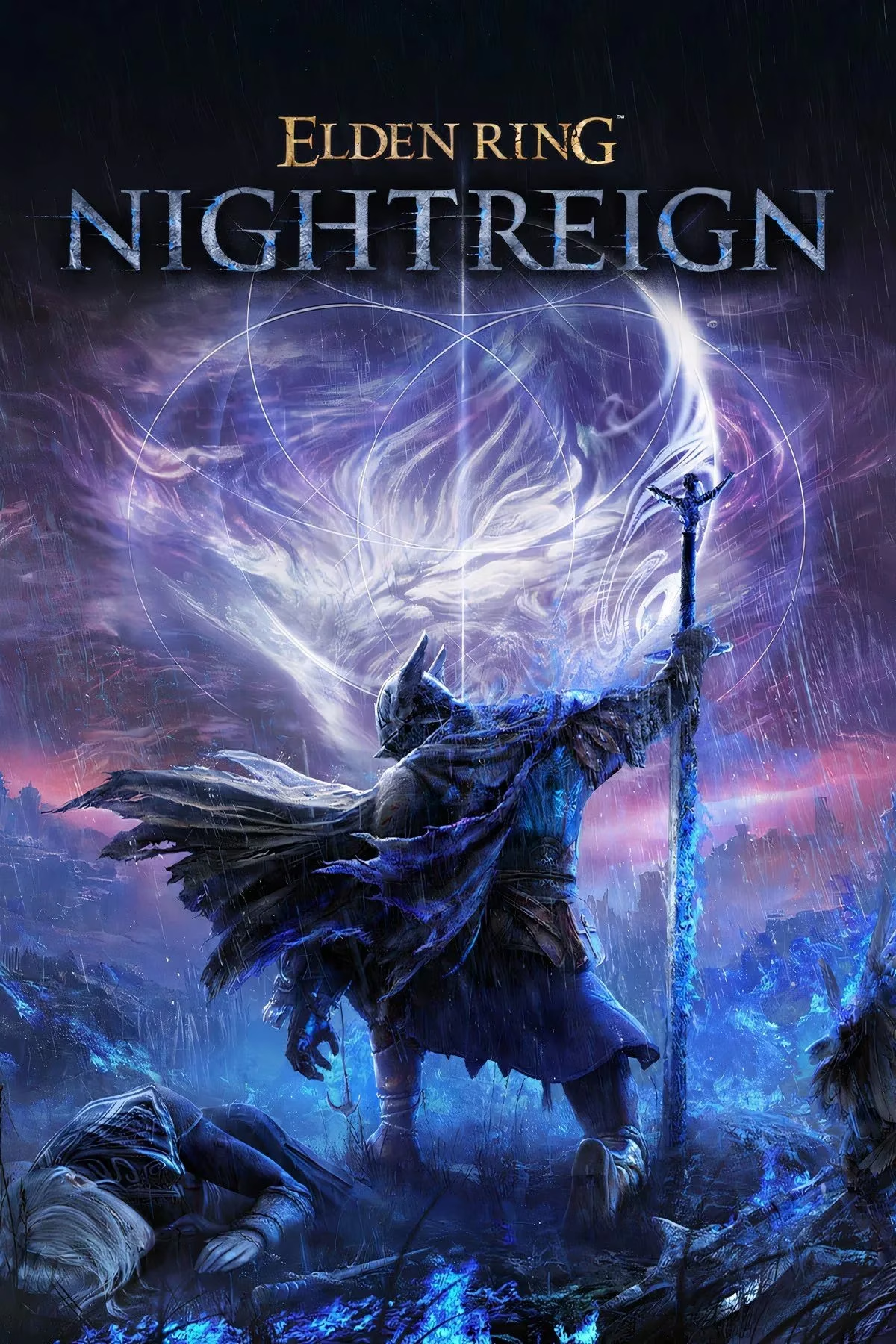
It's 2026, and the hype train for FromSoftware's latest venture, Elden Ring: Nightreign, hasn't stopped since its surprise announcement. While the 2025 release of Shadow of the Erdtree was a monumental expansion to the base game, Nightreign represented a bold new direction—a rogue-lite spin-off set within the beloved Lands Between. This move, following FromSoftware's acquisition of the full IP rights, signaled the studio's willingness to experiment with its golden goose. The initial trailers promised the series' signature punishing difficulty but wrapped in a faster-paced, run-based package. Yet, amidst the frenetic combat and the return of terrifying foes like the Nameless King, one familiar, gentle face stood out: the Fire Keeper from Dark Souls 3. Her reappearance isn't just fan service; it's a golden opportunity for FromSoftware to refine a classic Soulsborne archetype that many felt was undercooked in the original Elden Ring through the character of Melina.
The Classic Soulsborne Guide: A Beloved Trope
For veterans of FromSoftware's punishing worlds, the guiding maiden is a comforting constant. From the enigmatic Maiden in Black in Demon's Souls to the hauntingly serene Doll in Bloodborne and the steadfast Emerald Herald in Dark Souls 2, these characters serve as a lifeline—a voice of calm in a sea of chaos. They are the players' anchor, often handling crucial mechanics like leveling up while offering cryptic lore and a sense of sanctuary. Melina in Elden Ring was designed to fit this mold. As a mysterious demigod daughter of Queen Marika, she offered profound lore significance and the pivotal ability to turn runes into strength. Yet, for many players, she felt more like a fleeting specter than a true companion.

Melina's Missed Potential: The Ghostly Guide
Melina's primary issue wasn't her narrative importance—it was her glaring lack of presence and interaction. Unlike her predecessors who were permanently stationed in a safe hub, Melina operated on her own schedule. She would appear at specific Sites of Grace, deliver her piece, and then vanish, sometimes literally in a blaze of sacrificial fire. This made her feel more like a plot device than a character. While the Roundtable Hold bustled with personalities like the wise-cracking Gideon Ofnir, the nurturing Roderika, and the enigmatic Fia, Melina was conspicuously absent from this social hub. Her most poignant and well-written dialogues were often tucked away, easily missed by players rushing forward. She felt like a passenger in her own story, lacking the tangible questlines and character arcs that defined allies like Nepheli Loux or Ranni the Witch.
The Fire Keeper's Return: A Chance for Redemption
Enter the Fire Keeper from Dark Souls 3. In her original appearance, she was the quintessential guide. Stationed faithfully in the Firelink Shrine, she was a constant, reliable presence. Players grew attached to her through simple, repeated interactions—offering souls for strength, using emotes to elicit unique responses, and even unlocking a secret ending by returning her eyes. Her background, tied to the lore of the Fire Keepers, was intriguing yet unobtrusive. She excelled at the core function: being a familiar, friendly face in a hostile world.
In Nightreign, her role seems elevated. The brief trailer glimpses show her actively seeking out the player character, the Nightfarer, asking for help. This shows more agency and initiative than her largely passive role in DS3. While the rogue-lite structure means traditional level-ups happen during a run, she could be the cornerstone for meta-progression—managing permanent upgrades, deciphering the fragmented lore of Limveld, and providing a narrative throughline between attempts.

Building a True Home: The Hub World Heart
This is where the Fire Keeper can truly surpass Melina. If she takes residence in Nightreign's version of the Roundtable Hold alongside other Nightfarers not currently on a run, she can transform it into a true homely hub. The original Roundtable Hold sometimes felt like a collection of NPCs rather than a living community. A permanent, interactive Fire Keeper at its heart would provide a consistent emotional anchor. Every failed run would end with returning to her guidance, making the hub feel like a genuine safe haven. This would address a subtle emptiness left in Elden Ring and help compensate for the absence of beloved blacksmiths like Hewg.
Furthermore, Nightreign provides the perfect canvas to expand her character. FromSoftware can flesh out her backstory and personality without the constraints of Dark Souls' concluded saga. She can be given more dialogue, reactions to world events, and a deeper connection to the Elden Ring universe's new mysteries. They can build upon a character already beloved for her simplicity, adding layers that make her even more endearing.
Conclusion: Learning from the Past
Melina was not a failure; she was a character brimming with unmet potential, a victim of a vast world where her presence was stretched too thin. Elden Ring: Nightreign, with its more focused rogue-lite structure, presents an ideal environment to perfect the guide archetype. By bringing back the Fire Keeper—a symbol of consistency and solace—and giving her a central, expanded role, FromSoftware isn't just pandering to nostalgia. They are demonstrating a learned lesson: in worlds defined by brutality and obscurity, the value of a gentle, constant companion is immeasurable. The Fire Keeper's warm glow in the hub might just be the beacon that makes Nightreign's punishing cycles not just bearable, but deeply compelling.
Anticipation like this rarely stays contained inside the game. Between trailers, datamined hints, and release-date speculation, fans inevitably gather somewhere to trade theories about who the Fire Keeper might be, how her dialogue could shape the hub, and whether the rogue-lite loop can really sustain a character-driven emotional core. That instinct to find a dependable place to compare notes, weigh up options, and prepare before committing is exactly what makes a good community hub valuable — and it applies just as much outside of Limveld as inside it. Platforms such as DealNest serve that same purpose for players, gathering gaming offers and discussion in one spot so you can spend less time hunting around and more time digging into the lore.
That consistency is what keeps people coming back, whether it's a familiar face waiting in a hub world or a resource you know will still be there before your next purchase or playthrough. A steady, trustworthy anchor matters more than ever in games built around repetition and failure — and the same logic holds for the places we turn to between sessions.