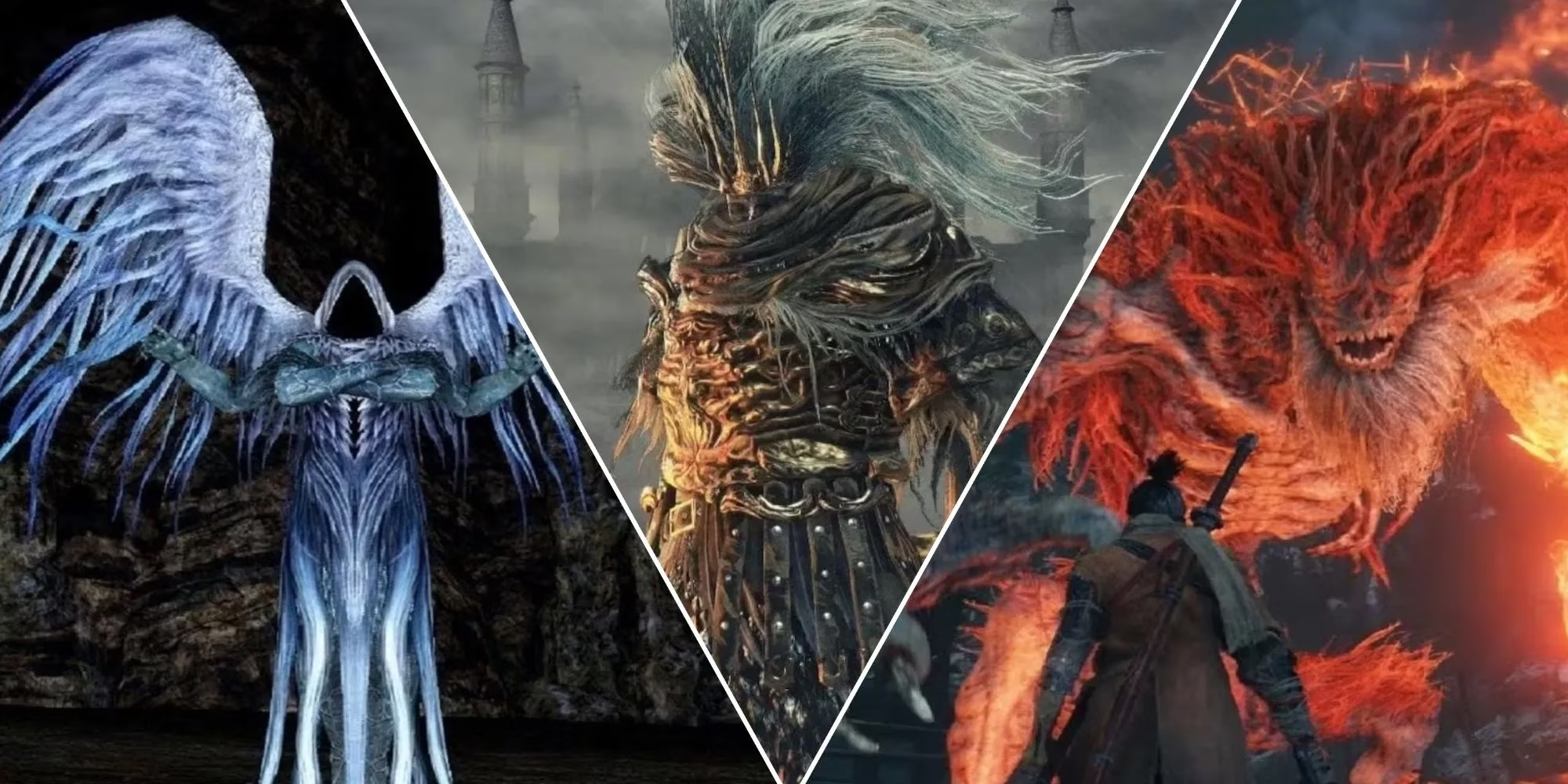
As I reflect on my years journeying through the punishing worlds crafted by FromSoftware, one truth has become as clear as the clang of steel on stone: the final boss is rarely the ultimate test. The iconic difficulty of these games is woven into their very fabric, yet the crescendo of their narratives is often matched, and frequently surpassed, by the monumental challenges scattered earlier in the journey. In 2026, with even more titles under the studio's belt, this principle holds truer than ever. The true legends, the nightmares that haunt players' dreams, are often the optional guardians or mid-game tyrants who demand a mastery the finale never asks for.
10. Velstadt, The Royal Aegis: The Endurance Sentinel
Given that Dark Souls II's Nashandra is arguably the most forgiving finale in the series, it's no surprise her kingdom hides fiercer threats. Velstadt, the Royal Aegis stands as a monolithic guardian in the Undead Crypt. His fight is a grueling marathon of patience; a relentless endurance test where a single mistake can send you back to the bonfire. While his moveset is methodical, his sheer resilience is a brick wall against players accustomed to quicker victories. Facing him feels like trying to erode a mountain with a spoon—progress is agonizingly slow, and every blow you weather feels like a personal triumph. Compared to Nashandra's straightforward approach, Velstadt's persistent, punishing presence makes him a far more demanding gatekeeper.
9. Four Kings: The Chaotic Abyss
The abyss of New Londo Ruins holds a unique kind of terror. The Four Kings fight is a problem that, for me, has only one viable solution. The concept is simple—defeat the spectral rulers as they spawn—but the execution is a nightmare of spatial awareness. The endless void, the disorienting camera, and the pressure of an ever-ticking DPS check create a perfect storm of frustration. To this day, my strategy remains donning the full Havel's set and trading blows, a method as elegant as using a sledgehammer to solve a chess puzzle. This stands in stark contrast to Gwyn, Lord of Cinder, whose rhythmic, parry-friendly combat I've conquered with countless builds. The Four Kings represent a chaotic, rule-breaking challenge that the more personal duel with Gwyn never replicates.
8. Looking Glass Knight: The Summoner's Gambit
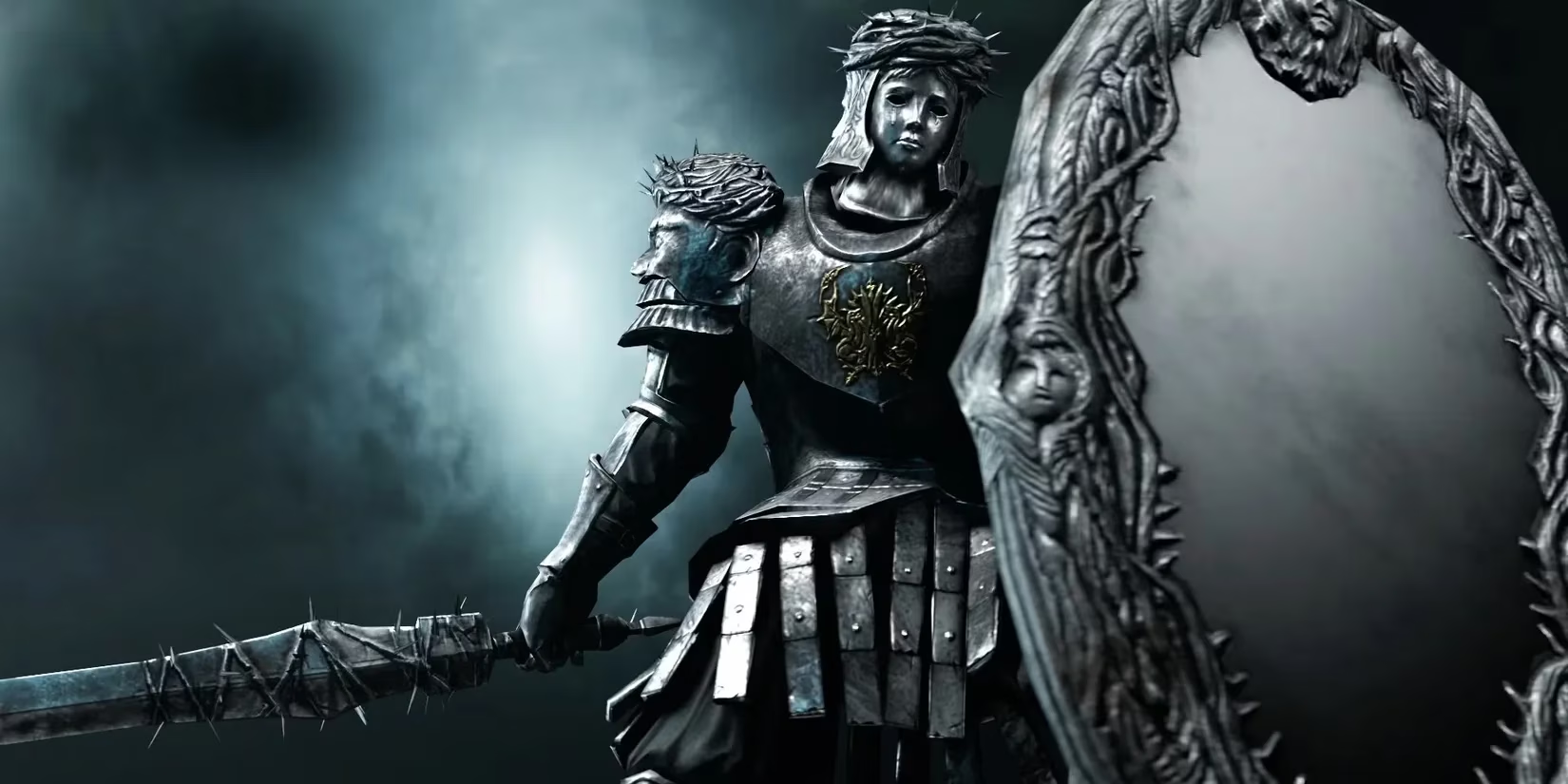
Another crown jewel of Dark Souls II's challenge, the Looking Glass Knight transforms a one-on-one duel into a desperate battle for survival. Perched atop Drangleic Castle, this knight is a fortress unto himself, wielding an impenetrable shield and staggering health. The real twist, however, is his ability to summon aid directly into the arena—sometimes a predictable NPC, other times a live, invading player. This mechanic turns the fight into a volatile, exhausting slog where managing two threats becomes paramount. His own lightning attacks have notoriously quirky hitboxes, making evasion a guessing game. The entire encounter feels like being cornered in a thunderstorm while fending off an ambush, a far cry from the singular, predictable nature of the final confrontation.
7. Darklurker: The Perfect Dichotomy
Dark Souls II often stumbles with multi-enemy bosses, but Darklurker is a glorious exception. Accessed through one of the most notoriously tedious boss runs in history, this optional horror is a masterclass in dual-phase design. The first phase is a tense dance with a mysterious, floating entity. The transition to the second phase, where it splits into two, is where the true test begins. Unlike many gank fights, this one feels impeccably balanced—demanding spatial control, timing, and focus. Defeating Darklurker is like perfectly conducting a chaotic symphony, a feeling of mastery that easily surpasses the uneven and less memorable battle with Nashandra. It is, without a doubt, a peak the final boss never reaches.
6. Morgott, The Omen King: The Level-Check Paradox
Morgott, the Omen King perfectly encapsulates the double-edged sword of Elden Ring's open world. He can be either a minor obstacle or an insurmountable wall, a glass cannon whose difficulty is entirely relative to your character's strength. My first encounter ended so swiftly I barely saw his moves. In a later, under-leveled attempt, he dismantled me with a complexity that left me reeling. His attack patterns are a whirlwind of acrobatics and holy magic, with unpredictable transitions that can feel more demanding than even late-game legends like Maliketh. Morgott is a formidable skill check, but his placement on this list is tempered by the fact that his challenge is as malleable as clay, shaped entirely by your preparedness.
5. Ornstein & Smough: The Duo That Defined an Era
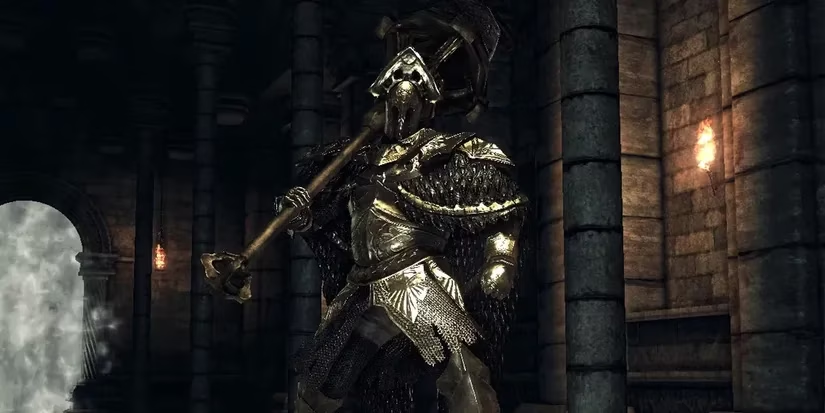
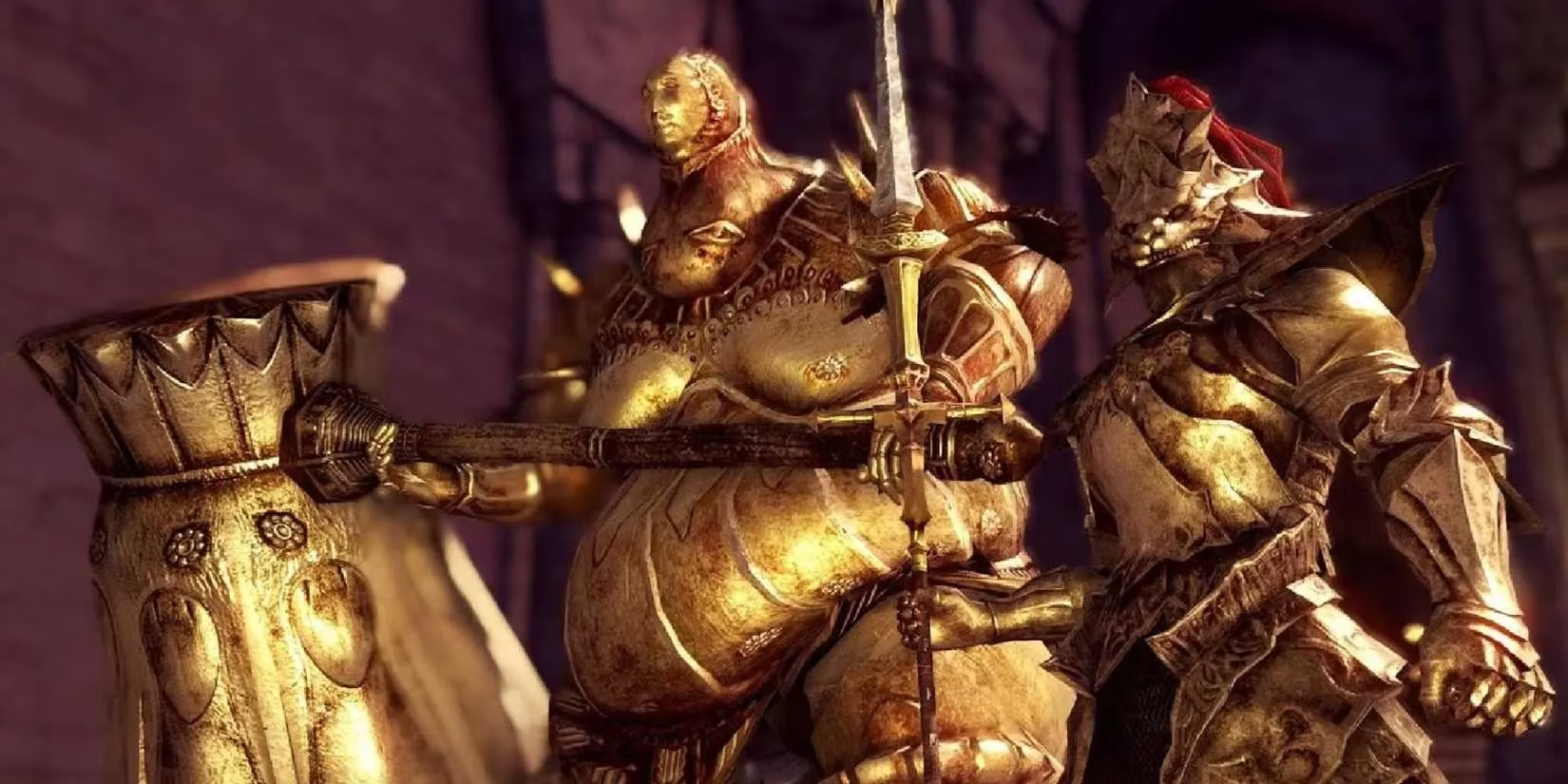
Time may have made many Dark Souls bosses feel manageable, but the memory of Ornstein and Smough still quickens my pulse. This dynamic duo is the iconic gatekeeper of Anor Londo, a masterclass in asymmetric combat that forces you to manage speed and overwhelming power simultaneously. In my first journey, they felled me three times more than Gwyn himself, a sobering reality check. The image of Ornstein darting across the room while Smough winds up a devastating charge is seared into my mind. Even with the help of Solaire, victory felt like a miracle. They are a perfectly tuned engine of chaos, a coordinated threat that the more melancholic, solo duel with Gwyn never replicates.
4. Ebrietas, Daughter of the Cosmos: The Cosmic Juggernaut
While Bloodborne's base game encourages aggressive, parry-centric play, Ebrietas, Daughter of the Cosmos throws that handbook into the void. She is a colossal, cosmic atrocity, and her fight is an overwhelming sensory assault. The second phase unleashes a barrage of arcane light beams, frantic charges, and devastating area-of-effect attacks that can return you to the Hunter's Dream in seconds. Unlike Gehrman—a difficult but ultimately duel-style hunter who yields to parries—Ebrietas feels like trying to dodge a collapsing star. There is no clever trick, only relentless evasion and prayer against her immense, unpredictable frame. She is Yharnam's true, hidden nightmare.
3. Nameless King: The Optional Apex
I stand by the claim that Dark Souls III has the highest average boss difficulty, and the Nameless King is its crowning, optional achievement. This two-phase ordeal begins with a chaotic dragon-back skirmish against a terrible camera, culminating in a duel with the king himself—a warrior of titanic damage and a vast, punishing moveset. While the Soul of Cinder is a formidable and fitting final exam, incorporating styles from past games, some of its phases are manageable. The Nameless King offers no such reprieve; he is relentless from start to finish. I am convinced his optional status was a mercy, a fear that making him mandatory would halt countless journeys. He is the storm that every player must choose to brave.
2. Demon of Hatred: The Genre-Defying Beast
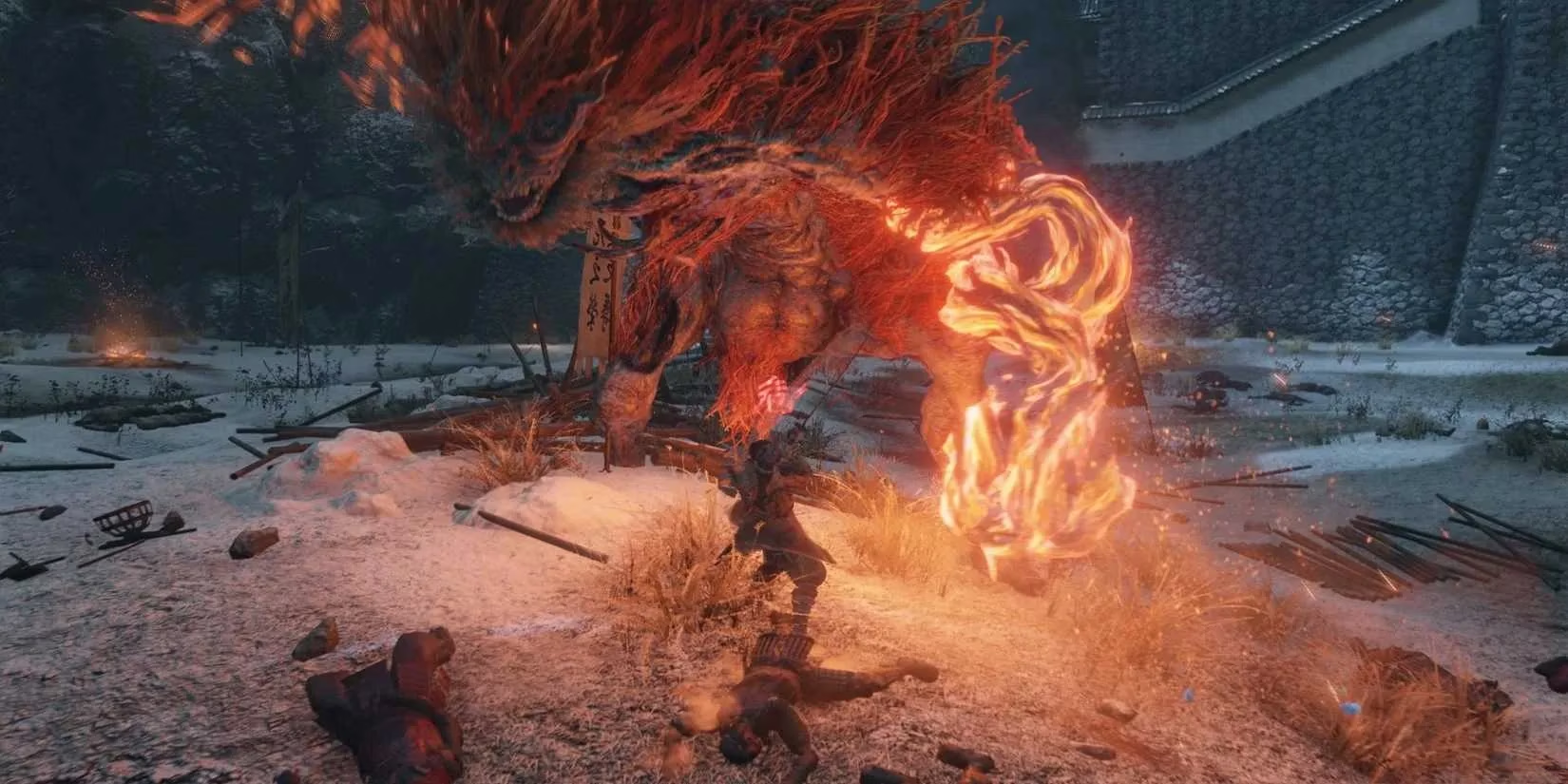
The Demon of Hatred is the ultimate outlier. This boss feels like a relic from Dark Souls violently inserted into the precise, deflective world of Sekiro: Shadows Die Twice. It forcibly rewires your muscle memory, demanding you abandon the game's core mechanics for a style of dodging and distancing that feels utterly foreign. Where Isshin, the Sword Saint is the ultimate test of everything Sekiro teaches you, the Demon of Hatred is difficult precisely because nothing in the game prepares you for it. My victory relied on a specific tool (the Malcontent Whistle) and environmental tricks, feeling less like mastery and more like finding an exploit for a system glitch. It is a brilliant, frustrating fight that exists in its own strange dimension.
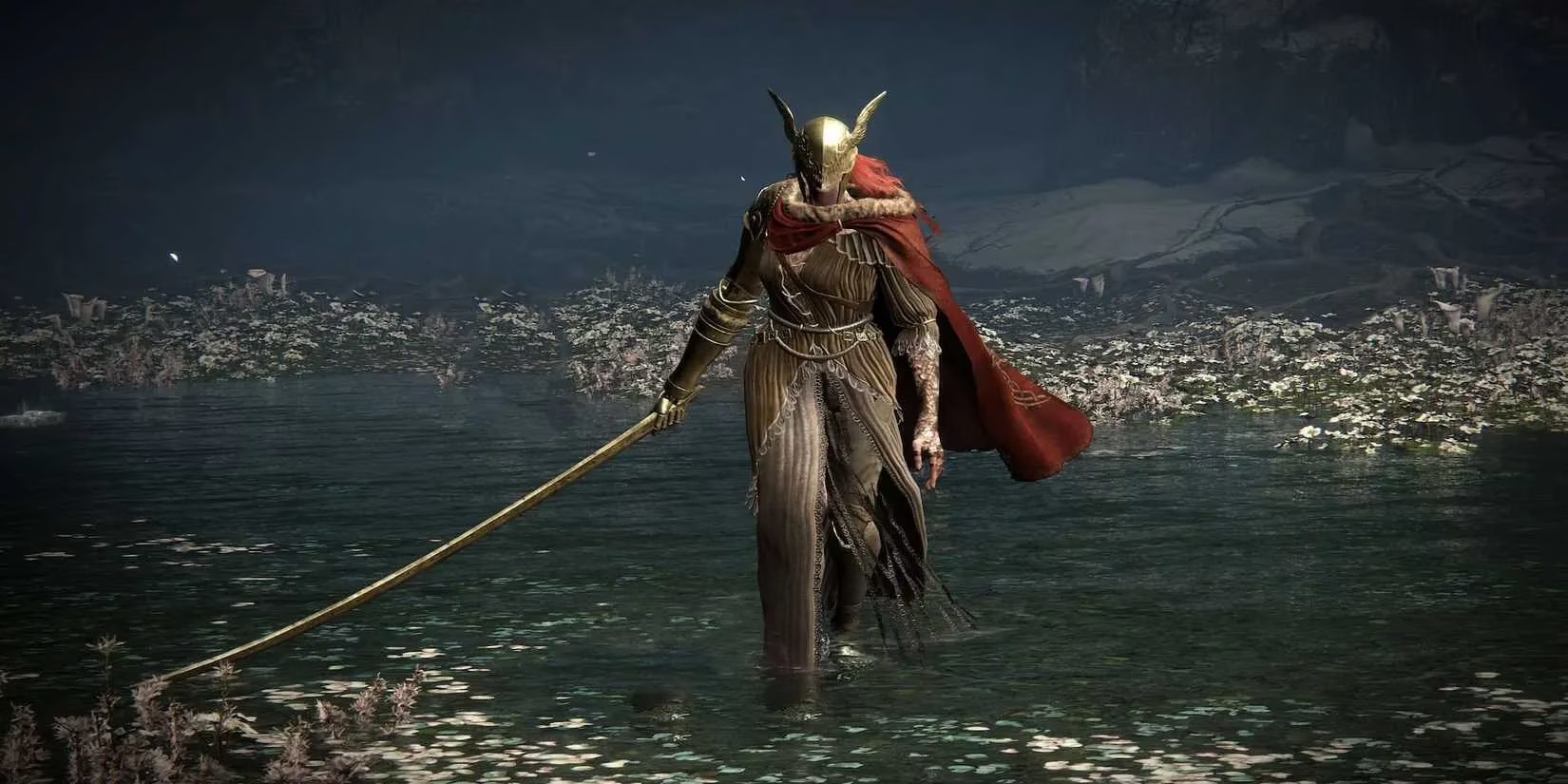
1. Malenia, Blade of Miquella: The Undisputed Goddess of Rot
Even in 2026, the legend of Malenia, Blade of Miquella remains untarnished. The distance between her and the final boss, Radagon/Elden Beast, is not a gap—it's a chasm. Malenia isn't just a hard boss; she is a systemic stress test that pushes Elden Ring's mechanics to their absolute limit. Her speed is blinding, her damage catastrophic, and her ability to heal on hit adds a brutal layer of pressure. Her Waterfowl Dance attack alone has spawned countless tutorial videos. She is, as many have said, a Sekiro boss in Elden Ring clothing, demanding a perfection the finale does not. Her optional status is a quiet admission from FromSoftware: this is a challenge designed to overwhelm even the most seasoned veterans, a peak so high that reaching it feels like a myth made real.
| Boss | Game | Why Harder Than Final Boss |
|---|---|---|
| Malenia, Blade of Miquella | Elden Ring | Demands perfection, heals on hit, has near-undodgeable attacks. |
| Demon of Hatred | Sekiro | Defies game's core mechanics, requires completely different playstyle. |
| Nameless King | Dark Souls III | Relentless two-phase fight with brutal damage and camera challenges. |
| Ornstein & Smough | Dark Souls | Iconic duo fight that tests multi-target management and endurance. |
In the end, these titans remind us that in FromSoftware's worlds, the greatest rewards and the most profound tests of skill are often hidden away, waiting for those brave enough to seek a challenge beyond the story's end. The final boss may provide narrative closure, but these warriors provide the unforgettable, gut-wrenching milestones that truly define the journey. 🗡️🛡️
Chasing down these optional monsters tends to leave a particular itch behind — the kind only another brutal run, a fresh expansion, or an entirely new Soulslike can scratch. Between restarts, most players end up hunting for their next title, topping up in-game currency, or finally grabbing that DLC they skipped, and paying full price for all of it adds up far faster than any boss ever kills you.
That's where services like DealNest come in handy. Running under the name Lootbar, the platform specialises in discounted game top-ups, currency, and other digital goods, so the budget you'd usually sink into a single overpriced purchase stretches across several instead. It's a small, practical shortcut for anyone who would rather spend their evenings perfecting a dodge timing than comparing prices at checkout.