Let's be real, folks. Most of us have had that one nightmare that sticks with you, the kind you wake up from sweating and immediately text your friend about at 3 AM. For one gamer, those subconscious trips into surrealist wastelands and monstrous forms found a bizarrely beautiful mirror in the work of Polish painter Zdzisław Beksiński. His paintings aren't your grandma's pastoral landscapes; they're a direct pipeline to a collective, creepy unconscious, filled with skeletal deformities, eldritch doorways, and ruins that look like they've seen better eons. It's the kind of stuff that makes you say, 'Whoa, that's metal... and also, I need to sleep with the lights on.' And while the 2022 survival horror title Scorn dipped its toes into this aesthetic pool, taking inspiration from both Beksiński and H.R. Giger, it ultimately felt more like being trapped in a bio-mechanical Alien ship than wandering a truly Beksińskian apocalypse. The vibe was more claustrophobic Nostromo than desolate, dreamlike wasteland. So, here's the hot take for 2026: Beksiński's profoundly disturbing and iconic body of work is screaming—or perhaps silently, eerily gesturing—for its own dedicated video game adaptation. And honestly, the gaming world needs to put some respect on this artist's nightmarish name.
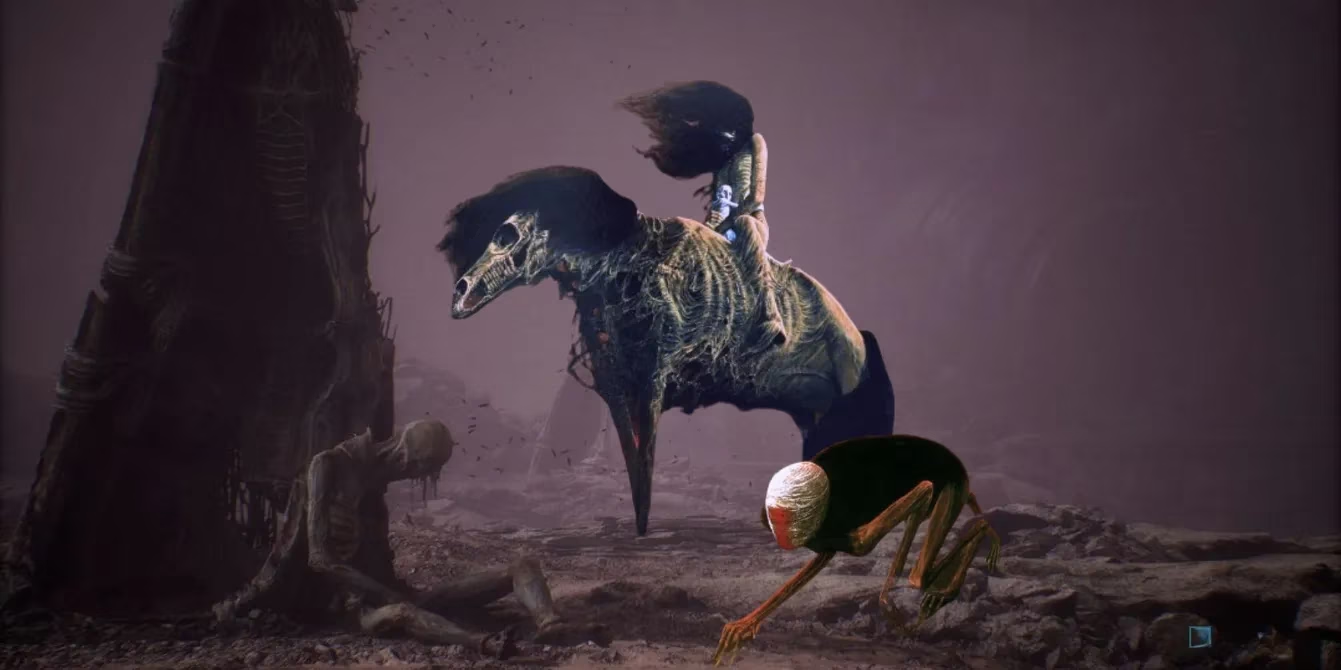
Why Beksiński's World Would Be a Gamer's Dream (and Nightmare)
Forget your typical post-nuclear Fallout vibes or even the high-fantasy decay of The Lands Between. A Beksiński game wouldn't just be a wasteland; it would be a dreamscape of desolation. Think about it: his paintings have this uncanny, dream-like quality precisely because nothing makes logical sense, yet it feels terrifyingly coherent. Grotesque, abstract forms lounge in unsettling environments that defy physics. This isn't a world that holds your hand with quest markers and objective logs. No way, José. This is a world that functions more like an indie, horror-inflected Elden Ring. You'd be unceremoniously dumped into a 'no man's land' littered with:
-
Towering, vaguely humanoid archways that seem to watch you.
-
Decaying houses that whisper with the memories of civilizations you can't comprehend.
-
Curious, blue-lit portals glowing ominously on endless, sandy stretches.
Your goal? Figure it out, champ. The oppressive, nightmarish feeling of being trapped in a delusion is the point. The gameplay loop would be a brutal ballet of exploration, discovery, and sheer survival. And speaking of survival, crafting would be... organic. Literally. You'd be scavenging materials from the environment to create anatomical weapons and tools:
| Material Source | Possible Use |
|---|---|
| Bones from fallen... things | Primitive blades, reinforcement |
| Natural Ingredients from the fallout | Potions, alchemical concoctions |
| Tools from past civilizations | Puzzle-solving, advanced crafting |
| Mythical Objects from ethereal beings | Key items, powerful upgrades |
A Roster of Horrors That Would Make Even a Souls Veteran Sweat
Now, let's talk about the locals. Beksiński didn't just draw from one well of monster inspiration. His bestiary is a buffet of body horror. While Scorn leaned heavily into Giger's techno-organic aesthetic, a true Beksiński game would showcase a far wider and weirder cast of characters. We're talking about:
-
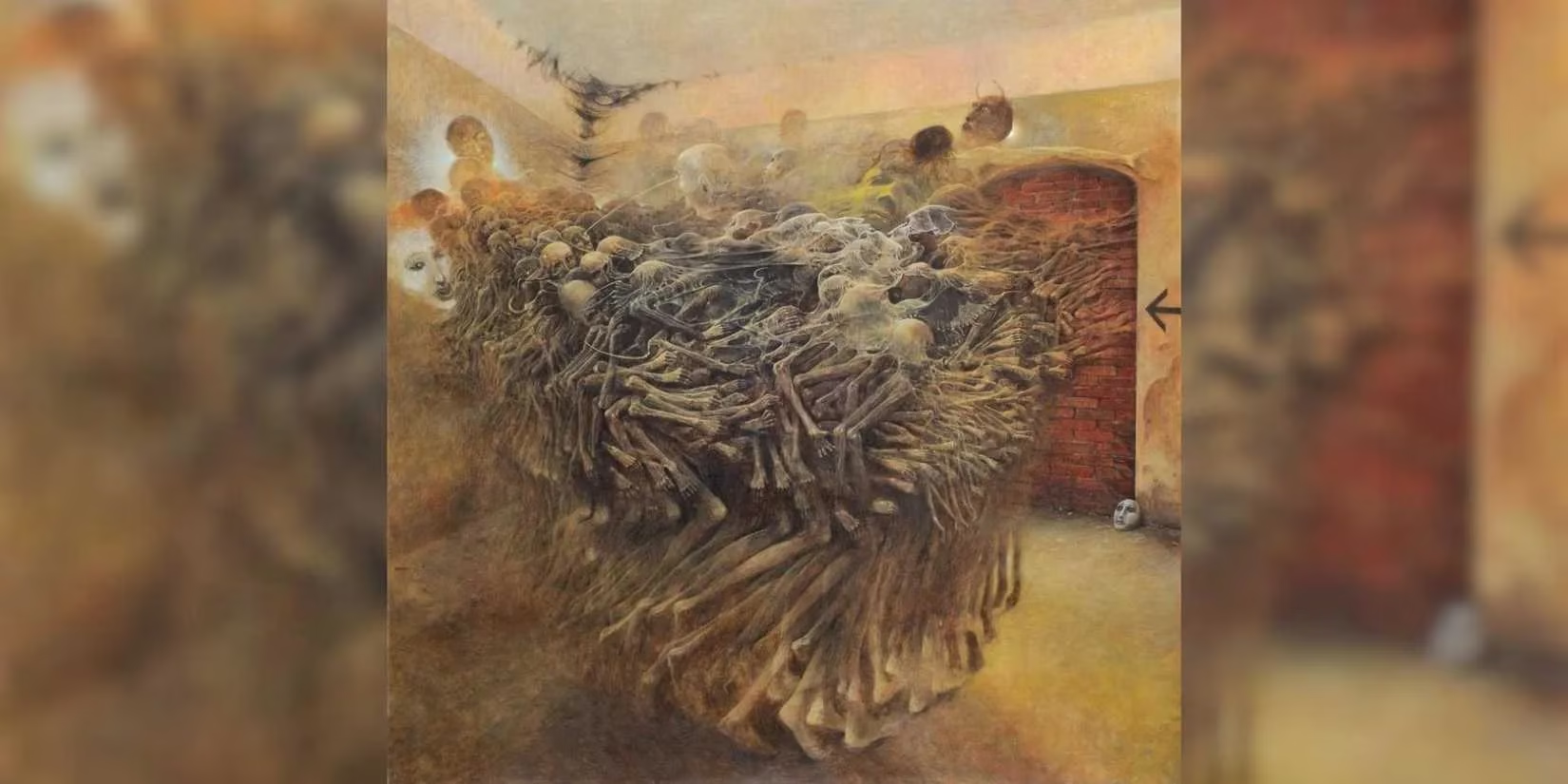
Cadaverous figures fused into architecture or clustered into singular, terrifying abominations. 😱
-
Childlike vestiges that are infinitely more creepy than any straightforward zombie.
-
Cloaked incubus figures lurking in the shadows of grim, Gothic structures.
-
Baboon-like pawns skittering across dunes.
-
And the pièce de résistance: Giant heads buried in the desert, just waiting for a truly epic, screen-filling boss fight.
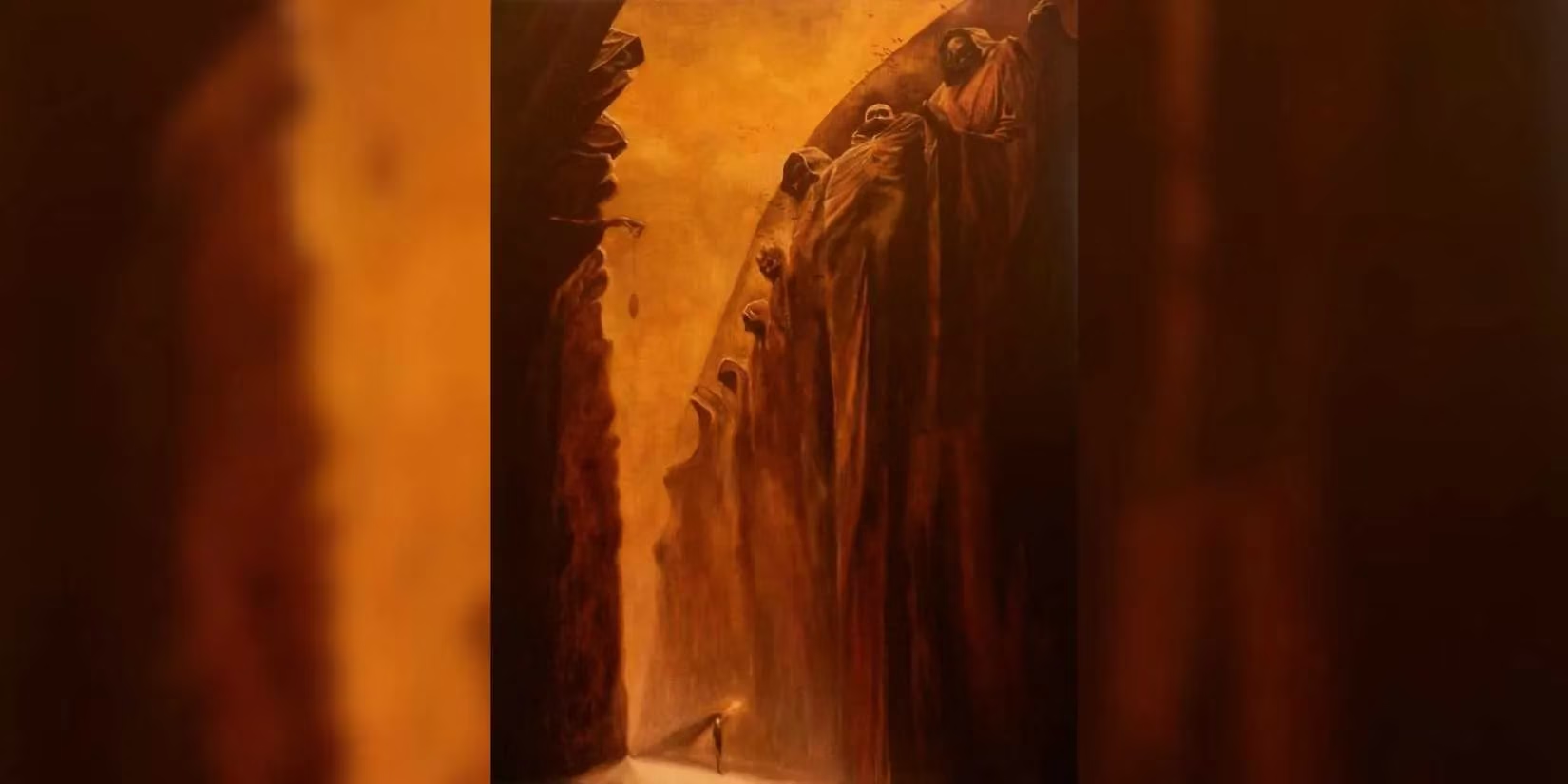
Giving these creatures the unforgiving, pattern-based combat intelligence of a Soulslike enemy would be the perfect recipe for pure, unadulterated dread. Every encounter would be a heart-pounding test of skill, where venturing into a new area comes with the very real risk of meeting something that defies description. It's not just about difficulty; it's about making the fear of the unknown a core, tactile gameplay mechanic.
Building a Lore From 'Cursed Paintings'
Beksiński's work was often called 'cursed paintings' for a reason. They tap into a disturbed unconscious, often featuring sadomasochistic themes and presenting a hellish alternative to traditional Baroque art. Later, he moved into a Gothic period but kept his signature sinister touch—deformed heads, grand but grim structures standing alone in vast dust bowls. This thematic richness is a goldmine for world-building.
A game could weave a unique thread of lore connecting these visions, much like the environmental storytelling and cryptic mythos of Dark Souls. Imagine discovering the tragic history behind a particular decaying mansion or understanding the ritual that created the giant desert heads. The lore would be dark, twisted, and deeply philosophical. However, the key would be to never fully explain everything. The game must retain that fundamental, nonsensical, dreamlike quality. Too much explanation would ruin the mystery. The player should always feel slightly off-balance, as if the rules of reality are just out of reach.
The Legacy and The Potential in Today's Gaming Scene
Beksiński's influence is already lurking in the gaming shadows. Beyond Scorn, his visions helped shape the point-and-click adventure Tormentum and even Guillermo del Toro's masterpiece, Pan's Labyrinth. That's some serious pedigree. While Scorn's release wasn't a world-beater, its visual design has had serious staying power in players' minds—a testament to the potency of this artistic style.
In 2026, the indie horror scene is more vibrant than ever, thriving on morbid curiosity and unique aesthetics. A Beksiński-inspired project has the potential to capture the same cult fascination as games like the recently released Pools (part of the Backrooms phenomenon). It would be a game that people talk about not just for its challenge, but for its sheer, unforgettable atmosphere. It would be an artistic statement as much as a game.
Of course, one must be careful what they wish for. Beksiński's monsters, rendered in modern high-definition with immersive audio design, could easily be scarier than iconic gaming horrors like Zant's Hand from Twilight Princess or the entire roster of freaks from Outlast. This wouldn't be a game for the faint of heart. It would be a challenging, disturbing, and profoundly unique journey into one of the darkest and most brilliant artistic imaginations of the 20th century. The controller is waiting. Does the gaming world have the guts to press start? 🎮💀