For decades, the concept of failure in video games was synonymous with frustration, a punitive "Game Over" screen that halted progress and tested a player's patience. However, as the medium has matured into a sophisticated art form, a new philosophy has emerged among developers and players alike: failure can be an integral, enriching, and even enjoyable component of the interactive experience. Far from being a simple roadblock, a well-designed fail state can deepen immersion, enhance storytelling, and create a more meaningful sense of accomplishment. This shift is evident across diverse genres, from punishing action RPGs to introspective narrative adventures, proving that the journey—and the stumbles along the way—can be as compelling as the destination. In 2026, we celebrate the games that masterfully reframe losing, dying, and stumbling not as endpoints, but as essential features that make the overall experience more engaging and profound.
🏆 Hades: Where Death Drives the Narrative
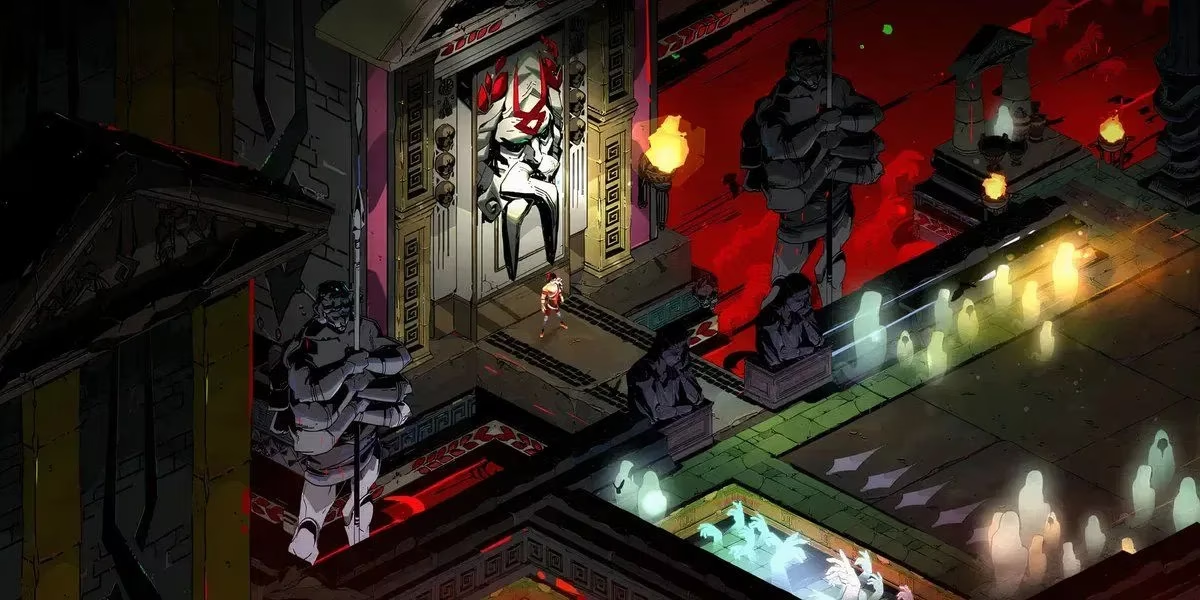
In the critically acclaimed roguelike Hades, demise is not a setback but a narrative and mechanical catalyst. Each escape attempt through the ever-shifting underworld ends either in triumphant victory or, more frequently, in a return to the House of Hades. This hub area is far from a static menu; it is a living, reactive space that evolves with every run. Failure here is an opportunity: to deepen relationships with the vibrant cast of Greek deities through conversation and gifts, to unlock permanent upgrades that ease future attempts, and to uncover more of the game's rich, character-driven story. The loop of action and repose makes each death feel purposeful, transforming what could be a moment of frustration into a moment of anticipation and growth. The game brilliantly teaches that true mastery comes not from avoiding failure, but from learning through it.
🔁 Outer Wilds: Knowledge Gained Through Catastrophe
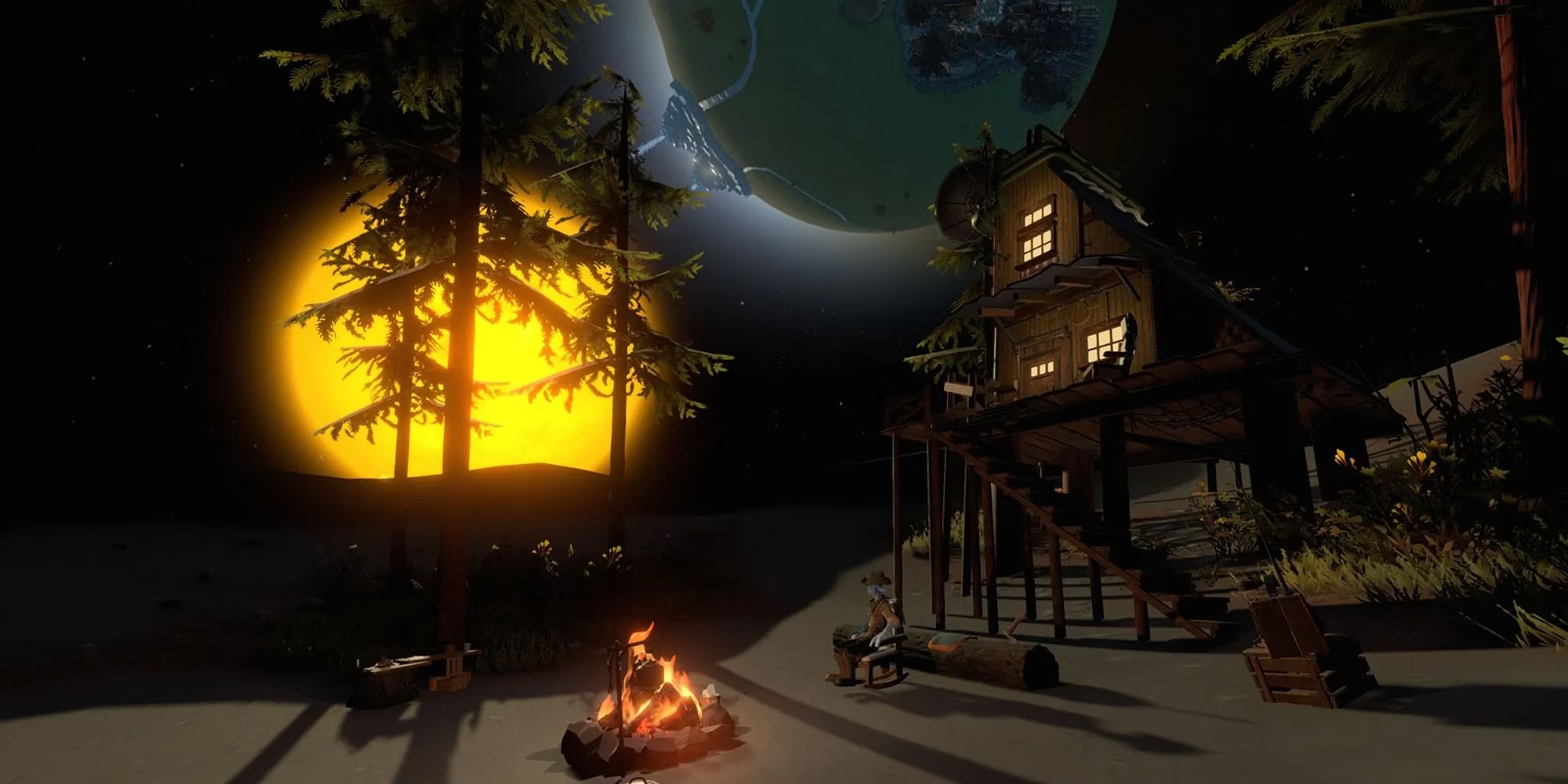
Outer Wilds presents a universe where failure is the primary teacher. Trapped in a 22-minute time loop, the player-explorer is tasked with unraveling the mysteries of a doomed solar system. Success is impossible in a single cycle, making each inevitable demise—whether by supernova, suffocation, or gravitational anomaly—a vital data-gathering mission. The core progression is not tied to character stats or items, but to the player's own accrued knowledge of planetary layouts, alien inscriptions, and cosmic phenomena. Every failure provides a new clue, a fresh perspective, or a eliminated hypothesis, making the final, successful run a symphony of hard-won understanding. It is a poignant allegory for the scientific process, where each "mistake" brings you closer to the truth.
⚔️ Elden Ring: The Accessible Crucible
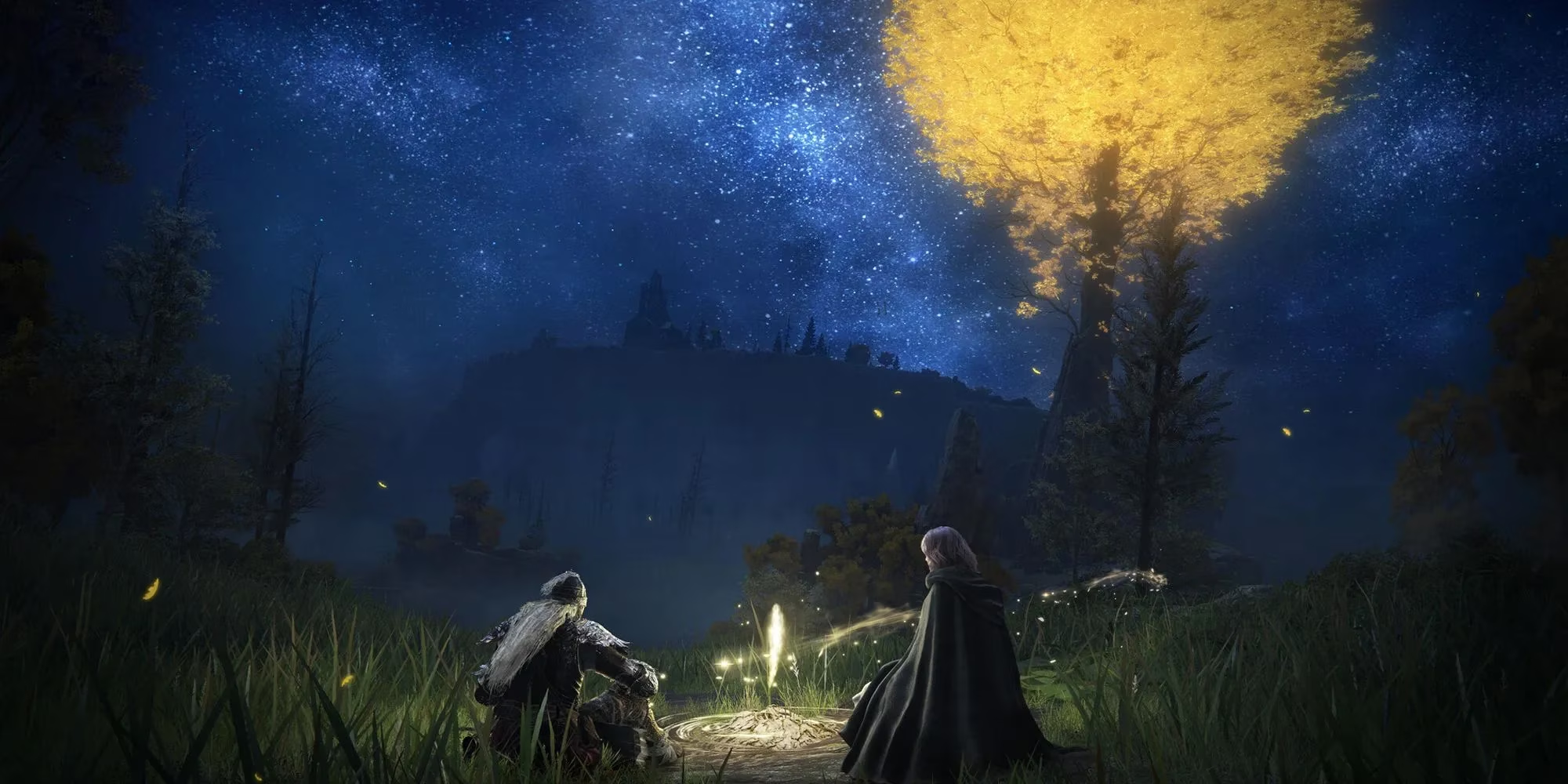
The "Soulslike" genre, pioneered by FromSoftware, has built its reputation on formidable challenge, where failure is a constant, humbling companion. Elden Ring, while maintaining this punishing ethos, brilliantly softens the blow through its expansive, open-world design. When a boss or area proves insurmountable, the game offers a liberating alternative: simply go somewhere else. This design philosophy transforms failure from a hard stop into a suggestion to explore, level up, and return stronger. The elation of finally toppling a foe that has bested you a dozen times is a feeling of genuine triumph, a dopamine rush earned through persistence and adaptation. Elden Ring demonstrates that accessibility in difficulty can coexist with uncompromising challenge, making the struggle itself rewarding.
🛹 Session: Skate Sim: Building Muscle Memory Through Slams

In the hyper-realistic skating simulator Session, failure is instantaneous, frequent, and foundational to the learning process. The game's demanding dual-stick control scheme for each foot requires precise timing and coordination. A player will spend hours slipping out of grinds, missing kickflips, and taking brutal slams. Yet, each of these micro-failures builds the muscle memory and spatial understanding necessary to eventually land a trick with "steeze." The game mirrors the real-world skateboarding journey, where progress is measured not in avoiding falls, but in learning from them. The satisfaction of finally nailing a complex line is directly proportional to the struggle that preceded it, making every bail an essential step toward mastery.
🩸 Dead Space 2: The Art of the Gruesome Demise
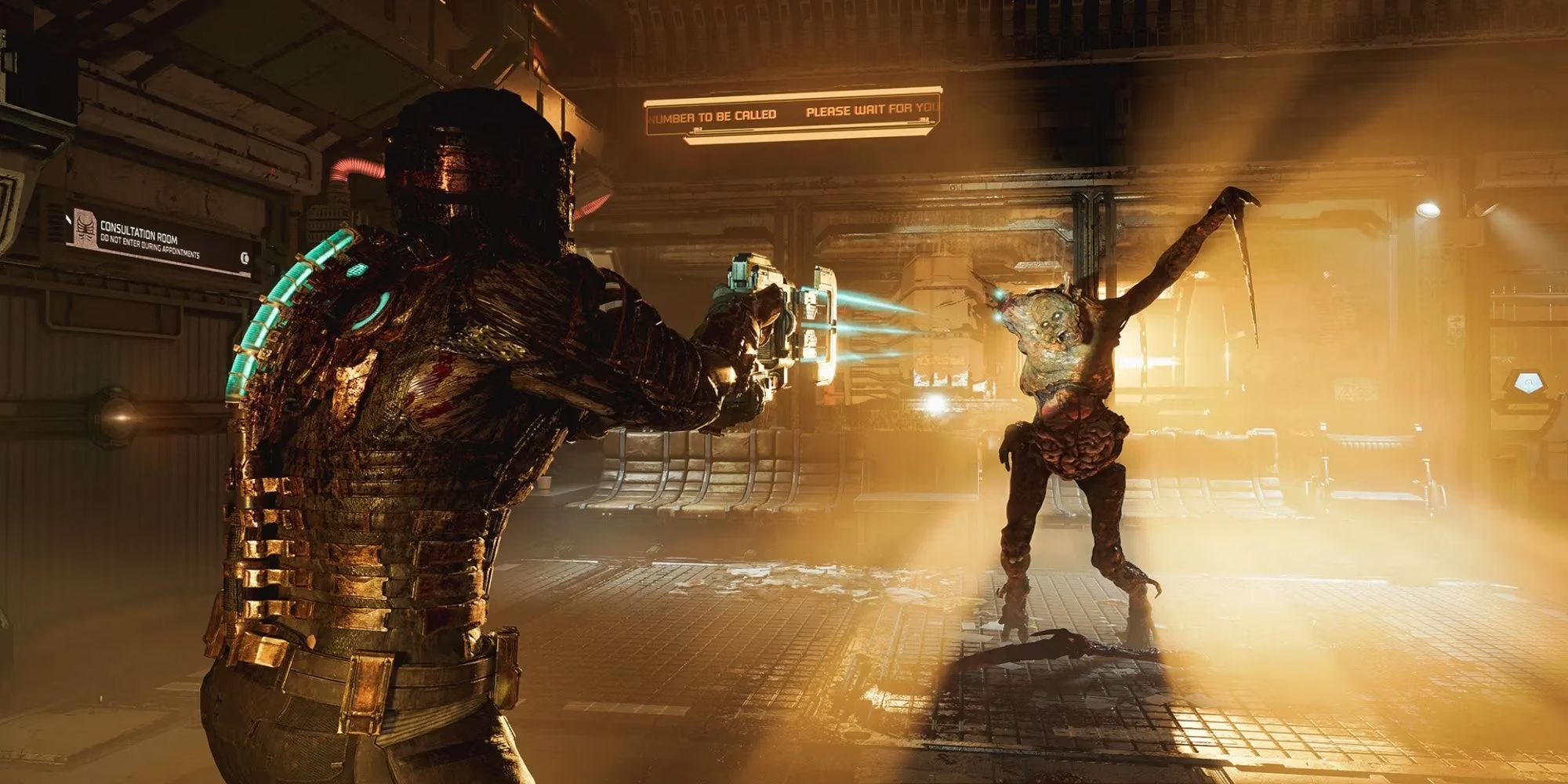
While most games on this list philosophically reframe failure, Dead Space 2 makes the act of dying itself a spectacle to be (morbidly) enjoyed. The series is renowned for its visceral, creative, and horrifying death animations. Whether Isaac Clarke is dismembered, impaled, or bisected, each failure is a unique, cinematic experience that reinforces the terrifying power of the Necromorph threat. For fans of horror and gore, these sequences become a macabre reward, a collection of "dumb ways to die" that add to the game's oppressive atmosphere. It turns a player's vulnerability into a key part of the horror aesthetic, ensuring that even in defeat, the game leaves a lasting, chilling impression.
🍓 Celeste: The Seamless Reset
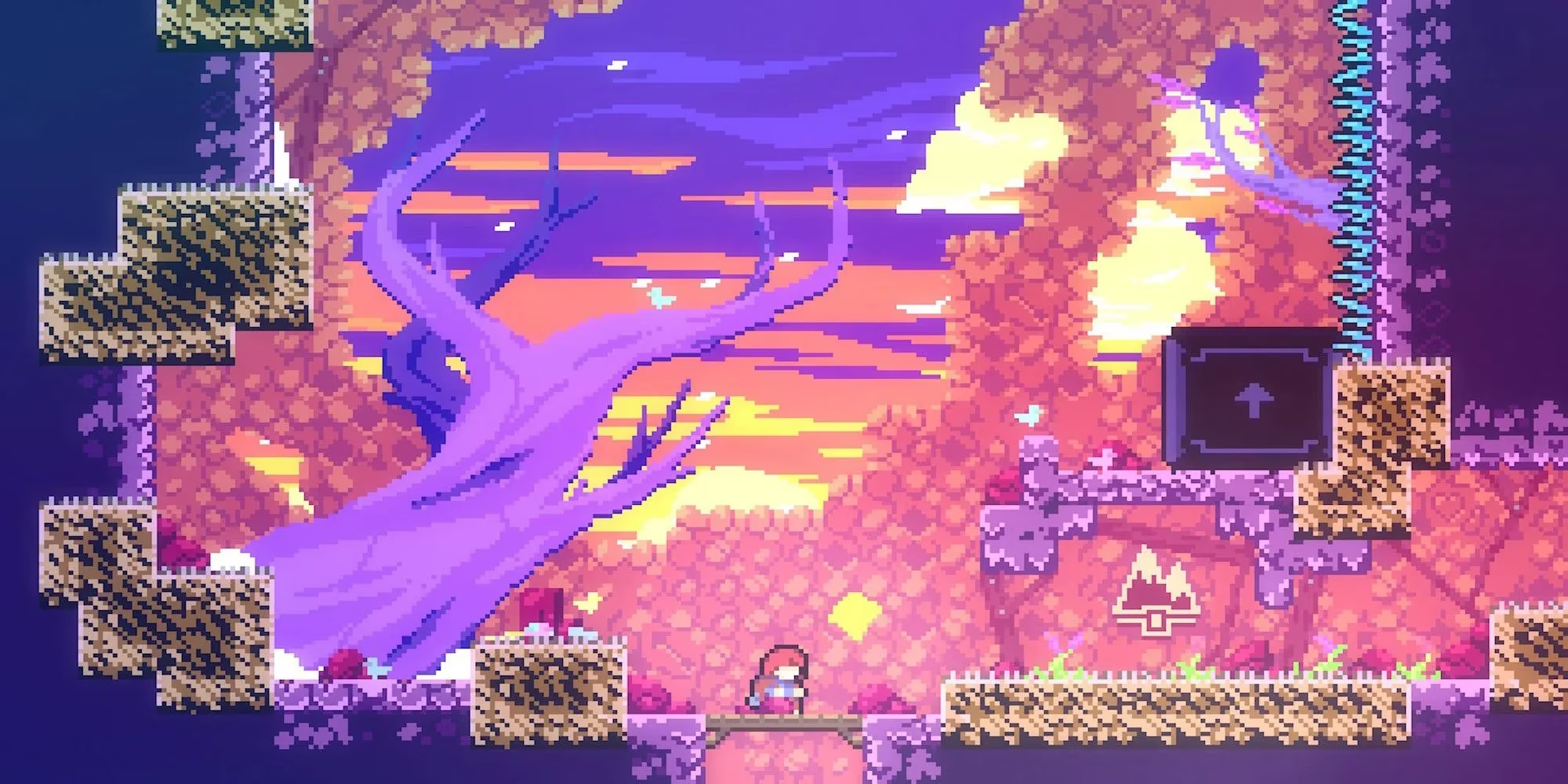
Celeste is a masterclass in platforming design, partly because of how it handles the player's inevitable mistakes. The game is brutally difficult, with precision jumps and complex sequences that demand perfect execution. However, its fail state is nearly instantaneous. Upon death, the player respawns at the beginning of the current screen in a fraction of a second, with no loading screens or progress loss. This design eliminates frustration and maintains a relentless, addictive pace. It encourages a mindset of rapid experimentation, where failure is a low-cost opportunity to try a new approach. Celeste understands that the fun is in the attempt, not in the punishment for failing, creating a perfectly tuned loop of challenge and immediate retry.
🥃 Disco Elysium: Failing Forward with Style
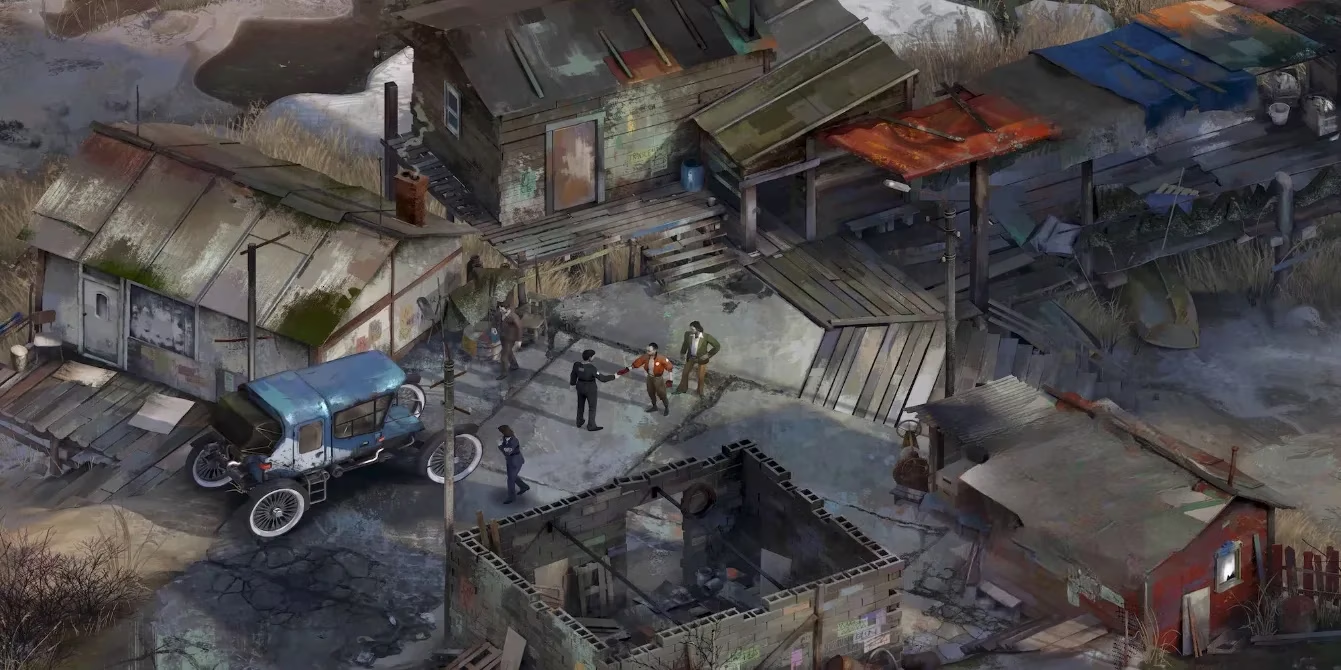
In the groundbreaking CRPG Disco Elysium, failure is not a state to avoid but a narrative path to embrace. Playing as the amnesiac, substance-addled detective Harrier Du Bois, the game offers a staggering array of choices, many of which lead to spectacular, hilarious, or tragic failures. You can fail a skill check to open a door, have a heart attack while trying to retrieve your necktie, or utterly destroy your credibility during an interrogation. Yet, these failures often lead to new story beats, character insights, and unique dialogue options that a "successful" playthrough would miss. The game rewards curiosity and role-playing over optimal performance, making the journey of a hopeless "hobocop" as valid and enriching as that of a brilliant sleuth.
⚡ Neon White: The Thrill of the Ghost
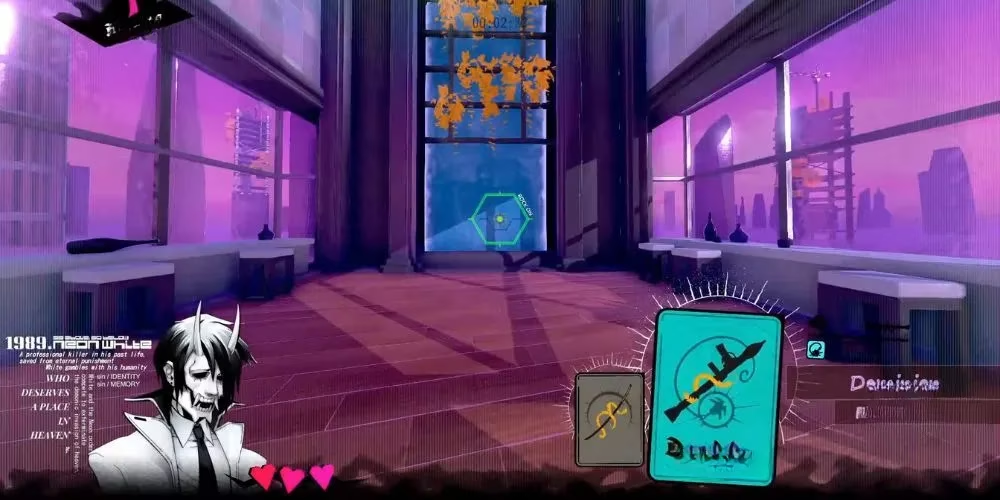
Neon White transforms failure into a relentless pursuit of personal perfection. As a heaven-bound assassin, the goal is to speedrun through levels, using a deck of cards that serve as both weapons and movement abilities. Failure here is defined by speed—simply completing a level isn't enough; you must beat par times and ultimately, your own best "ghost." Each failed attempt is a data point, teaching you about better angles, more efficient card usage, and hidden shortcuts. The game becomes a puzzle of motion, where the only true opponent is your previous best time. This focus on self-improvement and millisecond-shaving turns every "loss" into a direct lesson for the next, more successful run.
💥 Burnout Paradise: Wreckreation

The Burnout series, and particularly Burnout Paradise, built its identity on making automotive destruction a core part of the fun. While other racing games penalize crashes, Burnout celebrates them with cinematic slow-motion, crunching metal, and flying debris. A high-speed wreck is a spectacle, a momentary pause in the chaos that is satisfying in its own right. Mechanically, the game's "boost" system is often replenished by driving dangerously and causing near-misses or takedowns, meaning aggressive, risk-taking play is encouraged. The dedicated "Showtime" crash mode makes causing the most expensive pile-up possible the entire goal. Burnout Paradise brilliantly inverts racing game logic, proving that sometimes, the most fun you can have is in spectacularly failing to keep your car in one piece.
👴 Sifu: The Cost of Wisdom

Sifu presents one of gaming's most ingenious failure mechanics. The protagonist wears a magical talisman that revives them upon death—but at the cost of years of their life. With each death, they age, becoming more powerful and dealing more damage, but also losing a portion of their maximum health. This creates a fascinating risk-reward dynamic. Early failures make you stronger in the short term, turning you into a glass cannon capable of devastating combos. However, aging too much makes subsequent mistakes far more costly, as your dwindling health pool offers less room for error. Failure is literally baked into the progression system, making each run a unique story of sacrifice, adaptation, and the literal price of vengeance. It embodies the martial arts trope that wisdom and power come with age, but so does fragility.
Conclusion: The Pedagogy of Play
These diverse titles illustrate a fundamental truth about modern game design: failure is a feature, not a bug. When implemented thoughtfully, it can:
-
Drive Narrative (Hades, Disco Elysium)
-
Facilitate Learning (Outer Wilds, Session, Neon White)
-
Enhance Atmosphere (Dead Space 2)
-
Refine Pacing (Celeste)
-
Create Unique Progression (Sifu)
-
Offer Alternative Fun (Burnout Paradise)
-
Deepen Accomplishment (Elden Ring)
As we move further into the 2020s, the most memorable and respected gaming experiences are often those that respect the player's intelligence and resilience, using failure not as a punishment, but as a teacher, a storyteller, and a core pillar of engaging gameplay. The next time you see a "You Died" screen, consider it not an end, but an invitation to a richer, more meaningful experience.