In 2026, the legacy of FromSoftware's landmark title, Elden Ring, continues to be defined by its most punishing encounters. The discussion around game difficulty, particularly the distinction between mandatory and optional challenges, remains central to the player experience. While the base game presented formidable foes, the Shadow of the Erdtree expansion two years prior elevated this to a new zenith with its conclusive battle, setting a benchmark for intensity that still resonates with the community today.
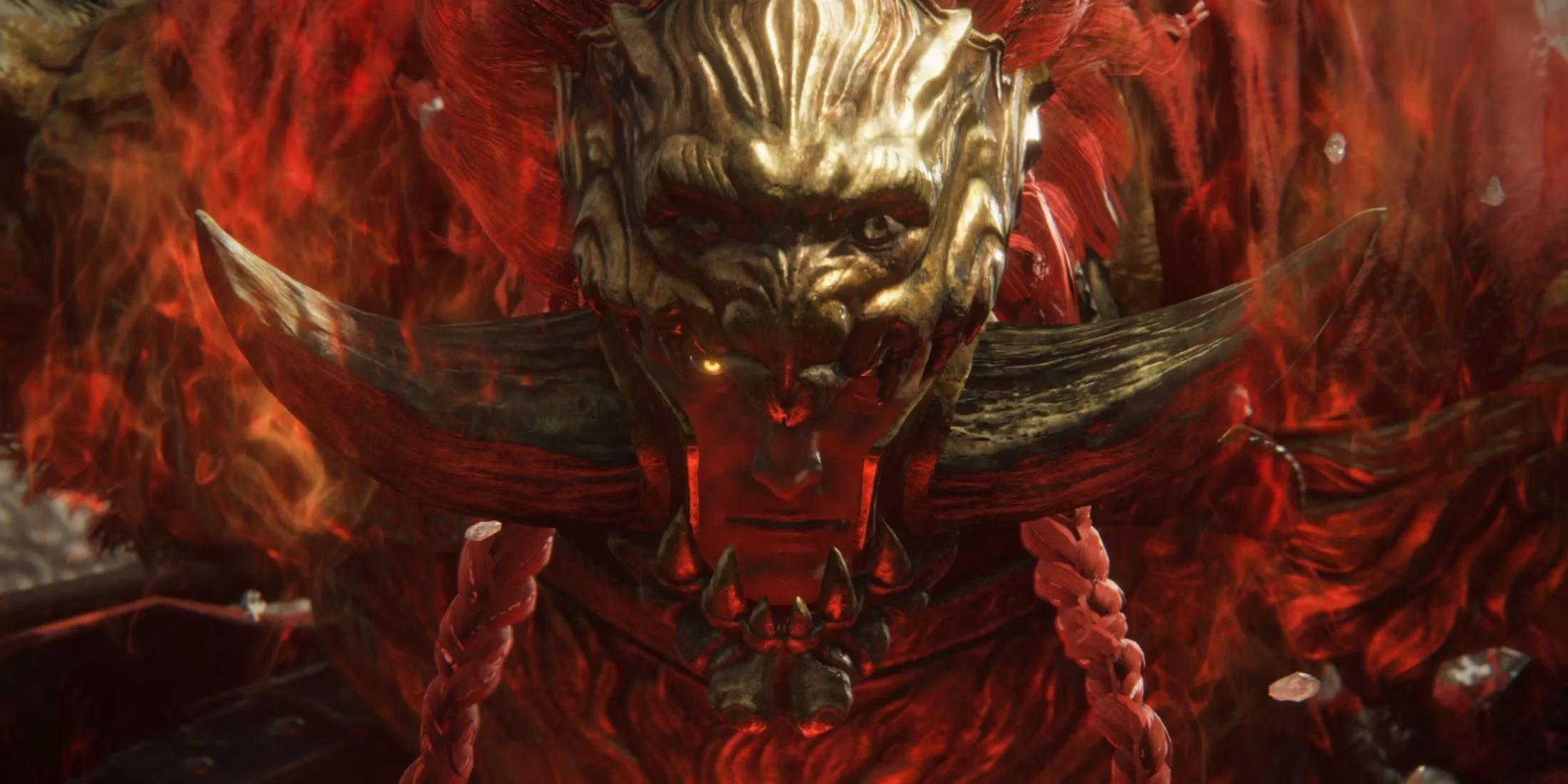
The Unforgiving Finale: Promised Consort Radahn
Promised Consort Radahn stands as the climactic encounter of the Shadow of the Erdtree DLC, effectively serving as the "final" final boss for the entire Elden Ring saga. This position naturally implied a severe test, but the reality proved far more relentless than many anticipated. The fight presented a staggering escalation in difficulty, characterized by devastating attack patterns that were notoriously challenging to evade. The second phase, in particular, was infamous for its overwhelming visual effects from Faith-based abilities, which often obscured attack telegraphs, making reactions feel nearly impossible. For players who had spent hours journeying through the expansion and empowering their characters with Scadutree Fragments, hitting this "brick wall" could feel like an abrupt and frustrating halt to their momentum.
The mandatory nature of this battle sparked significant debate. Critics argued that Radahn's design crossed a line, being "hard for the sake of being hard" or outright unfair, especially in the game's initial, pre-nerf state. This contrasted sharply with the reception of other supremely difficult bosses in FromSoftware's history. The core issue identified was one of context: a brutally challenging boss that players must defeat to complete the story is often perceived differently than one they can choose to avoid.
The Queen of Optional Challenges: Malenia, Blade of Miquella
Before the arrival of Shadow of the Erdtree, the title of Elden Ring's toughest boss was almost universally bestowed upon Malenia, Blade of Miquella. Her design exemplifies FromSoftware's philosophy regarding optional, endgame challenges. Tucked away in the concealed and demanding region of Miquella's Haligtree—an area itself requiring significant progression to access—Malenia is a battle reserved for those seeking the ultimate test.
Her combat style is a masterpiece of graceful ferocity, featuring one of the studio's most difficult movesets to counter. Key elements that define her infamy include:
-
Waterfowl Dance: A rapid, multi-stage flurry of slashes that is notoriously difficult to avoid completely.
-
Scarlet Rot Buildup: Her attacks inflict Scarlet Rot, applying continuous pressure and health drain.
-
Health Regeneration: She restores health with every hit she lands, punishing defensive mistakes severely.
Defeating Malenia feels like overcoming the base game's supreme challenge, a triumph that grants immense bragging rights. Her status as an optional encounter frames her extreme difficulty not as a roadblock, but as a reward for mastery.
Mandatory vs. Optional: A Philosophical Divide
The contrasting receptions of Radahn and Malenia highlight a crucial design philosophy in soulslikes. This can be summarized as follows:
| Boss Type | Player Perception | Primary Function | Example |
|---|---|---|---|
| Mandatory & Extremely Hard | Often seen as a frustrating roadblock. | Gatekeeper to narrative conclusion. | Promised Consort Radahn |
| Optional & Extremely Hard | Viewed as a prestigious, bragging-rights challenge. | Reward for player skill and exploration. | Malenia, Blade of Miquella |
This divide is key to understanding community feedback. Had Promised Consort Radahn been positioned as an optional boss—a hidden challenge within the Land of Shadow—the discourse would likely have mirrored that of Malenia. Players would have approached him on their own terms, prepared for an optional ordeal, and his victory would have been a badge of honor. Instead, as the culmination of a required journey, his difficulty risked overshadowing the narrative and experiential payoff for a segment of the player base.
The Lasting Impact on Game Design Discourse
Years later, the discussions ignited by these two bosses continue to influence conversations about difficulty balancing in AAA action RPGs. 🎮 The Elden Ring community still references them as the twin peaks of the game's challenge. The lessons are clear:
-
Context is King: The placement of a boss significantly impacts how its difficulty is received.
-
Clarity is Crucial: While complexity is welcome, attacks must remain readable amidst visual spectacle.
-
Choice Empowers: Giving players agency over when to engage with the hardest content fosters a more positive sense of accomplishment.
In the end, both Malenia and Promised Consort Radahn cemented their places in gaming history as defining challenges. One represents the pinnacle of voluntary mastery, the other the ultimate mandatory trial. Their legacy is a testament to FromSoftware's commitment to uncompromising design and the vibrant, passionate debates such design inevitably inspires among players worldwide. The shadow they cast over the genre remains long, ensuring that the question of "how hard is too hard?" will be debated for years to come.