I was casually exploring the Shaded Castle in Elden Ring, a location I've visited many times since the game's release, when something truly unsettling happened. As I navigated the grassy corridors of those ancient stone ruins, a strange texture glitch brought the statues behind me to life—or at least gave a terrifying illusion of movement. Their heads seemed to subtly turn, following my character's path back and forth. It was a moment straight out of a horror movie, and I wasn't alone in my fright. This eerie phenomenon, shared widely by players like Valerica-D4C, has reignited discussions about the hidden, sometimes accidental, horrors lurking within FromSoftware's expansive dark fantasy world. Even now, years after its launch, Elden Ring continues to surprise and unsettle us with unexpected discoveries.
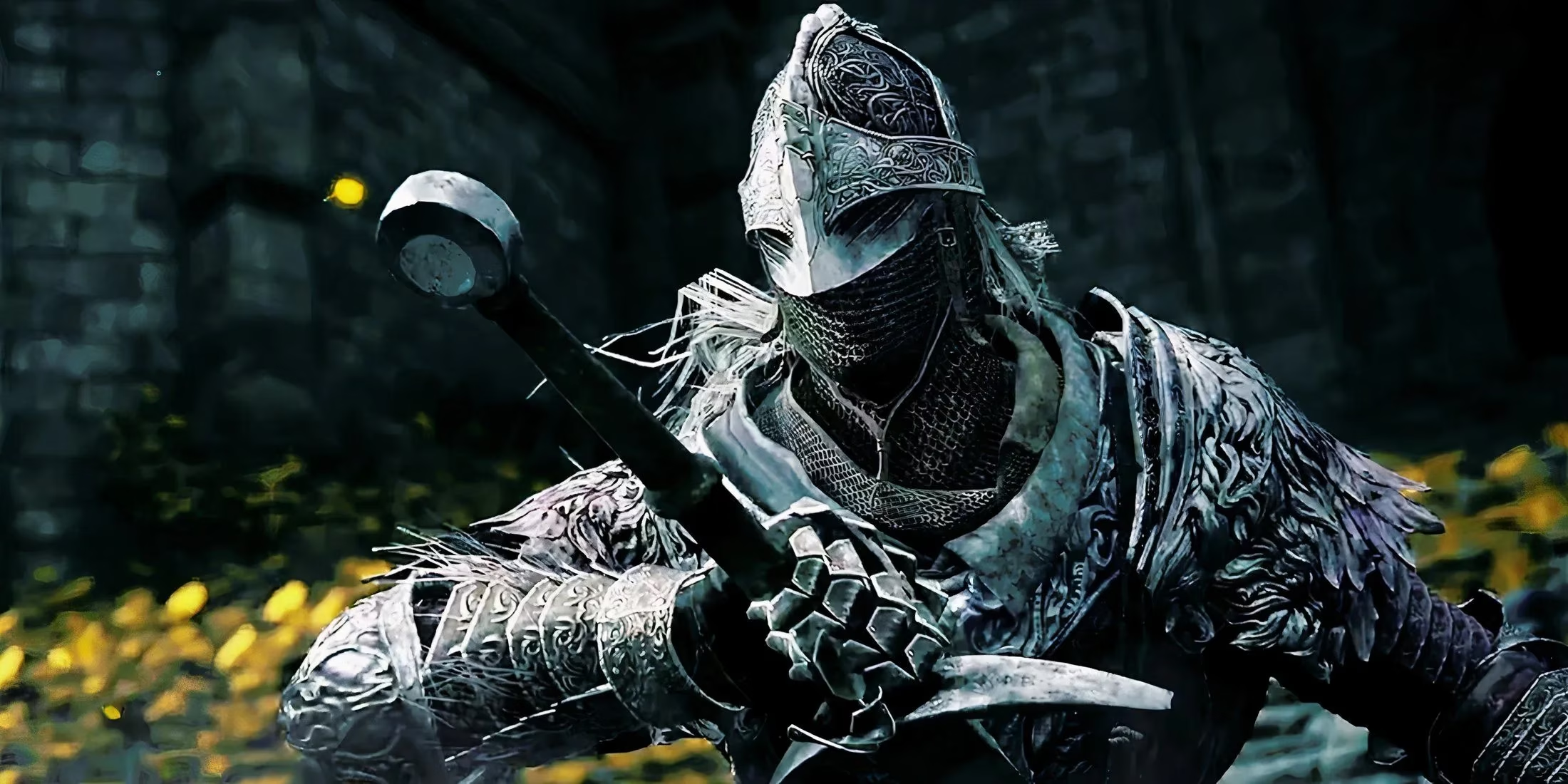
The heart of this spooky encounter lies in a specific texture-loading bug within the Shaded Castle. 🧐 When players move a certain distance away from the detailed stone statues, the game's engine sometimes fails to load the high-resolution textures properly. Instead, it switches to a lower-resolution version or a less detailed polygon model to maintain performance. This technical shortcut, usually invisible, created a perfect storm in this location. The sudden 'pop' or shift in the statue's appearance as textures despawned and respawned created the uncanny impression that the statues' heads were moving, eerily reminiscent of the 'Weeping Angels' from Doctor Who. The community was quick to diagnose the issue, with eagle-eyed players on forums dissecting the clip frame by frame. One theory suggested it's a classic Level of Detail (LOD) switching glitch, where the transition between high and low-detail models isn't seamless. Another pointed to specific memory or VRAM issues that could exacerbate the effect. While mods exist that offer thousands of HD textures to overhaul the game's visual fidelity—potentially fixing such bugs—this particular glitch has become less of a nuisance and more of a celebrated, chilling Easter egg.
Let's talk about the setting, because the Shaded Castle is no ordinary place. Located in the northern Altus Plateau, its environment is a masterclass in atmospheric dread:
-
Eerie Architecture: Crumbling stone walls, overgrown vegetation, and a perpetual, gloomy haze.
-
Aggressive Inhabitants: The castle is patrolled by tough enemies, setting a tense mood long before you reach the boss.
-
The Final Boss: At the summit dwells Elemer of the Briar, a boss whose design and mechanics amplify the horror. His magic-infused blades glow with a menacing red hue, and his lore paints him as a brutal hunter of bell bearings—a slasher villain stalking his own dark castle. This context makes the statue glitch feel less like a random bug and more like a feature, a subtle environmental horror that perfectly complements the location's vibe. 🏰⚔️
This incident is far from an isolated case of Elden Ring dipping its toes into horror. The community has long acknowledged the game's latent capacity for terror beyond its standard combat challenges. A previous viral clip showcased the sheer panic induced by unexpected enemy ambushes in pitch-black caves, proving the game's sound design and pacing can rival dedicated horror titles. Furthermore, the release of the Shadow of the Erdtree DLC introduced areas like the Abyssal Woods, which many fans believe is FromSoftware's strongest argument for creating a full-fledged survival horror game. That location, with its oppressive silence, twisted flora, and unseen threats, demonstrates a deliberate and effective use of psychological horror. The weeping angel statues, though born from a glitch, fit right into this emerging narrative. They tap into a primal fear of being watched by the inanimate, a theme horror games have exploited for decades.
| Elden Ring's Horror Elements | Description | Player Reaction |
|---|---|---|
| Weeping Angel Statue Glitch | Texture LOD bug causing statue heads to appear animated. | "Sure gave me a scare," shared by many as unnerving. |
| Abyssal Woods (DLC) | Oppressive, silent forest with eerie ambiance and hidden dangers. | Cited as proof of FromSoftware's horror game potential. |
| Elemer of the Briar | Boss with slasher-movie villain aesthetics and brutal attacks. | Creates intense, horror-fueled boss fight tension. |
| General Ambiance | Lonely, decaying worlds with sudden, deadly ambushes. | Consistently generates moments of dread and surprise. |
Reflecting on this, it's fascinating how a simple texture bug can evolve into a memorable community moment. It speaks to the power of Elden Ring's foundational atmosphere. The world is so meticulously crafted to feel ancient, lonely, and threatening that when a technical anomaly occurs, our minds are primed to interpret it as part of the intended experience—a new kind of enemy or environmental hazard. We, the players, become co-authors of the horror, our imaginations filling the gaps left by the glitch. It's a testament to the game's enduring legacy that in 2026, we're still sharing and dissecting these unexpected, player-driven stories. Whether facing the deliberate terrors of the DLC or jumping at the accidental movement of a pixelated statue, Elden Ring proves that true horror often lies not in what is explicitly shown, but in what we believe we see in the shadows. 👻✨
So, the next time you're traversing the Lands Between, pay close attention to the scenery. A flickering torch, a distant sound, or even a seemingly static statue might just hold a new secret—or a new scare. The line between bug and feature, between fantasy and horror, remains beautifully blurred in this timeless masterpiece.