In the annals of gaming history, few mounts have ever been as simultaneously beloved and begrudged as Elden Ring's spectral steed, Torrent. This phantom companion, summoned with a mere whistle, was FromSoftware's audacious answer to the vast, unforgiving expanses of the Lands Between. As 2026 unfolds and the gaming world eagerly anticipates the developer's next masterpiece, the legacy of Torrent stands as a colossal, unignorable monument—a brilliant but flawed experiment in blending Soulslike brutality with open-world freedom. The lessons carved from this experience are not mere footnotes; they are screaming directives for the future of the genre. FromSoftware's inaugural foray into an open-world Soulslike shattered conventions, but the ghost of its spectral mount haunts every discussion about what comes next.
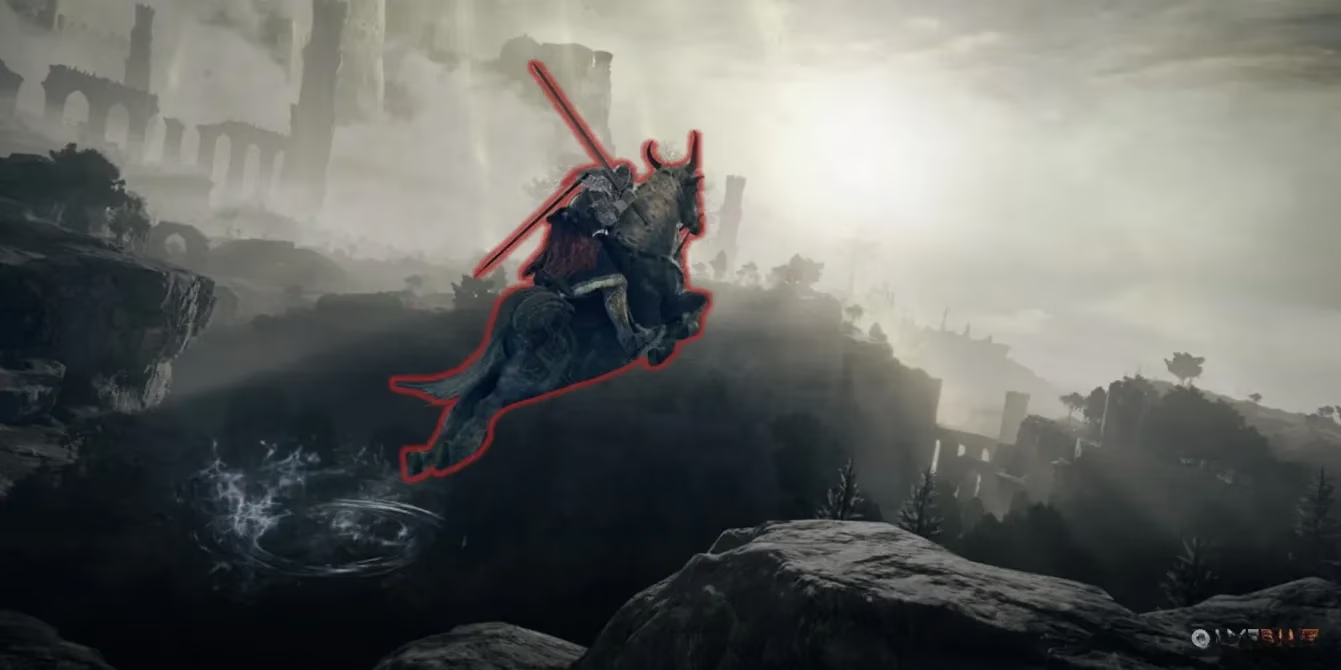
FromSoftware's design scripture has always been one of integrated hardship. Essential mechanics are never free; they are bound to sacred items. The Estus Flask was a lifeline, not a given. The Healing Gourd was a treasure, not a right. Elden Ring, in its infinite wisdom (or madness), applied this same draconian logic to world traversal itself. The Spectral Steed Whistle wasn't just a tool; it was a covenant. To call upon Torrent, players had to sacrifice precious inventory or pouch real estate—a deliberate, genius tax on convenience. This single decision screamed FromSoftware's awareness: a mount in a Souls game was a destabilizing force. It allowed for glorious hit-and-run tactics against towering bosses and a swift escape from certain, humiliating death. By tethering it to an item slot, the developers attempted to anchor this revolutionary power to their classic, weighty design philosophy. It was a first, tentative step in a dangerous dance.
Yet, for all its initial brilliance, the system revealed cracks under pressure. The true crucible of frustration wasn't summoning Torrent—it was losing him. When Torrent fell in battle, a jarring, immersion-shattering prompt would freeze the action: "Use a Flask of Crimson Tears to revive Torrent?" This wasn't a suggestion; it was an interrogation at sword-point. In the heat of a desperate retreat or a chaotic boss fight, this pop-up became a notorious party crasher. The community's reaction was volcanic! 😠
-
Modders rose in rebellion, creating patches to auto-revive Torrent, silencing the prompt forever.
-
Social media drowned in memes depicting the prompt as the real final boss of Elden Ring.
-
Players lamented the wasted healing charge—a resource more precious than gold—on a steed that would likely die again moments later.
This seemingly minor interface issue exposed a profound disconnect. The punishment felt arbitrary, a friction point that served no purpose but to annoy. It was a lesson written in the fiery letters of player feedback: do not break the flow. For a studio that masters seamless, punishing gameplay, this was an uncharacteristic stumble.
So, what does this mean for FromSoftware's inevitable next open-world venture in 2026 and beyond? The path forward is illuminated by Torrent's spectral glow. The mount concept is a resounding success, but its execution needs alchemy. Future designs must evolve beyond Elden Ring's template. Imagine a system where the mount's "whistle" is not just an item, but a character-bound ability that grows with the player. Through quests or upgrades, players could earn the power to:
| Potential Upgrade Path | Effect | Player Benefit |
|---|---|---|
| Steed's Resilience I | Reduces Flask cost to revive by 50% | Conserves vital healing resources |
| Spectral Bond | Removes the confirmation prompt entirely | Preserves immersive, fluid gameplay |
| Ethereal Return | Auto-revives Torrent after a cooldown (e.g., 60 sec) | Eliminates frustration during exploration |
| Legendary Ascension | Torrent becomes unkillable, but can be temporarily disabled by heavy damage | The ultimate reward for mastery |
Such a progression system would stay true to Soulslike principles—rewarding mastery and investment—while sanding down the rough edges that plagued Torrent. The goal isn't to make the game easier, but to make its systems smarter and more respectful of the player's engagement. The mount should feel like a trusted partner, not a temperamental rental with a problematic lease agreement.
Furthermore, the concept of mounted combat, only lightly explored, could be deepened. What if specific weapon arts or spells were designed exclusively for horseback? What if Torrent could be briefly empowered or armored? The possibilities are as vast as the open worlds FromSoftware will surely craft again.
In the end, Elden Ring's Torrent was a magnificent first draft. It proved that the deliberate, methodical pace of a Soulslike could survive and thrive in a sprawling landscape. But its stumbles in moments of death and revival are the gospel that FromSoftware must preach from for their next project. The lesson is clear: grant players the sublime freedom of a spectral steed, but never, ever interrupt their journey with a bureaucratic pop-up. The future of Soulslike navigation depends on it. The ghost of Torrent demands it.