In the vast, haunting world of Elden Ring, players have spent countless hours battling monstrous foes and uncovering the deepest secrets of the Lands Between. Yet, even in 2026, years after its release and subsequent DLC, the game continues to yield chilling discoveries that send shivers down the spines of even the most seasoned Tarnished. One such revelation, hidden in plain sight for so long, concerns the gruesome weapon of one of the game's most terrifying demigods: Mohg, Lord of Blood. How could a detail so macabre have been overlooked by millions for so long?
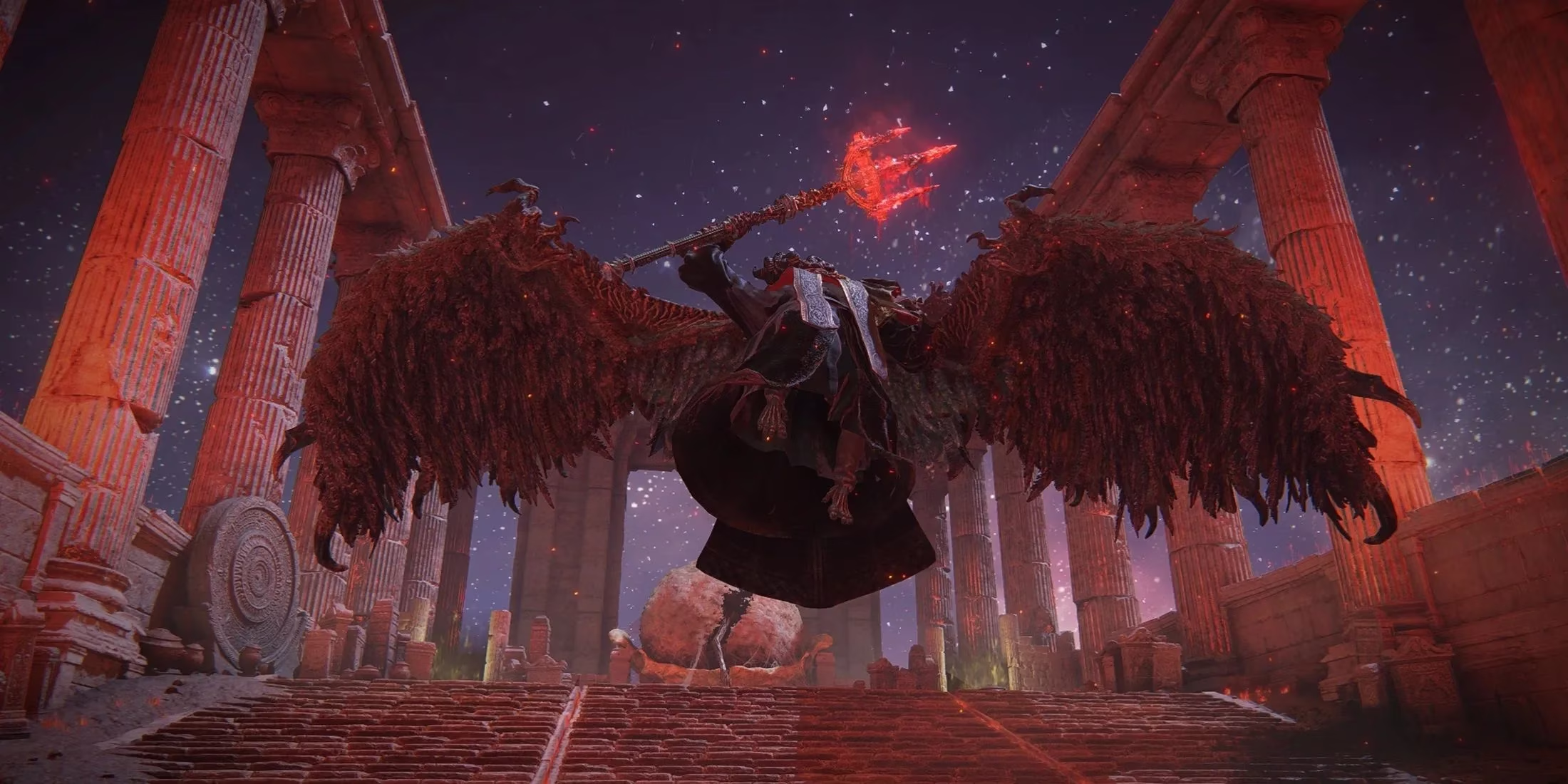
The story began when a keen-eyed player, known online as catsnstuffz, shared a startling find on the Elden Ring subreddit. They posted a stark, black-and-white close-up of Mohg's trident-like spear. The accompanying caption was simple yet profound: "Mohg's spear appears to be covered in tiny bodies. Never seen this discussed." This wasn't a trick of the light or a graphical glitch. Upon closer inspection, the community was horrified to see the truth. The entire surface of the spear's blades was not textured with mere bumps or molten wax, as many had assumed, but was instead a mass of faceless, contorted humanoid forms, seemingly melted and fused together into a dripping, wretched substance.
The reaction was one of collective awe and disbelief. How had this grotesque detail remained a secret for so long? Fans flooded the discussion, sharing their previous misconceptions. Many admitted they had always thought the texture was simply decorative rivulets of blood, cursed wax, or some form of ornate, gothic metalwork. The realization that it was, in fact, a tapestry of tormented souls was a testament to FromSoftware's signature brand of subtle, environmental storytelling. As one astute Redditor quipped, "What isn't covered in bodies in Elden Ring?"—a darkly humorous nod to the game's pervasive themes of suffering and decay.
This discovery cast Mohg's entire character in an even more sinister light. The Lord of Blood, an optional boss residing in the nightmarish Mohgwyn Palace, is already a figure of immense dread. His goals are perverse, his magic is devastating, and his design—a hulking figure crowned with a ghastly array of horns—is the stuff of nightmares. But his weapon is now understood as more than just a tool for combat; it is a monument to his depravity. The spear, officially named the "Bloodboon Ritual Spear," is not merely a weapon but a reliquary of suffering, a physical manifestation of the countless victims sacrificed in his bid to become Miquella's consort and ascend to godhood.
💀 Key Details of the Discovery:
-
Location: The detail is present on the spear's model in-game.
-
Appearance: Countless small, human-like figures are fused into the metal.
-
Common Misconception: Previously mistaken for melted wax, blood residue, or ornate metalwork.
-
Lore Implication: Directly ties to Mohg's title as the "Lord of Blood" and his ritualistic sacrifices.
The community quickly drew parallels to other nightmarish elements in the game. Many compared the spear's aesthetic to the infamous Blasphemous Blade, another weapon known for its grotesque, body-horror design. This discovery also explained why even the most dedicated fan recreations, including an incredibly detailed Mohg cosplay that perfectly captured his grand pauldrons and intricate robes, had missed this finer point. The detail was simply too subtle, too integrated into the weapon's overall hellish aesthetic, to be noticed without intense scrutiny.
This find is a brilliant example of the collaborative power of the Elden Ring community and the meticulous, layered world-building crafted by Hidetaka Miyazaki and George R. R. Martin. It's a detail that requires no quest marker or item description to explain it. Its horror is purely visual, speaking volumes about the character who wields it. The spear tells a story of endless, silent agony, a story that was waiting patiently for someone to look close enough.
| Aspect | Before Discovery | After Discovery |
|---|---|---|
| Weapon Texture | Ornate metal/Blood residue | A mass of fused, tormented bodies |
| Narrative Weight | A powerful boss weapon | A relic of genocide and sacrilege |
| Player Perception | Challenging boss fight | Deeply psychological horror encounter |
| Lore Integration | Implied through spells and dialogue | Explicitly shown through environmental detail |
So, what does this mean for players facing Mohg in 2026? The fight remains one of the game's greatest challenges, a brutal test of skill required to access the realms of the Shadow of the Erdtree expansion. But now, every swing of that terrible trident carries a new weight. Each time Mohg plunges his spear into the ground to summon circles of bloodflame or attempts to impale the player, one can't help but imagine the silent screams of the countless souls bound within the metal. It transforms the battle from a test of reflexes into a confrontation with a palpable, historical evil.
The world of Elden Ring is built on such secrets. From hidden paths uncovered after a thousand hours to cryptic item descriptions that rewrite character motivations, the game rewards obsessive observation. The horror of Mohg's spear is a masterclass in this design philosophy. It asks a simple, unsettling question: If such a terrifying truth was hidden on the weapon of a major boss for years, what other screams are waiting to be heard in the silence of the Lands Between? The hunt for understanding, it seems, is a journey with no true end, much like the cursed cycle of the Erdtree itself.