It's 2026, and the gaming landscape has been irrevocably shaped by Elden Ring's monumental success. However, fans waiting for a direct sequel might be in for a surprise. FromSoftware, the legendary studio behind the 2022 Game of the Year, has charted a new course—one that places Elden Ring: Nightreign at its forefront as a bold, experimental step rather than a conventional follow-up. This move signals a significant shift in the studio's philosophy, actively growing by entrusting new visions to different directors. While Hidetaka Miyazaki's creative genius remains the studio's cornerstone, he has stepped back from the helm of every project, allowing talents like Junya Ishizaki to take the lead on Nightreign. This raises a fascinating question: is the era of monolithic, Miyazaki-led epics giving way to a period of diverse, director-driven experiments?
Nightreign: The Experimental Spin-Off
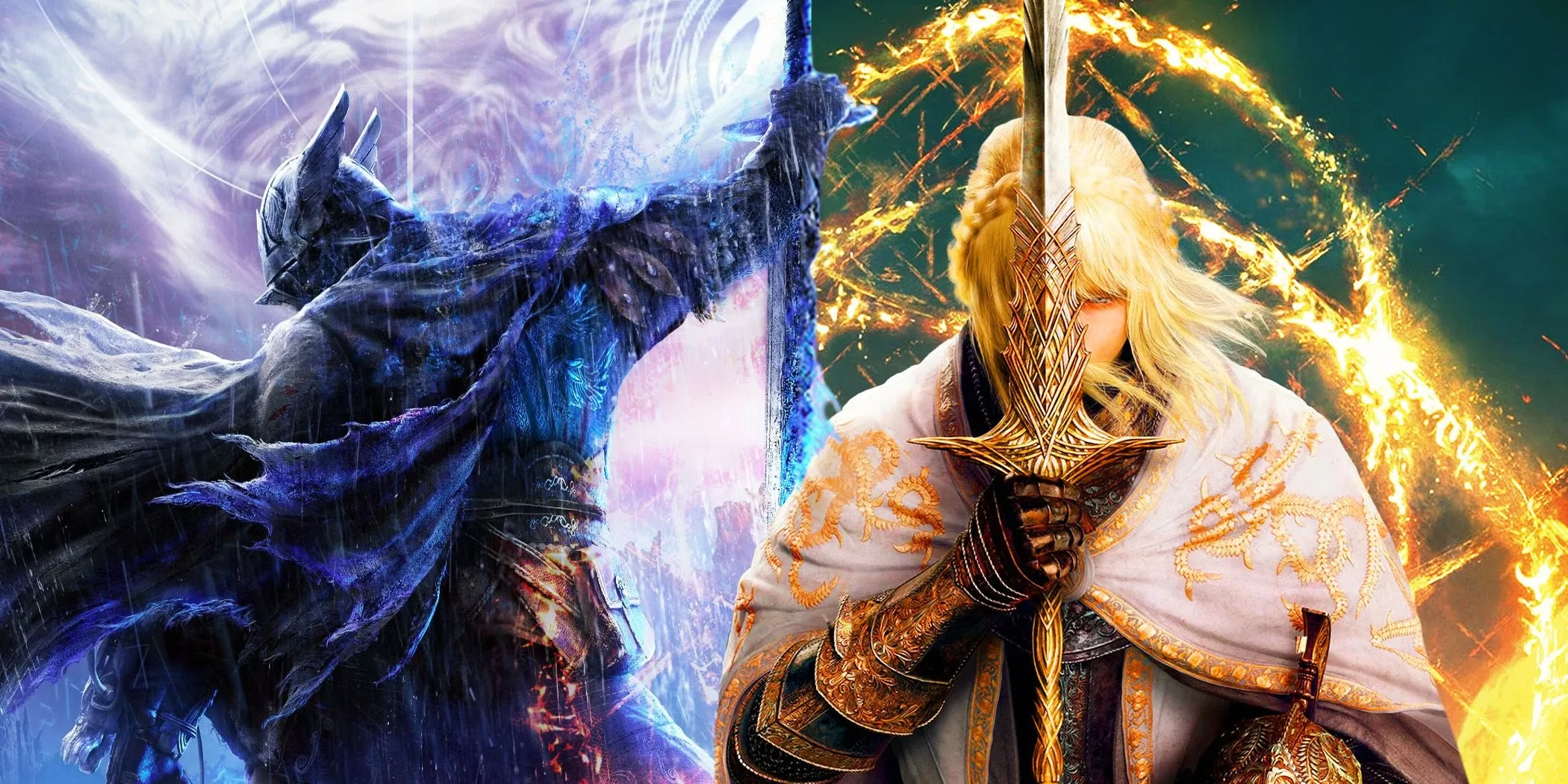
So, what exactly is Elden Ring: Nightreign? First and foremost, it is not Elden Ring 2. When it was unveiled at the 2024 Game Awards, it caused some confusion. Instead of another vast, hundred-hour open-world epic, Nightreign is a smaller-scale, experimental roguelite title. This confirms Miyazaki's own statements from late 2024 that a true sequel was not in development, though the IP would see further use. Miyazaki's direct involvement was limited to the initial concept stages, with Junya Ishizaki steering the project to its release in May 2025.
The game's setting itself is a departure. It doesn't just revisit the Lands Between; it reimagines it. Taking place in an alternate reality, familiar locations like Limgrave are now called Limveld, and characters from the Dark Souls series make unexpected appearances. This "anything goes" approach suggests Nightreign is a playful, non-canonical venture that uses the Elden Ring IP while leaving the main timeline untouched. It's a creative sandbox, asking: what happens when you break the established rules of a beloved world?
Why FromSoftware Might Not Go "Big" Again
To understand this shift, one must consider the sheer scale of Elden Ring and its Shadow of the Erdtree DLC. Miyazaki himself described their development as the studio's biggest challenge, a massive undertaking knowingly embraced to achieve a true sense of grand adventure. The scope was planned, not accidental. But such an endeavor is exhausting. The interviewer from GameWatch even suggested that Shadow of the Erdtree felt like an ending, a sentiment Miyazaki did not refute.
Furthermore, key collaborators have moved on. George R. R. Martin was not involved with Nightreign, as confirmed by Ishizaki, and his notes alone were used for Shadow of the Erdtree's lore. With Martin occupied elsewhere, the foundational world-building partnership that helped birth Elden Ring is currently dormant. Could a true sequel even exist without it? This, combined with the studio's focus on multiple new projects, strongly indicates that a game of Elden Ring's magnitude is off the table for the foreseeable future.
A Return to Roots and New Horizons
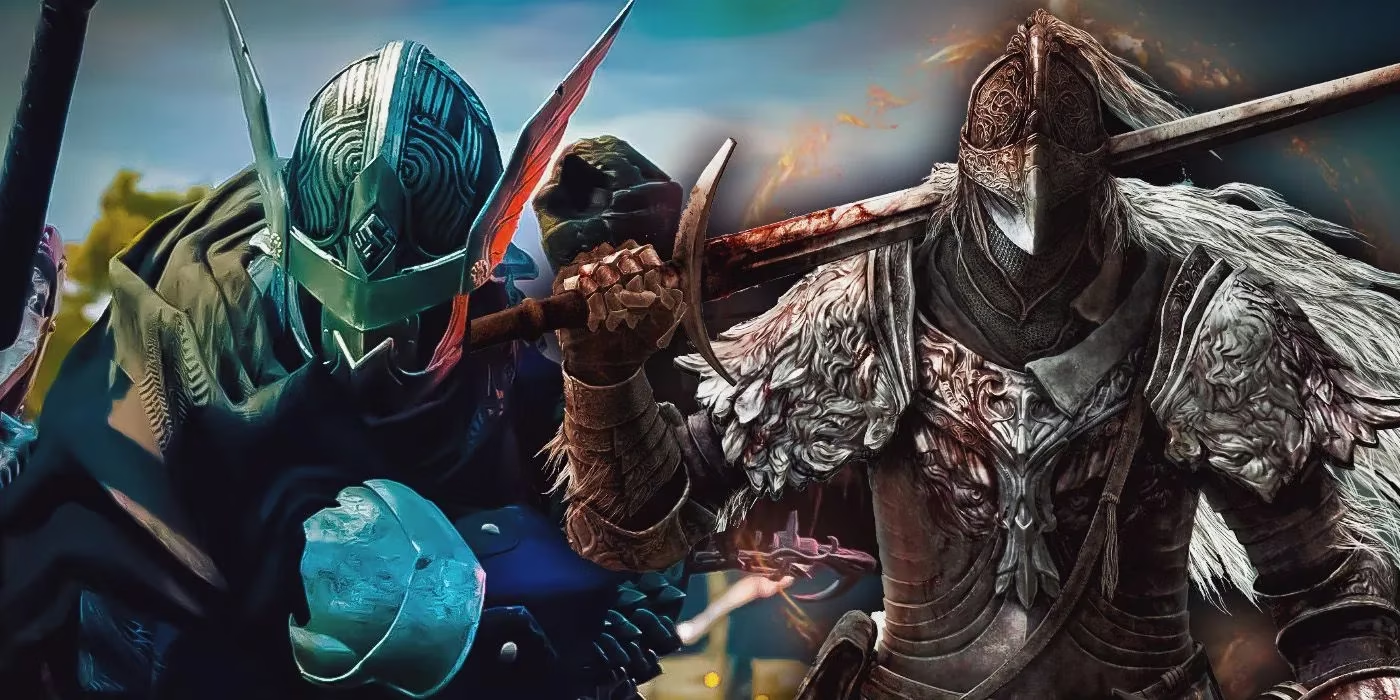
With multiple projects in the pipeline, FromSoftware's strategy appears to be one of diversification and a potential return to its core strengths. The studio might not currently have the resources for another Elden Ring-scale project, even for a new IP. So, what could these new projects be?
-
Reviving Old Franchises: The successful revival of Armored Core with its sixth installment proved the studio excels beyond Soulsborne games. Could Armored Core 7 or another dormant IP be next?
-
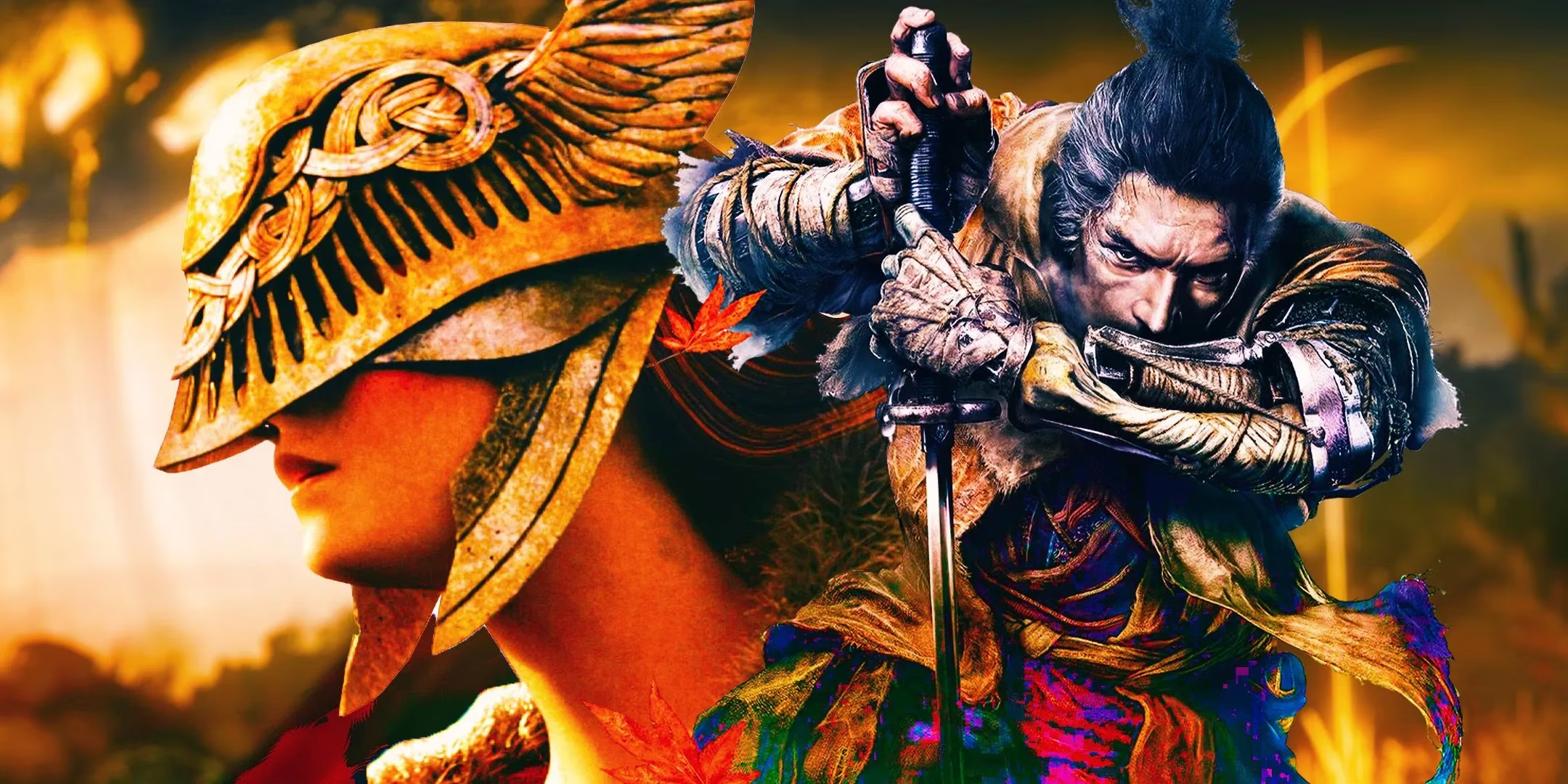
Refined Soulsborne Experiences: There's a clear opportunity to return to the more intricate, interconnected Metroidvania-style map design that fans praised in Dark Souls and Sekiro. A common critique of Elden Ring was that its vast open world sometimes diluted the density of its challenges and environmental storytelling. A new Soulsborne IP with winding, connecting maps on a smaller, more focused scale seems a likely and exciting direction.
-
Pure Experimentation: Nightreign itself is the prime example. Its roguelite structure is a stark departure from the studio's norms, suggesting FromSoftware is in a testing phase, seeing what new genres and formats resonate with players.
What Does Nightreign Signal for FromSoftware's Future?
In 2026, looking back at Nightreign's release and the studio's current trajectory, its role becomes clearer. It was never meant to be Elden Ring 2. Instead, it is a harbinger of a more experimental, agile FromSoftware. The studio is leveraging its most successful IP to test new waters—smaller-scale projects, new genres, and fresh directorial voices—without the immense pressure of following up a generation-defining game directly.
This is a studio in transition. After the monumental effort of Elden Ring and its DLC, it's only natural to explore, experiment, and recharge. For fans, this means the wait for a true successor to Elden Ring will be long, but the journey there will be filled with surprising and potentially brilliant new games that push the studio's boundaries in unexpected ways. The Age of Fracture in the Lands Between mirrors FromSoftware's own creative state: fragmented, diverse, and ripe with potential for new legends to be born.
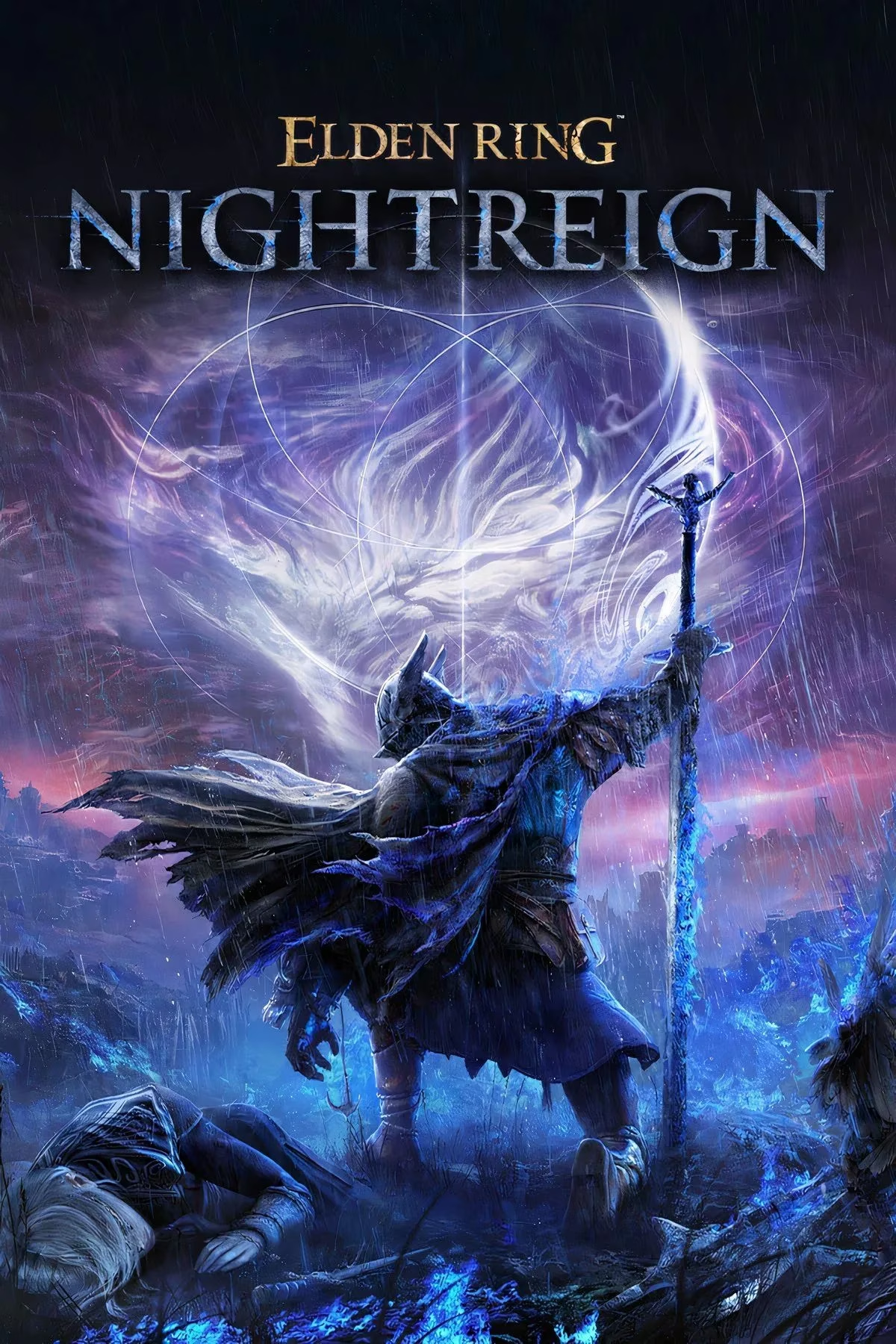
As FromSoftware charts this experimental path, players eager to revisit the Lands Between or sharpen their skills for the challenges of Nightreign will naturally look for ways to enhance their time in these demanding worlds. Whether that means stocking up on Runes to perfect a new build or ensuring you have the resources to stay competitive in co-op sessions, a little preparation goes a long way in a genre that punishes the unprepared. For those occasions, platforms like Lootbar provide a convenient and reliable option for topping up in-game currency, so players can focus on mastering boss patterns and uncovering secrets rather than grinding for supplies.
The studio's future direction may still be a mystery, but one thing remains certain: the community's hunger for FromSoftware's unique brand of challenge is as strong as ever. While we wait for whatever bold experiment comes next, the existing catalog continues to thrive—and having the right tools and resources at your disposal ensures you can dive into every new adventure fully prepared, whether you're exploring the Lands Between for the tenth time or venturing into a brand-new world that only Hidetaka Miyazaki could dream up.