In the shadow of the Erdtree, a legend finds new ground. The expansion to FromSoftware's monumental dark fantasy RPG, Shadow of the Erdtree, has carved its name into the annals of gaming history, evolving from a point of fervent debate to a celebrated masterpiece. While the punishing beauty of the Land of Shadow initially garnered a mixed reception for its formidable challenges, the tides of opinion have shifted, washing the shores of critical consensus with a "Mostly Positive" acclaim. Beyond the spectral battles and fractured lore, a new conversation echoes through the halls of the Roundtable Hold—a whisper of silver screens and cinematic dreams. Hidetaka Miyazaki, the visionary architect of this world, has cast a gaze beyond the interactive medium, expressing a cautious but genuine interest in seeing Elden Ring interpreted through the lens of film, even as he humbly reveals a truth about his own journey as a player.
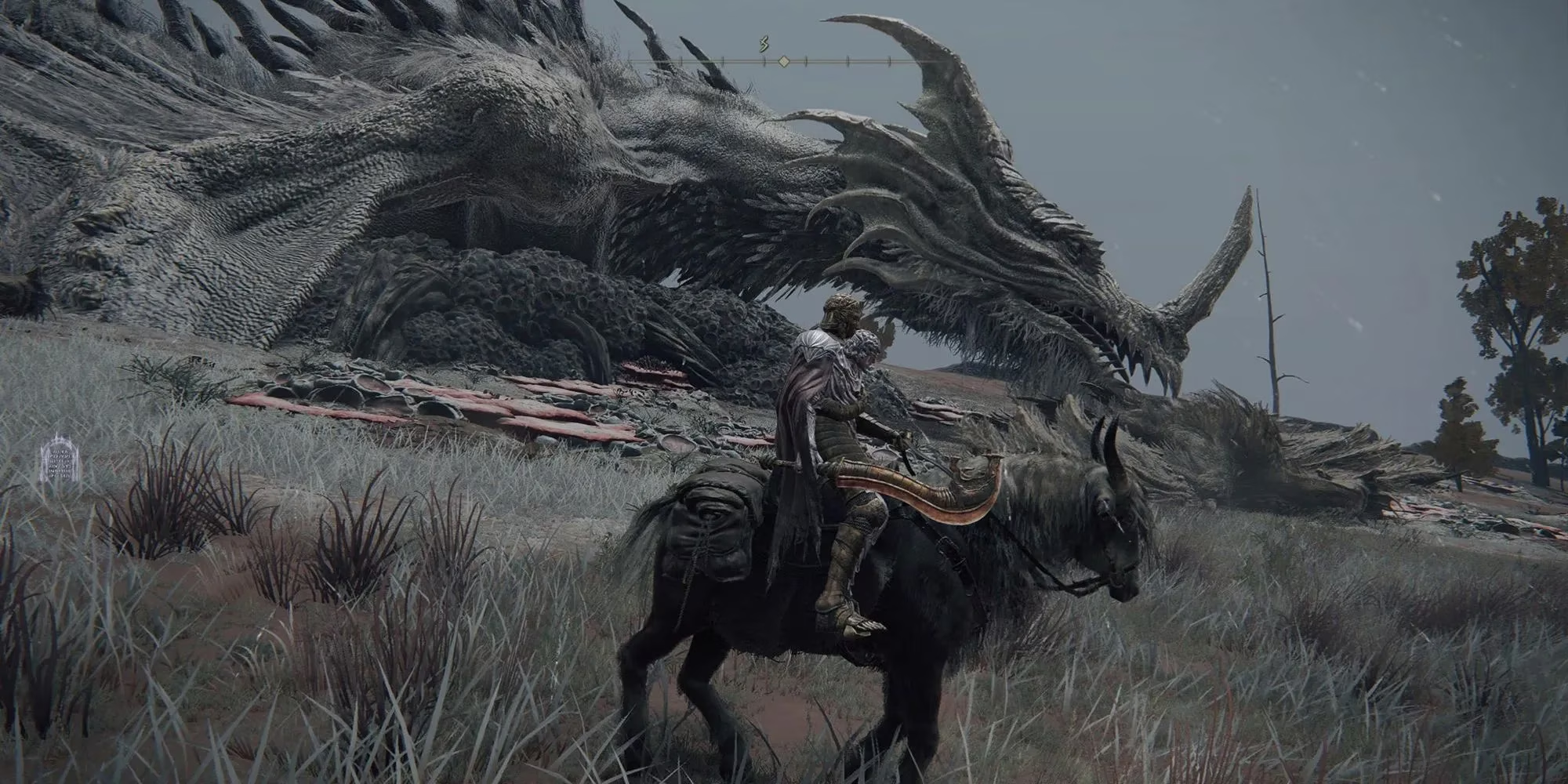
Miyazaki, in a revelation that might surprise those who envision him as a master of his own intricate labyrinths, recently shared a disarmingly honest assessment of his gaming prowess. The creator, whose name is synonymous with challenge and precision, admitted to possessing a skill level he considered "below-par." This confession adds a profound layer of humanity to the director, suggesting that the worlds he builds are not born from flawless execution, but from a deep, poetic understanding of struggle, atmosphere, and the stories that emerge from perseverance. It is a philosophy that has sculpted every corner of the Lands Between and now, the haunting vistas of the Land of Shadow.
The director's humility extends to the realm of adaptation. In discussions promoting the DLC, Miyazaki has openly embraced the idea of an Elden Ring film, stating he sees no reason to deny another interpretation of the rich tapestry he and George R.R. Martin wove. "I don’t see any reason to deny another interpretation or adaptation of Elden Ring, a movie for example," he reflected. The scale of the narrative, brimming with demigods, forgotten wars, and cosmic mysteries, seems destined for more than a single film—it whispers of epics, of seasons unfolding like the petals of a celestial flower.
However, Miyazaki was quick to anchor this vision in practical reality. He acknowledged that neither he nor FromSoftware possess the specific knowledge to produce such a work in a different medium. The path forward, he suggested, would require a "very strong partner" and the painstaking construction of "a lot of trust and agreement" on the shared artistic vision. This isn't a license for a quick adaptation; it's an invitation for a collaborative pilgrimage.
As this news spread like grace across the social media landscape, the community's imagination ignited. With the recent news of Rockstar stepping away from film adaptations for its own iconic franchises, the spotlight on Elden Ring burned brighter. The involvement of George R.R. Martin offers a tantalizing bridge between FromSoftware's visual and mechanical poetry and the narrative demands of cinema.
The question then became: who could possibly helm such an endeavor? The collective gaze of the fandom settled, with remarkable consensus, on a master of dark fantasy:
- Guillermo del Toro 🎬 – The visionary behind Pan's Labyrinth and The Shape of Water emerged as the fan-favorite choice. His entire oeuvre is a love letter to the grotesque and the beautiful, to monsters with souls and fairy tales steeped in shadow. Comments from the community ranged from hopeful inquiries about his schedule to confident assertions that his involvement would guarantee something "incredible."
Yet, the list of worthy contenders did not end there. Other names were whispered with reverence:
| Director | Rationale |
|---|---|
| Peter Jackson | Unparalleled experience in translating dense, high-fantasy source material (The Lord of the Rings) with a devotion to practical effects and scale. |
| Denis Villeneuve | A modern visionary capable of rendering vast, awe-inspiring worlds and complex lore with profound gravity, as evidenced by Dune. |
| Hideo Kojima | A wildcard mention, celebrated for his own brand of cinematic, lore-heavy game design that bends genres and expectations. |
This speculation is more than fan casting; it is a testament to the world Miyazaki built. Shadow of the Erdtree did not just add more content; it deepened the mythos, making the call for a cinematic journey feel more urgent. The DLC's journey from divisive challenge to beloved expansion mirrors the potential path of an adaptation—a difficult birth, requiring the right hands to guide it, but ultimately promising a reward of unparalleled spectacle and emotion.
As of 2026, the echoes of this conversation continue. The success of Shadow of the Erdtree has solidified Elden Ring's status not just as a game, but as a modern mythos ripe for exploration. Miyazaki’s dual revelations—his personal gaming fallibility and his open door to cinematic partnership—paint a picture of an artist not perched on an ivory tower, but standing at a crossroads, looking out at the vast Land of Shadow he created and wondering, with quiet curiosity, what reflections it might cast in other, equally dark and beautiful mirrors. The Tarnished may have become Elden Lord, but the saga's next chapter may yet be written in light and celluloid.