In the sprawling, unforgiving world of the Lands Between, where players have collectively died billions of times, a curious paradox exists. Elden Ring, FromSoftware's magnum opus and the studio's most approachable title thanks to its open world, is also home to some of the most bafflingly inconsistent boss encounters in modern gaming history. While the game rightfully earns its reputation for crushing difficulty and spectacular set-pieces, a closer look reveals a pantheon of demigods and monsters held together by duct tape and contradictory design philosophies. The community's love for the game is as vast as its map, but even the most devoted Tarnished must admit that when it comes to boss fights, the balance is more chaotic than a Frenzied Flame outbreak.
The Statistically Silly Spectrum 🎲
The core of the issue isn't necessarily bad design; it's often just wonky numbers. As any RPG veteran knows, balancing difficulty in an open world where players can grind to their heart's content is a Herculean task. However, Elden Ring takes this challenge and runs with it straight off a cliff in Limgrave. The disparity in boss challenge isn't just about player skill; it's baked into their very stat blocks.
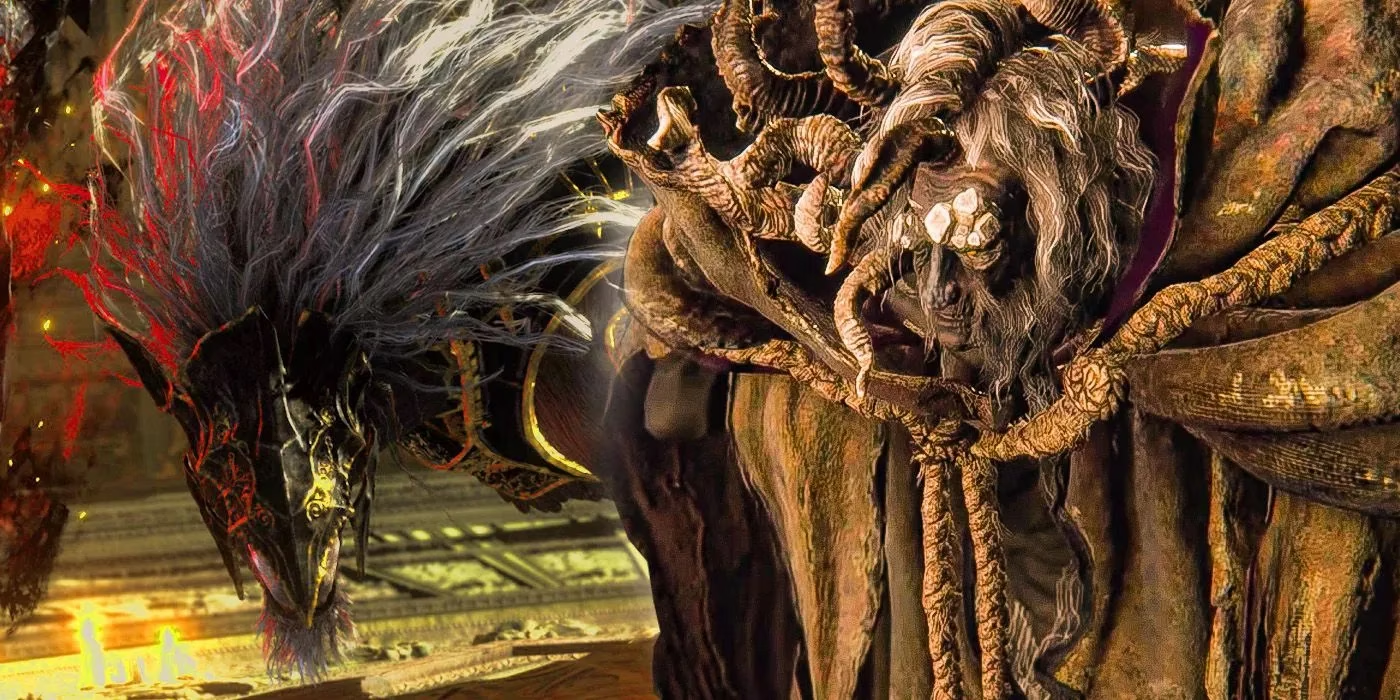
Take Maliketh, the Black Blade, for instance. Here is a boss with lore significance that shakes the foundations of the world, a move set that is a beautiful dance of death, and a visual design that is pure nightmare fuel. Yet, the poor beast might as well be made of tissue paper. His health pool, shared across two intense phases, is so surprisingly shallow that many players defeat him before they've even fully appreciated his terrifying arsenal. It's like building a magnificent, intricate castle and then making the walls out of sugar cubes.
On the flip side of this wobbly scale, we have the Fire Giant. This mountainous foe, encountered before Maliketh in the natural progression, boasts a health bar nearly four times as large. The fight becomes less a test of skill and more a marathon of hacking at ankles. Then, of course, there's Malenia, Blade of Miquella. She has become the game's unofficial mascot of misery, combining Sekiro-level speed, a health-stealing mechanic, devastating damage, and a colossal health pool into a cocktail of frustration that many feel crosses the line from 'challenging' to 'cheap'.
| Boss | The Problem | The Irony |
|---|---|---|
| Maliketh | Shockingly low HP for a late-game boss. | A legendary, feared figure who folds like a chair. |
| Morgott/Rennala | Fight ends too quickly to showcase mechanics. | Beautifully designed puzzles no one gets to solve. |
| Fire Giant | Health sponge extraordinaire. | A spectacle fight that becomes a tedious slog. |
| Malenia | Everything is overtuned: health, speed, damage, lifesteal. | The poster child for unbalanced difficulty. |
A Crisis of Philosophy ⚖️
Beyond the numbers game lies a deeper, more philosophical rift in Elden Ring's boss design. It's as if two different development teams were working with opposing rulebooks.
One book, titled "Patience and Punishment," was used for bosses like Margit, Morgott, and Godfrey. These foes are masters of the delayed attack, holding their strikes for an agonizing eternity to bait a panicked dodge. They teach the player to watch, wait, and strike with precision. It's a classic, cerebral Soulsborne style.
The other book, perhaps called "Aggression and Anxiety," was given to the team behind Maliketh (stats aside), Malenia, and the infamous Godskin Duo. This philosophy is simple: never stop attacking. These bosses offer few openings, applying relentless pressure designed to overwhelm and break the player's rhythm. It's a frantic, endurance-testing style.
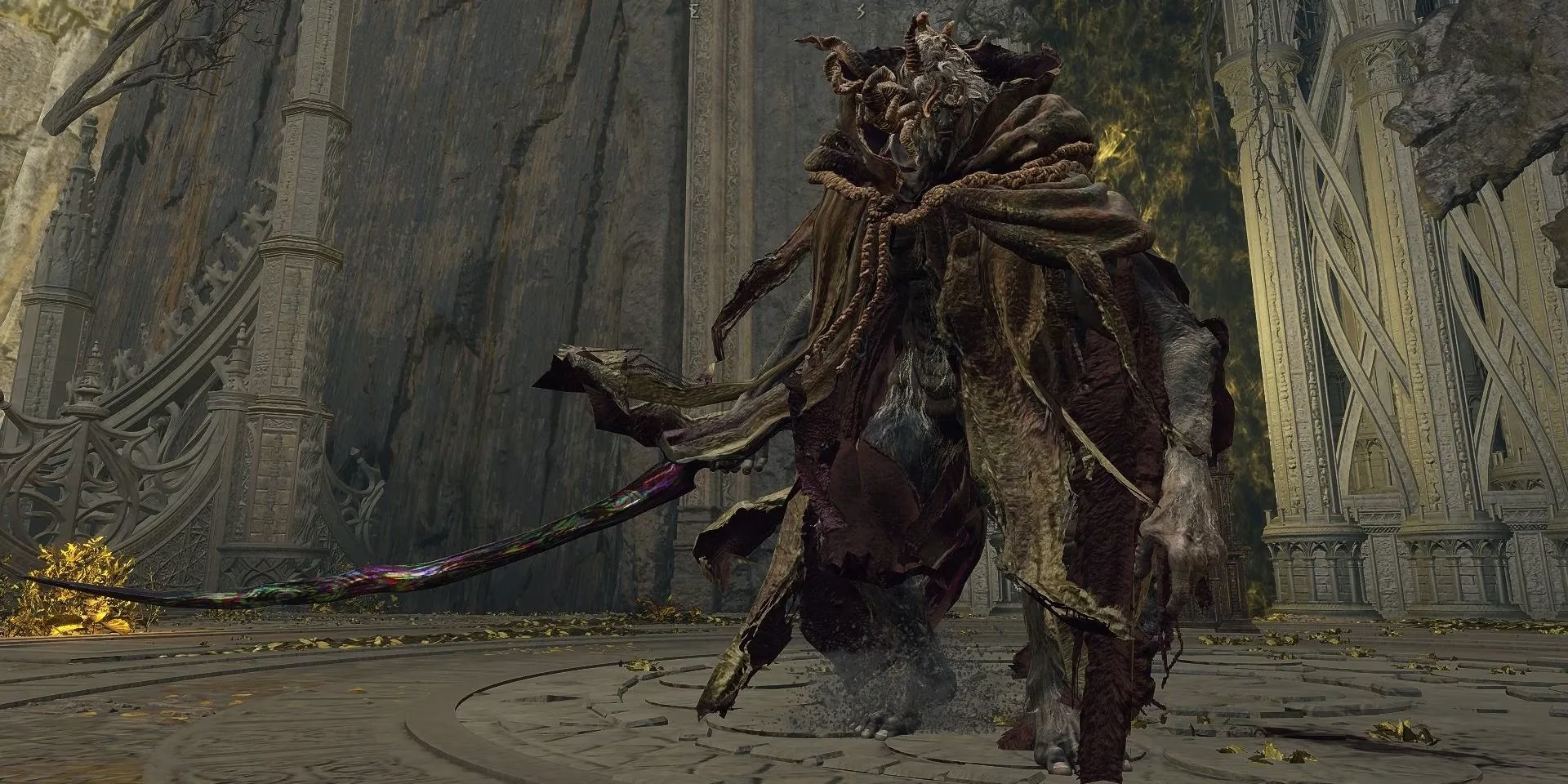
While variety is the spice of (after)life, the extreme swing between these philosophies can feel jarring. It creates a whiplash effect where players must completely rewire their instincts from one encounter to the next, not through adaptive learning, but through contradictory rule sets. One boss teaches you that hesitation is defeat; the next teaches you that haste is a quicker path back to the Site of Grace.
And let's not forget the 'spectacle' bosses. Fights like the Ancestor Spirit and Rykard, Lord of Blasphemy, are breathtaking visual and audio experiences on a first playthrough. The shimmering, ethereal deer and the volcanic, serpentine chaos are unforgettable. However, their gimmick-based nature (Rykard's entire fight is built around a single weapon) makes them underwhelming on repeat visits. The magic fades once the trick is known, leaving a pretty but hollow shell.
The Shadow of Hope: What the DLC Could Bring 🌳
This is where Shadow of the Erdtree enters the chat, carrying the weight of expectation and a glorious FromSoftware tradition. Historically, the studio's DLC expansions are where they truly flex their boss-design muscles, often delivering the most memorable and finely-tuned encounters in their entire catalog.
Think about it:
-
Bloodborne gave us the sublime dance with Lady Maria and the horrific majesty of Ludwig in The Old Hunters.
-
The Dark Souls series blessed us with Artorias the Abysswalker, the relentless Sister Friede, the epic finale of Slave Knight Gael, and the dignified duel with Sir Alonne.
These weren't just new bosses; they were masterclasses in combat design. Shadow of the Erdtree has the perfect setup to continue this legacy. Beginning from Mohg's arena, it's aimed at seasoned Tarnished. The developers can assume a higher baseline of player skill and dedication, freeing them to create complex, demanding encounters without worrying as much about broad accessibility. They can focus on tight, creative mechanics rather than compensating for a vast level range.
The hope is that FromSoftware, now fully accustomed to the scale and mechanics of their own open-world creation, will apply the lessons learned. We could see bosses that blend the methodical pacing of Godfrey with the intense aggression of Maliketh into a cohesive, challenging whole. We could see spectacle that is backed up by substantial mechanical depth, ensuring fights remain engaging on the tenth attempt as much as the first.
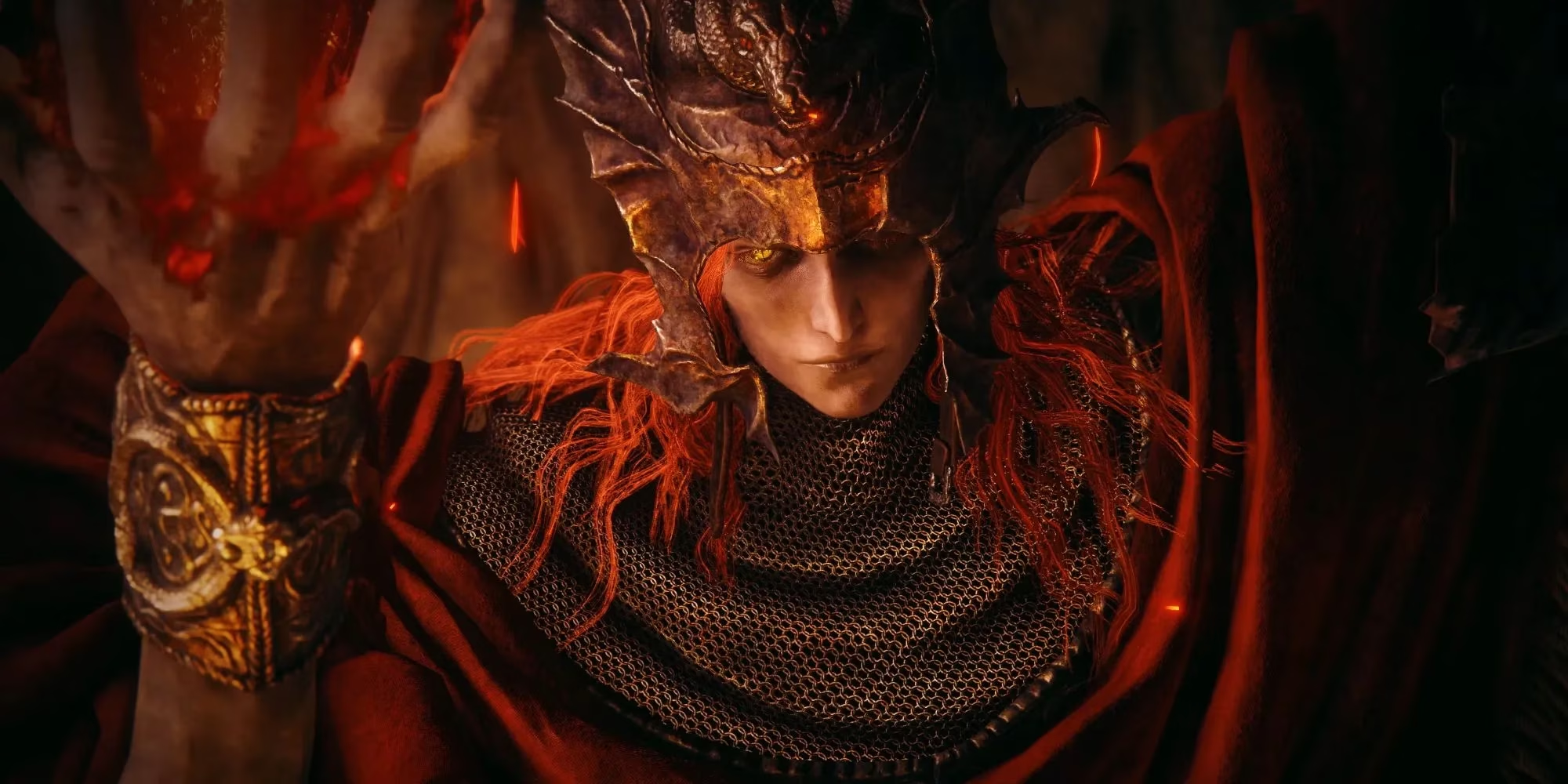
The community waits with bated breath, fingers crossed that Messmer the Impaler and the other new horrors waiting in the Land of Shadow will represent the pinnacle of Elden Ring's combat, not another entry on the list of statistical oddities. If history is any guide, the greatest challenges—and the most satisfying victories—are yet to come. After all, a Tarnished's journey is never truly over until the last boss is balanced... or at least until they stop one-shotting us with a move that has no tell. 🙏