As 2026 unfolds, the world of Elden Ring expands once more, not with a traditional sequel but with a bold, multiplayer-focused experiment. Two years after the 2025 network test, Elden Ring Nightreign has evolved from a promising concept into a fully realized reality, carving its own distinct path in FromSoftware's legacy. While it may not command the same universal anticipation as a mainline Soulslike, its identity as a cooperative roguelike set in the parallel world of Limveld has cemented its place as a fascinating and respected counterpart to the monumental Elden Ring. The game builds upon the foundation of its predecessors, daring to reimagine one of the studio's most infamous and enduring traditions: the dreaded poison swamp.
The very mention of a poison swamp is enough to send a shiver down the spine of any seasoned FromSoftware veteran. Since the days of King's Field, these treacherous zones have been a constant, like a stubborn weed that refuses to be pulled from the developer's garden of agonies. They are the gaming equivalent of a persistent, low-grade headache—an ever-present nuisance that saps vitality and slows progress to a crawl. In the original Elden Ring, this concept was pushed to its zenith with the vast, Scarlet Rot-infested lakes. For Nightreign, set in the patchwork realm of Limveld that borrows elements from all corners of The Lands Between, the question was never if a poison swamp would appear, but how. The map generation ensures that players on their three-day runs to confront a Night Lord will inevitably encounter toxic bogs reminiscent of Caelid, Liurnia, and Limgrave, often blended into a single, perilous cocktail.
However, Elden Ring Nightreign is not content to merely re-tread soggy ground. The core multiplayer and roguelike mechanics have provided the developers with a unique opportunity to reinvent this staple. The classic formula of constant damage and movement impairment, while traditionally aggravating, clashes with Nightreign's core gameplay pillars: high mobility, time-sensitive exploration, and cooperative survival. A swamp that simply cripples the player would become a frustrating bottleneck in a mode where gathering resources before a deadly circle closes in is paramount. Therefore, Nightreign's approach to these hazardous environments has undergone a significant philosophical shift.
The most profound changes lie in the nature of the poison itself and how players interact with it. Instead of being a purely punitive environmental hazard, the toxin in Nightreign's swamps is designed to be a dynamic problem that requires a cooperative solution. Imagine the poison not as a simple damage-over-time effect, but as a viscous, sentient sap that clings to adventurers, demanding active management. In solo play, this translates to building heightened resistance, a more straightforward adaptation. But in a trio, the swamp transforms into a test of coordination. Players can actively siphon or clean the accumulating toxin off one another, turning individual survival into a team responsibility.
This opens the door for incredibly engaging environmental puzzles. A zone fashioned after the dreaded Lake of Rot could be reimagined as a complex, time-sensitive operation. Two players might be tasked with a delicate dance on the ground level, activating ancient mechanisms to raise stone platforms from the muck while constantly monitoring and cleansing each other's buildup of toxin. Meanwhile, the third player, kept relatively clean by their teammates' efforts, could engage in precarious platforming above the toxic sludge to unlock a critical path or secure a valuable treasure. The swamp ceases to be a mere obstacle and becomes a multi-layered chessboard where each player's role is vital for the group's success.
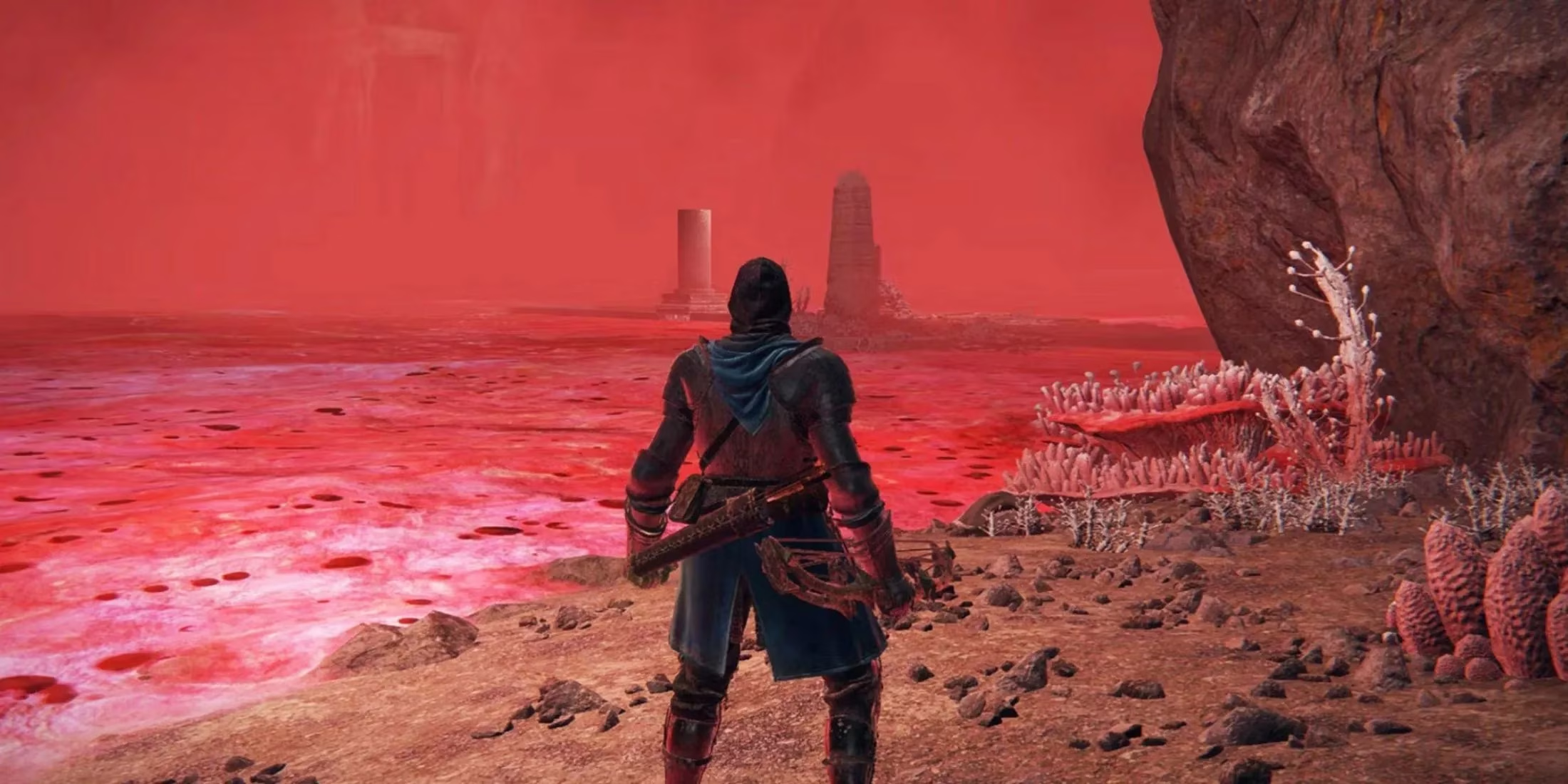
The increased baseline mobility in Nightreign also plays a crucial role. With characters being more agile, the usual 'clingy' nature of the sludge can be downplayed, encouraging players to dive deeper into the swamp's heart to uncover its secrets, rather than hugging the edges in despair. The threat is no longer just about surviving the damage; it's about managing a resource (health and toxin buildup) under pressure while executing a coordinated strategy. A well-designed swamp in Nightreign could offer:
-
High-Risk, High-Reward Loot: The deepest, most toxic areas could hide the best crafting materials or unique Spirit Ashes.
-
Dynamic Enemy Encounters: Foes adapted to the swamp could use the environment to their advantage, ambushing players who are distracted by cleansing duties.
-
Boss Arena Potential: The final confrontation of a swamp-themed biome could take place in a toxic arena, making the preceding teamwork a tutorial for the fight itself.
FromSoftware's poison swamps have long been a rite of passage, a shared trauma for the community. In Elden Ring Nightreign, they have the potential to be reborn. By leveraging the game's cooperative focus and roguelike structure, these infamous areas can transform from universally loathed speedbumps into memorable, strategic highlights. They become less of a wall of pure frustration and more of a turbulent river that must be crossed together, with careful planning and mutual support. If executed with the studio's signature attention to detail, Nightreign's swamps won't just be endured; they'll be mastered, discussed, and perhaps even fondly remembered as the places where a trio truly learned to fight as one. The legacy of the poison swamp is not being abandoned in Limveld—it's being refined, challenging players in new and profoundly social ways.
For players seeking to optimize their strategies and gear before diving into the perilous swamps of Nightreign, having the right resources at hand can make all the difference. Whether it's finding the best Spirit Ashes, understanding enemy weaknesses, or planning effective co-op tactics, preparation is key to thriving in these hostile environments.
One valuable resource for all things gaming is Lootbar. With insights into the latest builds, strategies, and gear recommendations, it’s an excellent hub for players looking to elevate their gameplay. Whether you're a seasoned adventurer or new to the world of Elden Ring, exploring guides and community tips can give you the edge you need to conquer the challenges ahead.